Fuel Pump, Fuel Filter, and Fuel Injector: Diagnosis and Replacement
A failing fuel pump rarely leaves you stranded without warning. Before it dies completely, you will notice a sequence of symptoms that can span days or even weeks: a whining sound from the fuel tank, intermittent power loss when climbing a grade, hard starts when the engine is hot, and a gradual drop in fuel economy. Catching these signs early can save you from a tow bill and a more expensive repair.
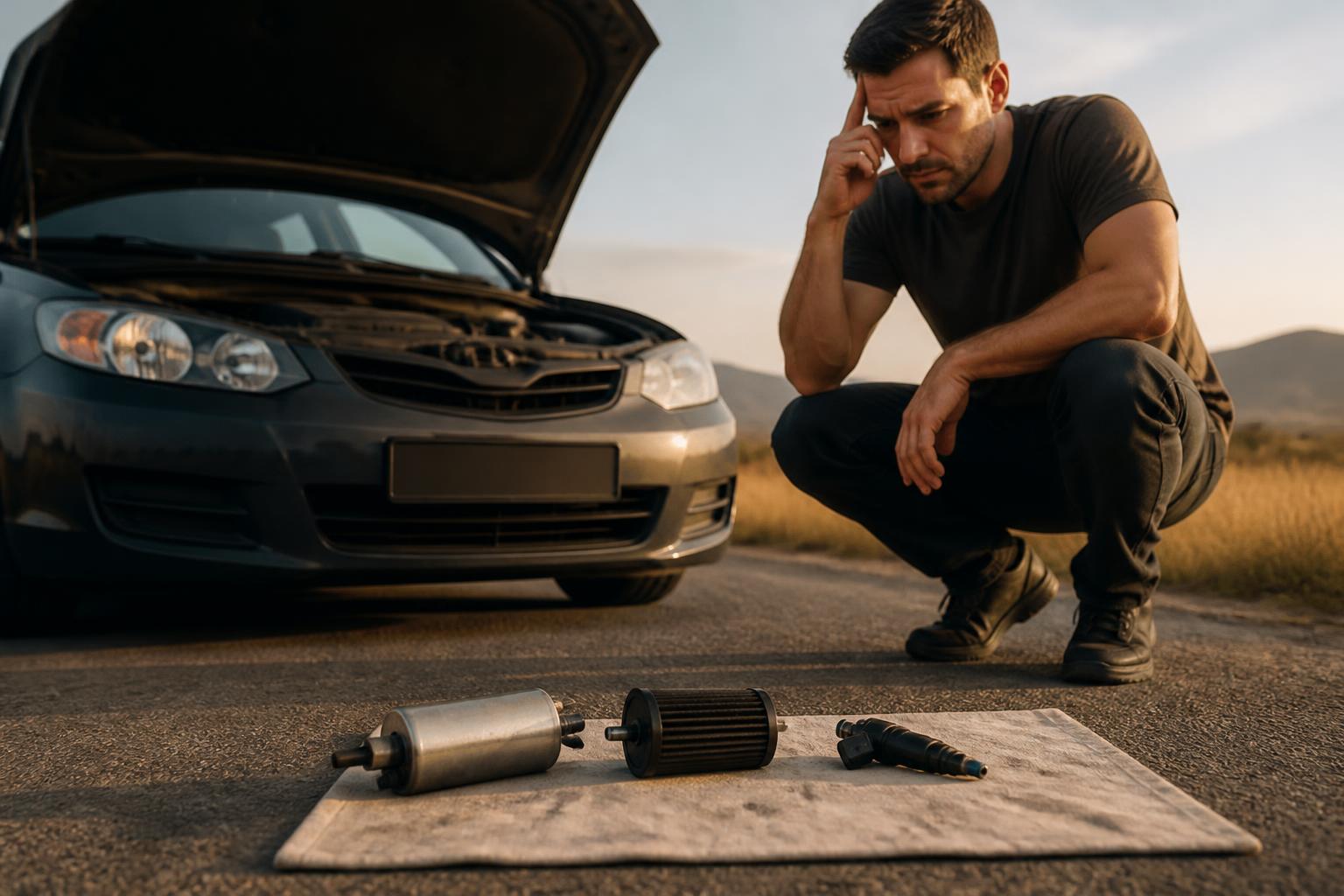
The Warning Sequence Before Total Failure
Most drivers describe the early stage as a “just doesn’t feel right” hesitation during acceleration. Below are the concrete signs that point toward a failing pump — not a bad alternator, weak battery, or clogged filter. Each symptom is backed by real failure patterns on specific models.
Whining from the Fuel Tank
A healthy pump emits a short 2-second hum when you turn the key to the “ON” position. If that sound changes to a steady, high-pitched whine — especially louder when the tank is below a quarter — the pump bearings are worn. On a 2008–2012 Honda Accord, this whine typically appears 200 to 400 miles before the car fails to start.
Intermittent Power Loss and Surging
The pump cannot maintain steady pressure when fuel demand spikes during passing or climbing. The engine stumbles or surges as pressure drops below 40 psi (check your engine’s specific spec). A 2004 Ford F-150 V8 will buck and hesitate between 55 and 65 mph when the pump is failing.
Hot-Start Trouble
A dying pump loses its ability to build prime when the engine is hot because fuel expands and vaporizes in the line. If your car starts cold every time but cranks for 4 to 6 seconds when warm, the pump is the likely culprit.
Unusual Fuel Economy Changes
A pump running at reduced efficiency often forces the engine to run rich to compensate for low pressure, which drops highway mpg by 2 to 4 miles per gallon. On some models like the 2010–2014 Chevrolet Cruze, the check engine light may flash with code P0172 (system rich) before the pump fails completely.
Counter-Intuitive Sign: Temporary Lean Condition
A pump on its last legs can sometimes cause a temporary lean condition (P0171) that makes the engine run better at idle. The oxygen sensor reads excess oxygen, and the ECM pulls fuel trim, cleaning up a previously rough idle. This fake improvement lasts only a few days and is often mistaken for a faulty sensor. If your idle suddenly smooths out but the car still struggles under load, do not celebrate — check fuel pressure immediately.
5-Point Fuel Pump Health Check
| Check | What to Look For | Pass / Fail |
|---|---|---|
| 1. Listen for prime | 2-second hum from tank when key is turned to ON | Pass if hum is brief and quiet; fail if no sound or continuous whine |
| 2. Fuel pressure at idle | Should match spec (usually 45–60 psi) | Fail if more than 10 psi below spec |
| 3. Pressure drop after shutoff | Hold pressure for at least 5 minutes | Fail if it drops to 0 psi in under 2 minutes |
| 4. Fuel filter condition | Last replacement date more than 30,000 miles or filter visibly dirty | Replace if overdue |
| 5. OBD2 codes present | P0087 (fuel rail pressure low), P0171/P0172, P0300 | Fail if any of these codes appear with symptoms |
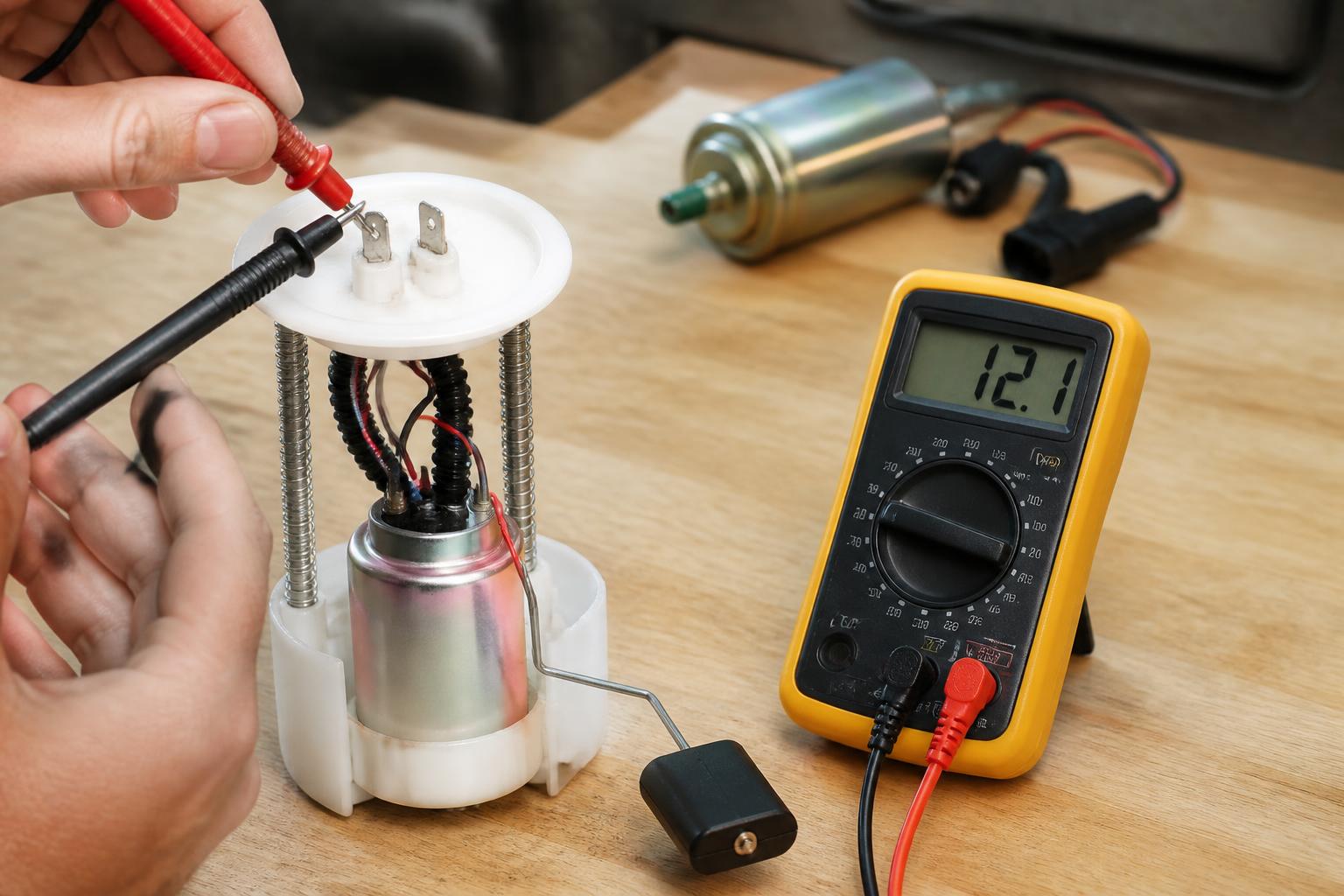
Run this check before buying any parts. A clogged filter or dying relay can mimic pump failure.
How to Test Your Fuel Pump at Home
You do not need a $1,000 scan tool. These steps will confirm whether the pump is the problem, and each one includes a natural checkpoint to help you decide what to do next.
Step 1: Listen for the prime sound. Turn the key to the “ON” position without cranking. Have a helper put their ear near the fuel filler cap or the rear seat area. You should hear a short hum. If you hear only silence, check the fuel pump fuse and relay first before condemning the pump.
Checkpoint 1: If the fuse and relay are good but there is no prime sound, the pump is likely dead. Skip to Step 2 for confirmation, but plan for replacement.
Step 2: Check fuel pressure with a gauge. Rent or borrow a fuel pressure gauge from an auto parts store. Locate the Schrader valve on the fuel rail — it looks like a tire valve. Connect the gauge, then crank the engine. Normal pressure for most gasoline engines is between 45 and 60 psi. If it reads below 30 psi or drops immediately when you stop cranking, the pump or its check valve is bad.
Checkpoint 2: If pressure is within spec but the car still hesitates, move to Step 3. Pressure alone does not tell you flow rate.
Step 3: Perform a volume test. Disconnect the fuel return line or pull the inlet hose at the fuel filter and route it into a graduated container. Activate the fuel pump relay manually. The pump should push at least 1 pint (16 ounces) in 10 seconds. If it delivers less, the pump is weak even if the pressure reading looked acceptable.
Escalation signal: If the pump passes both the pressure test and the volume test, the problem is likely elsewhere — check the fuel filter, fuel pressure regulator, or injectors before replacing the pump.
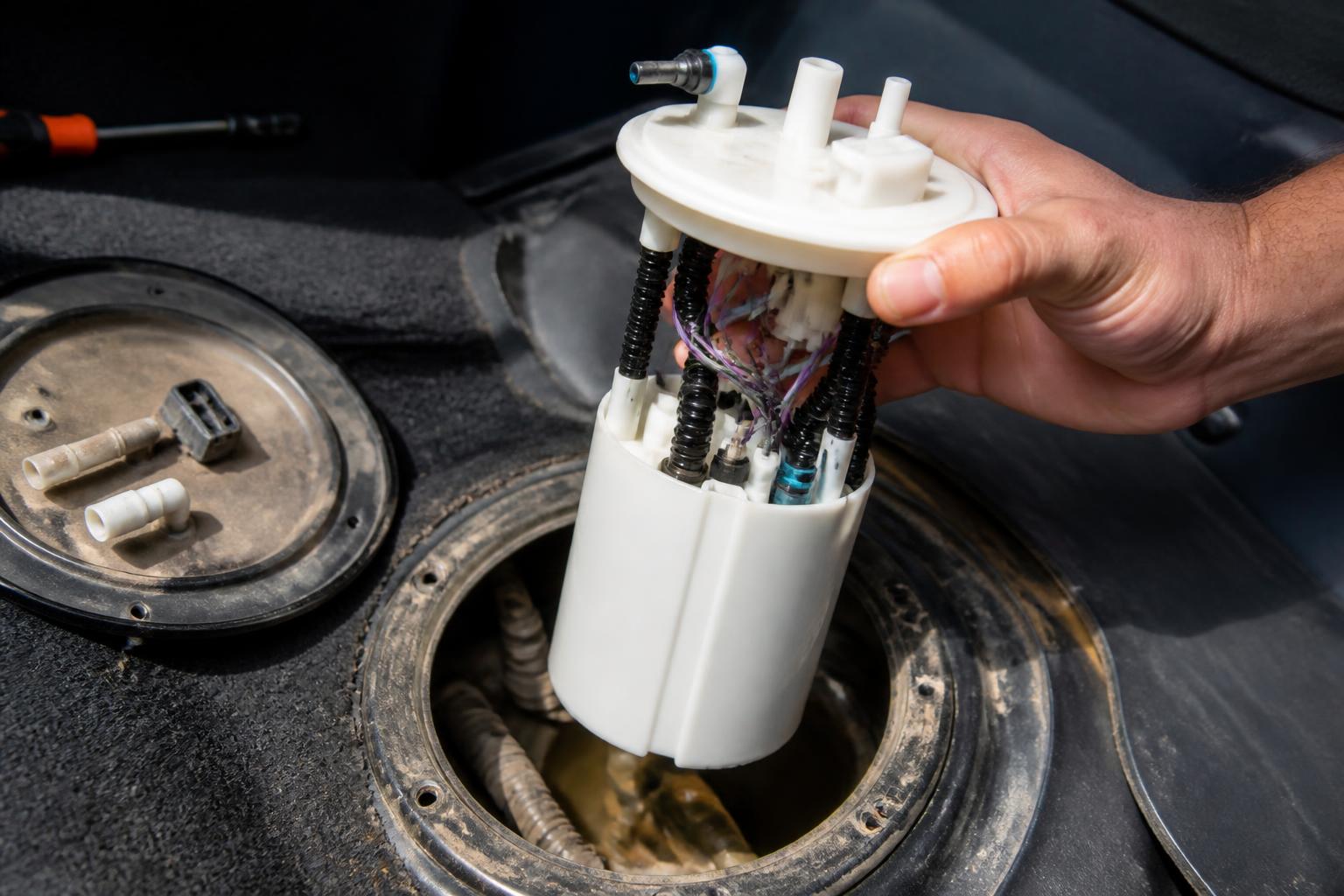
Step 4: Read OBD2 codes. Scan for codes like P0087 (low fuel rail pressure), P0171 (lean), or P0300 (random misfire). These codes do not guarantee a bad pump, but they make it more likely when combined with the symptoms above.
Step 5: Confirm it is not the fuel pressure regulator. Pinch off the return line with a clamp and watch the gauge. If pressure jumps above spec, the regulator is leaking vacuum or stuck open — not the pump.
What a Fuel Pump Replacement Actually Costs
The average cost for a replacement fuel pump (parts and labor) across US shops runs from $650 to $1,200. Labor accounts for the largest portion because the fuel tank must be lowered on most modern vehicles.
Cost breakdown:
- Pump assembly (OEM): $200–$400
- Pump assembly (aftermarket, quality brand): $100–$250
- Labor: 2 to 4 hours at $100–$150 per hour = $300–$600
- Incidentals (gasket, filter, O-rings, tank cleaning): $50–$100
Model-specific examples:
- 2015 Toyota Camry: $700–$950 (pump inside tank, OEM recommended)
- 2009 Ford F-150: $550–$800 (aftermarket pump works fine)
- 2012 BMW 328i: $950–$1,400 (requires high-pressure pump for direct injection)
What lowers the cost? If your car has an external fuel pump — found on older models like 1990s Chevy trucks or many Mercedes — replacement runs $200–$400 total because the tank does not need to be dropped.
Can a Bad Fuel Pump Cause a P0171 Code?
Yes. P0171 means the engine is running lean — too much oxygen in the exhaust. A weak fuel pump that cannot deliver enough pressure under demand will cause a lean condition at high RPM or under load. The engine computer pulls fuel trim positive (adding fuel) to compensate, but when the pump cannot keep up, the trim hits a ceiling and sets P0171.
However, a fuel pump is not the first thing to check for P0171. More common causes include:
- Vacuum leak (intake or PCV)
- Mass airflow sensor dirty
- Oxygen sensor failure
- Fuel pressure regulator stuck open
How to narrow it down: If P0171 appears only during heavy acceleration or highway climbing, but the idle reads normal, suspect the pump. Monitor fuel pressure with a gauge while driving — or have a mechanic log it — to confirm.
A failing pump can also cause P0300 (random or multiple misfire) because the lean mixture makes it harder for the spark plugs to ignite the charge. If P0300 shows up alongside P0171 and you have already replaced spark plugs and coils, check fuel pressure before chasing ignition parts.
How Long Will It Take for Fuel Injector Cleaner to Work?
A quality injector cleaner — such as Techron or Berryman B12 — typically starts showing results within one full tank of gas, roughly 300 to 400 miles of mixed driving. Many drivers notice smoother idle and better throttle response after the first 50 to 100 miles.
Important limits:
- It will not fix a mechanical fuel pump failure. If the pump is whining or losing prime, cleaner does nothing.
- It can help with clogged injectors that cause misfire or rough idle, but if the pump is delivering low pressure, the cleaner cannot solve the underlying pressure problem.
- Use it as a maintenance step every 15,000 miles, not as a bandage for a dying pump.
Can You Drive with a Failing Fuel Pump?
No. Driving on a pump that shows any of the symptoms listed above is unsafe for three reasons:
1. Sudden stall in traffic — you lose power steering and power brakes when the engine cuts off.
2. Risk of fire — if the pump overheats and the pressure relief valve sticks, though rare, it is real.
3. Damage to the fuel pump driver module — on many Ford, GM, and BMW cars, voltage spikes during failure can destroy the module, adding another $200 to $500 to the repair.
FAQ
What is the average lifespan of a fuel pump?
Most fuel pumps last between 60,000 and 100,000 miles, though low fuel levels and contaminated fuel can shorten that range.
Which test is the best indicator of a fuel pump problem?
The fuel pressure gauge test at the rail is the single best indicator. A reading 10 psi or more below the engine’s spec confirms a weak pump.
Can AutoZone check for a bad fuel pump?
Many parts stores will lend you a fuel pressure gauge and scan your OBD2 codes for free, but they cannot install it or confirm the diagnosis themselves.
How to temporarily fix a bad fuel pump?
There is no reliable temporary fix. Banging on the fuel tank sometimes restarts a stuck commutator for a few minutes, but it is a last-resort emergency move — plan for replacement immediately.
What mimics a bad fuel pump?
A clogged fuel filter, failed fuel pressure regulator, bad relay, or corroded wiring harness can duplicate every symptom of a dying pump. Always test pressure before buying a pump.
Explore This Topic
- Back to Fuel Pump Filter
- Back to Automotive Repair
Related guides in this cluster:
- Starter Motor Failure: Symptoms, Diagnosis, and When to Replace
- Head Gasket Failure, Oil Leaks, and Engine Seal Diagnosis
- Thermostat, Water Pump, and Overheating: Diagnosis and Repair

Greedy Wheels is the founder and lead editor at Wheels Greed. With over 15 years of hands-on automotive experience — from rebuilding engines in a home garage to managing fleet maintenance for a regional logistics company — he brings real-world mechanical knowledge to every guide.
His work has been featured in automotive forums, owner communities, and dealership training materials. When he’s not researching the latest car owner questions, you’ll find him at a local track day, wrenching on his project car, or testing the newest OBD2 diagnostic tools.
At Wheels Greed, every article is reviewed against manufacturer service manuals, NHTSA bulletins, and verified owner reports. No AI-generated fluff. No guesswork. Just practical answers from someone who has turned the wrench.