Head Gasket Failure, Oil Leaks, and Engine Seal Diagnosis
Is it better to fix a blown head gasket or replace the engine? If the block and cylinder head are flat and crack-free, and the engine has under 120,000 miles with regular oil changes, fixing the head gasket is the smarter move. If the block is warped, the head is cracked, or the engine already has high miles and a history of overheating, a used or remanufactured engine swap often costs less and delivers more reliable miles. This guide covers the home checks that confirm the diagnosis, the decision rules for fix versus swap, and the one scenario where selling the car as-is makes more sense.

Fastest Home Checks – Confirm Before You Decide
You can diagnose a blown head gasket from your driveway in about 20 minutes with basic tools. Run these checks in order. The block tester is the only way to rule out look-alike problems that would waste your money on the wrong repair.
Visual Check – Oil and Coolant
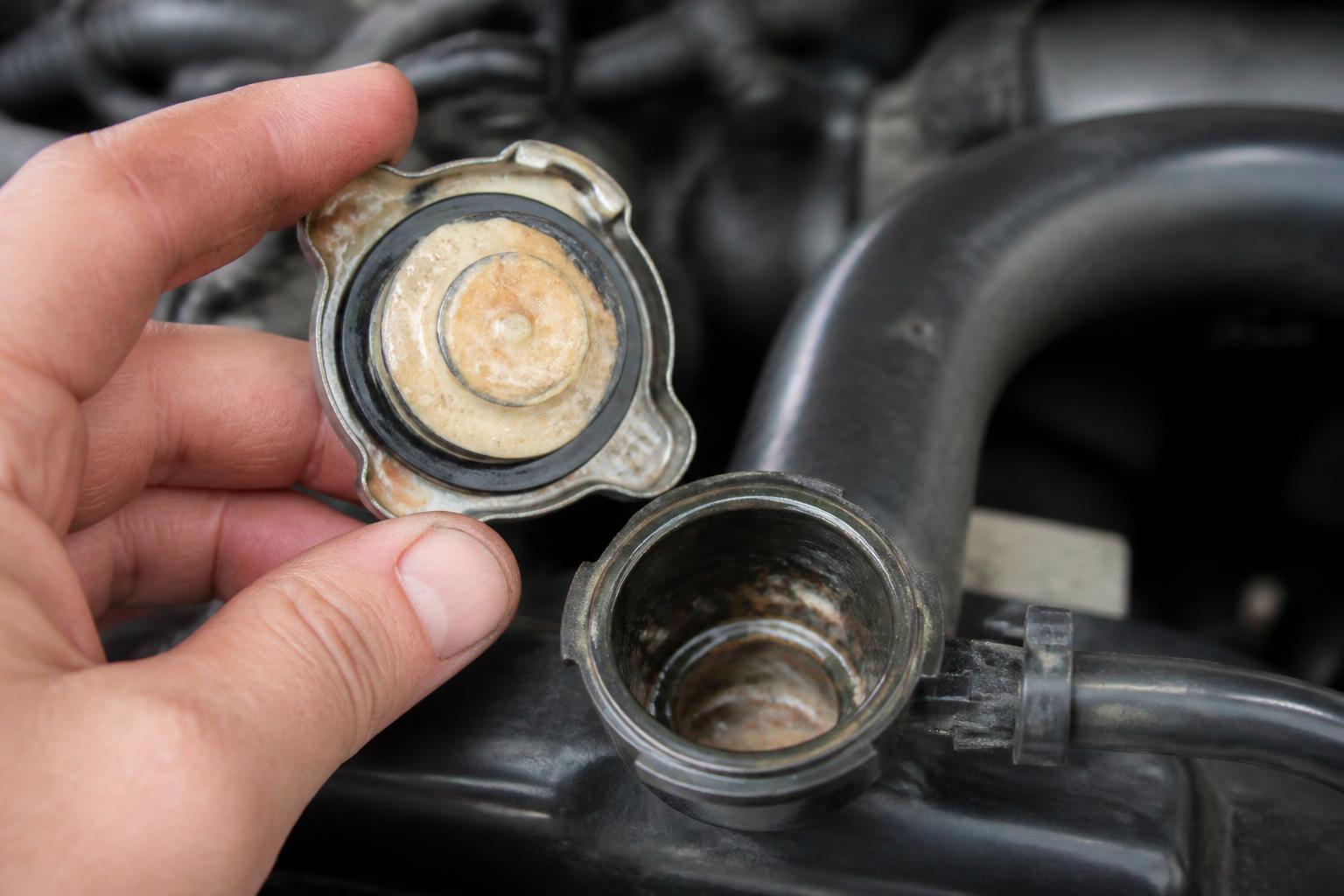
Pull the dipstick and unscrew the oil filler cap. A milky, tan, or frothy residue that looks like chocolate milk means coolant is mixing with oil. Then check the coolant reservoir or radiator cap (engine cold). A brown oily film on the coolant surface, or bubbles rising when the engine runs, points to combustion gas entering the cooling system.
White Smoke Check
Start the engine and let it warm to operating temperature. Steady white exhaust that smells sweet and hangs in the air is coolant burning inside the cylinders. A quick puff at cold start is normal condensation. If the smoke persists after the engine is fully warm, coolant is leaking into the combustion chamber.
Combustion Leak Test – The Only Reliable Home Confirmation
A block tester kit costs about $25 at any auto parts store. This is the definitive driveway test because it detects exhaust gases in the coolant—the signature of a blown head gasket.
1. Warm the engine to operating temperature.
2. Fill the tester with the blue test fluid.
3. Place the tester over the open radiator neck (or coolant reservoir on sealed systems).
4. Squeeze the bulb to draw air from the cooling system through the fluid.
The fluid turns yellow or green if exhaust gas is present. That confirms a blown head gasket or a cracked cylinder head or block. If the fluid stays blue, the gasket is likely intact—diagnose elsewhere.
Compression and Leak-Down Tests – The Damage Check
A compression tester (rentable at most parts stores) tells you which cylinder is losing pressure. A leak-down tester tells you where that pressure is going.
- Normal compression: All cylinders within 10–15% of each other.
- Blown head gasket pattern: Two adjacent cylinders reading low (common on inline engines) or one cylinder near zero.
- Leak-down test: If air entering the cylinder bubbles into the radiator, the head gasket has failed between that cylinder and a coolant passage.
Confirmation Verification – Listen for Metal and Feel for Knock
Before you authorize any repair, verify the engine is not already destroyed. Run the engine at idle and accelerate lightly. Listen for a rhythmic knocking sound from the bottom of the engine (rod knock) or a steady tapping from the top (valve train damage from overheating). Let the engine cool, then drain a small amount of oil into a clean container. Shine a flashlight through the oil—look for metallic flakes or glitter. If you see metal particles or hear knocking, the engine has internal damage beyond the head gasket. Skip the gasket repair and go straight to a replacement.
What Can Be Mistaken for a Blown Head Gasket
Several conditions mimic head gasket symptoms but are cheaper and easier to fix. Mistaking them can lead to a $1,500 unnecessary repair.
| Symptom | What It Could Also Be |
|---|---|
| White smoke from exhaust | Cracked cylinder head, leaking intake manifold gasket (coolant passage), turbocharger coolant leak |
| Milky oil | Short-trip condensation, leaking oil cooler, failed transmission cooler mixing fluid into coolant |
| Coolant loss, no smoke | External leak from a hose, water pump, radiator, or intake manifold gasket |
| Overheating | Stuck thermostat, failed water pump, clogged radiator, air trapped in the cooling system |
| Bubbles in the radiator | Failed EGR cooler, cracked cylinder head without gasket failure, air being sucked in at low coolant level |
| Misfire or rough idle | Bad spark plug, failing ignition coil, vacuum leak, clogged fuel injector, low compression from worn piston rings |
The block tester fluid is the only way to rule out false positives. If the fluid stays blue, you do not have a head gasket problem—keep looking before you spend money.
The Repair vs. Replace Decision
Once the block tester confirms combustion gases in the coolant, and the compression and leak-down tests show no cracked block or head, it is time to calculate costs. The head gasket itself costs $40–$150. The labor is what kills the budget.
Average Cost to Fix a Blown Head Gasket
- 4-cylinder engines (Honda Civic, Toyota Corolla, Ford Focus): $1,100–$1,800
- V6 engines (Honda Accord V6, Toyota Camry V6, Ford 3.5L): $1,500–$2,500
- V8 engines (Ford F-150 5.0L, Chevy Silverado 5.3L, BMW N62): $2,000–$3,500
These estimates include resurfacing the cylinder head, new head bolts, gaskets, coolant, and labor. If the cylinder head is cracked, add $400–$800 for a replacement head.
Average Cost to Replace the Engine
- Used engine from salvage yard (80k–120k miles, common models): $1,500–$3,500 installed
- Remanufactured engine (rebuilt to factory spec with warranty): $3,000–$5,500 installed
- Low-mileage crate engine (enthusiast cars only): $4,000–$8,000+
The Decision Rule That Changes the Recommendation
Fix the head gasket if:
- The engine has under 120,000 miles with regular oil changes and no overheating history.
- The block tester confirmed a gasket leak, but leak-down tests show no internal damage to the block or head.
- The failure was caught early—before the engine ran hot for more than a few minutes.
- Your vehicle is rare and engine swaps require custom fabrication or rare parts.
- You are doing the labor yourself (parts cost about $200–$400 for gaskets, bolts, coolant).
Replace the engine if:
- The engine has over 150,000 miles without service records. – The block or cylinder head is warped or cracked. Visible cracks in an aluminum head mean replacement—welding rarely works long-term. – The head gasket failure caused secondary damage: rod knock, spun bearing, metal particles in the oil, or the car was driven until it died from overheating. – A used engine swap quote is $2,000 or less installed, and the head gasket repair quote exceeds $2,500.
This happens on common vehicles like Honda Civics, Toyota Camrys, and Ford F-150s with the 4.6L or 5.4L engines. – The engine has a known weak-point failure pattern where even a perfectly repaired gasket may fail again due to a flawed design. Examples include the Subaru EJ25 (2002–2012 head gasket failure even on low-mileage engines), BMW N20 (timing chain and head gasket issues), and VW 2.0T (cam follower and head gasket failures on early TSI engines).
The gray zone (120,000–150,000 miles): Get firm quotes for both options. If the engine swap is within 20% of the head gasket repair cost, choose the swap. You get a lower-mileage engine with no hidden heat damage from the gasket failure.
5-Point Decision Checklist
Run through these five gates before you authorize any repair. Each is a pass/fail check.
1. Block tester confirmed combustion gases in coolant? Yes → Proceed. No → Stop and look for external leaks, intake gasket issues, or short-trip condensation. Do not spend money on head gasket repairs for a car that does not have one.
2. Compression and leak-down tests show no warped block or cracked head? All cylinders hold compression, no bubbles from the crankcase during leak-down, no air entering the radiator? → Fix the gasket. Metal in coolant, rod knock, or cylinder scoring → Replace the engine.
3. Vehicle book value exceeds the repair cost by at least $1,000 after the repair? Check Kelley Blue Book for your car’s running value. If the car is worth $3,000 running and the repair is $2,500, the margin is tight. Consider whether you want to keep it long-term or sell after repair.
4. Engine mileage and maintenance history point to a good candidate for gasket repair? Under 120k miles with documented oil changes = fix. Over 150k with unknown history = swap.
5. Is a quality used engine available for a reasonable price? For common cars, a used engine under 120k miles often costs $1,500–$2,500 installed. If that’s within 20% of the head gasket quote, the swap is the better long-term value.
Frequently Asked Questions
Can a blown head gasket cause P0420?
Yes. A blown head gasket can push coolant into the exhaust, damaging the catalytic converter. The P0420 code indicates low catalytic converter efficiency. Replace the head gasket first, then clear the code. If P0420 returns, the converter needs replacement.
How long will an engine last after head gasket replacement?
If the block and head are in good condition and the repair is done correctly (including resurfacing the head and using new bolts), the engine can easily last another 80,000–100,000 miles. Many drivers report 150,000 more miles on engines that were well-maintained before the gasket failure.
What is the average cost to fix a blown head gasket?
For a typical four-cylinder car, expect $1,100–$1,800. V6 engines run $1,500–$2,500. V8 trucks and luxury cars cost $2,000–$3,500. These prices include resurfacing the cylinder head, new head bolts, coolant, and labor. A cracked head adds $400–$800.
Is it cheaper to replace an engine than to replace a head gasket?
Sometimes. On common cars with plentiful used engines (Honda Civic, Toyota Camry, Ford F-150), a salvage-yard engine swap can cost $1,500–$2,500 installed. If the head gasket repair quote exceeds $2,500 and the used engine is under 120,000 miles, the swap is cheaper. On rare vehicles, engine swaps cost more due to parts scarcity.
How much is a car worth if it has a blown head gasket?
A running car with a confirmed blown head gasket is worth 30–50% of its Kelley Blue Book value in running condition. For example, a car worth $6,000 running might sell for $2,000–$3,000 with a blown gasket. A non-running car is worth scrap value (usually $300–$800).
Explore This Topic
- Back to Head Gasket Oil
- Back to Automotive Repair
Related guides in this cluster:
- Alternator Failure: Warning Signs, How to Test, and Replacement
- Radiator and Coolant Leaks: Diagnosis, Stop-Leak, and Repair Costs
- Fuel Pump, Fuel Filter, and Fuel Injector: Diagnosis and Replacement

Greedy Wheels is the founder and lead editor at Wheels Greed. With over 15 years of hands-on automotive experience — from rebuilding engines in a home garage to managing fleet maintenance for a regional logistics company — he brings real-world mechanical knowledge to every guide.
His work has been featured in automotive forums, owner communities, and dealership training materials. When he’s not researching the latest car owner questions, you’ll find him at a local track day, wrenching on his project car, or testing the newest OBD2 diagnostic tools.
At Wheels Greed, every article is reviewed against manufacturer service manuals, NHTSA bulletins, and verified owner reports. No AI-generated fluff. No guesswork. Just practical answers from someone who has turned the wrench.