Flat Towing a Honda CR-V: Which Models and How-To
When I first started exploring the idea of flat towing my Honda CR-V, I found myself overwhelmed by the different models and their towing capabilities. I wanted to ensure I had all the right information before hitting the road. In this article, I’ll break down the requirements for flat towing, so you know exactly which Honda CR-V models are compatible. I’ll also share a step-by-step guide to help you prepare and execute the towing process safely. With the right knowledge and tools, I believe anyone can master flat towing their Honda CR-V with confidence.
Key Takeaways
Consult the owner’s manual for compatibility and equipment requirements for flat towing a Honda CR-V.
Essential equipment includes a tow bar, safety chains, a supplemental braking system, and a wiring harness for taillights.
Follow safety guidelines such as verifying weight limits, ensuring secure connections, and monitoring tire pressure during towing.
Perform post-towing maintenance, including checking tire pressure and fluid levels, to ensure vehicle health.

Understanding Flat Towing Requirements
I’ve learned that understanding flat towing requirements is crucial for a successful towing experience. It’s not just about hooking up the vehicle; there are specific guidelines and equipment needed. Now, let’s dive into the essential points to consider.
Flat Towing Basics
Understanding the basics of flat towing can help me ensure my vehicle is properly prepared for the journey. I need to know which models of the Honda CR-V are suitable for flat towing. It’s essential to have the right equipment, like a tow bar and safety chains. I should also check the owner’s manual to follow the manufacturer’s guidelines. Lastly, I’ve got to remember to disconnect the battery to prevent draining during the tow.
Model Compatibility
Model compatibility is something I need to check before proceeding with any flat towing plans. I often refer to the owner’s manual to confirm if my specific Honda CR-V can be flat towed. It’s essential to ensure that the model year supports this towing method. I find that some models have limitations or require additional modifications. Knowing the compatibility helps me avoid potential issues on the road.
Necessary Equipment
Necessary equipment plays a vital role in ensuring safe and efficient flat towing, and I’ve made sure to gather everything required for the task. I’ve invested in a sturdy tow bar that can handle the weight of my Honda CR-V. I also have safety cables to provide an extra layer of security during towing. A supplemental braking system is essential, so I’ve got that ready to go as well. Lastly, I’ve checked that I have the necessary wiring harness to connect the taillights for proper signaling on the road.
Towing Safety Guidelines
Towing safety guidelines are something I’m always mindful of to ensure a smooth and secure journey. I make sure to check the weight limits of my towing setup before hitting the road. I also double-check that the tow bar is properly secured and connected. It’s essential for me to monitor the tire pressure on both vehicles throughout the trip. Lastly, I always keep an emergency kit handy just in case something goes wrong.

Honda CR-V Models Compatible with Flat Towing
I’ve discovered that not all Honda CR-V models are suitable for flat towing. It’s essential to know which specific models work best for this purpose. Now, let’s dive into the details of compatible Honda CR-V models and the flat towing specifications.
Compatible Honda CR-V Models
The compatible Honda CR-V models for flat towing include the 2014-2020 versions, and I’ve found them to be reliable choices. I appreciate how they’ve been designed with the necessary features for easy towing. I’ve also noticed that the towing capacities remain consistent across these years. It’s comforting to know I can rely on these models for my adventures. Overall, they’ve made my flat towing experience much smoother.
Flat Towing Specifications Overview
Flat towing specifications for my Honda CR-V indicate specific requirements that need to be met for safe and effective towing. I’ve got to ensure that the vehicle is in neutral and the ignition is in the accessory position. I also need to use a tow bar rated for the weight of my CR-V. It’s crucial to keep an eye on the distance and speed limits while towing. Lastly, I’ve learned that following these guidelines helps prevent any potential damage.
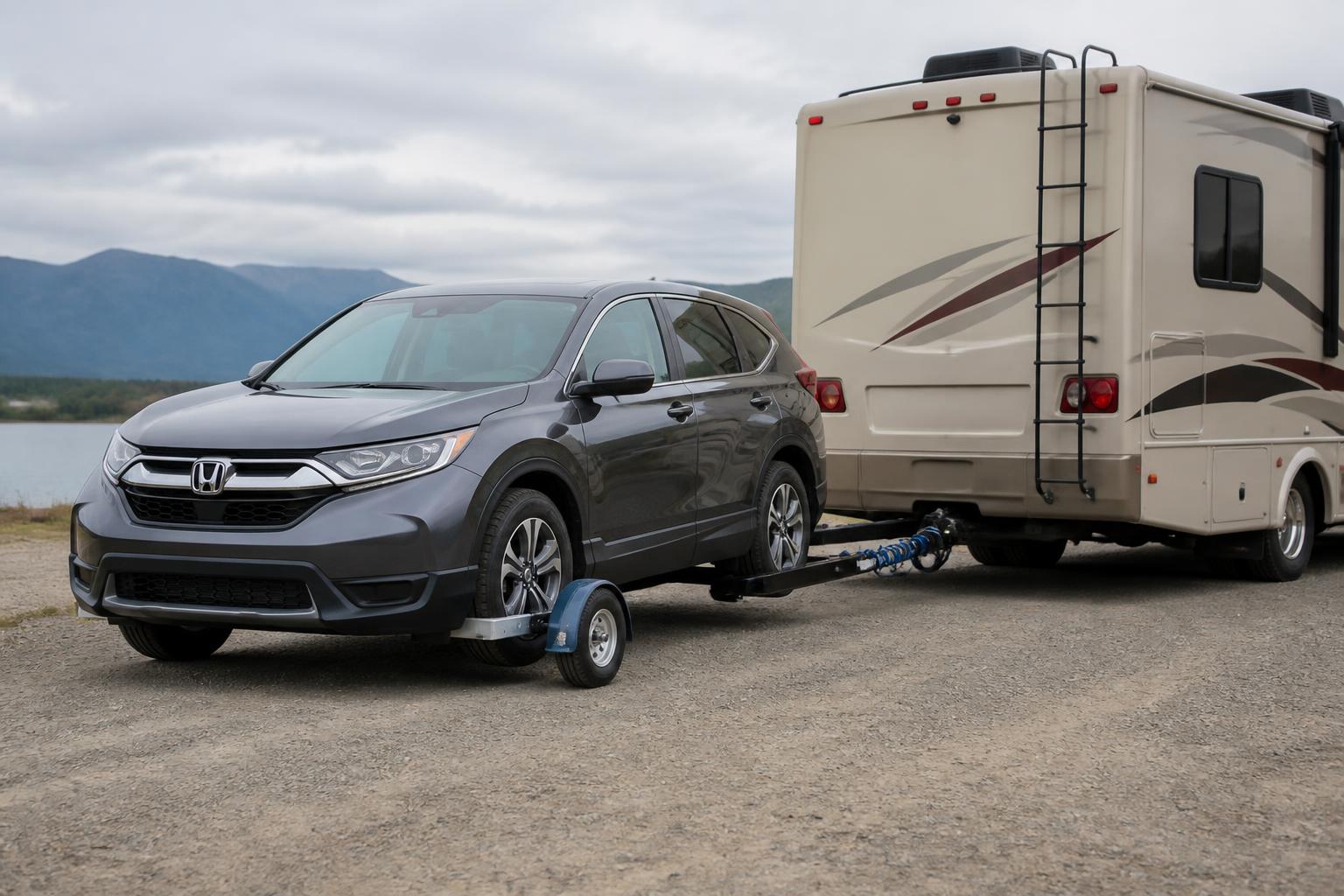
Preparing Your Honda CR-V for Flat Towing
I’ve learned that getting my Honda CR-V ready for flat towing is crucial for a smooth experience. It’s important to choose the right model and take essential preparation steps before hitting the road. With that in mind, let’s dive into the key points.
Choosing the Right Model
Choosing a model that’s compatible with flat towing makes all the difference for me. I’ve found that certain Honda CR-V models are specifically designed for this purpose. It’s been essential for me to check the owner’s manual to see which years work best for flat towing. I’ve also realized that having the right equipment, like a tow bar and safety cables, is key for a successful setup. Overall, I’m glad I took the time to pick the perfect model for my needs.
Essential Preparation Steps
Ensuring all necessary equipment is on hand makes the preparation process for flat towing my Honda CR-V much easier. I’ve always double-checked the tow bar and safety chains to avoid any mishaps. It’s also essential to disconnect the battery to prevent draining it during the trip. I make sure to put the transmission in neutral and the ignition in the right position. Finally, I always review the owner’s manual to confirm I’m following all recommended steps.
Tools and Equipment Needed for Flat Towing
When I think about flat towing, I know there are specific tools and equipment I need to gather. It’s crucial to have everything prepared to ensure a smooth towing experience. Now, let’s dive into the essential tools required, safety equipment overview, towing accessories checklist, and vehicle preparation gear.
Essential Tools Required
Gathering the essential tools required for flat towing is something I always prioritize before heading out. I make sure I have a tow bar that’s compatible with my Honda CR-V model. Safety chains are a must, so I double-check that I’ve got those packed. I also never forget to bring along a braking system to ensure everything’s secure on the road. Finally, I always include a hitch lock to keep everything safe when I’m parked.
Safety Equipment Overview
Safety equipment plays a vital role in my flat towing setup, as it helps prevent accidents and ensures peace of mind on the road. I always make sure to use safety chains to provide an extra layer of security. Having a tow bar with a breakaway system is essential for added safety. I also rely on proper lighting and signaling devices to keep my setup visible to other drivers. Lastly, I never skip using wheel chocks to prevent any unwanted movement when I’m parked.
Towing Accessories Checklist
I’ve got a towing accessories checklist that I’m always sure to review before hitting the road. I make sure to pack my tow bar, safety chains, and a wiring harness for the lights. I also include a braking system to ensure everything’s safe and compliant. Don’t forget the tow dolly or flatbed if needed, and a spare tire just in case. Finally, I always double-check that my hitch is properly secured and rated for the load.
Vehicle Preparation Gear
The vehicle preparation gear plays a vital role in making sure everything’s ready for a successful flat towing trip. I always check the tow bar and safety cables to ensure they’re secure and in good condition. It’s also important for me to verify that the vehicle is in the correct position for towing. I make sure the tires are properly inflated and the transmission is set to neutral. Lastly, I double-check that all lights and signals are functioning before hitting the road.
Step-by-Step Guide to Flat Towing
Flat towing my Honda CR-V requires a careful step-by-step approach to ensure everything’s set up correctly. First, I check the owner’s manual to confirm that my model is suitable for flat towing. Then, I gather all the necessary equipment, including a tow bar and safety cables. Next, I attach the tow bar to both the CR-V and the towing vehicle. I ensure that the CR-V’s transmission is in neutral to prevent damage. After that, I turn the ignition key to the “on” position without starting the engine. I also make sure the parking brake is disengaged and the wheels are unlocked. Before hitting the road, I double-check all connections to ensure everything’s secure. I keep an eye on the speed and avoid exceeding the recommended limits. As I drive, I periodically check the towing setup to ensure everything’s still in place. Finally, I enjoy the journey, knowing that I’ve taken the proper steps to flat tow my Honda CR-V safely.
Safety Tips for Flat Towing Your CR-V
When I’m flat towing my CR-V, I always make sure to prioritize safety. It’s crucial to prepare my vehicle properly and use the right equipment. I also keep an eye on the towing conditions to ensure a smooth journey.
Prepare Your CR-V Properly
Preparing my CR-V properly is essential to ensure everything goes smoothly during the towing process. I always check the owner’s manual for specific flat towing instructions. Before towing, I make sure to disconnect the battery and shift the transmission into neutral. I also double-check that all wheels are aligned and that the towing equipment is securely attached. Lastly, I perform a quick visual inspection to catch any potential issues before hitting the road.
Use Appropriate Equipment
Using the right equipment for flat towing my CR-V is essential for a safe and reliable experience. I always invest in a quality tow bar that’s compatible with my model. Additionally, I make sure to have safety chains and a brake system in place. I double-check the wiring connections to avoid any issues on the road. Having the right gear gives me peace of mind while towing.
Monitor Towing Conditions
I’ve got to stay alert to any changes in the weather or road conditions while towing. If it starts to rain, I’ll adjust my speed and increase my following distance. I can’t afford to be complacent, especially on unfamiliar roads. When I notice strong winds, I make sure to grip the steering wheel more firmly. Keeping an eye on the traffic around me is just as important to ensure a safe trip.
Common Mistakes to Avoid While Flat Towing
When I flat tow my CR-V, I’ve learned there are some common mistakes to steer clear of. It’s easy to overlook important details that can lead to problems down the road. By being aware of these pitfalls, I can ensure a smoother towing experience.
Ignoring Manufacturer Guidelines
Ignoring manufacturer guidelines can lead to serious issues while flat towing my CR-V. I’ve found that not following the recommended procedures can cause significant damage to the vehicle. Sometimes, I think I know better, but that often results in unforeseen complications. I’ve learned the hard way that skipping steps can void warranties and lead to costly repairs. Sticking to the guidelines keeps my CR-V safe and in good condition while towing.
Overlooking Safety Precautions
Overlooking safety precautions can lead to serious issues while flat towing my CR-V. I’ve realized that not securing the tow bar properly can create dangerous situations. I always double-check the connections to make sure everything’s tight. Forgetting to use safety chains is another mistake I can’t afford to make. Keeping my lights and signals functional is crucial for safe towing on the road.
Improper Setup Procedures
Improper setup procedures can lead to serious issues while flat towing my vehicle. I’ve had moments where I didn’t double-check the tow bar connections and it almost caused a disaster. Forgetting to disengage the transmission can also result in costly repairs that I’d rather avoid. I’ve learned to always verify that the car is in neutral before setting off. Taking the time to follow the correct setup procedures makes all the difference in my towing experience.
Post-Towing Maintenance for Your CR-V
After flat towing my CR-V, I always make sure to check on a few key things. It’s crucial for me to perform routine checks and stay on top of recommended maintenance practices. This way, I can ensure my vehicle stays in top shape and ready for the next adventure.
Routine Checks After Towing
I always make it a point to perform routine checks on my CR-V right after towing it. First, I inspect the tire pressure to make sure everything’s balanced. Then, I check the fluid levels, including oil and coolant, just to be safe. I also take a moment to look over the lights and signals to ensure they’re functioning properly. Finally, I give the hitch and tow bar a quick once-over to confirm everything’s secure.
Recommended Maintenance Practices
Recommended maintenance practices for my CR-V include regular oil changes and tire rotations to keep everything running smoothly. I also make it a point to check the brake fluid and coolant levels after towing. It’s important for me to inspect the battery connections and tire pressure before hitting the road again. I schedule routine inspections to catch any potential issues early. Staying on top of these practices helps me enjoy a worry-free driving experience.
Troubleshooting Flat Towing Issues
Troubleshooting flat towing issues can be frustrating when things don’t go as planned. I’ve found that the first step is to double-check the setup. Sometimes, I forget to engage the tow mode, which can lead to complications. If I notice the steering feels off, I make sure the key is in the accessory position. I’ve also had moments where I didn’t confirm the transmission was in neutral, and that’s caused problems.
When the lights aren’t working, I often check the wiring connections. Corroded pins can sometimes be the culprit, so I clean them if needed. I’ve learned to listen for any unusual noises during towing, which can indicate an underlying issue. If I encounter a warning light on the dashboard, I pull over immediately to assess the situation.
It helps to keep a checklist handy to avoid missing any crucial steps. Lastly, I always remind myself that patience is key when troubleshooting these issues.
Frequently Asked Questions
What are the legal requirements for flat towing a vehicle in different states?
I’ve found that the legal requirements for flat towing a vehicle can vary significantly from one state to another, so it’s important to check local laws. Some states may require additional equipment or specific signage, and I always make sure I’m compliant before hitting the road.
How does flat towing affect the warranty of a honda cr-v?
I’ve noticed that flat towing can potentially void the warranty on my Honda CR-V if it’s not done according to the manufacturer’s guidelines. It’s important to check the specific terms in my warranty to avoid any issues.
Can i flat tow a honda cr-v with a manual transmission?
I can flat tow a Honda CR-V with a manual transmission, but I need to ensure that I follow the proper procedures to avoid any damage. It’s always best to check the owner’s manual for specific guidelines related to towing.
Conclusion
In wrapping up, I’ve realized that understanding the specifics of flat towing my Honda CR-V is crucial for a smooth experience. By following the guidelines and ensuring all equipment is in place, I can avoid common pitfalls that could lead to trouble on the road. Regular inspections and maintenance not only keep my vehicle safe but also give me peace of mind during my travels. Staying aware of conditions and being prepared can make all the difference. Ultimately, taking the time to prepare properly makes my towing experience much more enjoyable.
If you’re interested in exploring the evolving landscape of the automotive market, I highly recommend checking out the article on understanding challenger brands. It offers valuable insights into how these innovative companies are reshaping consumer choices and influencing traditional brands. You can read more about it here.
Explore This Topic
- Flat Towing Capabilities Of The Honda Cr V A Guide
- Flat Towable Honda Cr V Model Years
- Recommended Oil Type For Honda Cr V Models

Greedy Wheels is the founder and lead editor at Wheels Greed. With over 15 years of hands-on automotive experience — from rebuilding engines in a home garage to managing fleet maintenance for a regional logistics company — he brings real-world mechanical knowledge to every guide.
His work has been featured in automotive forums, owner communities, and dealership training materials. When he’s not researching the latest car owner questions, you’ll find him at a local track day, wrenching on his project car, or testing the newest OBD2 diagnostic tools.
At Wheels Greed, every article is reviewed against manufacturer service manuals, NHTSA bulletins, and verified owner reports. No AI-generated fluff. No guesswork. Just practical answers from someone who has turned the wrench.