Thermostat, Water Pump, and Overheating: Diagnosis and Repair
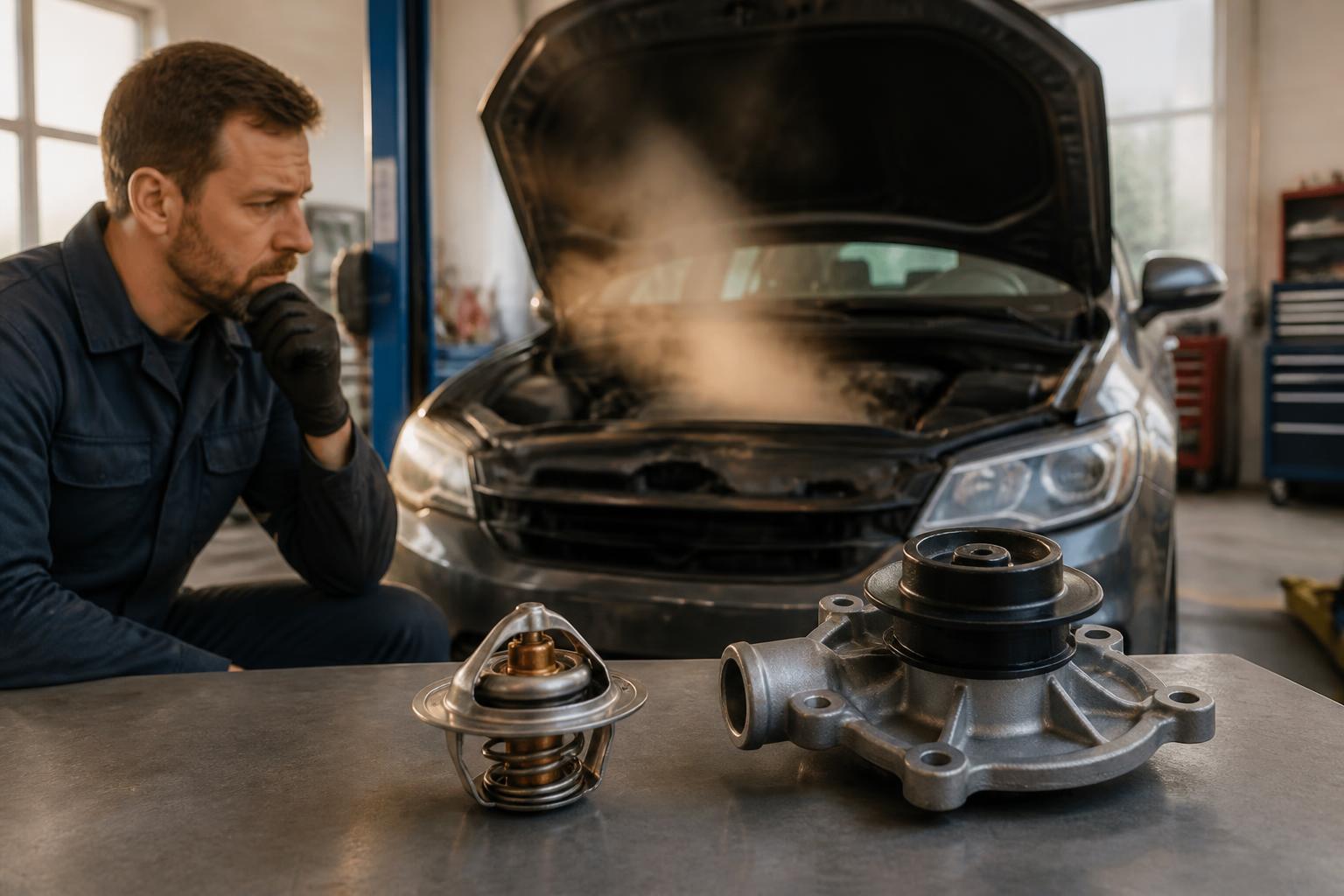
When the water pump begins to fail, your car typically gives clear warning signs before a total breakdown. The most common early symptoms are a coolant leak (a puddle or drips under the front-center of the car), a high-pitched whining or grinding noise from the engine bay that changes with engine speed, and erratic temperature gauge behavior—especially after highway driving or in stop-and-go traffic. The pump’s internal bearing or seal wears out over time, and once it lets go, coolant stops circulating. That leads directly to overheating. Spotting these signs early means you can replace the pump before the engine overheats, saving you from a potential $2,000+ head gasket repair.
How to Tell If It’s Your Water Pump or Thermostat
These two parts fail in overlapping ways, but a few telltale differences help you narrow down which one is causing the problem before you buy parts. This distinction keeps you from buying a part you don’t need and wasting half a weekend on the wrong repair.
Water Pump Failure Signs
A failing water pump usually announces itself in three distinct ways.
- Coolant leak – Look for a puddle under the front of the car, often near the passenger side of the engine, with a green, orange, or pink tint. The pump has a weep hole that drips coolant when the internal seal is failing. On cars with timing-belt-driven pumps (many Hondas, Toyotas, and Subarus), the leak often appears near the timing cover area.
- Noise – A whining, grinding, or chirping sound that changes with engine RPM. On a serpentine-belt-driven pump, the noise is often a steady squeak that speeds up as you rev the engine. On timing-belt-driven pumps, it tends to be a rhythmic chirp.
- Overheating after highway driving – The pump impeller may be loose or broken, so at higher RPM it stops moving coolant effectively. You may notice the temperature gauge spikes shortly after you exit the highway and hit city traffic.
What this means for your next decision: If you see a coolant puddle and hear a noise, the water pump is almost certainly failing. You’ll need to replace it, and on many cars it makes sense to also replace the thermostat and belts at the same time since the access labor is already paid for.
Thermostat Failure Signs
A bad thermostat shows different patterns because it controls flow, not pressure.
- Engine runs too cold – If the temperature gauge stays low even after 10–15 minutes of driving, the thermostat is stuck open. You may also notice the heater blows lukewarm air instead of hot air.
- Overheating at idle, then cooling down on the highway – A stuck-closed thermostat blocks flow when the engine is under low load (idle), but the extra airflow at speed can temporarily keep temperatures down. This pattern specifically points to the thermostat, not the pump.
- No coolant leak – A bad thermostat rarely leaks externally; the failure is internal. If you have a puddle on the ground, the thermostat is unlikely to be the primary cause.
What this means for your next decision: If there is no leak and the engine runs cold or overheats only at idle, start with the thermostat. A replacement part costs about $15–$40. Paying a shop to replace just the thermostat runs roughly $150–$250, so it’s worth confirming the diagnosis first.
Quick Confirmation Checks Without Removing Parts
You can verify which part is failing without pulling anything apart. These checks take about 10 minutes and require no tools beyond your hands and a flashlight.
1. Feel the upper radiator hose after the engine reaches operating temperature (10–15 minutes of driving). It should be hot—about 190–210°F. If it’s cold or barely warm while the engine gauge shows normal temp, the thermostat is stuck closed. This is your single best non-removal test for the thermostat.
2. Check for coolant from the water pump weep hole. Use a flashlight to look at the pump housing (usually a metal or plastic unit mounted on the front of the engine, driven by a belt). A small hole about the size of a nail head will show dried or wet coolant residue if the seal is failing. Even a few droplets after the engine has cooled is a sure sign the pump needs replacing.
3. Listen for water pump bearing noise. Press a long screwdriver or a mechanic’s stethoscope to the pump housing while the engine runs. A grinding, growling, or chirping sound that speeds up with RPM points to a failing bearing. Compare it against the sound on the engine block or alternator—if the pump sounds different, that’s your target.
Trade-off: These checks work well on most cars, but on some transverse-mounted engines (like those in many front-wheel-drive cars), the water pump and timing belt are tucked behind a plastic cover. You may not be able to see the weep hole without removing the cover. In that case, rely on the noise test and the leak pattern (coolant dripping from near the timing cover) as your main indicators.
Which Part Needs Replacing?
Use this five-item checklist to decide where to start. Mark each item as Pass or Fail.
1. Coolant puddle under car? (Pass = water pump likely; Fail = thermostat more likely)
2. Whining/grinding noise from engine that changes with RPM? (Pass = water pump likely)
3. Engine runs cold after 10 minutes of driving? (Pass = thermostat stuck open)
4. Overheats only at idle but cools at highway speed? (Pass = thermostat stuck closed)
5. Coolant leak from front-center near timing cover? (Pass = water pump)
If you have 3 or more Pass items pointing to one part, start with that part. If results are mixed, do the upper radiator hose test (Step 1 above) to confirm.
What to Do When the Temperature Gauge Climbs
Step 1: Stop Immediately
Pull over as soon as it’s safe. Driving even a few minutes past the red zone can warp the cylinder head or blow the head gasket. Turn off the engine. Do not open the hood immediately—steam can cause serious burns, and suddenly exposing hot metal to cold air can crack the engine block.
Step 2: Let the Engine Cool
Wait at least 30 minutes before opening the hood. A hot radiator can release steam at 250°F+. If you’re in a hurry and need to move the car a short distance, turn the heater to maximum (fan on high, temperature hot) and run the engine at idle. This pulls heat from the engine into the cabin. It is uncomfortable but can cool the engine significantly in 5–10 minutes.
Limitation: The heater trick puts extra stress on the cooling system, especially if the water pump is already failing. It works for moving the car 100 yards off a busy road or into a driveway, but it is not a fix. Using it for more than 10 minutes risks damaging the heater core or making a small pump leak much worse.
Step 3: Inspect Obvious Causes
Once the engine is safe to touch, check:
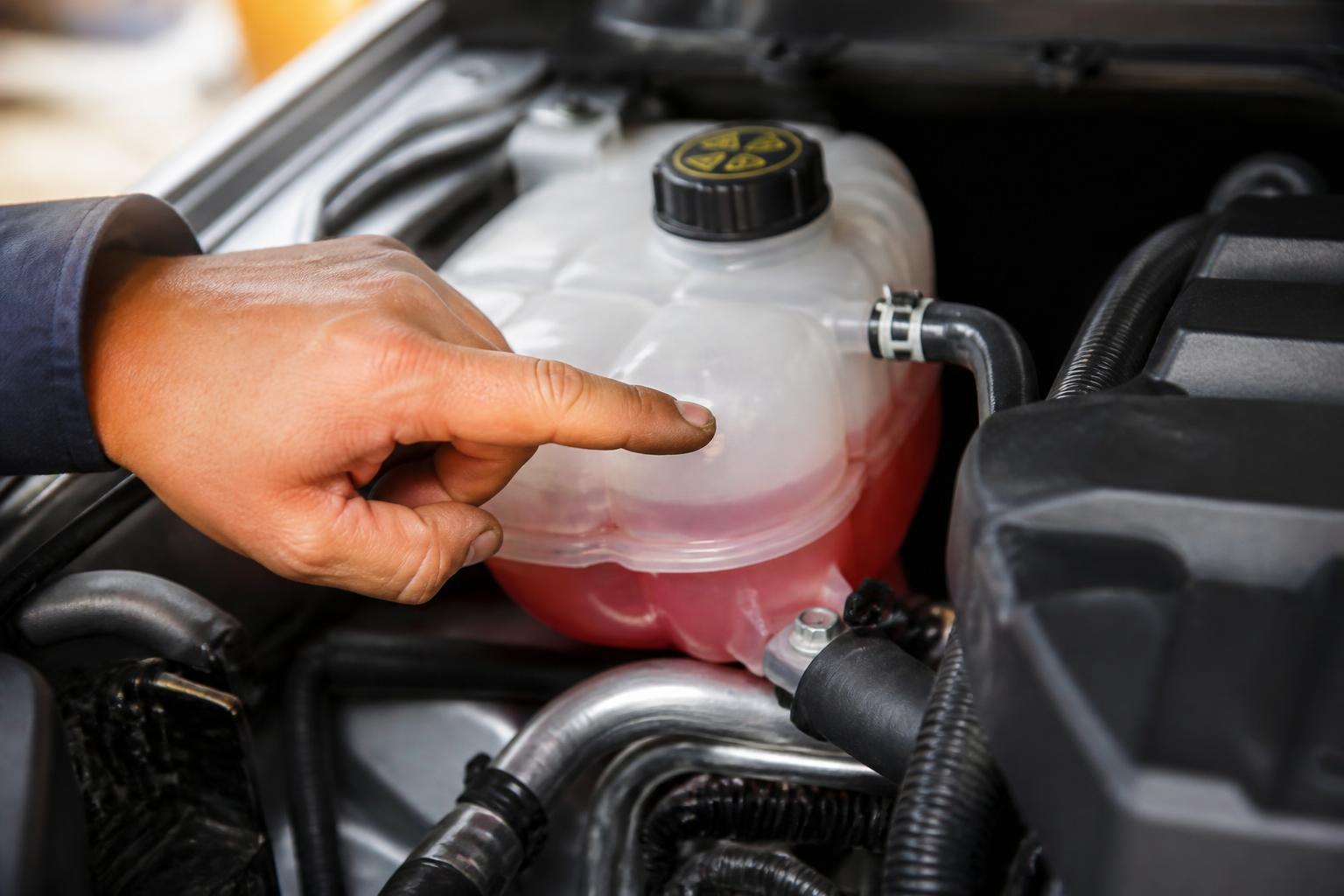
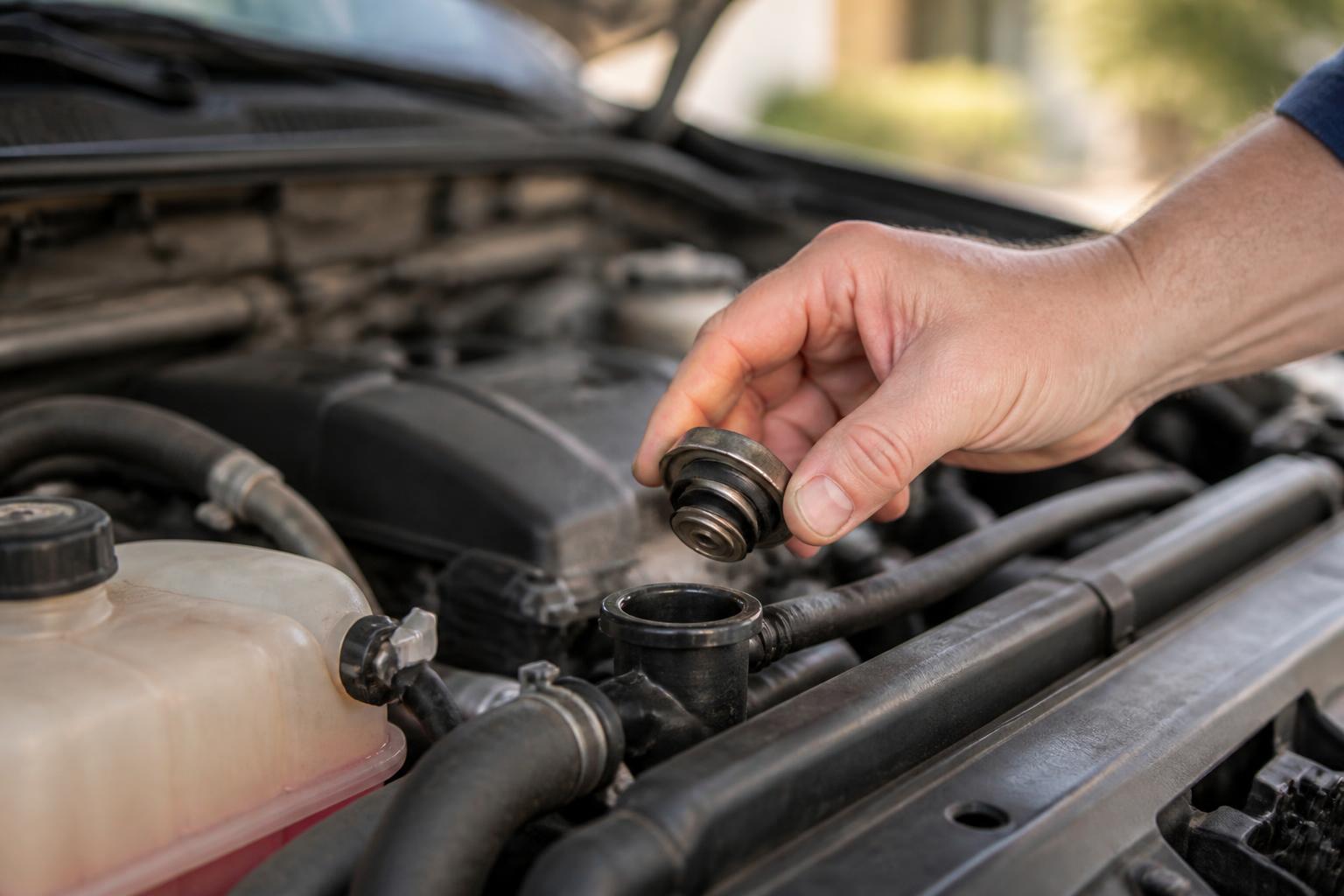
- Coolant level – Look at the overflow tank (translucent plastic with low/high marks). If it’s empty, you’ve lost coolant. Never remove the radiator cap while the engine is hot—the system is under pressure and can spray scalding coolant.
- Hoses – Squeeze each hose. A collapsed or very soft hose can block flow.
Explore This Topic
- Back to Thermostat Water Pump
- Back to Automotive Repair
Related guides in this cluster:
- Starter Motor Failure: Symptoms, Diagnosis, and When to Replace
- Engine Misfire: Causes, Spark Plugs, and Ignition Coil Diagnosis
- Fuel Pump, Fuel Filter, and Fuel Injector: Diagnosis and Replacement

Greedy Wheels is the founder and lead editor at Wheels Greed. With over 15 years of hands-on automotive experience — from rebuilding engines in a home garage to managing fleet maintenance for a regional logistics company — he brings real-world mechanical knowledge to every guide.
His work has been featured in automotive forums, owner communities, and dealership training materials. When he’s not researching the latest car owner questions, you’ll find him at a local track day, wrenching on his project car, or testing the newest OBD2 diagnostic tools.
At Wheels Greed, every article is reviewed against manufacturer service manuals, NHTSA bulletins, and verified owner reports. No AI-generated fluff. No guesswork. Just practical answers from someone who has turned the wrench.