Exhaust Smoke Color: White, Blue, Black — Diagnosis Guide
A thin wisp of white smoke that vanishes after a few minutes of driving, especially in cold or humid weather, is normal condensation. Thick white smoke that lingers, smells sweet, or gets worse as you drive means coolant is burning – usually a blown head gasket or a cracked engine block. Blue smoke signals oil burning, while black smoke points to an overly rich fuel mixture. This guide tells you exactly what each color means, how to check for the cause, and when you can fix it yourself versus when you need a mechanic.
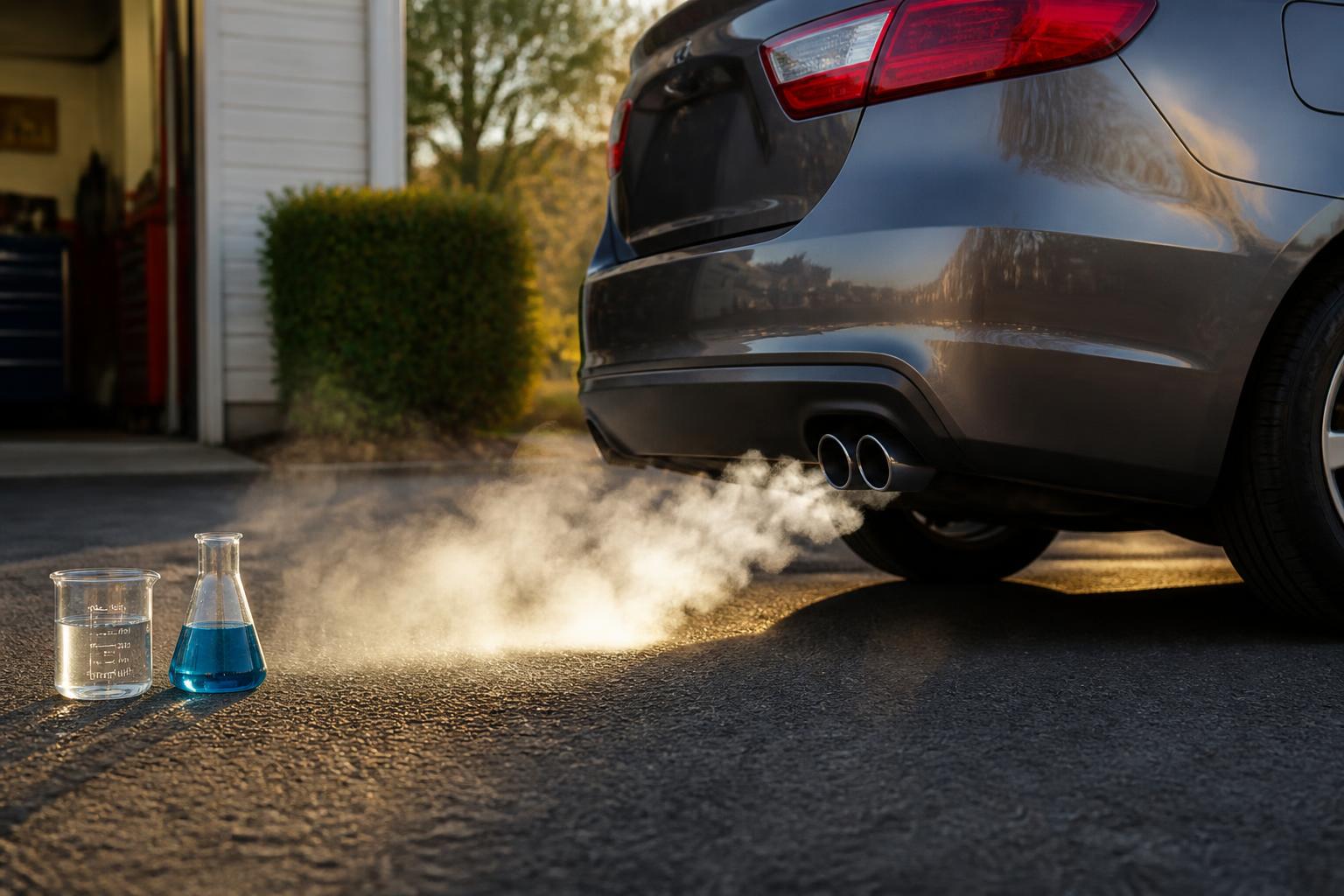
White Smoke: Normal Condensation vs. Coolant Burning
Water vapor is a byproduct of combustion. When the engine is cold and the exhaust system is cool, that vapor condenses into visible white smoke. This is normal if:
- It appears only at startup and clears within 1–2 miles of driving.
- The smoke is thin, wispy, and doesn’t have a strong odor.
- Outside temperature is cold (below 50°F) or humidity is high.
Abnormal white smoke is thick, persistent, and often smells sweet (coolant). It may pour out continuously even after the engine is fully warm. In severe cases you may also notice the coolant level dropping, engine overheating, or bubbles in the radiator.
Common mistake: On a cold, humid morning, a large cloud of white smoke that disappears quickly is normal – do not top off coolant or start replacing parts. If you add coolant unnecessarily, you can dilute the mixture and cause overheating. Always verify with a cooling system pressure test and block tester before assuming a head gasket failure.
Specific failure example: On a 2010–2015 Subaru Outback, a blown head gasket typically produces white smoke from the right side exhaust pipe and a milky oil dipstick. On a 2002–2006 Ford Explorer 4.0L, a cracked cylinder head can cause the same symptom without any external coolant leak.
How to Confirm Before You Pay for a Repair
1. Check the oil dipstick – look for a milky or frothy appearance (coolant in oil).
2. Check coolant color and level – if it’s low, top up and watch if it drops again without external leaks.
3. Pressure test the cooling system – a cooling system pressure tester (rent at most auto parts stores) will show if the system holds pressure and can reveal external leaks or internal seepage.
4. Look for bubbles in the radiator – with the engine warm, remove the radiator cap (careful, hot!) and rev the engine. Bubbles or a gurgling sound mean combustion gas is entering the cooling system.
5. Use a combustion leak test – a block tester fluid (blue liquid) changes color to yellow when exhaust gas is present in coolant.
Stop/escalate threshold: If you see any of the following, stop driving and have the vehicle towed to a repair shop – engine temperature rises above normal on the gauge, coolant drops more than 1 quart in a week, or you see thick sweet-smelling white smoke while driving. Continuing at highway speeds can warp the cylinder head, turning a $1,500 head gasket job into a $4,000 engine replacement.
Blue Smoke – Oil Burning: How to Fix It
Blue or bluish-white exhaust smoke means engine oil is burning in the combustion chamber or exhaust stream. The color can range from light blue to almost grey. The cause depends on when the smoke appears.
| When smoke appears | Likely cause | Typical fix |
|---|---|---|
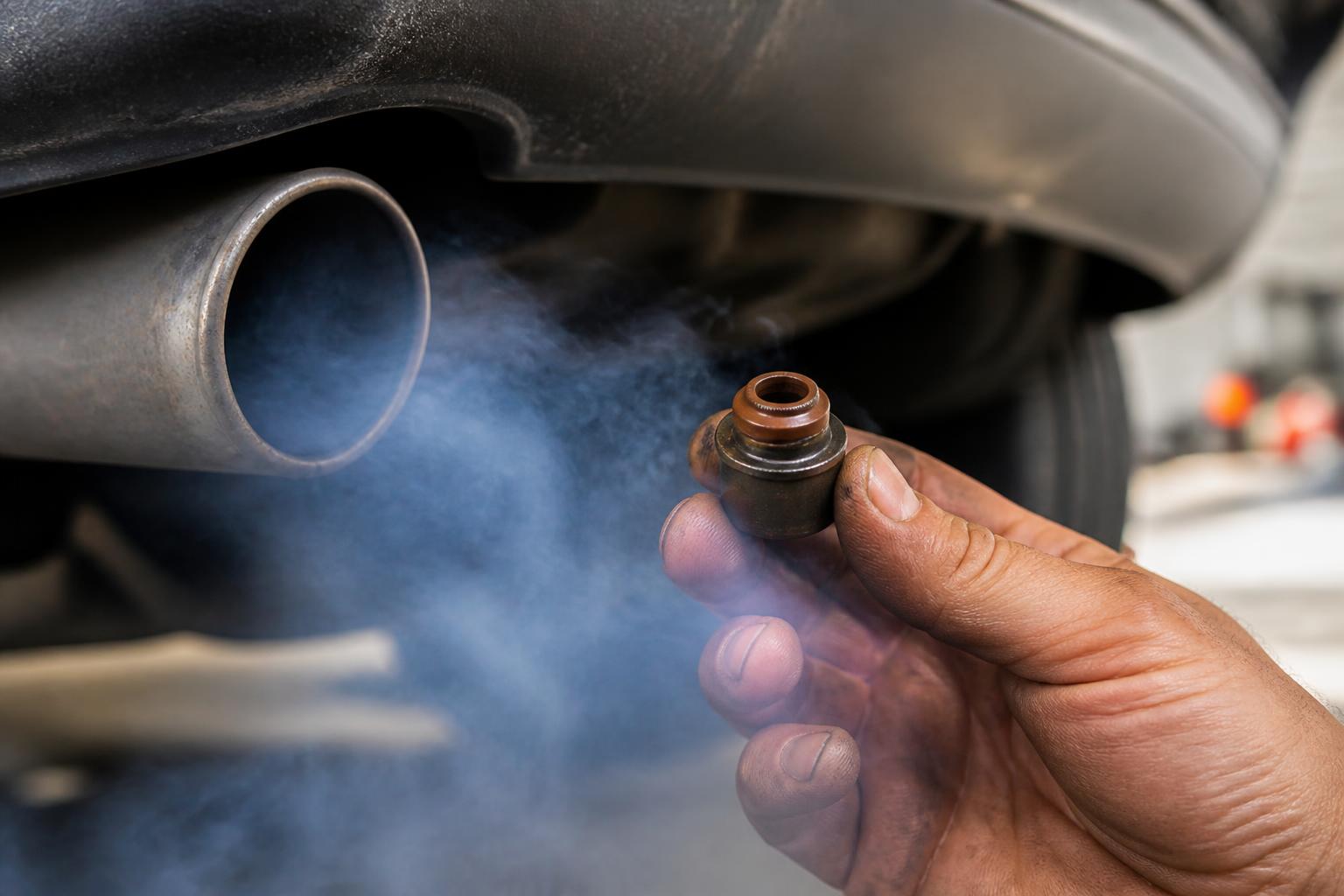
| On startup, then clears after a few seconds | Worn valve stem seals | Replace valve seals (valve job often needed) – DIY skill level: advanced |
| On startup and continues while idling or under load | Worn piston rings | Engine rebuild or replacement – not a DIY job for most |
| Only on deceleration | Worn valve guides | Repair heads or replace engine |
| Steady blue smoke during acceleration | Piston rings, or PCV system failure | First check PCV valve (simple $10 part) |
Step-by-Step Fix Path for Blue Smoke
First check the $10 part: PCV valve. A stuck-closed PCV valve can force oil vapor into the intake. On a 2008–2012 Honda Civic, a failing PCV causes blue smoke at idle – replace it and the hose if cracked. On older Subaru and Toyota engines, a clogged PCV system is a known cause.
How to verify the PCV fix worked: After replacing the PCV valve, start the engine and let it idle for 5 minutes. If no blue smoke appears, take it for a 10-minute mixed-driving test. If smoke is gone and doesn’t return on deceleration, the PCV was the culprit. If smoke persists, move to the next step.
If the PCV is fine, move to valve stem seals. A common DIY approach is to use a thicker oil (e.g., switch from 5W-30 to 10W-40) to reduce smoke temporarily, but that’s a band-aid. Replacing valve seals requires removing the cylinder head on most engines – plan on $800–$1,200 at a shop.
If piston rings are the culprit (confirmed by a compression test or leak-down test), the smoke will be present under acceleration and may worsen over time. A heavy-duty fuel additive like Berryman B-12 Chemtool can help clean carbon from rings, but it won’t fix a worn ring. Full piston ring replacement is a rebuild – typically $2,500–$4,500.
Can you fix blue smoke yourself? If it’s PCV-related, yes – that’s a 15-minute job. Valve seals are difficult without specialized tools. Rings usually require a shop. A product like Bar’s Leaks Engine Oil Smoke Stop (p/n OS-1) can reduce blue smoke from minor seal wear temporarily, but it is not a permanent fix.
Black Smoke – Rich Air-Fuel Mixture
Black smoke is unburned fuel. It usually indicates that the engine is running too rich (too much fuel, not enough air). Common causes:
- Faulty oxygen sensor – most frequent on vehicles over 100,000 miles. On a 2007–2010 Ford F-150 with the 5.4L engine, a failing O2 sensor often triggers code P0174 and produces black smoke. Replacing bank 2 sensor 1 typically solves it.
- Malfunctioning MAF sensor – common on Ford and GM trucks (e.g., 2004–2008 Ford F-150 5.4L).
- Leaking fuel injector – drips fuel into a cylinder.
- Stuck-open fuel pressure regulator – raises fuel pressure.
- Clogged air filter – restricts airflow.
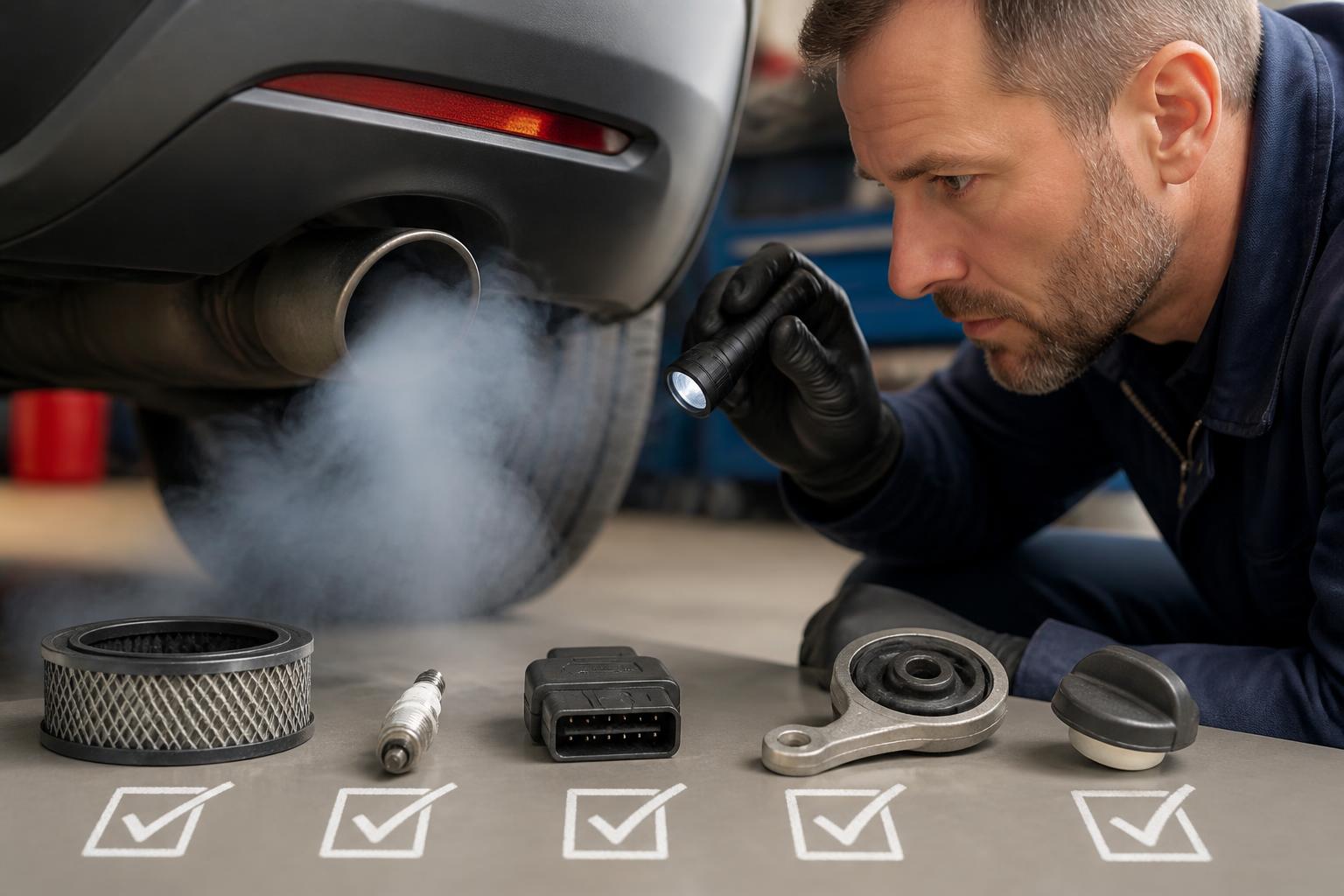
What to check first: Scan the OBD2 system for trouble codes. P0172 (system too rich) or P0175 often point to MAF or O2 sensors. Clean the MAF sensor with a dedicated cleaner ($12) – spray 10–15 strokes on the sensor wire, let it dry completely, then reinstall. If that doesn’t clear the code, replace the oxygen sensor(s) – a DIY task with a socket and simple tools. Expect to pay $50–$150 per sensor.
Can you drive with black smoke? Yes, but you’re wasting fuel and damaging the catalytic converter. A rich mixture can overheat the converter and clog it, leading to a $1,000+ replacement. Fix it within a few hundred miles.
Exhaust Smoke Decision Aid: 5 Checks Before You Drive
Use this quick checklist to decide if you can drive to work or need to call a tow:
- [ ] Smoke color: Is it white (coolant), blue (oil), or black (fuel)? Note which.
- [ ] Smoke persistence: Does it stop after the engine warms up (normal) or continue? If it continues, proceed.
- [ ] Fluid loss: Check oil and coolant levels. If coolant is low, do not drive unless adding top-up and heading to a shop.
- [ ] Engine temperature: Is the gauge in the normal range? Overheating + white smoke = stop engine immediately.
- [ ] Performance issues: Does the engine misfire, lose power, or run rough? If yes, do not drive – tow instead.
Stop driving and call a tow if: the engine overheats, coolant drops more than 1 quart per week, or you see thick sweet-smelling white smoke while driving. These signs mean internal engine damage is active and continued driving will make it much worse.
FAQ
How much white smoke from exhaust is normal?
A thin wisp that clears within a minute of driving in cold or humid weather is normal condensation. Any thick, continuous white smoke is not normal.
Does white smoke always mean a blown head gasket?
Not always. It can also mean a cracked cylinder head, leaking intake manifold gasket, or porous engine block. But a blown head gasket is the most common cause once condensation is ruled out.
Can I still drive with white smoke from exhaust?
Only if the smoke is thin and stops quickly. If it’s thick or the engine overheats, stop driving immediately to prevent catastrophic engine damage.
How to fix blue smoke from exhaust without a rebuild?
First check the PCV valve (cheap, easy). If that’s not the issue, try a thicker oil or an oil additive designed to reduce smoke. For worn valve seals, a stop-leak product may help temporarily, but the permanent fix requires seal replacement.
What is the most common cause of blue smoke from the exhaust?
Worn valve stem seals or piston rings. On many high-mileage engines, a simple PCV valve replacement resolves the issue first.
Will a blown head gasket always produce white smoke?
No. Some blown head gaskets cause coolant loss without visible smoke, especially if the leak goes to the outside of the engine or into the oil pan. Always check the oil for milky residue and monitor coolant levels.
How much does it cost to fix white smoke from exhaust?
If it’s a blown head gasket, expect $1,200–$2,500 on a typical four-cylinder engine, more on V6 or V8 engines. A cracked head or block can cost $3,000 or more. Temporary stop-leak products are cheaper but not a permanent fix.
Can you fix blue smoke from exhaust yourself?
Yes, if the cause is a PCV valve – that’s a 15-minute task. Valve seals and piston rings require advanced mechanical skills and specialized tools, so most owners leave those to a professional shop.
Explore This Topic
- Back to Exhaust Smoke Color
- Back to Automotive Repair
Related guides in this cluster:
- Steering Wheel Vibration and Wheel Alignment: Causes and Costs
- Head Gasket Failure, Oil Leaks, and Engine Seal Diagnosis
- Radiator and Coolant Leaks: Diagnosis, Stop-Leak, and Repair Costs

Greedy Wheels is the founder and lead editor at Wheels Greed. With over 15 years of hands-on automotive experience — from rebuilding engines in a home garage to managing fleet maintenance for a regional logistics company — he brings real-world mechanical knowledge to every guide.
His work has been featured in automotive forums, owner communities, and dealership training materials. When he’s not researching the latest car owner questions, you’ll find him at a local track day, wrenching on his project car, or testing the newest OBD2 diagnostic tools.
At Wheels Greed, every article is reviewed against manufacturer service manuals, NHTSA bulletins, and verified owner reports. No AI-generated fluff. No guesswork. Just practical answers from someone who has turned the wrench.