Transmission Slipping and Shifting Problems: Diagnosis Guide
The quickest way to spot transmission slipping is to watch the tachometer during acceleration: if the RPM jumps 500–1,000 rpm while the car barely speeds up, that’s a slip. Before you assume a rebuild is needed, run through these checks. They take about 15 minutes and can rule out simple causes.
How a Slipping Transmission Feels and What to Look For
Most drivers notice these symptoms first:
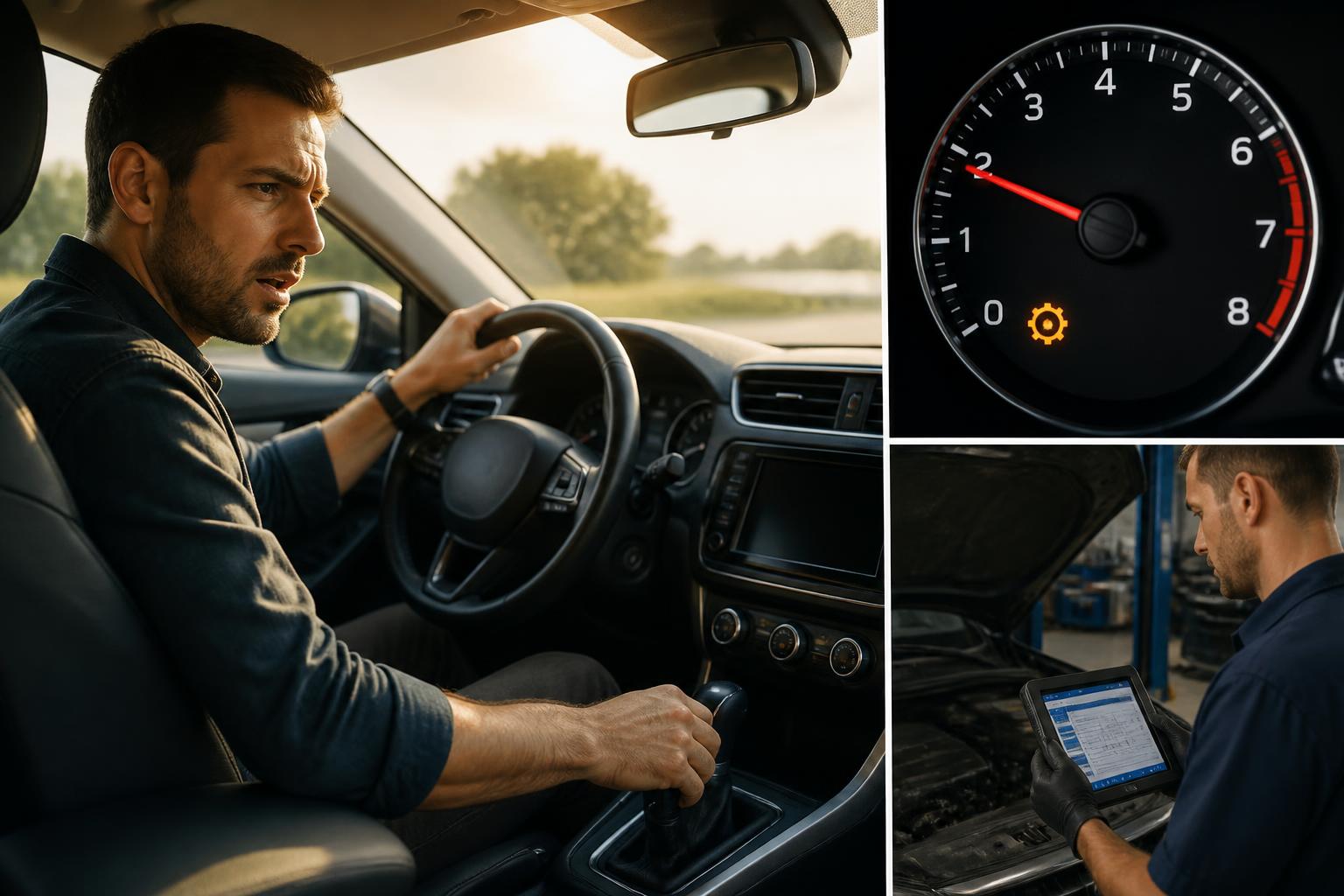
- RPM flare – You press the gas, the tach rises, but the car doesn’t accelerate proportionally.
- Delayed engagement – A two- to three-second pause after shifting into Drive or Reverse before the car moves.
- Harsh or vague shifts – The transmission bangs into gear, or you feel a “floating” sensation between shifts.
- Shudder during acceleration – A rhythmic vibration at highway speed, often from a failing torque converter.
- Burning smell – Overheated transmission fluid gives off an acrid odor that signals internal wear.
Three Early Checks Before You Test Drive
Start with these simple inspections. You can do all three without leaving your driveway.
Fluid Level and Condition
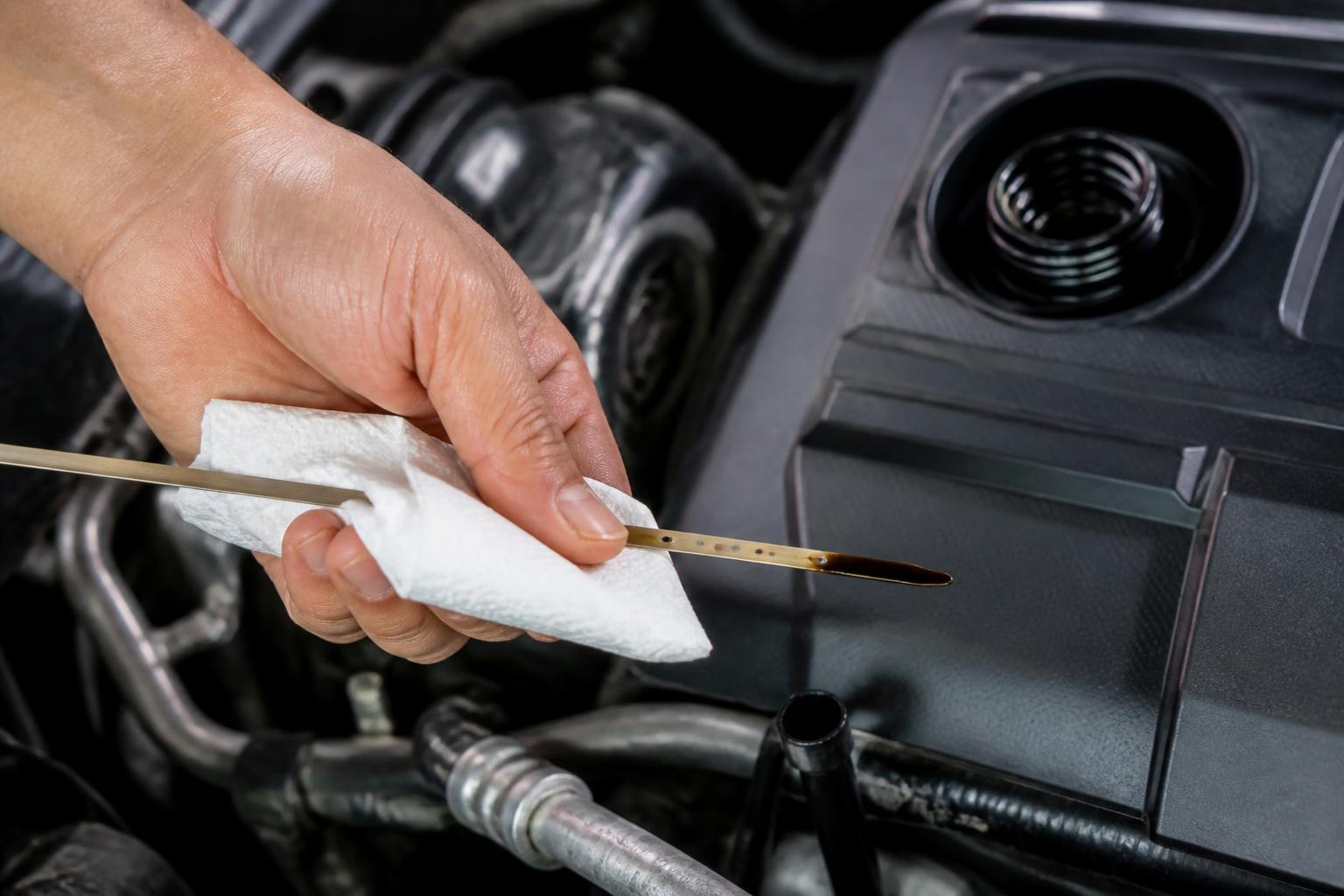
Park on level ground, warm the engine to operating temp, and shift through all gears (P→R→N→D→L) with your foot on the brake. Leave it in Park or Neutral (check your owner’s manual) and pull the dipstick.
| Check | What to look for |
|---|---|
| Level | Fluid should be between the “Hot” marks – low fluid is the #1 cause of slipping. |
| Color | Healthy fluid is red or pink. Dark brown or black means it’s burnt. |
| Smell | A burnt odor indicates overheated clutch material. |
| Debris | Metal flakes or gritty particles mean mechanical failure inside. |
Check for Leaks
Look under the car for red puddles or wet spots around the transmission pan, cooler lines, and axle seals. Even a slow leak can drop fluid below the safe level over a few weeks.
Scan for Trouble Codes
Use an OBD2 scanner (many auto parts stores do this for free). Codes like P0700, P0730 (incorrect gear ratio), or P0740 (torque converter clutch circuit) point directly to transmission problems. A misfire code (P0300–P0304) can mimic a slip – fix that first before assuming the transmission is bad.
Decision Aid: Quick Check to Decide Your Next Step
Use this checklist to determine whether you can safely continue or need to plan for a repair:
- Transmission fluid is at the correct hot level? → Yes / No
- Fluid is still red/pink and smells clean? → Yes / No
- No visible leaks underneath? → Yes / No
- Check engine light is off (and no transmission codes)? → Yes / No
- Car shifts without unusual delay or RPM flare? → Yes / No
- No shudder or vibration during steady highway cruising? → Yes / No
If you answered “No” to any of the first four, address that issue first. If “No” to the last two, you likely have internal wear. Drive only as needed until you confirm the cause.
How to Test for a Slip on the Road
Only do this if the fluid is adequate and the car is safe to drive. If you confirm slipping during the test, stop driving and have it towed.
1. Warm up the transmission by driving 10–15 minutes normally.
2. Find a straight, level road with little traffic.
3. Accelerate gently from a stop in Drive. Watch the tach and speedometer:
- Normal: RPM climbs smoothly as speed increases (shifts are subtle).
- Slipping: RPM jumps 500+ rpm for a few seconds before speed catches up, or RPM keeps climbing while speed stays flat.
4. Try a moderate hill. The car should hold speed or accelerate without RPM flare. Spiking RPM on a hill is clear internal slip.
5. Test Reverse: from a stop, shift into Reverse. A delay longer than two seconds before moving indicates weak reverse clutches.
If you see flare or delay in any of these steps, the transmission has internal wear. Continuing to drive will damage more parts and increase repair cost.
What Actually Causes Transmission Slipping
The most frequent reason is low fluid level from a leak or infrequent service. Once fluid is full and clean, the common culprits are:
- Worn clutch packs – Friction plates wear down, especially after 100,000 miles. On many Honda and Toyota automatics from the 2000s, failing shift solenoids cause intermittent slipping that mimics clutch wear.
- Torque converter failure – Causes shudder at highway speeds and poor lockup.
- Valve body issues – Sticking valves or clogged passages starve clutches of hydraulic pressure.
- Burnt fluid – Overheated fluid loses its friction modifiers, making slip worse.
- Solenoid or sensor failure – Faulty shift solenoids (e.g., on Ford 6R80 or GM 6L80) can trigger slip-like symptoms and often set a code.
A key decision point: if the fluid is dark and burnt, slipping is almost certainly internal wear – plan for a rebuild. If the fluid is clean but low, a top-off and leak repair may solve it.
Can Transmission Slipping Go Away on Its Own?
Almost never permanently. Adding fluid may restore normal operation for a while if low fluid was the cause, but the underlying leak will keep returning. Thermal expansion of warm fluid can also temporarily mask a low condition. Slipping from worn clutches or a bad torque converter will steadily worsen. Don’t expect it to heal.
What Else Can Be Mistaken for a Transmission Slip
Several other problems feel identical to transmission slipping:
- Engine misfire – A bad plug, coil, or injector causes hesitation and RPM fluctuation. Scan for a misfire code.
- Torque converter shudder – Usually felt as a vibration at cruising speed, not a loss of acceleration.
- Faulty throttle position sensor (TPS) – Can confuse the transmission computer, causing delayed or harsh shifts.
- Clogged fuel filter – Starves the engine for fuel, causing temporary power loss that feels like a slip.
- Worn differential or driveshaft U-joints – Grinding or clunking under load is often misattributed to the transmission.
Good rule: if your check engine light is flashing or you have a pending misfire code, fix that first. It might save you an unnecessary transmission repair.
Fixing It – DIY or Shop?
What You Can Do Yourself
- Fluid and filter change – If fluid is low but still red/pink, drain, replace filter, and refill with the correct spec. Cost: $50–$100 in parts.
- Solenoid replacement – On many FWD transmissions (Honda, Nissan, GM), shift solenoids are accessible externally. If you have a code like P0740 or P0750, replacing the solenoid pack ($150–$300) can cure intermittent slip.
- Leak repair – Replacing a pan gasket, axle seal, or cooler line ($20–$50) solves the fluid loss causing slip.
When to Call a Shop
- Fluid is dark, burnt, or smells like a hot clutch.
- Vehicle has 120,000+ miles with no previous transmission service.
- You find metallic debris in the pan during a fluid change.
- Transmission shows hard, erratic shifts along with slip.
- Diagnostic code points to internal mechanical failure (P0730, P0731, etc.).
Typical Repair Costs (US average)
| Repair option | Typical cost |
|---|---|
| Fluid flush + filter | $150–$250 |
| Shift solenoid replacement | $200–$400 |
| Valve body rebuild | $600–$1,200 |
| Full transmission rebuild | $1,500–$4,000 |
| Remanufactured transmission | $2,500–$6,000 |
How Long Can You Drive After Slipping Starts?
Not long. On most cars, gentle driving buys you 500–1,000 miles before a major failure (snapped band or burnt clutch pack). Aggressive acceleration or towing can cut that to under 50 miles. Once the transmission won’t engage a gear, you’re looking at a tow and more damage than a rebuild would have cost earlier.
Bottom line: if you confirm slipping during a test drive, stop driving. Have it towed to a transmission specialist. Continuing to drive doubles or triples the repair bill.
FAQ
Will low transmission fluid cause a car to shudder?
Yes. Low fluid prevents the torque converter from building proper hydraulic pressure, which can cause a shudder or vibration during acceleration.
How long will a transmission last after it starts slipping?
Typically 500–1,000 miles if driven gently, but much less under hard use. Immediate diagnosis is the cheapest route.
Is a slipping transmission worth fixing?
It depends on the car’s value. For a vehicle worth $5,000 or more, a rebuild often makes sense. For a 15-year-old car with high miles and a market value under $3,000, replacing the car is usually more economical than a full rebuild.
Can a slipping transmission be fixed without replacing the transmission?
Yes, if the cause is low fluid, a leaking seal, or a faulty shift solenoid. Those repairs are minor. Internal clutch wear or torque converter failure typically requires a rebuild or replacement.
What is the most common cause of transmission slipping?
Low fluid level from a leak or neglected service is the number one cause. Checking and topping off the fluid should always be your first step.
How do I tell if my transmission is slipping vs. an engine problem?
Watch the tachometer during acceleration. If RPM rises but speed doesn’t follow, it’s a transmission slip. If RPM stays flat or stumbles with the speed, suspect an engine misfire or fuel issue.
Explore This Topic
- Back to Transmission Slipping Shifting
- Back to Automotive Repair
Related guides in this cluster:
- Transmission Fluid: When to Change, How to Check, and DIY Guide
- Head Gasket Failure, Oil Leaks, and Engine Seal Diagnosis
- Thermostat, Water Pump, and Overheating: Diagnosis and Repair

Greedy Wheels is the founder and lead editor at Wheels Greed. With over 15 years of hands-on automotive experience — from rebuilding engines in a home garage to managing fleet maintenance for a regional logistics company — he brings real-world mechanical knowledge to every guide.
His work has been featured in automotive forums, owner communities, and dealership training materials. When he’s not researching the latest car owner questions, you’ll find him at a local track day, wrenching on his project car, or testing the newest OBD2 diagnostic tools.
At Wheels Greed, every article is reviewed against manufacturer service manuals, NHTSA bulletins, and verified owner reports. No AI-generated fluff. No guesswork. Just practical answers from someone who has turned the wrench.