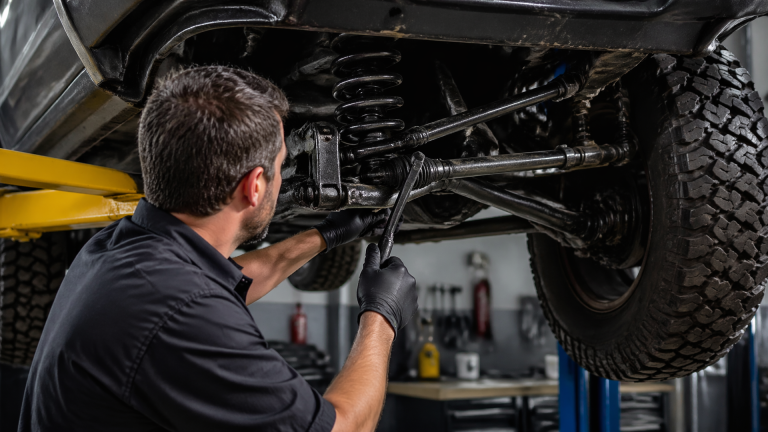
Transmission Fluid: When to Change, How to Check, and DIY Guide
Low transmission fluid feels like a delayed catch when you accelerate—the engine revs, the car hesitates, then it grabs with a thump. You might also notice slipping on hills, a whining sound that changes with RPM, or a faint burnt smell after a long drive. If you recognize these signs early, checking and topping off the fluid is a straightforward DIY job that can save you from an expensive rebuild. Below you’ll find exactly what to feel for, how to check the level on both dipstick and sealed transmissions, when to add versus change, and the step-by-step process for doing it yourself.

What Low Fluid Actually Feels Like
The most reliable symptom is a delay between pressing the gas and the car moving. On a cold morning a healthy transmission should engage within one or two seconds. When fluid is low, that pause can stretch to three or four seconds, and the shift may feel spongy rather than crisp.
Other concrete sensations include:
- Slipping: The engine revs higher than normal before the transmission catches, especially on steep inclines or when accelerating from a stop. On a 2006 Chevy Silverado with a 4L80E, a common complaint is the truck “flares” to 3,000 RPM before the clutches grab.
- Harsh engagement: Low fluid reduces hydraulic pressure inside the valve body. The clutches slam together instead of easing in, causing a jarring thump when shifting from Park to Drive or Reverse.
- Shuddering at highway speed: A torque-converter shudder feels like driving over rumble strips at 55–65 mph. It’s caused by the torque converter clutch engaging and disengaging rapidly due to insufficient fluid pressure.
- Whining or buzzing: The transmission pump makes a high-pitched whine when it’s starved of fluid. The pitch changes with engine RPM. On a 2012 Cadillac SRX, owners often report a whine from the front of the transmission before any shift delay appears.
- Burnt smell: If fluid is low enough to let clutches overheat, you’ll smell a toasty, acrid odor after driving. This means friction material is already wearing off the clutches.
Scan-Ready Symptom Quiz
Use this pass/fail check before you grab a tool:
- ☐ Delayed engagement (3+ seconds after shifting into gear)
- ☐ Engine revs rise but vehicle speed doesn’t match
- ☐ Hard thump when shifting into Drive or Reverse
- ☐ Shudder or vibration at steady highway speed
- ☐ Burnt smell from the engine bay or under the car
- ☐ Transmission warning light or check engine light (OBD2 codes P0700–P0799)
If you have any two of these signs, start with a fluid check before heading to a shop. If you smell burning or see a warning light, stop driving and check immediately.
How to Confirm How Much Fluid You Actually Have
The procedure depends on whether your vehicle has a traditional dipstick or a sealed “lifetime” unit. Using the wrong method can give you a false reading or cause a mess.
With a Dipstick (Most Cars Before ~2015)
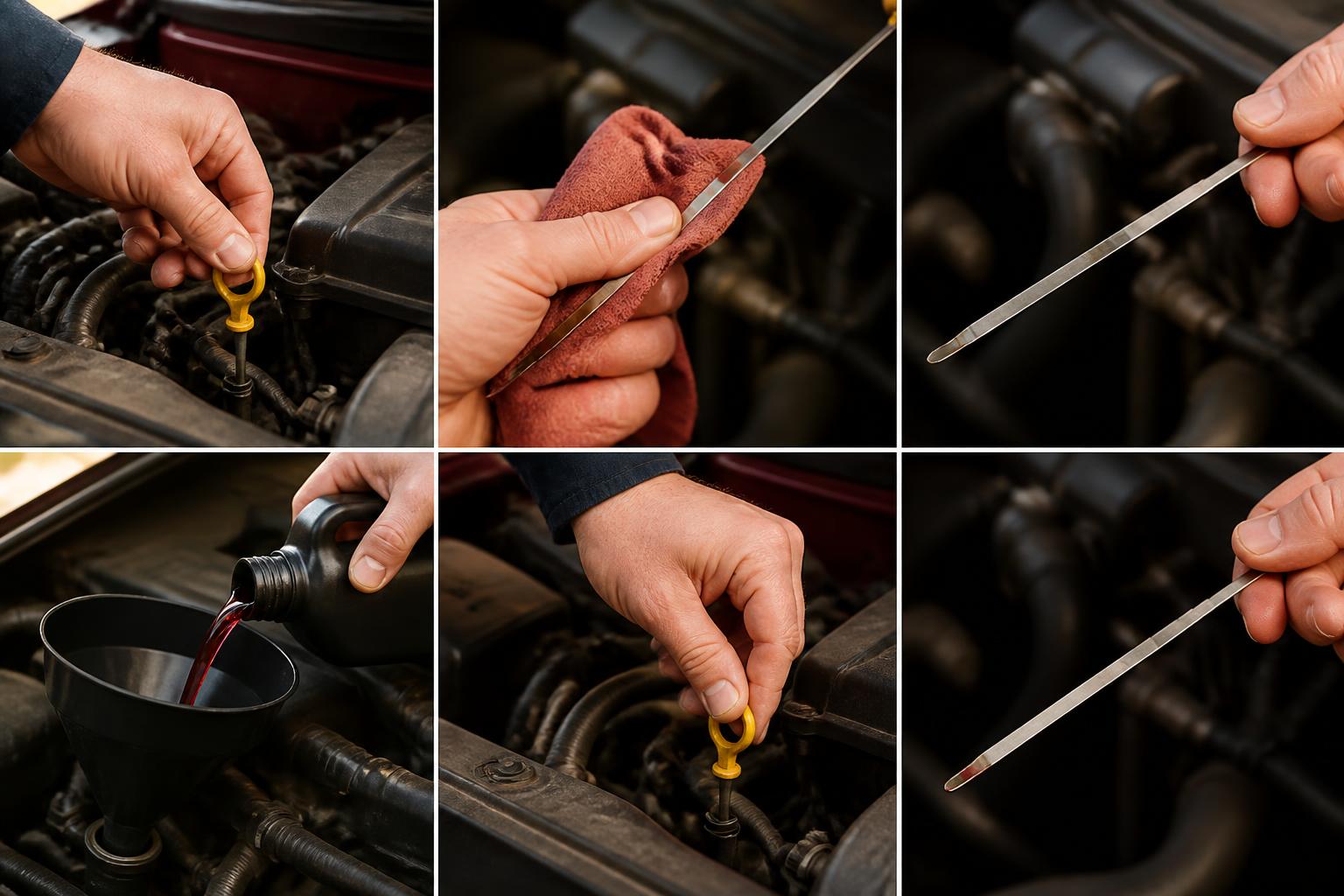
1. Park on level ground and warm the engine until the transmission fluid reaches operating temperature—usually after a 5–10 minute drive. Do not check it cold; the fluid expands when hot, so a cold reading can show “full” when it’s actually low.
2. Set the parking brake. With the engine idling, step through all shift positions (P→R→N→D→L and back to P). This fills the torque converter and valve body.
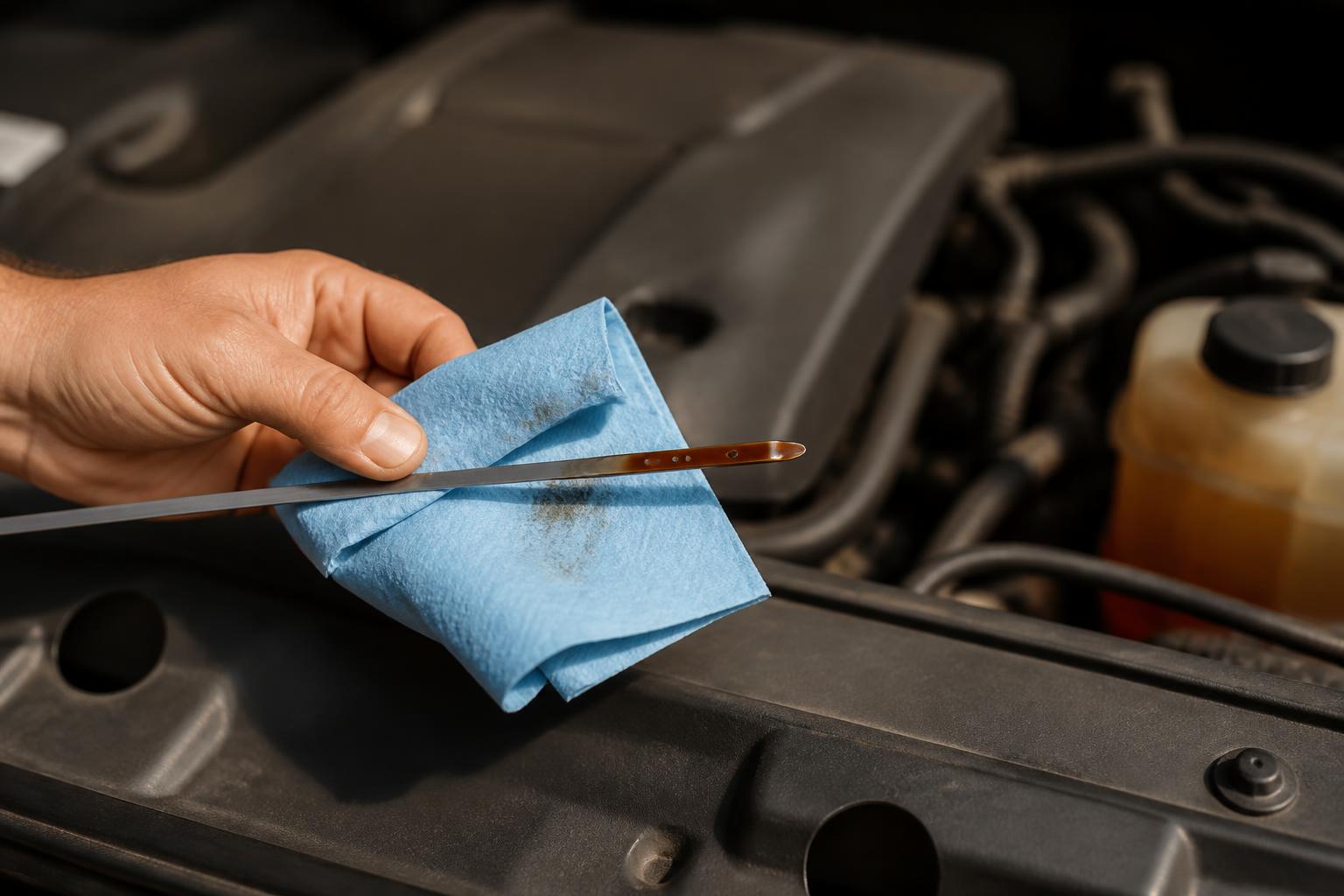
3. Pull the dipstick (usually yellow or orange, marked “Transmission”). Wipe it clean with a lint-free rag, reinsert it fully, then pull it again. The fluid level should be between the “Full” and “Add” marks. The fluid should be clear red or reddish-brown. If it’s dark brown, cloudy, or smells burnt, plan a change soon.
Without a Dipstick (Modern Sealed Transmissions)
Many vehicles built after 2015—and some earlier models like the 2012 Cadillac SRX—have a sealed transmission with no dipstick. The level is checked via a fill plug on the side of the transmission case.
For a 2011–2015 Cadillac SRX (6T70 transmission), there is no dipstick tube at all. To check the level you need to:
- Raise the vehicle safely on jack stands
- Locate the fill plug on the driver’s side of the transmission, near the axle
- Remove the plug while the transmission fluid is between 86°F and 122°F (requires a scan tool or infrared thermometer)
- Pump fluid in until it weeps out of the fill hole
- Reinstall the plug
Do not attempt this cold or without a temperature reading. Adding fluid when the transmission is cold can lead to overfilling once the fluid warms up. Overfilled fluid foams and causes erratic shifting, which can damage the transmission. If you don’t have the tools, have a shop check it during a routine service.
Once You Know the Level, Make the Right Call
Add fluid if the level is low but the fluid still looks clean (bright red and translucent) and doesn’t smell burnt. Topping off is fine for small leaks or slow seepage. Use the exact fluid type recommended in your owner’s manual—mixing types can cause clutch chatter.
Change fluid when any of these are true:
- Fluid is dark brown, black, or has a burnt odor
- You see metal flakes or debris on the dipstick
- Your vehicle has over 100,000 miles and the fluid has never been changed
- The manufacturer’s severe-service interval is due (commonly every 30,000–60,000 miles)
Can you change transmission fluid at 100,000 miles? Yes, if the transmission has been shifting normally. A drain-and-fill is safe. Avoid a power flush on high-mileage transmissions that have never been serviced—the sudden pressure can dislodge decades of sludge and cause failure within a few hundred miles. A simple pan drop, filter change, and refill is the safer route.
Stop Driving Threshold
If the fluid is dark brown or smells burnt, do not drive more than 5 miles—and skip the power flush entirely. Continuing to drive with burnt fluid accelerates clutch wear and can turn a $150 fluid change into a $3,000 rebuild. If you see metal flakes on the dipstick, have the vehicle towed to a transmission shop; the internal damage is already in progress.
| Situation | Action | Safe to DIY? |
|---|---|---|
| Level low, fluid clean red | Top off | Yes |
| Level low, fluid brown/smells burnt | Change soon | Yes (drain-and-fill) |
| Level normal, fluid dark | Change at interval | Yes |
| Level low, no dipstick (sealed unit) | Shop check recommended | Only with correct tools |
| 100k+ miles, never serviced | Drain-and-fill only | Yes (no power flush) |
| Metal flakes or debris present | Tow to shop | No |
DIY Top-Off Sequence (Dipstick Transmissions)
These steps assume a standard transmission with a dipstick. For sealed units, refer to your vehicle-specific service manual.
Before You Start
- Park on a level surface and chock the rear wheels
- Warm the engine to operating temperature (5–10 minute drive)
- Gather the correct fluid—check your owner’s manual or the fill cap for the spec
- Have a funnel with a long, narrow neck, a drain pan, a wrench set, and a rag
What You’ll Need
- Correct fluid (see special cases below for 4L80E and Cadillac SRX)
- Funnel
- Drain pan (for a change)
- New filter and gasket (for a change)
- Torque wrench (pan bolts typically need 8–12 ft-lb)
Step 1: Locate the Fill Point
With the dipstick removed, the dipstick tube is the fill point. For transmissions without a dipstick, locate the fill plug on the side of the case (usually a 17mm or 19mm bolt).
Step 2: Add Fluid in Small Amounts
Add slowly—one quart at a time, then recheck the level. Overfilling is worse than underfilling; excess fluid causes foaming, which leads to erratic shifting and can damage seals. For a typical sedan, low fluid usually needs 0.5–1.5 quarts. A 4L80E (common in GM trucks and vans) holds about 7 quarts for a pan-only drain; if it’s low, you might add 1–2 quarts.
Step 3: Recheck with the Engine Running
After adding each quart, run the engine, cycle through all gears (P→R→N→D→L and back), and check the level again while idling in Park (or Neutral for some rear-wheel-drive cars). Do not skip the gear cycling—it fills the torque converter.
Step 4: Verify the Fix
Before you call it done, drive the car for 5 minutes at varied speeds (25–45 mph) and observe how it shifts. Normal behavior:
- Engagement into Drive or Reverse within 1–2 seconds with a smooth, firm feel
- No slipping or flaring when accelerating from a stop
- No shudder or vibration at steady highway speed
- No whining from the transmission
If any symptom returns after the drive, recheck the level and look for active leaks. If the shifting is still erratic or you still smell burning, stop driving and call a transmission shop—the fluid level alone isn’t the problem.
Where People Get Stuck
- Using the wrong fluid. A 4L80E requires Dexron VI (not earlier Dexron III for long-term life). A Cadillac SRX also takes Dexron VI. Using the wrong spec can cause harsh shifts or clutch slip within 5,000 miles.
- Not warming the fluid. Cold fluid expands when hot, so checking cold gives a falsely high reading. You’ll underfill and end up low at operating temperature.
- Forgetting to cycle the gears. If you only check after filling in Park, the torque converter and valve body are empty—you’ll be a quart or more low.
- Over-tightening the pan bolts. Aluminum pans strip easily at 15 ft-lb. Use a torque wrench.
Your Next Move: What the Outcome Tells You
- If symptoms cleared after top-off: You caught it early. Monitor the level monthly and watch for leaks. A slow seepage of 0.5 quarts over 30,000 miles is normal for older transmissions; faster loss means a leak needs repair.
- If symptoms persisted after topping off: You likely have a deeper problem—worn clutch packs, a failing valve body, or internal debris blocking passages. Further driving will cause more damage. Have the transmission diagnosed at a shop.
- If you saw metal flakes or the fluid was dark brown: The transmission needs professional attention. Driving further risks turning a repairable problem into a full rebuild.
Special Cases: 4L80E and Cadillac SRX
What Transmission Fluid for a 4L80E?
The 4L80E is a heavy-duty GM transmission found in trucks, SUVs, and vans (including some 2005 models with Allison branding). Use Dexron VI exclusively. Dexron VI is backward-compatible with earlier Dexron III, but for optimal shift quality and longevity, stick with the current spec. Capacity is roughly 7 quarts for a pan-only drain and filter change, and about 12 quarts for a full system flush.
How much transmission fluid to add to a 4L80E transmission? If you’re just topping off, add 1 quart at a time and recheck. If doing a pan drop and filter change, start with 6 quarts, then add the final quart after checking the level at operating temperature.
Does a 2012 Cadillac SRX Have a Transmission Dipstick?
No. The 2010–2016 Cadillac SRX uses a sealed 6T70 transmission with no dipstick. To check the level, you must:
- Remove the fill plug on the driver’s side of the transmission case
- Pump fluid in until it weeps out
- Do this at 86–122°F transmission fluid temperature (requires a scan tool or infrared thermometer on the pan)
Topping off without the correct temperature can cause under- or overfilling. If you’re comfortable with basic DIY, buy the factory service manual for the exact procedure. Otherwise, let a transmission shop handle it—the labor is usually under $50 for a level check.
What kind of transmission fluid does a 2016 Cadillac SRX take? Dexron VI. The 6T70 transmission in the SRX requires this specification. Do not use generic “multi-vehicle” fluids unless they explicitly list Dexron VI compatibility on the bottle.
Frequently Asked Questions
What does low transmission fluid feel like?
Delayed engagement, slipping (engine revs without speed matching), harsh thumps into gear, shuddering at highway speed, and a whining or buzzing sound that changes with RPM.
Can I still drive with low transmission fluid?
Only a short distance at low speed if the fluid is just barely down. If you feel slipping or smell burning, stop immediately—driving further causes internal damage.
How does your car act when it’s low on transmission fluid?
It hesitates when accelerating, may slam into gear, vibrate on the highway, or emit a whining noise. The check engine light may come on with transmission-related OBD2 codes.
What transmission fluid for a 4L80E?
Dexron VI. Capacity is roughly 7 quarts for a pan-only drain and filter change.
Does a 2012 Cadillac SRX have a transmission dipstick?
No. It has a sealed transmission with a check plug. DIY checking requires a pump, a temperature reading, and a scan tool or infrared thermometer. If you lack these tools, have a shop check it.
Explore This Topic
- Back to Transmission Fluid Change
- Back to Automotive Repair
Related guides in this cluster:
- Transmission Slipping and Shifting Problems: Diagnosis Guide
- Head Gasket Failure, Oil Leaks, and Engine Seal Diagnosis
- Catalytic Converter Cleaner, Clogging, and Replacement Cost

Greedy Wheels is the founder and lead editor at Wheels Greed. With over 15 years of hands-on automotive experience — from rebuilding engines in a home garage to managing fleet maintenance for a regional logistics company — he brings real-world mechanical knowledge to every guide.
His work has been featured in automotive forums, owner communities, and dealership training materials. When he’s not researching the latest car owner questions, you’ll find him at a local track day, wrenching on his project car, or testing the newest OBD2 diagnostic tools.
At Wheels Greed, every article is reviewed against manufacturer service manuals, NHTSA bulletins, and verified owner reports. No AI-generated fluff. No guesswork. Just practical answers from someone who has turned the wrench.