Subaru Crosstrek: The Complete Owner’s Guide (All Generations)
The Subaru Crosstrek is a compact crossover with standard all-wheel drive and 8.7 inches of ground clearance, sold in the U.S. since the 2013 model year. It spans three generations: first (2013–2017), second (2018–2023), and third (2024–present). This guide covers available engines, real-world capability, cargo room, common issues, maintenance schedules, and the model years that deliver the most value for your money.
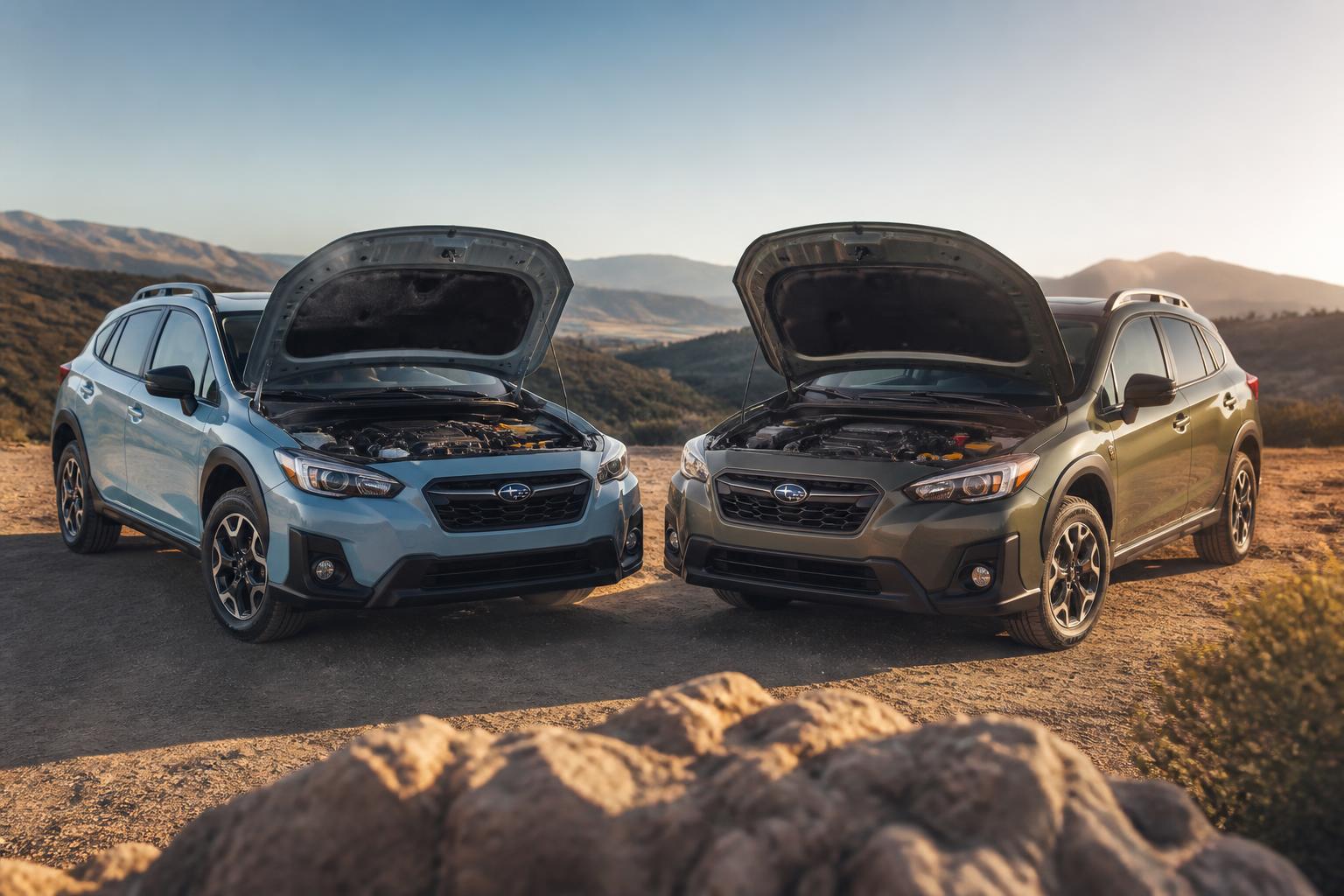
Engine Options: 2.0L vs 2.5L
The biggest decision point across generations is which engine you get. Here’s a generation-by-generation breakdown.
| Generation | Available Engines | Horsepower | EPA Combined Fuel Economy |
|---|---|---|---|
| 2013–2017 | 2.0L FB20B | 148 hp | 29 mpg (manual), 30 mpg (CVT) |
| 2018–2020 | 2.0L FB20D | 152 hp | 30 mpg (CVT) |
| 2021–2023 | 2.0L (152 hp) or 2.5L FB25D (182 hp) | 152 / 182 hp | 30 mpg (2.0L), 29 mpg (2.5L) |
| 2024+ | 2.0L (152 hp) base; 2.5L (182 hp) on Sport, Limited, Wilderness | same | 29 mpg (2.5L); Wilderness slightly lower |
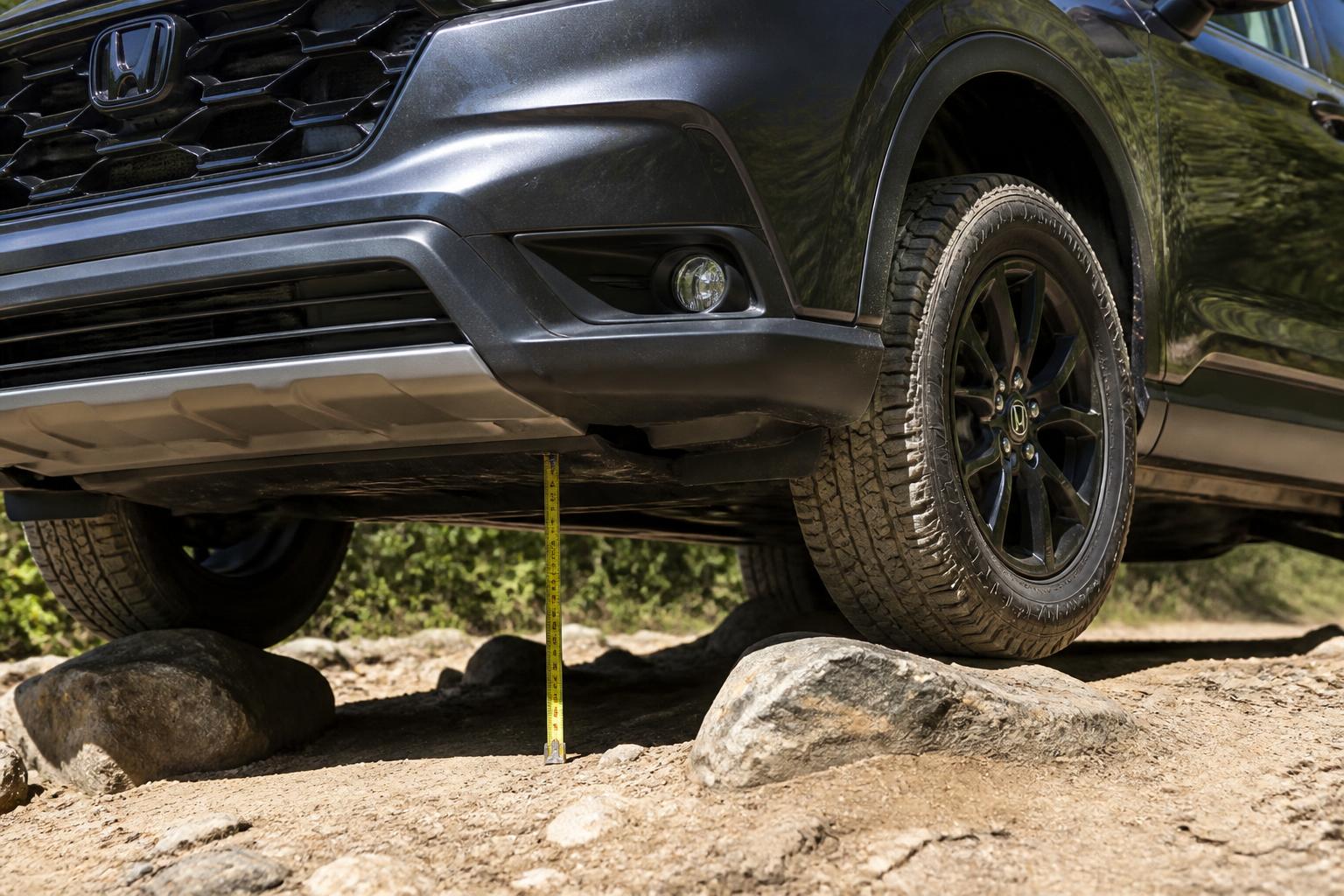
The 2.0L works fine for daily commuting but struggles on steep grades or with a full load. The 2.5L, introduced in 2021, drops 0–60 mph from about 9.2 seconds to 7.7 seconds (Car and Driver testing) without a major fuel penalty. If you live in mountainous areas, carry passengers and cargo often, or just want a more responsive car, favor a 2021+ model with the 2.5L.
Ground Clearance and Off-Road Capability
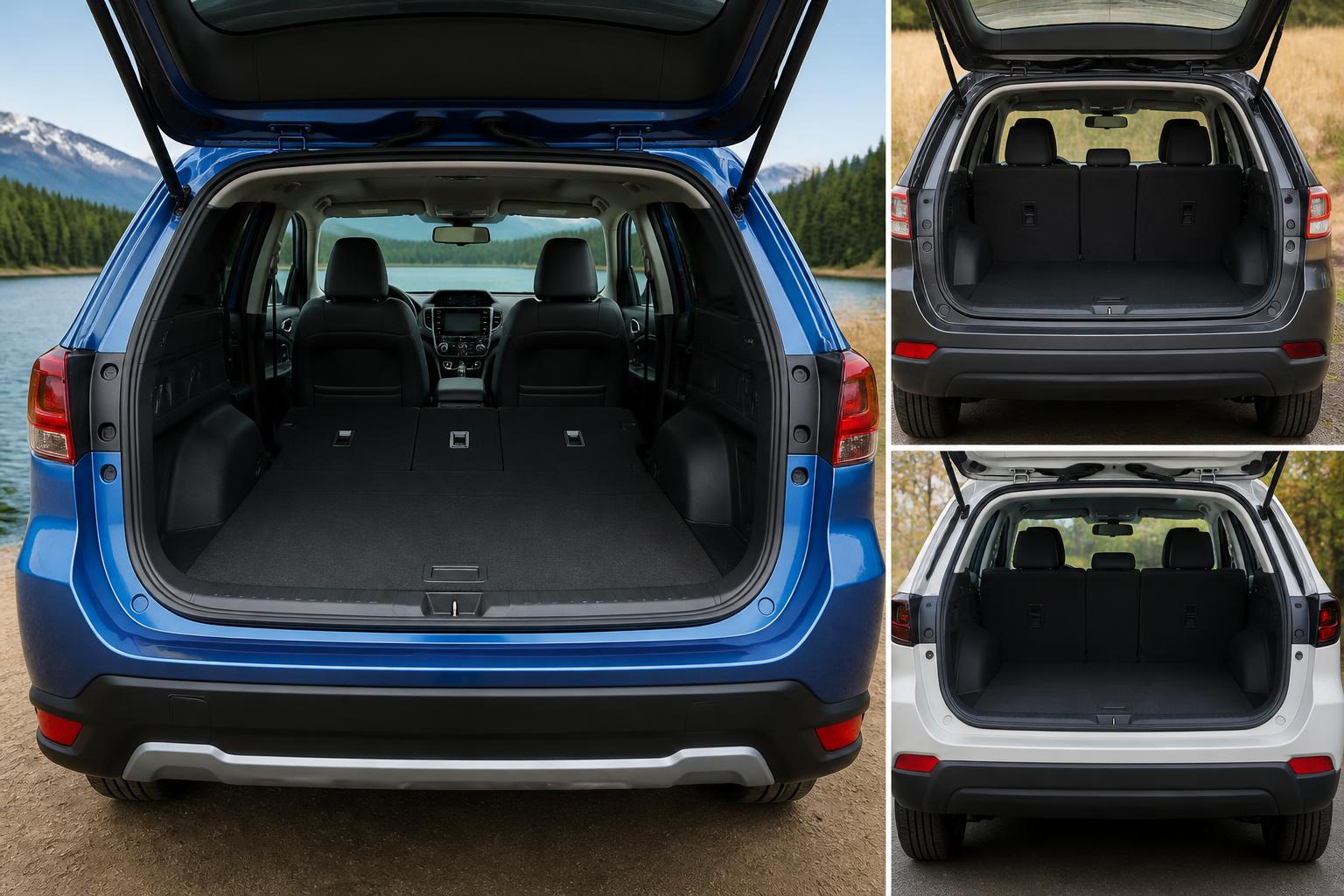
Every Crosstrek comes with 8.7 inches of ground clearance—matching the Forester and beating most rivals. The Honda HR-V has 6.7 inches, the Mazda CX-30 has 6.9 inches, and the Toyota Corolla Cross has 8.0 inches. Combined with standard all-wheel drive and X-Mode (available from 2018 on), the Crosstrek handles soft sand, gravel roads, and light mud easily. The 2024 Wilderness trim raises clearance to 9.3 inches and adds a lower final drive ratio plus Yokohama Geolandar all-terrain tires for better crawling on trails.
Approach and departure angles are 18.2 degrees front and 30.1 degrees rear on standard trims; the Wilderness improves to 20.4 and 33.4 degrees. This is not a rock crawler—deep ruts and boulders call for a more hardcore off-roader. For snowy commutes and unmaintained forest service roads, the standard Crosstrek is more than capable.
Cargo Space vs Competitors
Cargo volume behind the rear seats and with seats folded:
| Model | Behind Rear Seats | Seats Folded |
|---|
| Subaru Crosstrek (all years) | 20.8 cu ft | 55.3 cu ft |
| Honda HR-V (2015–2022) | 24.3 cu ft | 55.9 cu ft |
| Mazda CX-30 | 20.2 cu ft | 45.2 cu ft |
| Toyota Corolla Cross | 24.0 cu ft | 48.5 cu ft |
| Hyundai Kona | 19.2 cu ft | 45.8 cu ft |
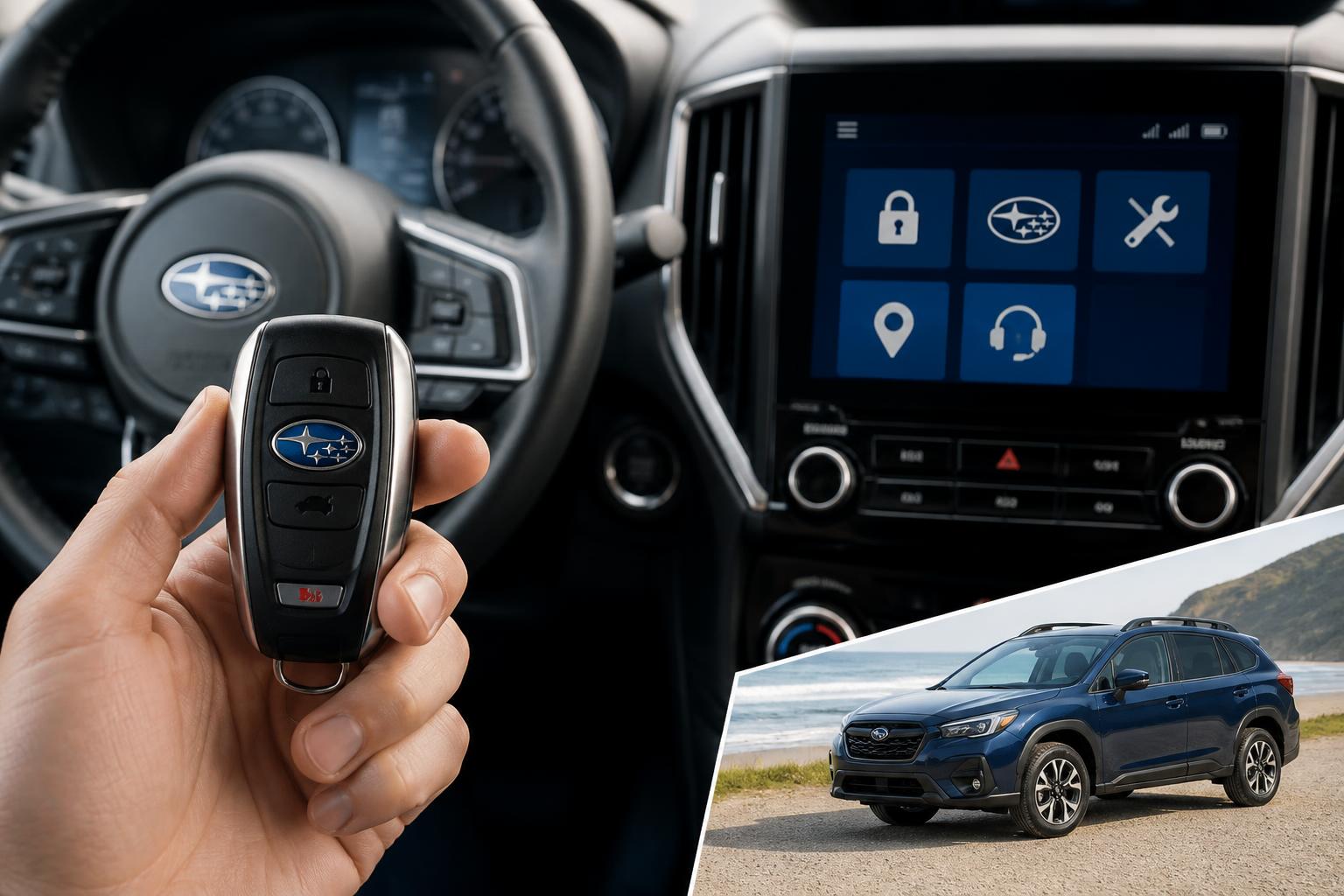
The Crosstrek is competitive but not class-leading. The older HR-V has slightly more space thanks to its Magic Seat that folds up. The Crosstrek’s load floor is flat when the seats are folded, and the hatch opening is wide. If you regularly haul bulky items, the Crosstrek works fine; if you need absolute maximum space, consider an HR-V or Corolla Cross.
Subaru Starlink and Key Fob
Subaru’s infotainment system (Starlink) has evolved significantly. The 2013–2015 models have a basic 6.2-inch screen that feels slow. The 2018–2023 models get a 6.5-inch or 8-inch unit with Apple CarPlay and Android Auto (standard from 2019 onward). The 2024 model features an 11.6-inch portrait display similar to the Outback, standard on Sport, Limited, and Wilderness trims.
Common Gripes and Quick Fixes
2018–2019 models: Screen lag, occasional freezes, Bluetooth pairing issues. First try a soft reset: hold the volume and power button for 10 to 15 seconds. If that doesn’t help, a dealer software update resolves most issues.
2020–2023 models: Better responsiveness, but some owners report random blackouts or slow startup. Use the same soft reset (hold power button for 10–15 seconds). If blackouts persist, ask the dealer for the latest firmware.
2024 models: Wireless Apple CarPlay may drop connection. Subaru has released firmware updates; visit your dealer to apply them.
Key Fob
The standard fob from 2013–2023 is rectangular with lock, unlock, panic, and trunk buttons. The 2024 model uses a larger rounded fob with push-button start and a mechanical key inside. Battery life is 2–3 years using a CR2032 battery. If the fob stops working, hold it against the start button—the car can read the RFID chip even with a dead battery. If that doesn’t work, the fob may need dealer reprogramming.
Common Issues by Generation
Knowing what to watch for can save you money. For each issue, start with the owner-level check before escalating.
First Generation (2013–2017)
Excessive oil consumption (2013–2015, some 2016): The 2.0L FB engine can burn more than 1 quart per 1,000 miles. Subaru extended the warranty on affected engines. Check the oil level at every fill-up. Perform a measured consumption test: fill to the full mark, drive 1,200 miles, then recheck. If consumption exceeds 1 quart per 1,000 miles, contact a Subaru dealer—some vehicles received short-block replacement under a class-action settlement.
CVT hesitation (2013–2014): Early Lineartronic CVTs have a lag when accelerating from a stop. Subaru issued a software update; some units were replaced. If the transmission jerks or shudders, have it inspected immediately. A failing CVT can leave you stranded.
Front strut top bearing noise: A clicking sound when turning at low speeds. Replacement is common and straightforward.
Second Generation (2018–2023)
Infotainment screen delamination (2018–2020): A bubbling or rainbow effect on the touchscreen. Subaru replaced units under warranty if caught early. Out of warranty, a used replacement screen from a salvage yard costs $200–$400.
Bluetooth call volume low: Software fix available through a dealer update.
Rear brake pad wear: Some owners report rear pads wearing faster than fronts, around 30,000 miles. This is not a defect, but inspect regularly. Replace both axles when pads reach 3 mm thickness.
Battery drain (2019–2020): A technical service bulletin updated the charging logic. If your battery dies repeatedly after the update, have the alternator load-tested.
Third Generation (2024+)
Early reports note wireless Apple CarPlay dropouts that firmware updates can address. Also, the Wilderness trim’s all-terrain tires are noisier on pavement—that’s normal and requires no fix.
Maintenance Schedule
Subaru recommends these intervals. Always check your owner’s manual for exact year-specific details.
| Item | Interval |
|---|
| Oil and filter change | Every 6,000 miles (use full synthetic 0W-20 for 2.0L; 5W-30 for 2.5L) |
| Tire rotation | Every 6,000 miles (or with oil change) |
| Brake fluid flush | Every 30,000 miles |
| CVT fluid replacement | Every 60,000 miles (severe service: 30,000) |
| Spark plugs | Every 60,000 miles |
| Cabin air filter | Every 12,000 miles |
| Engine air filter | Every 30,000 miles |
| Coolant flush | First at 100,000 miles, then every 60,000 |
Use a full synthetic that meets API SP or ILSAC GF-6. For 2.0L engines, 0W-20 is required; for the 2.5L, 5W-30 is common. Good options include Mobil 1, Pennzoil Ultra Platinum, and QUARTZ 9000 FUTURE FGC 5W-30 (for the 2.5L). Do not use conventional oil. For CVT fluid, only Subaru High Torque CVT Fluid is approved—do not use generic CVT fluid. If you tow or drive off-road frequently, change the CVT fluid at 30,000 miles instead of 60,000.
Which Model Years Offer the Best Value
Best bang for the buck used: 2018–2019 models with the 2.0L. They are affordable, include Apple CarPlay and Android Auto, and the major oil consumption issues are fixed. Expect $18,000–$22,000 for a clean example with 40,000–60,000 miles. Avoid early 2018 units built before June 2017, as some had CVT glitches.
Sweet spot used: 2021–2022 models with the 2.5L in Sport or Limited trim. You get the stronger engine, refreshed styling, and better infotainment. The premium over an equivalent 2.0L is about $3,000, but it’s worth it for daily driving.
Best new value: The 2024 Base starts around $25,000 and still has 8.7 inches of ground clearance and AWD. For long-term ownership, the 2024 Sport or Limited with the 2.5L is the best overall package.
Avoid if possible: 2013–2015 models unless you can verify that the oil consumption issue was resolved and the CVT has been serviced or replaced. The 2017 model has no major problems, but the 2018 refresh brought much-needed infotainment updates.
Frequently Asked Questions
What is the towing capacity of the Crosstrek?
All standard models are rated to tow 1,500 pounds. The 2024 Wilderness can tow 3,500 pounds with a trailer equipped with brakes.
Does the Crosstrek have a spare tire?
Most trims come with a temporary spare tire. The 2024 Wilderness includes a full-size spare. Some models such as the Hybrid have a tire repair kit instead.
Can I use regular gas in the 2.5L engine?
Yes, 87-octane is fine. Subaru recommends premium only for the 2014–2016 STI models, not for Crosstreks.
How does the Crosstrek Hybrid compare?
The plug-in hybrid offered from 2019–2023 provided about 17 miles of EV range and 90 MPGe, but cargo space dropped to 15.9 cubic feet. It is rare and expensive; for a plug-in hybrid in this class, the RAV4 Prime offers more range and cargo room at a similar price point.
Explore This Topic
Related guides in this cluster:

Greedy Wheels is the founder and lead editor at Wheels Greed. With over 15 years of hands-on automotive experience — from rebuilding engines in a home garage to managing fleet maintenance for a regional logistics company — he brings real-world mechanical knowledge to every guide.
His work has been featured in automotive forums, owner communities, and dealership training materials. When he’s not researching the latest car owner questions, you’ll find him at a local track day, wrenching on his project car, or testing the newest OBD2 diagnostic tools.
At Wheels Greed, every article is reviewed against manufacturer service manuals, NHTSA bulletins, and verified owner reports. No AI-generated fluff. No guesswork. Just practical answers from someone who has turned the wrench.