Ford Bronco: The Complete Owner’s Guide (2021-Present)
The Ford Bronco (2021–present) is a body-on-frame off-road SUV available in 2-door and 4-door configurations. This guide covers engine choices, trim levels, G.O.A.T. modes, removable roof and doors, FordPass and SYNC 4 features, towing capacity, dimensions, common problems, and when to stop DIY work and visit a dealer. The Bronco and the unibody Bronco Sport are different vehicles; this guide is about the full-size Bronco only.
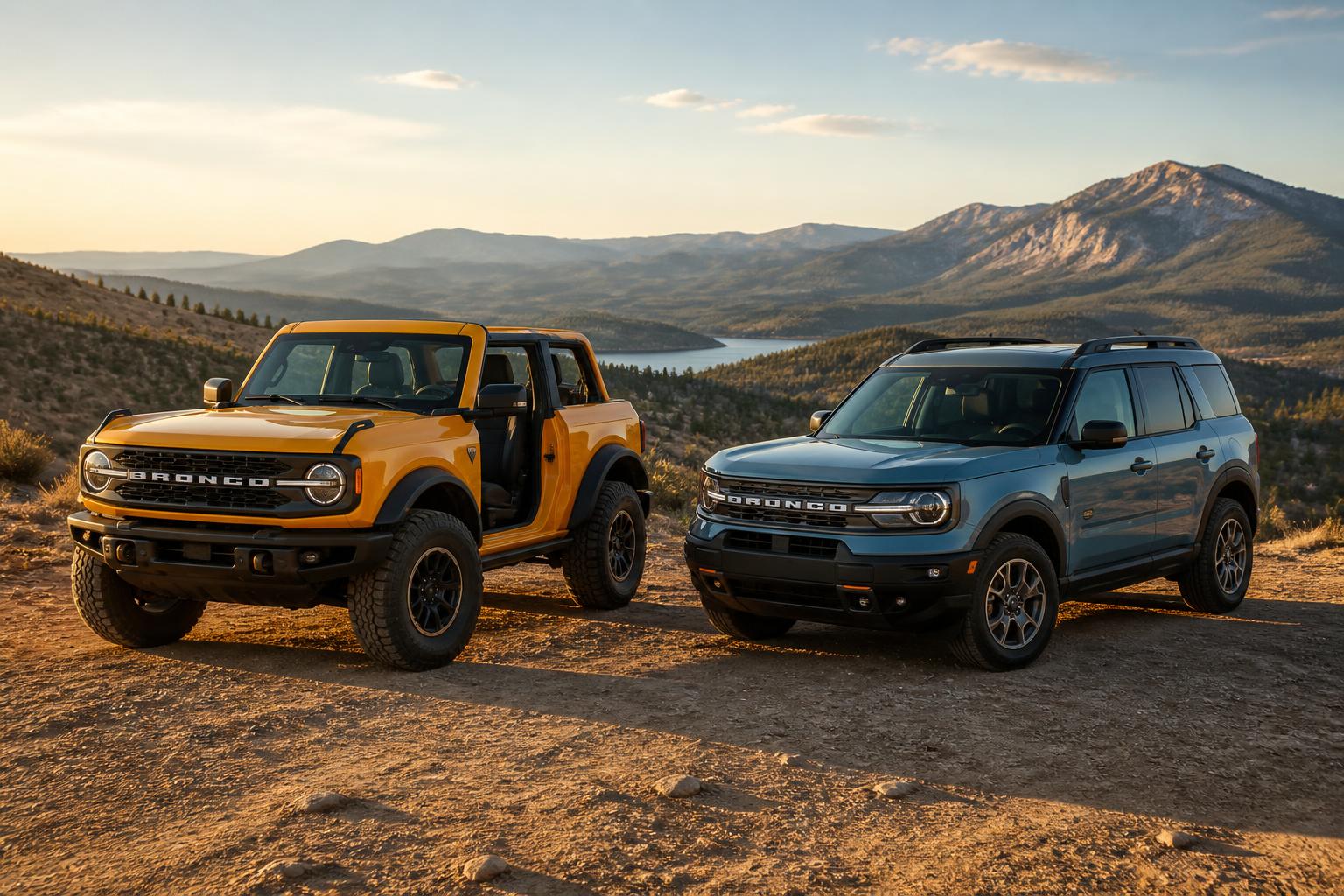
Bronco vs Bronco Sport: Key Differences
The full-size Bronco sits on a dedicated ladder frame with a solid rear axle and available front stabilizer-bar disconnect. The Bronco Sport uses a car-based unibody platform with independent rear suspension. If you need serious off-road rock crawling, high ground clearance (8.3–11.5 inches), and a removable roof and doors, buy the Bronco. The Sport is a capable light-duty off-roader but lacks the Bronco’s hardware and removable top.
| Feature | Bronco | Bronco Sport |
|---|---|---|
| Platform | Body-on-frame | Unibody |
| Ground clearance | 8.3–11.5 in | 7.8–8.3 in |
| Roof removal | Yes (2–4 panels) | No |
| Door removal | Yes (with tool kit) | No |
| Max towing | 3,500 lbs (4-door 2.7L) | 2,000 lbs |
Engine Options: 2.3L vs 2.7L
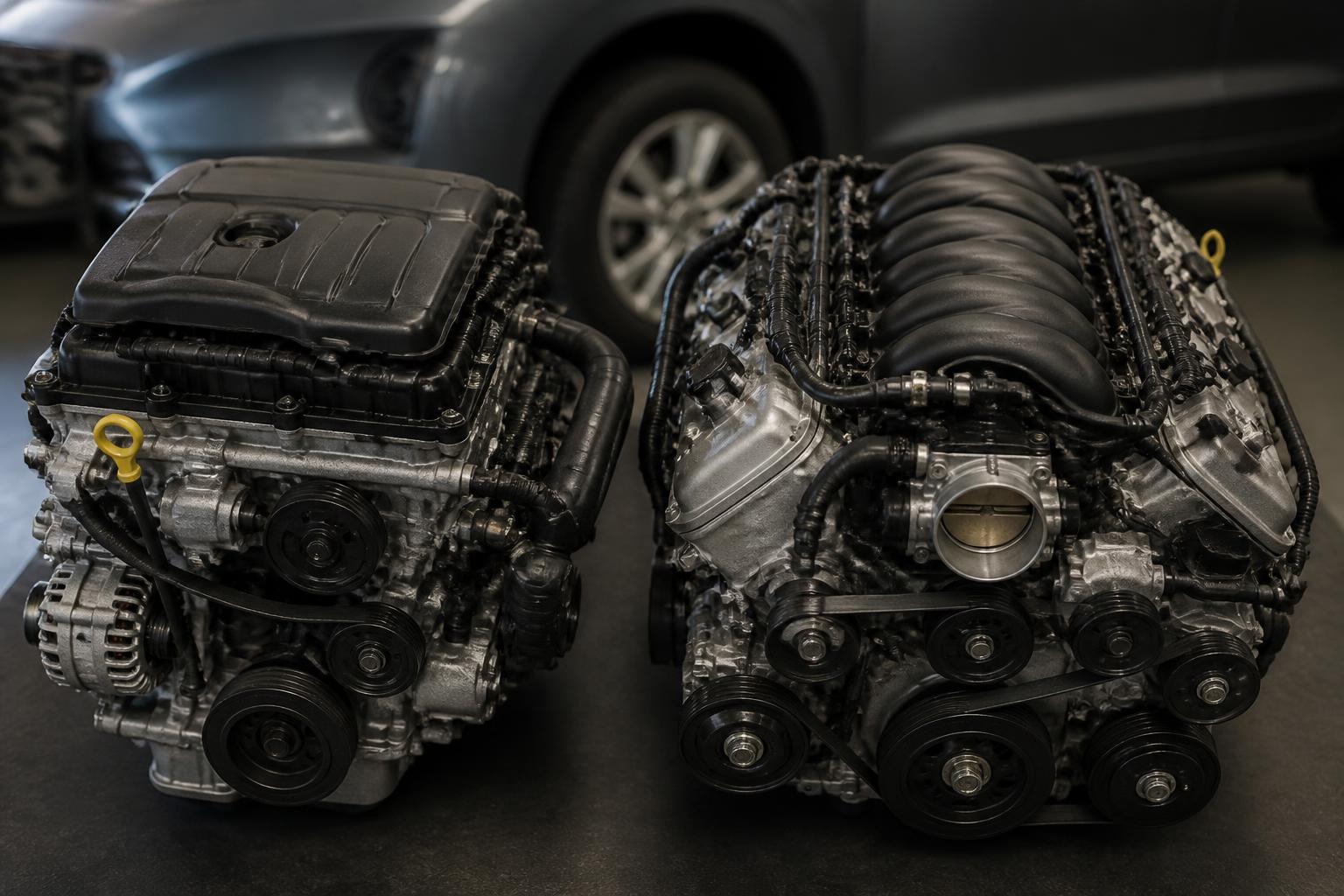
2.3L EcoBoost I-4 (standard) – 270 hp, 310 lb-ft. Works with a 7-speed manual (Base, Big Bend, Black Diamond) or a 10-speed automatic. Adequate for daily driving and moderate trails. Towing capacity drops to 2,000 lbs with the manual or about 3,500 with automatic on the 4-door. Check your doorjamb sticker for your specific vehicle – the ratings vary by optional equipment and payload.
2.7L EcoBoost V6 (optional) – 310 hp, 400 lb-ft. Only pairs with the 10-speed automatic. The extra torque matters when crawling rocks, towing a trailer, or driving at altitude. Ford quotes 3,500 lbs max towing for the 4-door with the 2.7L (2-door max is 3,000). The 2.7L is the better choice if you plan heavy off-road use or regular towing.
Practical judgment: If you mostly drive pavement and hit light trails once or twice a year, the 2.3L is fine and saves you about $1,900. For towing near the limit or frequent altitude driving, spend the extra on the 2.7L. Fuel economy (EPA combined): 2.3L automatic ~20 MPG, 2.7L automatic ~18 MPG. Real-world numbers drop 1–2 MPG with larger tires.
Verification and escalation: To confirm your actual towing capacity, read the sticker on the driver’s doorjamb – it lists the Gross Combined Weight Rating (GCWR) and maximum trailer weight for your specific build. If you experience harsh shifts or hesitation from the 10-speed automatic (common on early 2021–2022 models), check for Ford software TSBs. A dealer flash usually resolves it. If the problem returns after a flash, schedule a dealer appointment – repeated transmission issues may indicate a valve-body problem covered under the powertrain warranty (5 years / 60,000 miles).
Trim Levels Explained
The Bronco has eight core trims (plus special editions). Each adds specific off-road hardware and convenience features.
Trail-Ready Trims (Base, Big Bend, Black Diamond)
- Base – 30-inch all-season tires, manual locks, cloth seats. Minimal off-road gear beyond standard 4×4.
- Big Bend – Adds SYNC 4 with 8-inch screen, 17-inch alloy wheels, cloth seats. Still uses basic Dana 44 rear axle.
- Black Diamond – Marine-grade vinyl seats, rubberized floor, rock rails, front/rear steel bumpers, Dana 44 AdvanTEK rear axle with electronic locker. The no-frills off-roader.
Mid-Range and On-Road (Outer Banks)
- Outer Banks – Leather seats, aluminum wheels, LED signature lighting. No heavy off-road gear; aimed at pavement driving with optional Sasquatch package. Good compromise if you want a comfortable daily driver that can still handle moderate trails with the right options.
High-Performance Off-Road (Badlands, Wildtrak, Everglades)
- Badlands – Front stabilizer-bar disconnect (allows more suspension travel), 33-inch all-terrain tires, upgraded Bilstein shocks, front/rear lockers, 4.7:1 crawl ratio. The best all-round off-roader.
- Wildtrak – Standard 2.7L V6, HOSS 3.0 suspension with Fox internal bypass shocks, 35-inch tires, Baja G.O.A.T. mode. Built for high-speed desert running.
- Everglades (2023+) – Factory-installed Warn winch, snorkel (35-inch water fording), 35-inch tires. Limited-production swamp rig.
Ultra-High Performance (Raptor, 2023+)
- Raptor – 3.0L EcoBoost V6 (~400 hp), fully independent front suspension, 37-inch tires, wider stance, Fox Live Valve shocks. Track-oriented rock racer. Prices often exceed $80,000; only worth it if you regularly push the limits at high speed off-road.
Practical tip: If you want a daily driver with occasional trail use, the Outer Banks with the Sasquatch package gives you leather comfort and 35-inch off-road capability without the spartan interior of the Badlands. The Badlands is the better pick if you plan to crawl rocks every month.
Off-Road Features and G.O.A.T. Modes
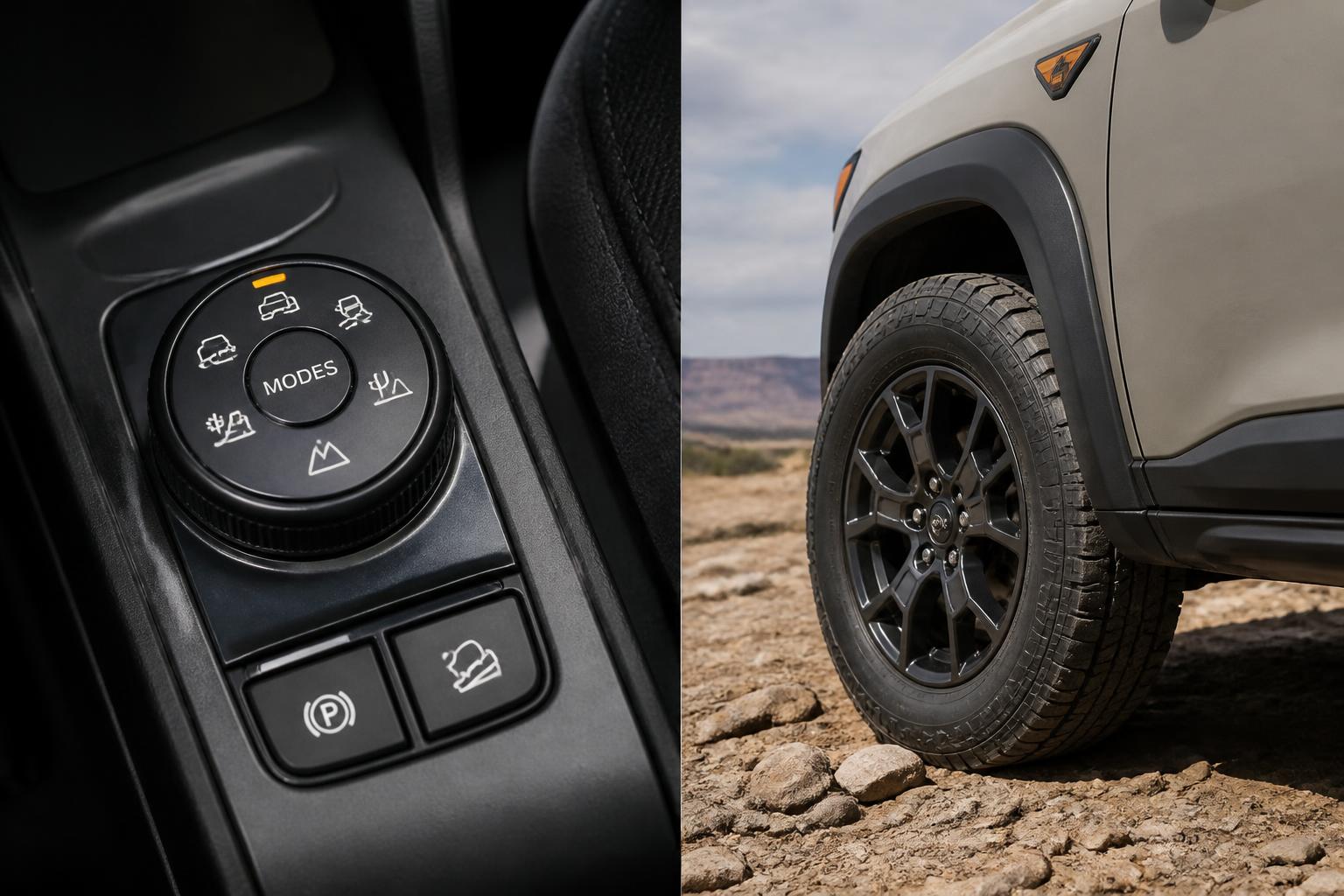
G.O.A.T. stands for “Goes Over Any Terrain.” Each trim has a specific set of modes, accessed via a dial on the center console.
| Mode | Use case | Notes |
|---|---|---|
| Normal | Daily driving | Default for on-road. |
| Eco | Fuel economy | Reduces throttle response, no shift to neutral. |
| Sport | Performance on pavement | Firmer shift schedule, quicker throttle. |
| Slippery | Rain, snow, ice | Reduces wheel spin. |
| Sand | Deep sand, soft ground | Holds gears, prevents wheel hop. |
| Mud/Ruts | Mud, loose dirt | Aggressive traction control, locks differentials (if equipped). |
| Rock Crawl | Low-speed boulders | 4-Low only, active front sway-bar disconnect (Badlands/Raptor). |
| Baja | High-speed off-road | Wildtrak and Raptor only. Increased throttle sensitivity, firmer damping. |
Hardware add-ons to know:
- Sasquatch package (all trims except Raptor) – 35-inch tires, beadlock-capable wheels, electronic locking front/rear axles, Bilstein shocks, 4.7:1 gearing, high-clearance fender flares.
- Front stabilizer-bar disconnect – Standard on Badlands, optional on some. Lets the front axle droop further over rocks.
- Trail Turn Assist – Brakes the inside rear wheel to tighten turning radius in low-range. Works in any 4-Low mode. To verify it’s working, try it in a wide, empty parking lot – you should feel the inside rear wheel briefly lock to pivot the vehicle.
Stop threshold: If the front stabilizer-bar disconnect fails to re-engage (warning light stays on), stop using 4-Low and drive to the dealer. A stuck disconnect can damage the sway bar links. This is a known issue on early models; Ford has a TSB for actuator replacement.
Removable Roof and Doors
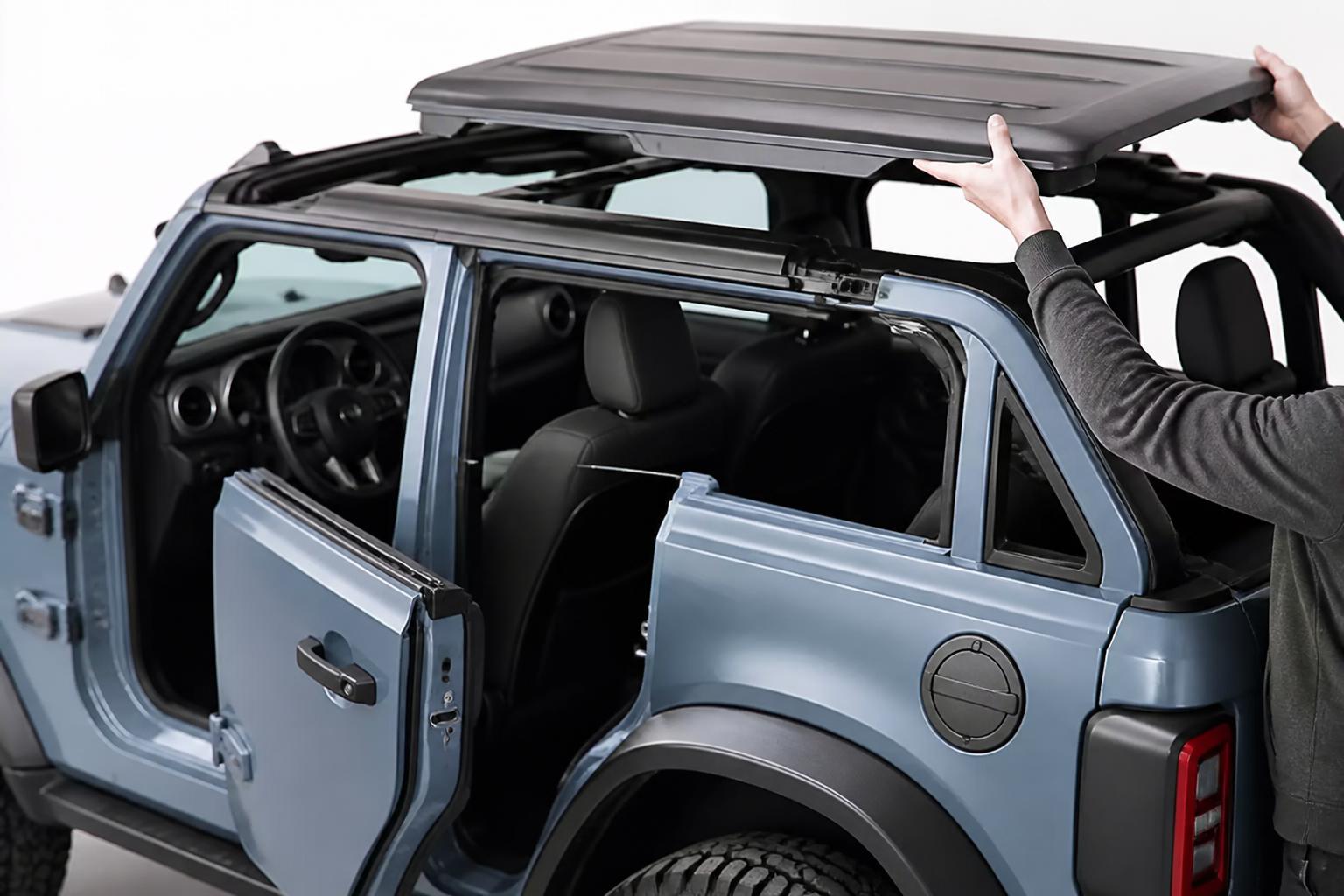
Both 2-door and 4-door Broncos have a modular roof. The front two panels are removable; on the 4-door the rear section can be removed as a single piece (or two with the optional modular hardtop). Doors are easily taken off with a hand-tool kit supplied with the vehicle.
Roof Removal (Quick Steps)
1. Remove the front two twist-knobs (inside near the windshield header).
2. Unlatch the rear clamps (if 4-door, also unbolt the rear cap).
3. Lift off each panel (approx. 35 lbs for front panels, 60 lbs for rear cap). A second person helps with the rear cap.
4. Store panels in optional roof-storage bags or carry in the cargo area.
Tips: Never drive with the roof panels stored in the back without properly securing them – they can shift and break. The roof panels can leak if not properly aligned; Ford has a TSB for resealing early-model hardtops.
Verification after reinstallation: After reinstalling all panels, run a garden hose over the seams (especially the front header area and the rear cap joins) for 30 seconds. Check the interior for any drips. If you see water, adjust the panel alignment and re-tighten. Leaks that persist after two alignment attempts require a dealer visit – Ford sells revised seal kits and may replace the hardtop under warranty if delamination is present.
Door Removal
1. Lower windows fully.
2. Remove the two bolts on each door hinge (use the supplied Torx bit).
3. Disconnect the wiring harness plug behind the door panel (push tab and pull).
4. Lift door straight up and off. A door-hanger cart or padded sawhorse is recommended for storage.
5. Replace bolts in the hinge brackets to protect threads.
Warning: The Bronco has no side mirrors when doors are off – you must install the legal aftermarket or Ford-approved door-mounted mirrors before driving on public roads. The supplied mirror kit mounts to the hinge brackets and is required by law in most states.
FordPass and SYNC 4 Features
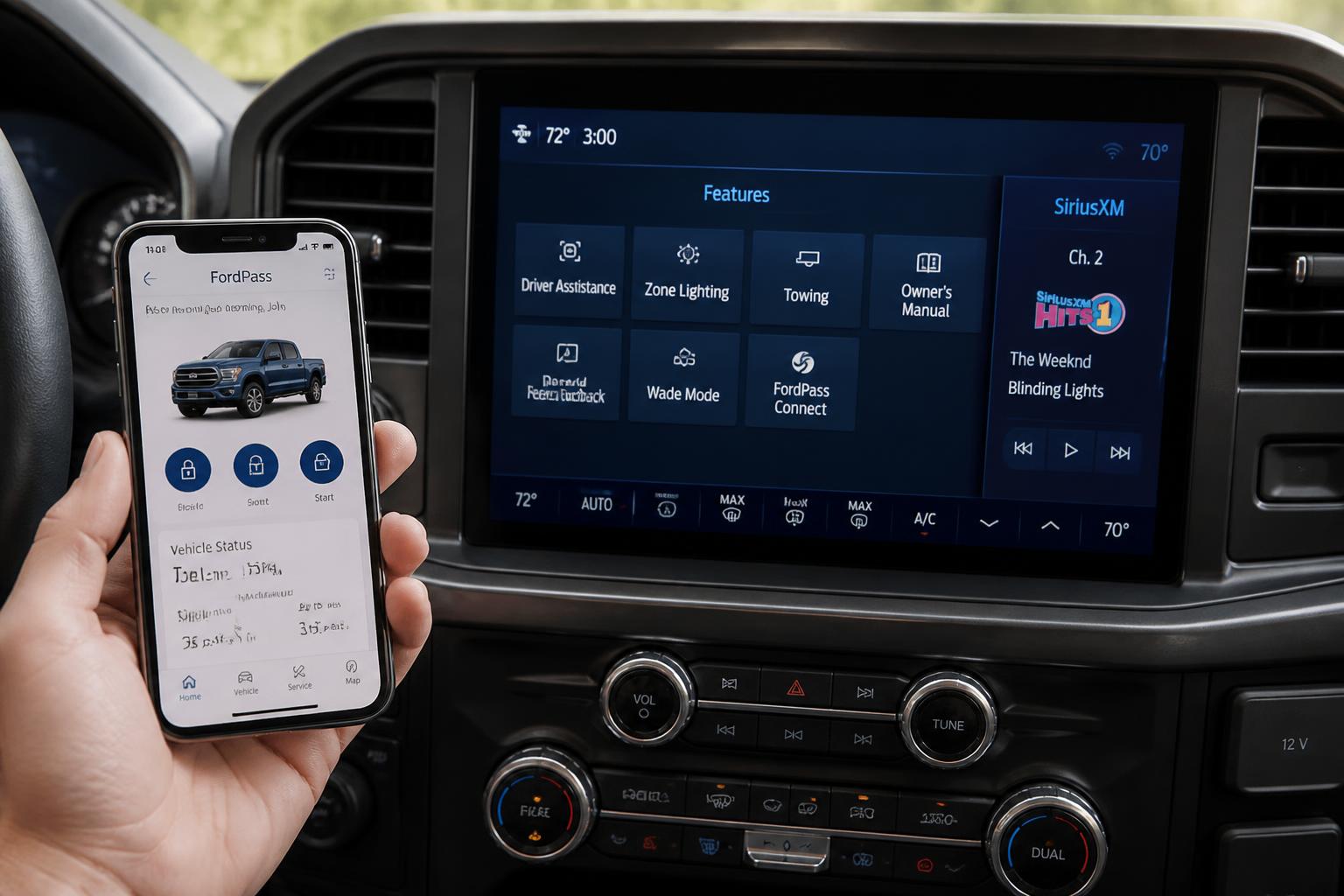
SYNC 4 is standard on all 2021-present Broncos. The 8-inch screen is standard on Base and Big Bend; the 12-inch screen is standard on all other trims. Key features include:
- Wireless Apple CarPlay and Android Auto – No cable needed. Connects automatically when you start the vehicle.
- FordPass Connect – Built-in 4G LTE modem gives you remote start, lock/unlock, vehicle locator, and driving data through the FordPass app. A trial subscription is included; after that, a monthly fee applies.
- Over-the-air (OTA) updates – SYNC 4 receives software updates automatically. The Bronco also gets powertrain and module updates via OTA. Check your SYNC 4 settings to confirm automatic updates are enabled.
- Available navigation – The 12-inch screen includes connected navigation with live traffic (subscription required after trial).
FordPass app setup: Download the FordPass app, create an account, and enter your VIN. Follow the in-app pairing instructions. If the vehicle doesn’t appear after 15 minutes, verify that your SYNC 4 modem is activated (check the SYNC settings menu under “FordPass Connect”). If activation fails, a dealer can reset the modem module.
Stop threshold: If FordPass shows “vehicle unavailable” consistently for more than 48 hours despite good cellular coverage, the TCU (telematics control unit) may need replacement. This is covered under the 3-year / 36,000-mile bumper-to-bumper warranty.
Towing Capacity and Dimensions
Towing by Configuration
| Configuration | Max Towing (lbs) | Notes |
|---|---|---|
| 2-door, manual | 2,000 | Check payload sticker – may be lower with heavy options. |
| 2-door, 2.3L auto | 3,500 | Requires Class II hitch and 7-pin wiring. |
| 4-door, 2.3L auto | 3,500 | Same as 2-door auto; longer wheelbase helps stability. |
| 4-door, 2.7L auto | 3,500 | Extra torque helps but the limit is chassis, not engine. |
| Bronco Raptor | 4,500 | Unique frame reinforcement and higher-rate springs. |
All Broncos require the tow package (factory hitch, 4-pin/7-pin connector, and trailer sway control) to achieve these ratings. Adding an aftermarket hitch does not increase the legal towing limit.
Key Dimensions
| Dimension | 2-Door | 4-Door |
|---|---|---|
| Wheelbase | 100.4 in | 116.1 in |
| Overall length | 173.7 in | 189.4 in |
| Width (mirrors folded) | 75.9 in | 75.9 in |
| Height (hardtop) | 71.9 in | 73.0 in |
| Ground clearance (Base) | 8.4 in | 8.3 in |
| Ground clearance (Sasquatch) | 11.5 in | 11.6 in |
| Cargo behind 2nd row | 22.4 cu ft | 35.6 cu ft |
| Cargo behind 1st row | 52.3 cu ft | 77.6 cu ft |
The 2-door is noticeably shorter than a Wrangler 2-door but wider. The 4-door is within an inch of a Wrangler Unlimited in most dimensions. If you plan to off-road on narrow trails, the 2-door’s shorter wheelbase and tighter turning circle give it a real advantage over the 4-door in technical terrain.

Greedy Wheels is the founder and lead editor at Wheels Greed. With over 15 years of hands-on automotive experience — from rebuilding engines in a home garage to managing fleet maintenance for a regional logistics company — he brings real-world mechanical knowledge to every guide.
His work has been featured in automotive forums, owner communities, and dealership training materials. When he’s not researching the latest car owner questions, you’ll find him at a local track day, wrenching on his project car, or testing the newest OBD2 diagnostic tools.
At Wheels Greed, every article is reviewed against manufacturer service manuals, NHTSA bulletins, and verified owner reports. No AI-generated fluff. No guesswork. Just practical answers from someone who has turned the wrench.