BMW Reliability: Common Problems, Maintenance Costs, and What to Expect
BMW reliability depends heavily on which engine and model year you choose. The B58 inline-six and N52 naturally aspirated six regularly exceed 200,000 miles with routine care, while the N20 four-cylinder and early N63 V8 can produce five-figure repair bills before 60,000 miles. Your actual ownership experience comes down to engine selection and how well you stay ahead of cooling system failures, oil leaks, and turbo issues.
Which BMW Engines Give the Least Trouble?
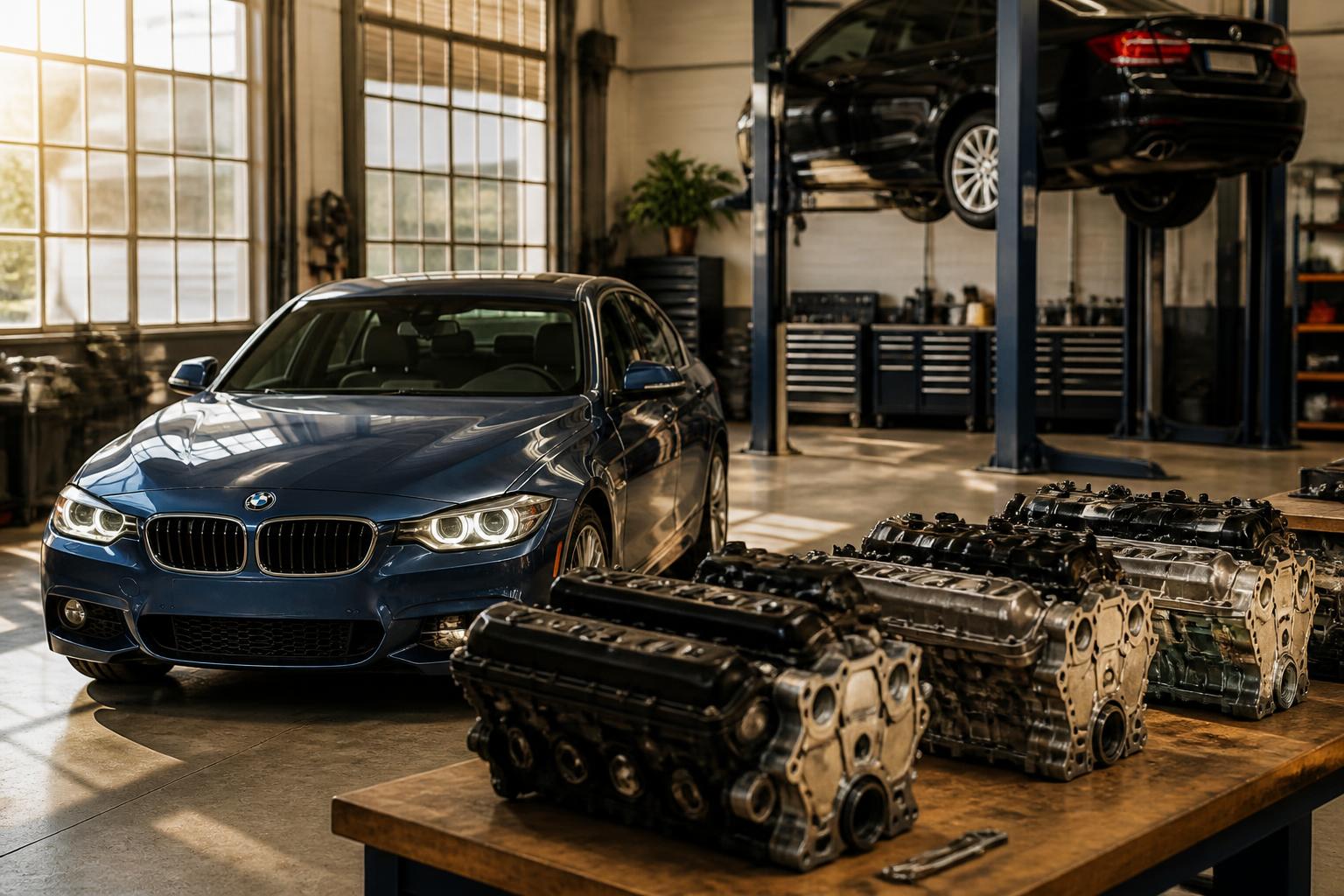
The engine choice is the strongest predictor of long-term reliability. Some powertrains have earned strong reputations; others have known failure patterns that make them risky buys.
B58 (2015–present, inline-6 turbo)
Found in the 340i, 440i, M240i, X3 M40i, and later 5-series models, the B58 uses a closed-deck block and robust timing chain that avoid the catastrophic failures seen in earlier BMW engines. Common issues are limited to occasional coolant leaks from the expansion tank or water pump and rare fuel injector failures. Many owners report 150,000+ miles with only basic maintenance (oil changes, spark plugs, coolant flushes). This is the most reliable turbocharged six-cylinder BMW has produced.
N52 (2005–2015, naturally aspirated inline-6)
BMW’s last naturally aspirated six avoids turbo-related failures entirely and uses a timing chain that rarely needs replacement. It appears in 328i, 528i, X3, and Z4 models. The main weak points are the electric water pump (typically fails at 60,000–80,000 miles, $800–$1,200 to replace) and valve cover gasket oil leaks. If you are looking at a used non-turbo 3-series from 2006–2013, the N52 is your safest choice.
N55 (2009–2016, inline-6 turbo)
The predecessor to the B58 is generally reliable but not as bulletproof. It shares the electric water pump weakness with the N52, and the plastic charge pipe often cracks (about $300 to replace with an aftermarket aluminum pipe). High-mileage examples may develop VANOS solenoid issues or timing chain guide wear, but these are far less common than the N20’s known problems.
Engines to Approach with Caution
- N20 (2011–2016, 4-cylinder turbo) – Used in 320i, 328i, X1, and X3 sDrive28i. The timing chain guide is a known failure that can destroy the engine if it breaks. BMW issued a service campaign but not a full recall. Replacement cost: $2,500–$4,000. If you are considering a used N20 car, verify that the chain guide was updated (late 2015+ production or documented dealer replacement).
- Early N63 (2008–2013, twin-turbo V8) – Found in 550i, X5 50i, and 750i. This engine has well-documented issues with valve stem seal leakage (causing excessive oil consumption), turbo coolant line failures, and fuel injector problems. Even a well-maintained example can need $8,000+ in repairs by 80,000 miles. The N63TU (2014+) is improved but still expensive to maintain.
What to Watch For and How to Handle Common Problems
Beyond engine-specific issues, several problems recur across many BMW generations. Here is a practical troubleshooting flow.
Earliest Checks Before a Repair
Catch these early to prevent a minor leak from becoming an engine-destroying event. Check your coolant level and color monthly on any 2005–2018 BMW. Look for oil drips on the driveway, especially near the front of the engine (oil filter housing gasket) or top rear (valve cover gasket). Listen for a rattling noise from the turbocharger area on N55 and N20 models — that is the wastegate actuator failing. If you see a check engine light accompanied by any of these symptoms, address it the same week.
Likely Causes and Ordered Fixes
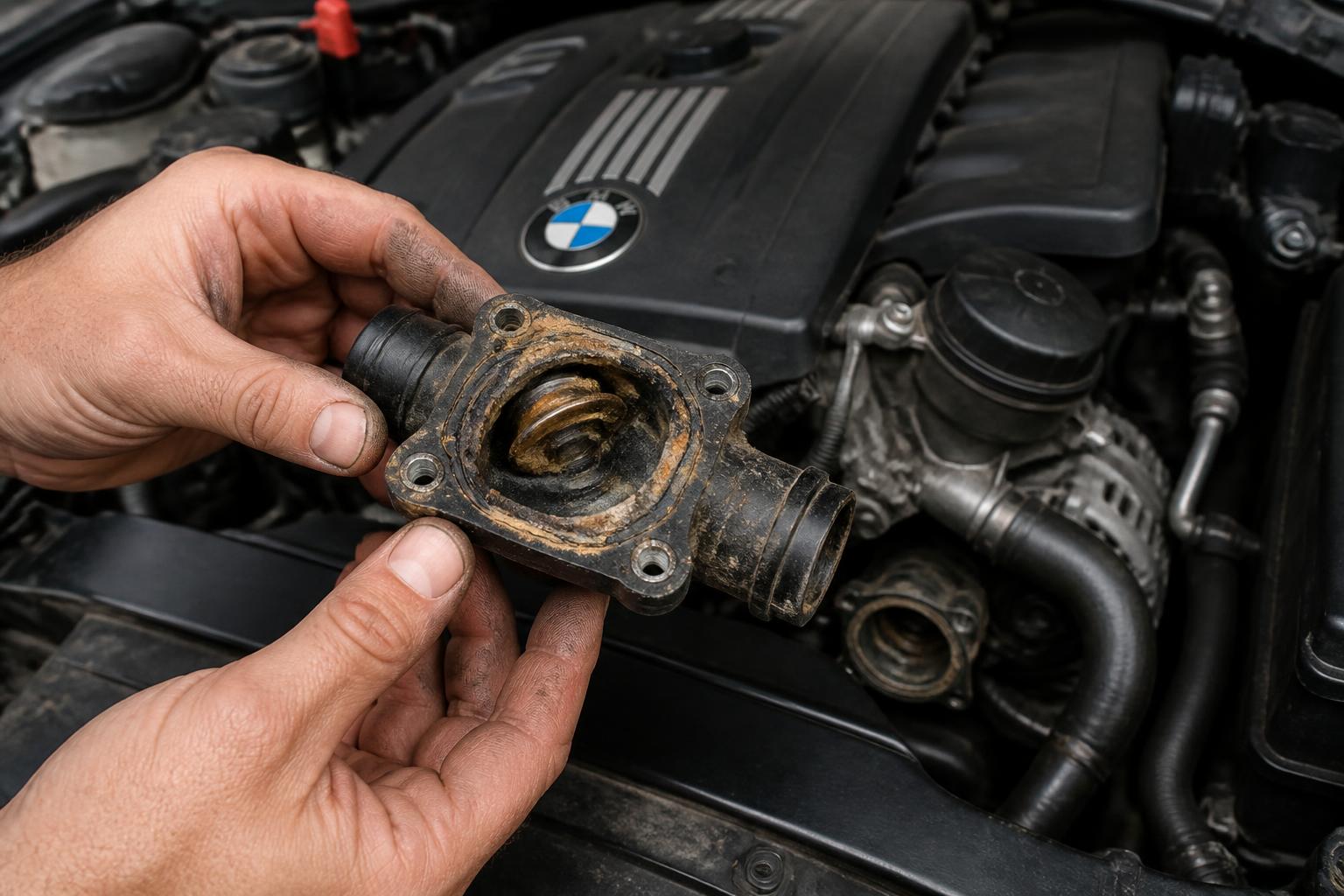
Cooling system failure is the most likely cause of a sudden breakdown on BMWs from 2005–2018. The electric water pump and plastic thermostat housing are chronic weak points. If the temperature gauge climbs above normal or you get a check engine light for insufficient coolant flow (code P0597 or P0598), stop driving immediately to avoid head gasket damage. Replace the water pump, thermostat, and coolant hoses as a set every 70,000 miles — roughly $800–$1,200 at an independent shop.
Oil leaks from the valve cover gasket, oil filter housing gasket, and oil pan gasket rank second. On N52 and N55 engines, the oil filter housing gasket can leak oil onto the serpentine belt, causing the belt to slip and get ingested through the front crank seal. That failure can destroy the engine. If you see oil on the front of the engine or smell burning oil, have the gasket replaced immediately ($400–$700). Do not wait for the next oil change.
Turbocharger issues appear on higher-mileage N55, N20, and N63 cars. A wastegate rattle on startup is annoying but not urgent. A grinding noise or whining under boost means the turbo bearings are failing — stop driving and have it inspected. Replacing a turbo on an N55 costs $1,500–$2,500. On the N20, the timing chain problem is far more urgent than any turbo issue.
How to Verify a Repair and When to Stop
After any cooling system repair, verify that the fix worked before you drive again. Refill with the correct BMW coolant and bleed the system according to the factory procedure. Start the engine and let it reach operating temperature. The electric fan should cycle on and off, the temperature gauge must stay at the midpoint, and the heater should blow hot air. Drive for 10 minutes and recheck the coolant level after the engine cools. If the temperature needle spikes or the heater stays cold, air is trapped in the system or the pump wasn’t properly coded (required on some models). Do not drive further — tow it back to the shop.
For oil leaks, after repairs, run the engine for 15 minutes and inspect the repaired area with a flashlight. A dry gasket surface with no fresh oil residue means the fix is good. If you see any wetness, the gasket was not seated correctly or the sealing surface was not cleaned properly.
Stop immediately if you hear knocking from the engine, see the temperature gauge in the red zone, or lose power while driving. Continuing to drive under any of these conditions on a BMW can turn a $1,000 repair into a $6,000 engine replacement.
Real-World Maintenance Costs by Model
Annual maintenance varies by model and driving habits. These estimates are based on independent shop rates (approximately $130–$170 per hour labor) and typical parts costs.
| Model / Segment | Annual Maintenance (5-Year Avg) | Notes |
|---|---|---|
| 3-series (328i, 330i) – N52 or B48/B58 | $1,200–$1,800 | Includes oil changes, brakes, occasional cooling system work |
| 3-series (335i, 340i) – N55 or B58 | $1,500–$2,200 | Higher due to turbo-related parts and more expensive fluids |
| 5-series (528i, 530e) – N20/B48/B58 | $1,500–$2,500 | Larger brakes, more electronics, more labor |
| 5-series (550i) – N63/N63TU | $2,500–$4,000 | Spark plugs every 30k miles, injectors, oil leaks, turbos |

| X5 (xDrive35i) – N55 | $1,800–$2,800 | Added cost for xDrive fluid services, air suspension (if equipped) |
| X5 (50i) – N63 | $3,000–$5,000 | Same V8 issues as the 550i, plus heavier suspension components |
Oil changes at an independent shop run $90–$130 using OEM synthetic oil. Brake pads and rotors last 30,000–50,000 miles depending on driving style — a full brake job on a 3-series costs $800–$1,200. Performance tires on models with staggered fitment or run-flats can add $300–$600 per axle more frequently than on a front-wheel-drive car.
How BMW Stacks Up Against Mercedes and Audi

All three German luxury brands have similar overall cost profiles, but their failure patterns differ noticeably.
Mercedes-Benz: The M274 four-cylinder and M276 V6 are generally reliable but share cooling system and oil leak problems with BMW. Mercedes’ service intervals are often longer (10,000–15,000 miles for oil changes), which catches less attentive owners off guard. Parts cost is comparable — a water pump on a C300 runs about the same as on a 330i.
Audi: Audi’s 2.0T (EA888 gen 3+) has improved greatly, but earlier generations (2009–2015) had timing chain tensioner failures and carbon buildup on the intake valves. Audi also uses timing chains that are difficult to access on the V6s — a chain replacement on a 3.0T can cost $4,000–$6,000. The B58 is arguably more reliable than Audi’s 3.0T (EA839) based on lower reported failure rates.
Bottom line: If you want the lowest total ownership cost of the three, a late-model (2015+) BMW with a B58 or B48 engine is a strong contender. For a used car under $20,000, a non-turbo BMW with the N52 beats most Audis and Mercedes of the same age because it avoids the biggest German headaches: carbon buildup and timing chain failure.
Extended Warranty: When It Makes Sense
For any BMW with over 60,000 miles — especially models with N20 or N63 engines — an extended warranty can prevent a single repair from costing more than the car is worth. Focus on exclusionary (bumper-to-bumper) policies from reputable providers such as Fidelity, Route 66, or Carshield. Avoid named-component warranties that cover only a short list of parts. A quality exclusionary warranty on a 70,000-mile 3-series or X5 typically costs $2,500–$4,000 for 3 years/36,000 miles of coverage — a reasonable bet given the potential cost of a single N20 timing chain repair or N63 turbo replacement.
Explore This Topic
- Common Causes Of Bmw Shaking
- Understanding The Reliability Of Bmw I8
- Understanding The Reliability Of The Bmw X5

Greedy Wheels is the founder and lead editor at Wheels Greed. With over 15 years of hands-on automotive experience — from rebuilding engines in a home garage to managing fleet maintenance for a regional logistics company — he brings real-world mechanical knowledge to every guide.
His work has been featured in automotive forums, owner communities, and dealership training materials. When he’s not researching the latest car owner questions, you’ll find him at a local track day, wrenching on his project car, or testing the newest OBD2 diagnostic tools.
At Wheels Greed, every article is reviewed against manufacturer service manuals, NHTSA bulletins, and verified owner reports. No AI-generated fluff. No guesswork. Just practical answers from someone who has turned the wrench.