Ford Explorer: The Complete Owner’s Guide (All Generations)
The Ford Explorer has been America’s best-selling SUV for good reason—it offers three-row seating, capable towing, and a comfortable ride. But reliability varies significantly between generations, and a few expensive problems can catch owners off guard. This guide covers what you need to know before buying or maintaining one, starting with the issues that cost the most.

Reliability and Common Problems
The biggest reliability factor is the engine choice. The 3.5L V6 in 2011–2019 models has a known failure point that can total the engine. Newer models have different quirks that are less expensive to fix.
The Water Pump Problem (3.5L V6, 2011–2019)
This is the single most important thing to know about any Explorer with the 3.5L V6. The water pump is driven by the timing chain and mounted inside the engine block. When the seal fails—typically between 80,000 and 120,000 miles—coolant leaks directly into the oil pan. By the time you see a puddle under the car or get a low-coolant warning, the engine bearings may already be damaged.
Cost to fix: $1,500–$2,500, because the timing chain cover, oil pan, and front engine components all have to come off. There is no recall. The only prevention is proactive replacement of the water pump, timing chain, tensioners, and guides as a full kit at 100,000 miles.
How to check if yours is failing:
1. Check the oil dipstick. If the oil looks like a milky or foamy brown (resembling a chocolate milkshake), coolant has entered the oil.
2. Look for a pinkish or greenish residue near the front of the engine, below the water pump weep hole.
3. If the engine temperature gauge rises above normal during highway driving, the pump may be failing internally.
If you catch any of these signs, stop driving the vehicle immediately. Running the engine with coolant in the oil will score the bearings and require a full engine replacement.
PTU Failure (All-Wheel Drive, 2011–2019)
The Power Transfer Unit (PTU) on AWD models is a small gearbox that sends power to the rear wheels. It runs hot and Ford’s official maintenance schedule never calls for a fluid change—which guarantees eventual failure. Symptoms include a burning gear-oil smell, whining noise from under the front-center of the vehicle, or fluid leaking onto the exhaust.
Prevention: Drain and refill the PTU with full-synthetic 75W-90 gear oil every 30,000–60,000 miles. This step is not in the owner’s manual, but owners who do it often exceed 150,000 miles on the original PTU. Replacement costs $1,200–$1,800 if ignored.
6F50 Transmission Shudder (2011–2015)
The 6-speed automatic in these years can develop a torque-converter shudder felt as a vibration during light acceleration at 30–45 mph. A drain-and-fill using Mercon LV fluid sometimes resolves it for 10,000–20,000 miles. If the shudder returns, the torque converter needs replacement—typically $1,000–$1,500 at an independent shop.
Quick test: On a level road, hold steady throttle at 40 mph. If you feel a subtle vibration through the floorboards that disappears when you lightly press or release the gas, the torque converter is the likely cause.
10-Speed Transmission Hunting (2020–2022)
The 10R60 transmission on 6th-generation Explorers sometimes hunts for gears at low speeds—typically when coasting to a stop or accelerating gently from a rolling start. Ford issued multiple TSBs with software updates that improve this behavior.
Fix: If under warranty, ask the dealer to check for and apply the latest PCM/TCM calibration update. This is a software-only fix and usually takes less than an hour. Owners report that the 2023+ factory calibrations are noticeably smoother than the original 2020 software.
Self-check: In normal Drive mode, shift to Sport mode on the same slow-speed route. If the behavior improves significantly in Sport mode, the calibration is the issue, not a mechanical problem.
Towing and Cargo Capacity
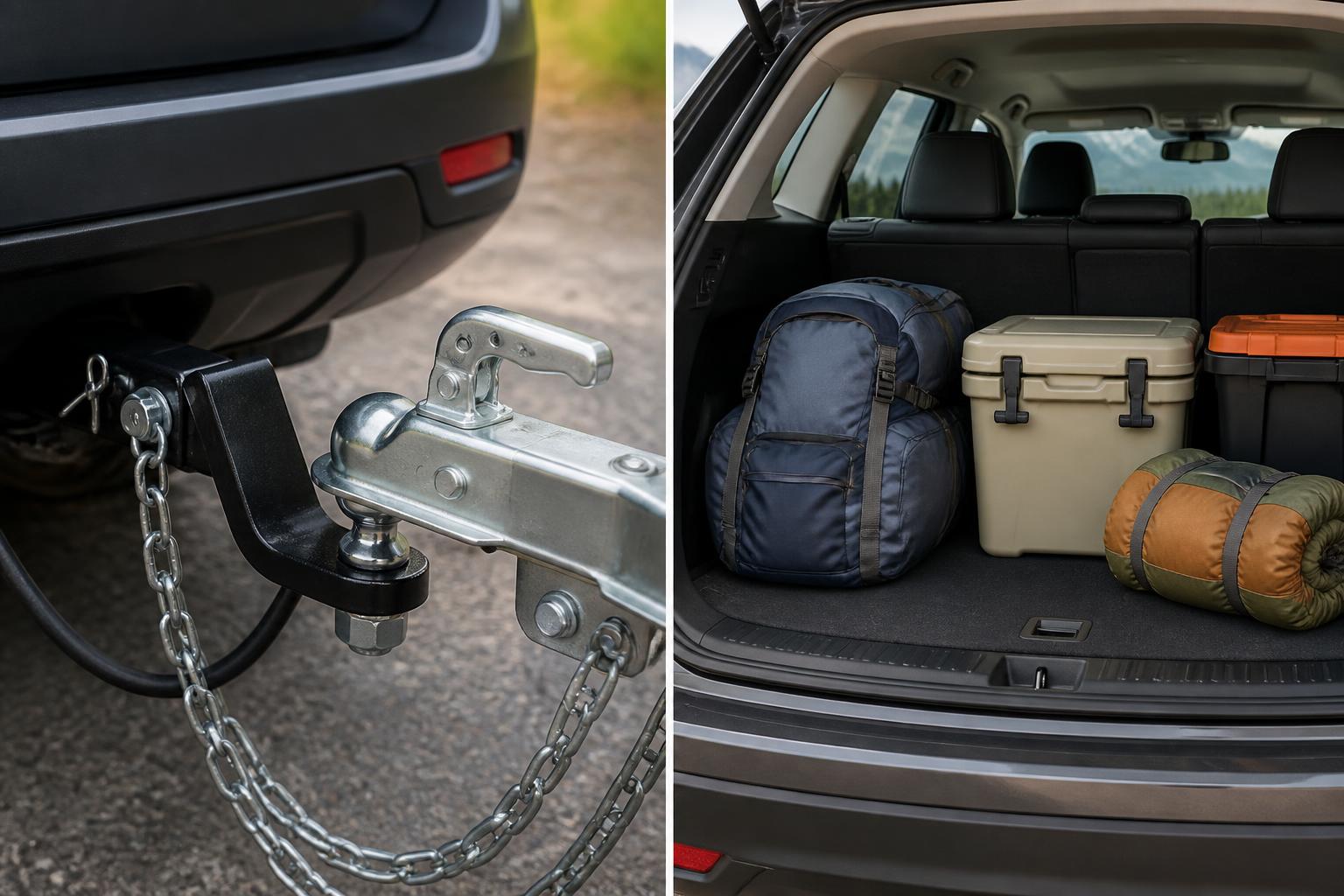
Towing capacity depends on the engine and whether the factory tow package is installed. Aftermarket hitches do not change the vehicle’s rated capacity—only the factory Class III hitch and auxiliary transmission cooler allow the maximum numbers listed below.
| Engine | Max Towing (properly equipped) | Key Requirement |
|---|---|---|
| 2.3L EcoBoost (2020+) | 5,000–5,600 lbs | Class III hitch + trailer sway control |
| 3.5L V6 (2011–2019) | 5,000 lbs | Class III hitch option required |
| 3.3L Hybrid (2020+) | 5,000 lbs | Loses ~1,500 lbs vs non-hybrid due to cooling limits |
| 3.0L EcoBoost ST/Platinum | 5,600 lbs | Best towing; requires premium fuel |
Cargo volume by generation:
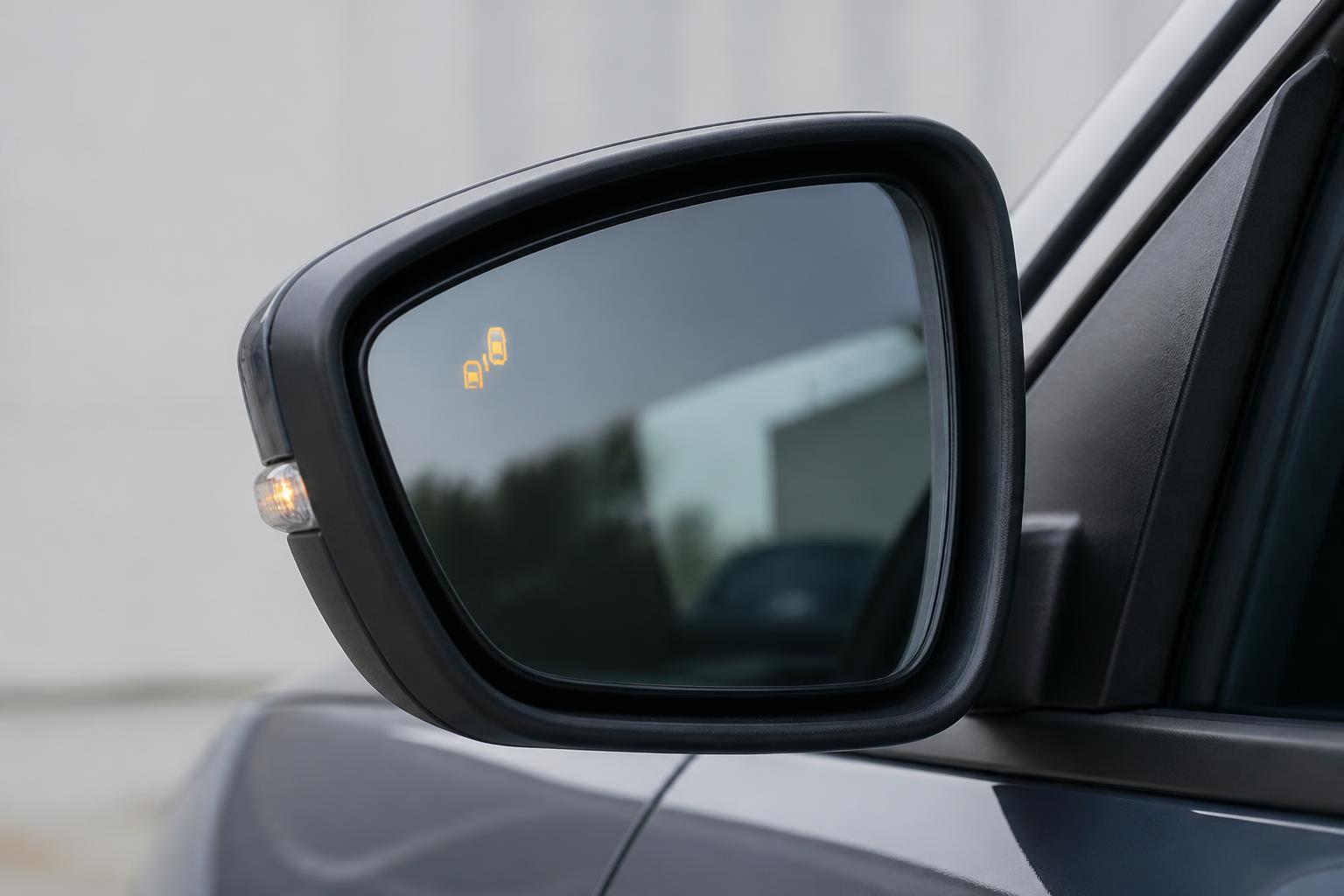
- 2011–2019 (5th gen): 21 cu ft behind third row, 43.8 cu ft with third row folded, 80.7 cu ft max
- 2020+ (6th gen): 18.2 cu ft behind third row, 47.9 cu ft with third row folded, 87.8 cu ft max
The 2020+ models have slightly less space behind the third row—that 18.2 cubic feet fits three large grocery bags or two standard carry-on suitcases stacked. Families who regularly carry all seven passengers will want a roof box or a cargo hitch platform.
Ford Co-Pilot360 Features (2020+)
Every 2020+ Explorer comes standard with the Co-Pilot360 safety suite. Here is what each feature actually does and how to confirm it is working.
- Pre-collision assist with automatic emergency braking: Works at speeds up to about 50 mph for vehicles and 30 mph for pedestrians. It alerts you with a red windshield reflection and an audible warning before applying the brakes. If you have never seen the alert, you can test it safely by driving slowly toward a large cardboard box in an empty parking lot—the system should trigger at around 15–20 mph.
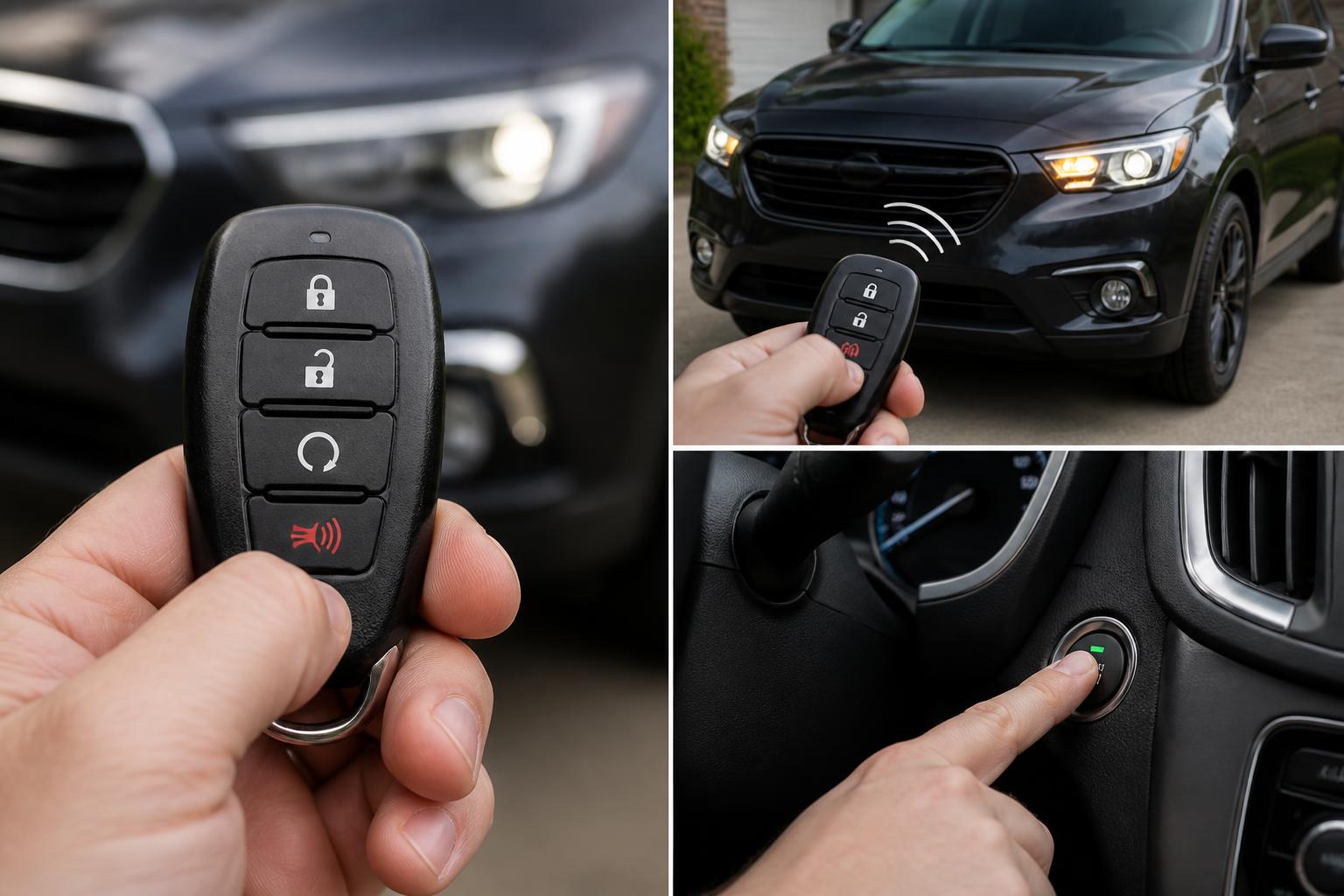
- Blind-spot monitoring with cross-traffic alert: The side mirror lights illuminate when a vehicle is in your blind spot. Cross-traffic alert works when reversing out of a parking space at speeds under 5 mph. It detects vehicles approaching from either side up to about 65 feet away.
- Lane-keeping system: Lane-keeping assist vibrates the steering wheel and applies gentle counter-steering if you drift without signaling. Lane-centering (available on Limited, Platinum, and ST) actively keeps the vehicle centered in the lane on well-marked highways. You can verify lane-centering is engaged by looking for two steering-wheel icon in the instrument cluster—it turns gray when unavailable.
- Auto high-beam headlamps: The system switches between low and high beams based on detected headlights and taillights ahead. On dark rural roads, you can confirm it is working by watching the blue high-beam indicator in the dash—it should turn off automatically when a car approaches from either direction.
- Rearview camera with washer (2020+): The camera lens is cleaned when you activate the rear window washer. A dedicated camera washer nozzle was added in mid-2020.
2021+ mid-cycle upgrade: Evasive steering assist and intersection assistance were added. These are not available on 2020 models even with a software update—the hardware is different.
Key Fob, Remote Start, and Sync Setup
Key Fob Battery Replacement
The fob uses a CR2032 coin-cell battery. When the effective range drops below about 20 feet, replace the battery before the fob stops working entirely.
1. Pry the fob halves apart using a flat tool at the notch on the side.
2. Remove the old battery and note the orientation (positive side faces down).
3. Install a fresh CR2032—brands like Panasonic or Duracell last longest.
4. Snap the halves back together. Test lock/unlock from 50 feet.
If a new battery does not restore range, the fob itself may be damaged. On 5th-gen models (2011–2019), the fob is part of Ford’s SecuriLock system and programming requires dealer-level IDS software.
Remote Start Verification (2020+)
Remote start is standard on XLT trim and above. The fob range is about 300–500 feet line of sight.
If remote start stops working, verify in this order:
1. Check the hood: The system disables remote start if it detects the hood is open, even slightly. Open and firmly close the hood.
2. Check the battery voltage: If the battery voltage drops below about 11.5V, remote start is disabled to preserve starting power. A short drive of 20 minutes usually restores it.
3. Check FordPass: On 2020+ models, open the FordPass app. If the app shows “Remote Start Unavailable” and the vehicle has not been driven in two weeks, the vehicle’s modem may be in deep sleep. Starting the vehicle with the key and driving for 10 minutes wakes the modem.
4. Check for DTCs: If the check engine light is on, remote start will not work. Address the check engine light first.
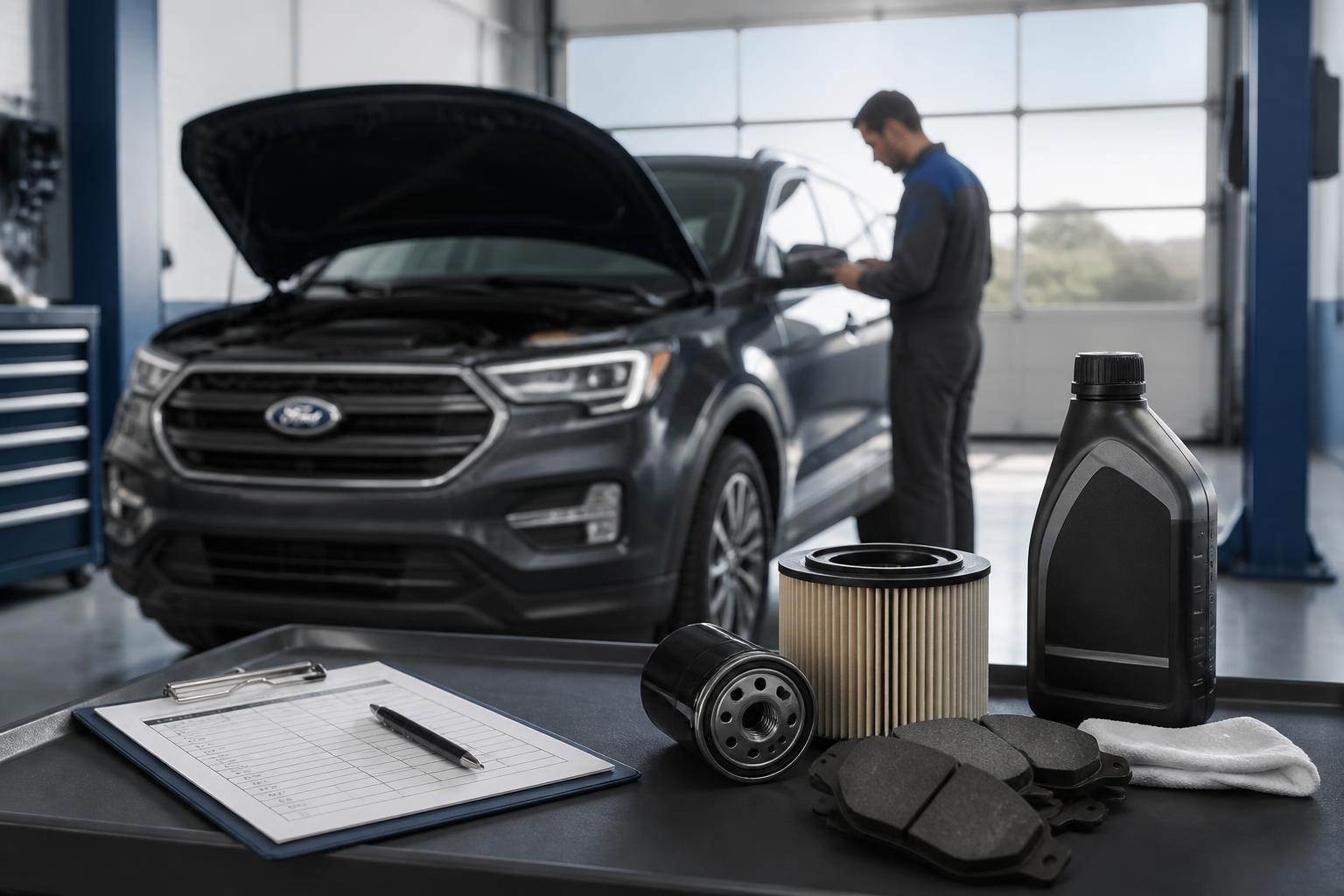
Success check: After resolving the issue, press the lock button on the fob once, then press the 2X remote start button twice. The parking lights should flash and the engine should start within three seconds. If the horn honks instead, the system detected a failure—repeat the checks above.
Sync Pairing (Sync 3 and Sync 4)
Sync 3 (2016–2019) and Sync 4 (2020+) both support wireless Apple CarPlay and Android Auto on models with the larger 8-inch or 15.5-inch screen. If wireless CarPlay or Android Auto disconnects repeatedly:
1. On your phone, go to Bluetooth settings and forget the SYNC connection.
2. On the vehicle screen, go to Settings > Bluetooth > Manage Devices and delete your phone.
3. Go to Settings > General > Master Reset (on Sync 3) or Settings > System > Factory Reset (on Sync 4). This clears all paired devices and saved Wi-Fi networks.
4. Reboot your phone.
5. Pair fresh: go to the vehicle’s Bluetooth screen, select “Add a Device,” and follow the prompts.
Sync 4 known issue: After a software-over-the-air (SOTA) update, the system may lose saved Wi-Fi hotspot networks. The fix is a factory reset of the connectivity settings under Settings > System > Connectivity > Reset Connectivity Settings. You will need to re-enter your Wi-Fi credentials afterward.
Maintenance Costs and Schedules
Engine Oil
Ford specifies 5W-30 full synthetic for all gasoline Explorer engines from 2011 onward. The oil change interval is 7,500–10,000 miles under normal driving, or 5,000 miles if you do frequent short trips, heavy towing, or operate in extreme heat.
Recommended oils:
- 3.5L V6: QUARTZ 9000 FUTURE FGC 5W-30, Mobil Super Synthetic 5W-30, or any full synthetic meeting Ford WSS-M2C946-B1
- 2.3L and 3.0L EcoBoost: Same viscosity, but must meet Dexos1 Gen 2 specification to protect the turbocharger
- 3.3L Hybrid: 5W-30 full synthetic, same as the standard V6
Capacity for the 3.5L V6 is 6 quarts. For the 2.3L EcoBoost, it is 5.7 quarts. Check the dipstick after the first start—the filter holds about half a quart.
Brake Pads
These 4,500-pound SUVs go through front brake pads every 40,000–60,000 miles. Rear pads last 60,000–80,000 miles.
Cost at a shop:
- Front pads and rotors: $350–$550
- Rear pads and rotors: $300–$450
- DIY pad replacement: $60–$120 for quality pads (Akebono or Wagner ThermoQuiet)
Signs to replace: A high-pitched squeal from the wear indicator, or a pulsing brake pedal indicates warped rotors. If you feel the pulse, replace the rotors—resurfacing them on modern Explorers is rarely cost-effective.
Spark Plugs
| Engine | Interval | Cost (parts + labor) |
|---|---|---|
| 3.5L V6 | 100,000 miles | $250–$400 |
| 2.3L EcoBoost | 60,000–100,000 miles | $300–$450 |
| 3.0L EcoBoost | 100,000 miles | $350–$500 |
Spark plugs on the 3.5L V6 are accessible with basic tools. The 2.3L and 3.0L EcoBoost engines require removing the intake manifold, which adds about 1.5 hours of labor. Most shops charge 1.5–2.5 hours total depending on engine.
Bottom line on Explorer maintenance: The 3.5L V6 is the cheapest to maintain long-term. The EcoBoost engines cost more per service but deliver better fuel economy and towing performance. Budget $600–$900 per year for routine maintenance on any engine, with the 3.5L at the lower end and the 3.0L ST at the upper end.

Greedy Wheels is the founder and lead editor at Wheels Greed. With over 15 years of hands-on automotive experience — from rebuilding engines in a home garage to managing fleet maintenance for a regional logistics company — he brings real-world mechanical knowledge to every guide.
His work has been featured in automotive forums, owner communities, and dealership training materials. When he’s not researching the latest car owner questions, you’ll find him at a local track day, wrenching on his project car, or testing the newest OBD2 diagnostic tools.
At Wheels Greed, every article is reviewed against manufacturer service manuals, NHTSA bulletins, and verified owner reports. No AI-generated fluff. No guesswork. Just practical answers from someone who has turned the wrench.