Ford Mustang: The Complete Owner’s Guide (All Generations)
For most buyers, the 2018–2023 S550 GT offers the best balance of performance, reliability, and modern features you can daily drive. If your budget is under $22,000, the 2011–2014 S197 GT with the 5.0L Coyote is the smartest used buy. The 2024+ S650 is the pick if you want the newest tech and are comfortable with first-year teething issues. This guide covers what each generation and trim actually delivers, the common problems you need to check before buying, and the maintenance that keeps them reliable.
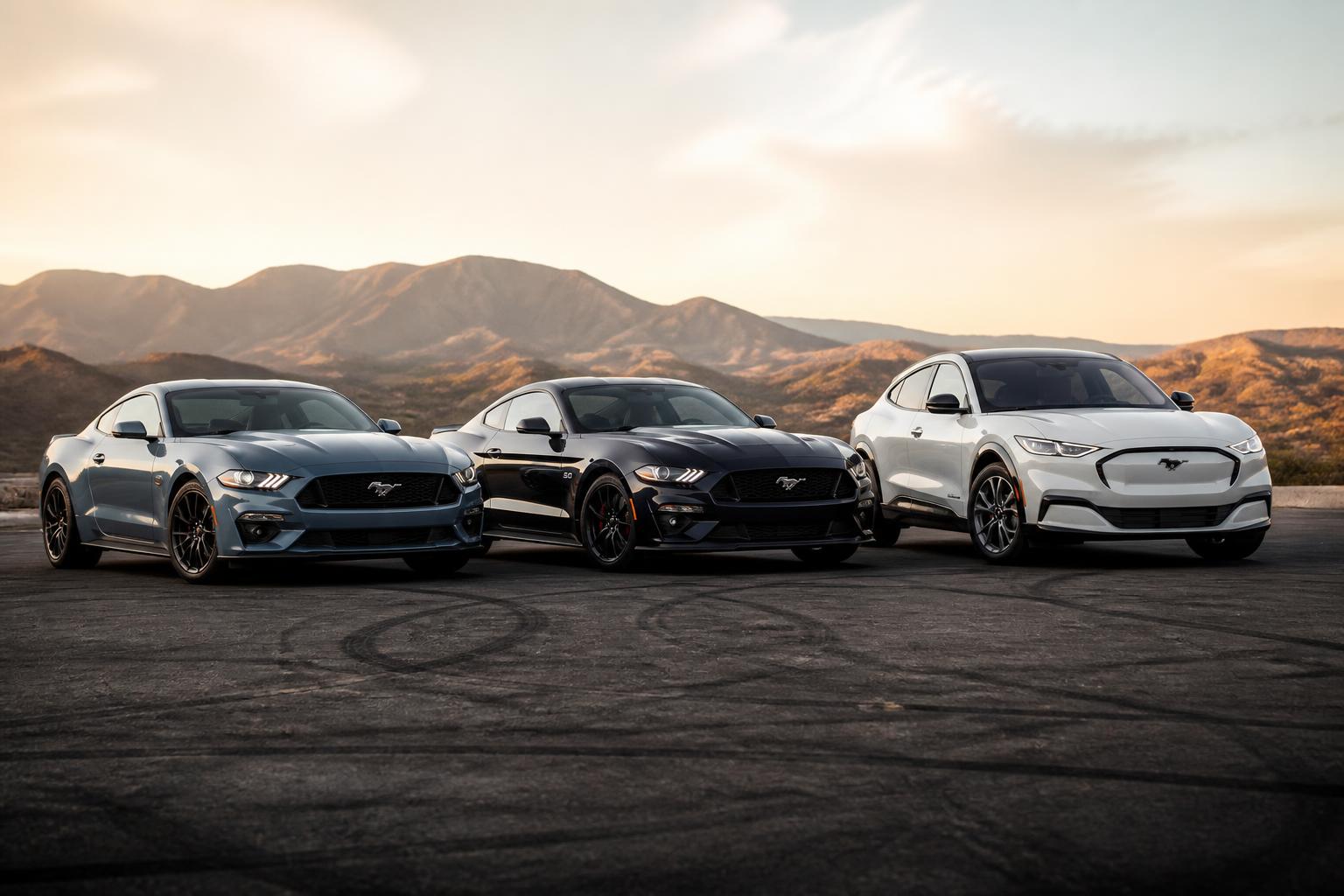
Choosing Your Mustang: EcoBoost vs GT vs Mach-E
The three powertrains serve different owners and budgets. Pick the one that matches how you actually plan to use the car.
EcoBoost (2.3L Turbo I4)
The 2.3L makes 310–332 hp depending on model year; the 2024+ S650 version produces 315 hp. Real-world fuel economy runs 22 city / 32 highway mpg on the S550—about 30% better than the GT in mixed driving. This trim fits daily commuters who want Mustang styling and handling without paying V8 fuel and insurance costs. The lighter front end also improves turn-in feel, making it genuinely enjoyable on back roads.
What to check before buying a used EcoBoost:
- Intercooler condensation (2015–2017): Cold, damp weather can cause misfires. Ford issued TSB 18-2021 for a warmer charge pipe and PCM reflash. If the car you’re looking at hasn’t had the fix, budget about $400 for the updated parts and labor.
- High-pressure fuel pump noise: A ticking sound from the passenger side is normal on all model years. A loud rattle on deceleration may indicate wastegate wear—covered under emissions warranty on 2015–2021 models in most states.
- Turbo wastegate rattle: Common on early S550s. A dealer wastegate adjustment or updated actuator arm usually quiets it. If ignored, it won’t damage the turbo but sounds bad.
Verdict: The 2018+ EcoBoost got a twin-scroll turbo that reduced lag and improved low-end torque. That’s the one to buy if you want the four-cylinder.
GT (5.0L Coyote V8)
Horsepower by generation: 2015–2017 (gen 2) makes 435 hp, 2018–2023 (gen 3) makes 460 hp, 2024+ (gen 4) makes 480 hp. Real-world fuel economy runs 15 city / 24 highway mpg. The GT is the choice for owners who want the V8 experience, the biggest aftermarket, and the strongest resale value.
What to check before buying a used GT:
- MT-82 manual transmission (2015–2020): Shift fork wear and synchro damage are common on cars with more than 60,000 miles, especially if the previous owner added a heavy aftermarket clutch. Symptoms include grinding into 3rd gear or a notchy 2–3 shift. A fluid swap to BG SyncroShift II can improve feel, but cracked shift forks need a rebuild ($1,200–$2,000). – 10R80 10-speed automatic (2018+): Harsh 2–3 upshifts or a clunk on downshifts are known issues. Ford TSB 21-2165 provides a PCM reflash. Many owners report that a fluid change at 40,000 miles prevents the problem from returning.
- Active exhaust valve failure (2018–2021): The welds on the valve housing crack, causing a rattle or exhaust leak. Ford extended warranty coverage on some VIN ranges through 8 years / 80,000 miles. If yours isn’t covered, aftermarket valved mufflers are often cheaper than replacing the stock system. – Oil consumption (2018–2020 gen 3): Some cars burn up to 1 quart per 1,000 miles when driven hard. Ford’s spec allows up to 1 quart per 500 miles under severe use, which is generous. Check the dipstick after a test drive and ask for service records.
Verdict: The 2018+ GT with the 10-speed auto is faster in a straight line than the manual and more livable in traffic. If you want a manual, the 2021+ models have revised synchros that hold up better under hard use.
Mach-E (Electric)
The Mach-E is a crossover, not a coupe, but it wears the Mustang badge and delivers performance that matches the name. The GT Performance Edition hits 480 hp and 600 lb-ft of torque, with a 0–60 time of 3.5 seconds. Range runs 224 miles (GT) to 312 miles (California Route 1 RWD). The Mach-E suits buyers who want instant torque, low running costs, and SUV practicality but still want Mustang-level acceleration.
What to check on a used Mach-E:
- HVJB (High-Voltage Junction Box) failure (2021–2022): A known issue causing loss of propulsion. Ford issued a recall (22S41) and software update that monitors contactor temperature. If the car still has the original part, the fix is free at any Ford dealer.
- 12V battery drain: The accessory battery can die if the car sits for a week without being plugged in. A Level 1 or Level 2 charger keeps it topped off; letting the car sit with a low high-voltage battery accelerates 12V drain.
- Cold-weather range drop: Expect a 25–35% range reduction in freezing temperatures. Preconditioning while plugged in helps recover about half of that loss.
Verdict: The 2023+ models resolved most of the early HVJB issues. Buy a 2023 or newer if you want the most reliable Mach-E experience.
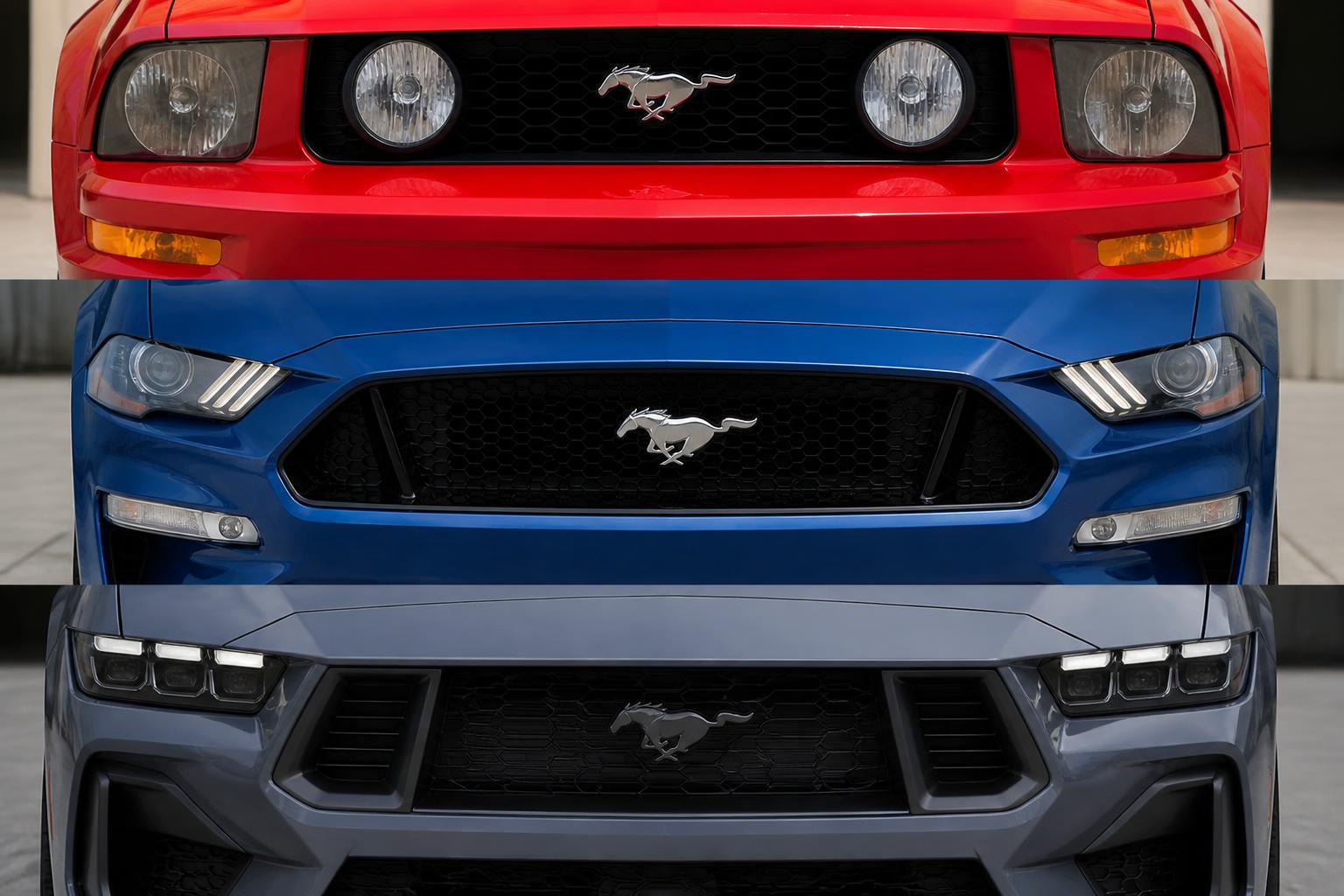
Mustang Generations Compared: S197, S550, and S650
Each generation has distinct strengths and problem patterns. Choosing the right generation matters more than choosing the right trim level.
S197 (2005–2014)
The S197 revived the Mustang with a retro look and solid-axle rear suspension. It splits into two distinct eras: 2005–2010 (4.0L V6 and 4.6L 3V V8) and 2011–2014 (3.7L V6 and 5.0L Coyote V8).
2005–2010:
- 4.6L 3V spark plug blowout: Spark plugs can eject from the cylinder head due to insufficient thread engagement. If it hasn’t happened yet, installing thread-repair inserts (Time-Sert or Lock-N-Stitch) at around $600 is a permanent fix. Check for threaded-repair evidence on any used car.
- Rear axle hop: The live-axle setup on GT models can unsettle the car during hard launches. Aftermarket control arms fix it; a car that already has them was probably driven hard.
- Interior quality: Hard plastics and rattling door panels are common. S197 interiors feel dated compared to S550 and S650 cabins.
2011–2014 (sweet spot for used buyers):
- Coyote 5.0L tick: A light ticking at idle is normal on most cars. A loud knocking sound that gets worse with RPM may indicate piston slap or a failed timing chain tensioner. Check the oil change history—long intervals accelerate chain wear.
- Getrag MT-82 transmission: The same weak spots as the S550 version, plus some early 2011 cars had synchronizer issues below 30,000 miles. The 2012–2014 revisions are more robust.
- Boss 302 and Shelby GT500: The Boss 302 (2012–2013) is a collectible that holds value, but it requires premium fuel and more frequent valve adjustments. The GT500 (2007–2014) has iron-block durability but the 2007–2009 supercharged 5.4L is prone to cooling system issues on track days.
Best S197 buy: A 2011–2014 GT Premium with Track Pack and manual transmission. Avoid 2005–2010 V8 cars unless the price accounts for the spark plug repair and axle hop fixes.
S550 (2015–2023)
The S550 brought independent rear suspension, aluminum front fenders and hood, and modernized styling. It is the deepest generation for options and the most livable as a daily driver.
2015–2017:
- IRS setup is a clear improvement over the S197, but early cars have a known clunk from the differential bushings. Ford TSB 17-2217 covers a bushing upgrade. Cost is about $300 if not repaired.
- SYNC 3 (2016+): The 2016 model year introduced Apple CarPlay and Android Auto. Avoid 2015 cars with SYNC 2 (MyFord Touch)—the system is slow and difficult to use by modern standards.
- A/C evaporator failure: Common on 2015–2017 cars. The evaporator leaks, causing warm air on the passenger side. Dashboard-out replacement runs $1,400–$2,000.
2018–2023 (recommended range):
- Gen 3 Coyote gained direct injection plus port injection, reducing carbon buildup on intake valves—a problem on earlier direct-injection-only engines. The added power (460 hp) and torque curve make this the best daily-driver GT engine.
- Magnaride dampers became available on GT Premium and Performance Pack 2 cars. They wear out around 70,000–90,000 miles; replacement cost is about $500 per corner at a shop. A car with failed Magnaride will feel floaty at highway speeds.
- 10-speed automatic pairing launched in 2018. The combination is quicker than the manual and returns better fuel economy. The manual is still available but now feels like the enthusiast choice rather than the performance choice.
Best S550 buy: A 2018–2023 GT Premium 401A with Performance Pack 1 and the 10-speed auto. For a lower budget, a 2018–2020 EcoBoost Premium with the 201A package gives you heated seats, leather, and a good audio system for under $25,000.
S650 (2024+)
The S650 is a major electronic and interior refresh. The powertrain carries over from the S550 with minor updates. The chassis is structurally the same as late-model S550.
What changed:
- Digital dash and SYNC 4: The 12.4-inch gauge cluster and 13.2-inch center screen are standard. The gauge cluster is fully configurable and offers a “Fox Body” retro mode.
- Exterior styling: Sharper front and rear fascias with a more angular look. The Dark Horse trim replaces the Mach 1 as the track-focused model.
- Gen 4 Coyote: 480 hp in the GT, achieved through revised intake and exhaust ports, higher compression, and dual throttle bodies on the Dark Horse.
First-year issues to watch:
- SYNC 4 glitches: Screen freezes, slow boot times, and random reboots have been reported on early 2024 cars. Most are fixed by over-the-air updates, but some require dealer PCM reflashes.
- Plastic rattles in the digital dash: A small number of owners report buzzing from the gauge cluster housing at highway speeds. So far, Ford’s fix is a foam shim kit applied by dealers.
- Dark Horse brake dust: The 6-piston Brembo calipers produce heavy dust that can stain wheels if not cleaned weekly. Ceramic pad swaps are available from aftermarket sources.
Best S650 buy: A 2025 model year after the first-year ABS and SYNC bugs get worked out. If you want a Dark Horse, buy it for the handling package, not the extra 20 hp—the chassis improvements make more difference on track than the power gain.
Key Fob and MyKey Features
All Mustangs from 2015 onward use the same key fob style with remote start, trunk release, and panic button. There are a few quirks you should know.
Remote Start Range
Ford rates the factory remote start at 300 feet of line-of-sight range. In practice, expect about 100–150 feet through buildings or parking lot obstacles. The 2018+ fobs have better range than 2015–2017 fobs. If you need more range, aftermarket antenna extenders are available for about $50, but they require wiring into the factory remote start module.
MyKey Programming
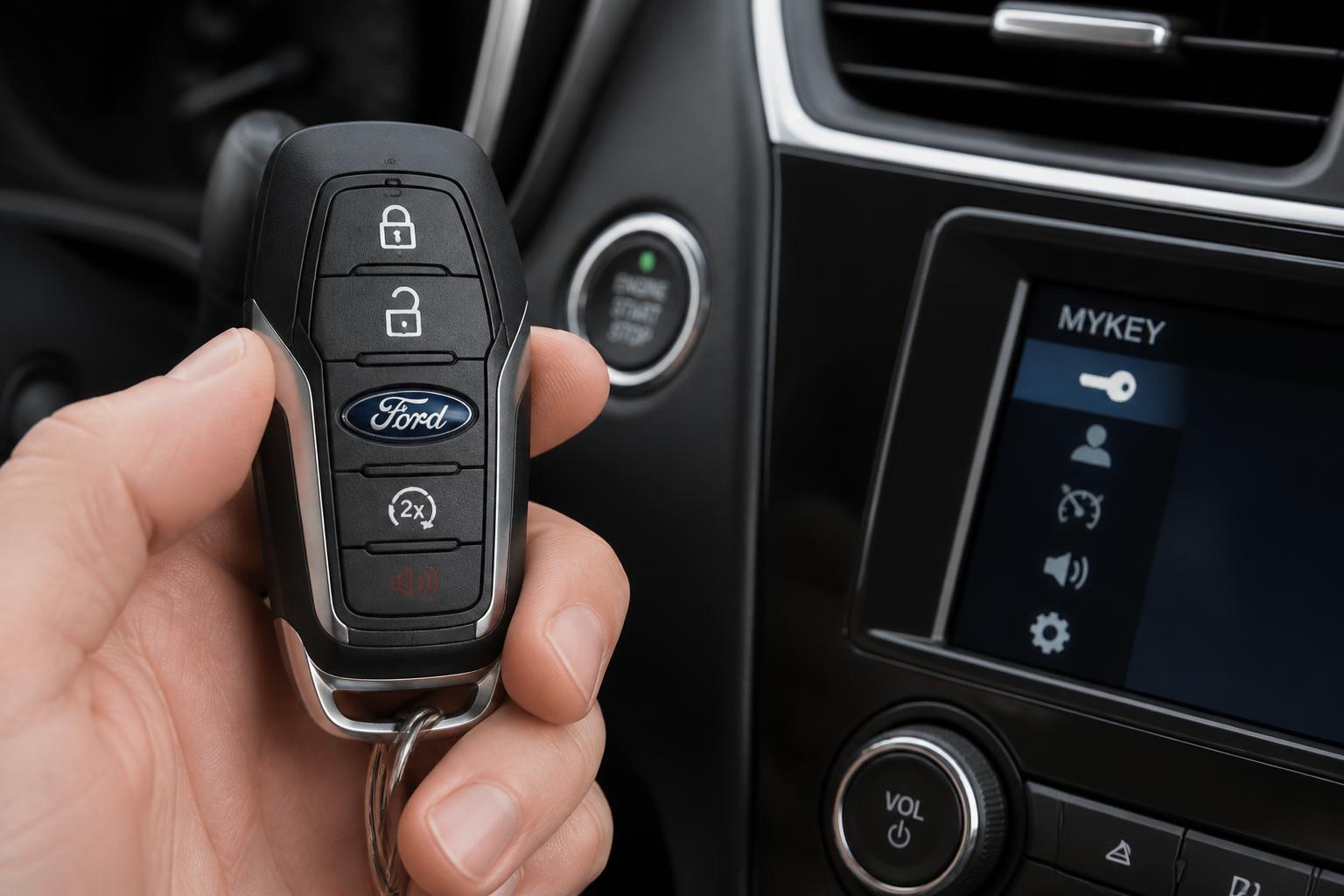
MyKey lets you restrict driving behavior for valets or teen drivers. You can:
- Limit top speed to 80, 85, 90, 95, or 100 mph. A 2022 survey by Ford found that 65% of Mustang owners who use MyKey set the speed limiter at 85 mph.
- Limit audio volume to 44% of max output. This overrides external amplifiers and aftermarket head units.
- Disable traction control. MyKey can force traction control to stay on in AdvanceTrac mode, so a restricted driver cannot fully disable it.
To program a MyKey: Insert the admin key (the one with the two red tags), navigate to Settings → MyKey → Create MyKey, then follow the on-screen prompts. You can program up to four total keys, and you must designate at least one admin key first.
Dead Fob Procedure
If your S550 or S650 key fob battery dies, you cannot start the car by pressing the start button normally. Lift the center console cupholder insert—there is a molded slot underneath. Insert the key fob into that slot, fully forward, and press the start button. This uses RFID coupling to start the engine even with a dead fob battery. On S197 cars with push-button start, you hold the fob against the start button itself.
SYNC Infotainment by Generation
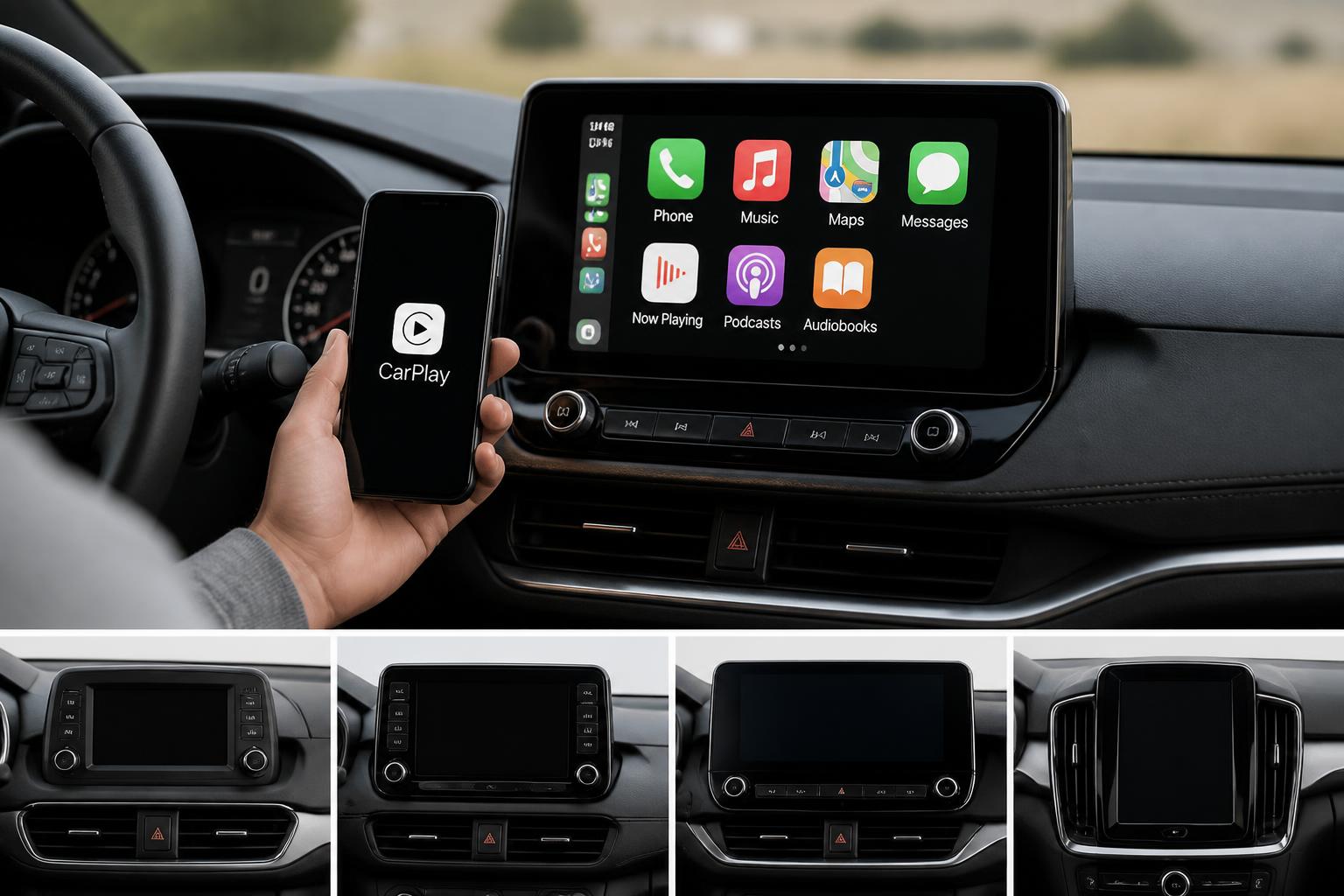
SYNC is the biggest usability difference between Mustang generations. Here is what each version does and does not do.
SYNC 1 (2010–2014)
- Basic voice commands for phone calls and media. No navigation, no touchscreen on base models.
- No smartphone integration. Bluetooth audio streaming works but Apple CarPlay and Android Auto do not exist.
- Screen: 4.2-inch monochrome on base, 8-inch color on Premium trim with Sony audio.
- Dealbreaker: The system feels archaic today. Plan to replace it with an aftermarket unit if you buy a 2010–2014 car and want modern connectivity. Install runs about $500 for a quality Sony or Pioneer unit with CarPlay.
SYNC 2 / MyFord Touch (2015 early models, some 2014)
- 8-inch resistive touchscreen with Ford Sync Services voice commands. Slow response times and laggy inputs are common.
- Owners complain about Bluetooth pairing dropping on phone calls and navigation reroutes taking 30 seconds or more.
- No CarPlay or Android Auto. This is the main reason to avoid 2015 cars unless the price is deeply discounted. A dealer SYNC 3 retrofit kit costs about $1,500 and requires programming.
SYNC 3 (2016–2023)
- Capacitive touchscreen with CarPlay and Android Auto standard from 2017 onward. 2016 models shipped with SYNC 3 but may need a software update from the Ford owner portal or a dealer USB install (usually free) to enable CarPlay.
- Over-the-air updates via Wi-Fi started with 2018+ models. Earlier cars need a USB update from owner.ford.com.
- 8-inch screen is standard; resolution and responsiveness are a big step up from MyFord Touch. The interface is clean and the system boots in under 10 seconds on most cars.
- Common issues: Screen delamination on 2016–2019 cars (bubbles under the glass at the edges). This is a known defect and some dealers will replace the APIM module under goodwill even outside warranty. Occasional CarPlay connection drops are fixed by a new USB hub ($60, DIY) or a SYNC master reset.
SYNC 4 (2024+ S650)
- 12.4-inch digital gauge cluster and 13.2-inch center screen are standard on all trims. Wireless CarPlay and Android Auto come standard — no cable needed.
- Faster processor than SYNC 3 with smoother animations and quicker voice command response.
- Early bugs: Screen freezes, slow boot times, and random reboots on early 2024 cars. Most are fixed by over-the-air updates. Some need a dealer PCM reflash under TSB 24-2012.
- Navigation: Connected built-in navigation with live traffic is standard on Premium and Dark Horse trims. Base models rely on phone projection.
- Recommendation: The 2025+ SYNC 4 cars have fewer early-build issues. If you buy a used 2024, confirm all available OTA updates have been applied before purchase.
Explore This Topic
- The Legacy Of The Father Of The Ford Mustang
- Understanding The Reliability Of Ford Mustang
- Understanding The Weight Of A Ford Mustang

Greedy Wheels is the founder and lead editor at Wheels Greed. With over 15 years of hands-on automotive experience — from rebuilding engines in a home garage to managing fleet maintenance for a regional logistics company — he brings real-world mechanical knowledge to every guide.
His work has been featured in automotive forums, owner communities, and dealership training materials. When he’s not researching the latest car owner questions, you’ll find him at a local track day, wrenching on his project car, or testing the newest OBD2 diagnostic tools.
At Wheels Greed, every article is reviewed against manufacturer service manuals, NHTSA bulletins, and verified owner reports. No AI-generated fluff. No guesswork. Just practical answers from someone who has turned the wrench.