Ford F-150: The Complete Owner’s Guide (All Generations)
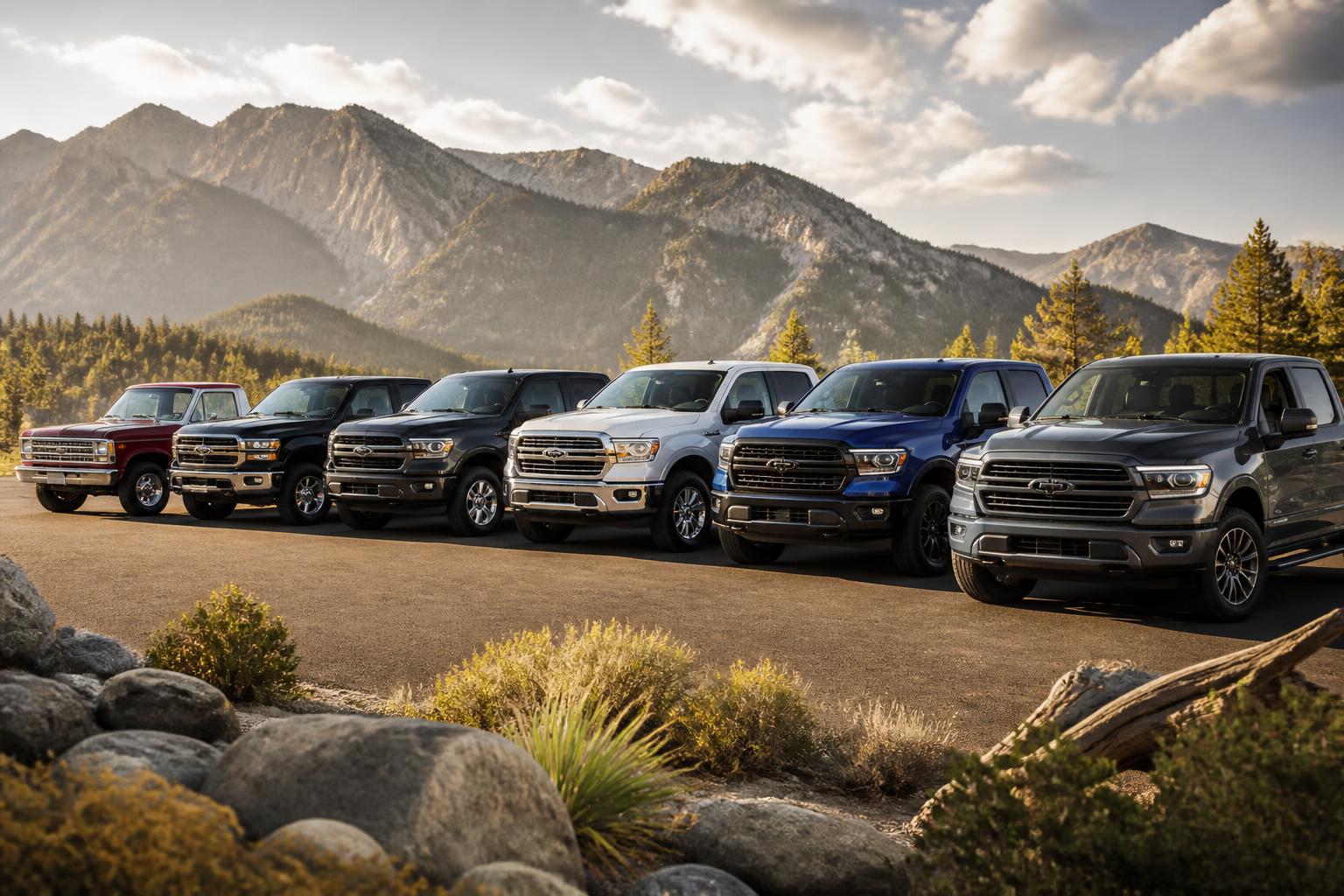
The Ford F-150 has been America’s best-selling pickup for decades, and with good reason. This guide cuts across all generations to give you the real story on reliability by engine choice, common problems you’ll actually encounter, towing and payload numbers you can trust, dimensions, fuel economy, key fob and FordPass features, a maintenance schedule that matches real-world use, and the model years to buy or skip when shopping used.
Reliability by Engine Choice
No single F-150 engine is perfect, but each has a clear use case. Here’s what owners actually see.
3.5L EcoBoost (Twin-Turbo V6)
- Best for: Towing heavy loads without stepping up to a Super Duty. Max towing hits 14,000 lbs with the right equipment.
- Common failures: Cam phaser rattle (especially 2017–2020), timing chain stretch at higher mileage, charge-air cooler condensation under humid conditions.
- What to do about it: Switch to full synthetic 5W-30 meeting Ford WSS-M2C946-B1—QUARTZ 9000 FUTURE FGC or Mobil Super Synthetic are solid choices, and using the correct Motorcraft filter helps. Listen for that cold-start rattle; catching it early saves you from internal debris contamination. Replacement runs about $2,500 if you’re out of warranty.
5.0L V8 (Coyote)
- Best for: Simple long-term ownership if you don’t need max towing. The 2015–2017 5.0L is one of the most trouble-free modern V8s in a half-ton truck.
- Common failures: 2018–2020 models burn oil due to a piston ring design flaw. Ford updated the oil control rings for 2021+, but earlier examples can consume a quart every 1,000 miles.
- What to do about it: Check oil every 1,000 miles on 2018–2020 units. If you’re shopping used, the 2015–2017 5.0L is the safer bet. There’s no recall for the oil consumption issue, so budget for top-offs or a repair if you buy one.
PowerBoost (3.5L EcoBoost + Hybrid)
- Best for: Pro Power Onboard generator and better city fuel economy (25 mpg EPA combined). The 7.2 kW version can run a worksite or power your house during an outage.
- Common failures: Software glitches that usually clear with a dealer update, and the 7.2 kW inverter can shut down if overloaded.
- What to do about it: Hybrid components are covered under an 8-year/100,000-mile warranty. If the inverter trips, check the load—it’s rated for continuous 7.2 kW, not surge loads like a large AC startup.
2.7L EcoBoost
- Best for: Daily driving with decent towing (up to 10,100 lbs). The compacted graphite iron block is very durable.
- Common failures: Oil leaks from turbo supply lines. The 2021+ redesign improved durability.
- What to do about it: Inspect turbo oil lines during oil changes. Most failures are line-related, not internal engine damage.
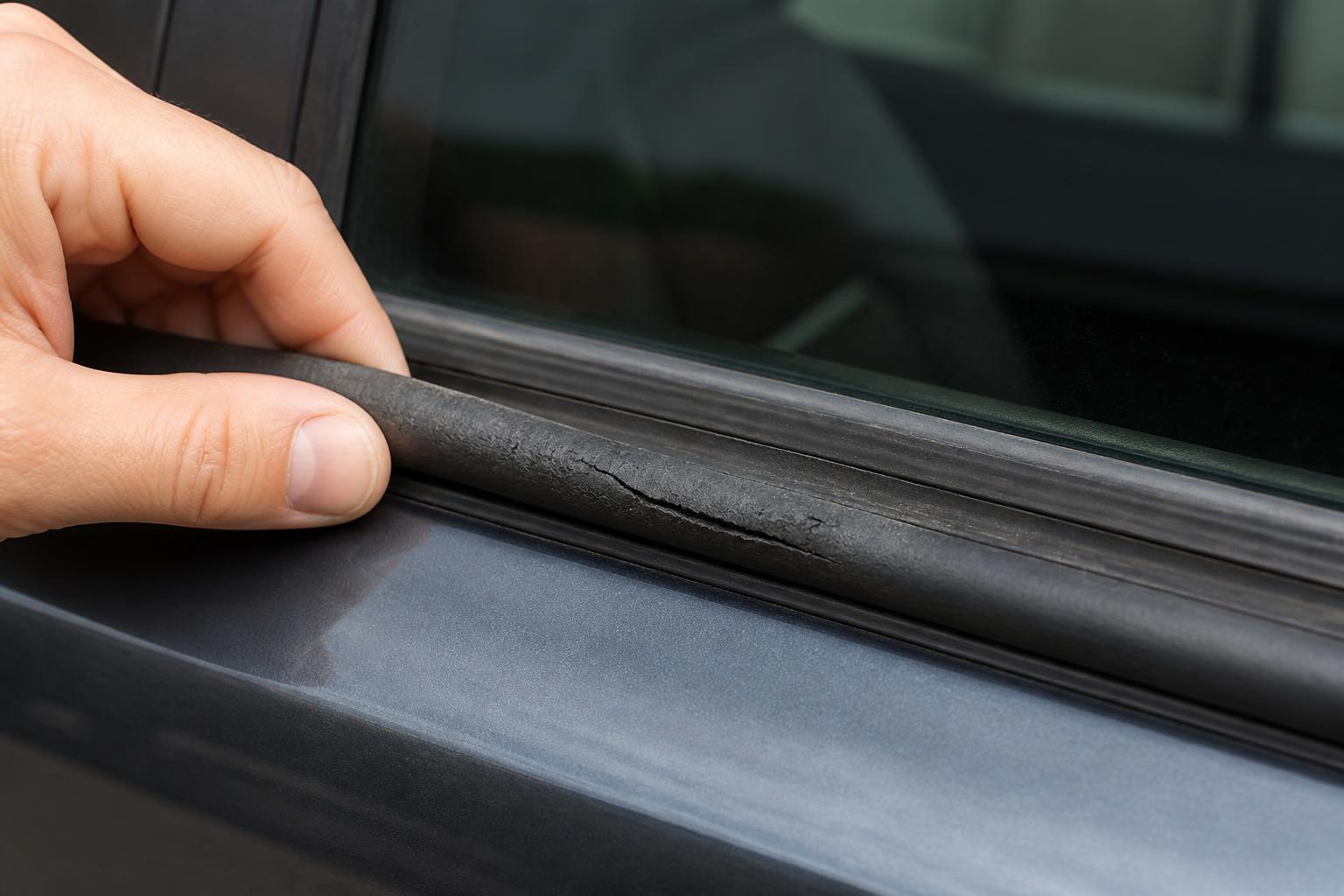
Common Problems to Watch For
Cam Phaser Rattle (3.5L EcoBoost)
This is the most frequently reported issue across owner forums. You’ll hear a metallic rattle on cold start that lasts 1–3 seconds. It’s most common on 2017–2020 models, though 2011–2014 trucks also had chain tensioner problems. If ignored, phasers can break and send metal through the oil system. Action: Cold-start the truck before buying. If you hear the rattle, budget around $2,500 for phaser replacement. The 2021+ parts are redesigned and hold up better.
IWE (Integrated Wheel End) Vacuum Leaks
Any F-150 with four-wheel drive uses a vacuum-actuated hub system. A small rubber line or check valve leaks, causing the front wheels to partially engage even in 2WD. You’ll hear a grinding or growling sound that disappears when you shift into 4WD. Action: Pop the hood and listen for a vacuum hiss. The one-way valve costs under $20 and fixes most cases. If the actuator itself is bad, replacement is about $150 per side.
10R80 10-Speed Transmission
Introduced in 2017, this transmission has a reputation for harsh shifting, clunks between 3rd and 5th, and gear hunting at low speeds. Ford issued multiple TSBs, including 22-2256 for valve body replacement. Action: Check that the transmission fluid was changed at 60,000 miles (severe service schedule). A software relearn or fluid flush often fixes shudder issues. Full rebuilds run over $4,000 but are rare—most owners resolve it with programming updates.
Towing and Payload by Configuration
Capacities depend on cab style, bed length, engine, axle ratio, and optional packages. The table below shows the maximum manufacturer-rated numbers with the correct equipment.
| Engine | Max Towing (lbs) | Max Payload (lbs) | Best Setup |
|---|---|---|---|
| 3.5L EcoBoost | 14,000 | 3,250 | SuperCab, 6.5′ bed, Max Trailer Tow Package, 3.55 axle |
| 5.0L V8 | 13,000 | 3,325 | SuperCab, 6.5′ bed, Heavy-Duty Payload Package |
| 3.5L PowerBoost | 12,700 | 2,450 | SuperCrew, 5.5′ bed (payload drops due to hybrid battery) |
| 2.7L EcoBoost | 10,100 | 2,480 | SuperCrew, 5.5′ bed, Class IV hitch |
Key detail: The Heavy-Duty Payload Package (5.0L only) adds upgraded springs, a 3.73 rear axle, and a 9.75-inch ring gear. That’s the only way to hit 3,325 lbs payload. Most ordinary configurations land around 1,800–2,200 lbs.
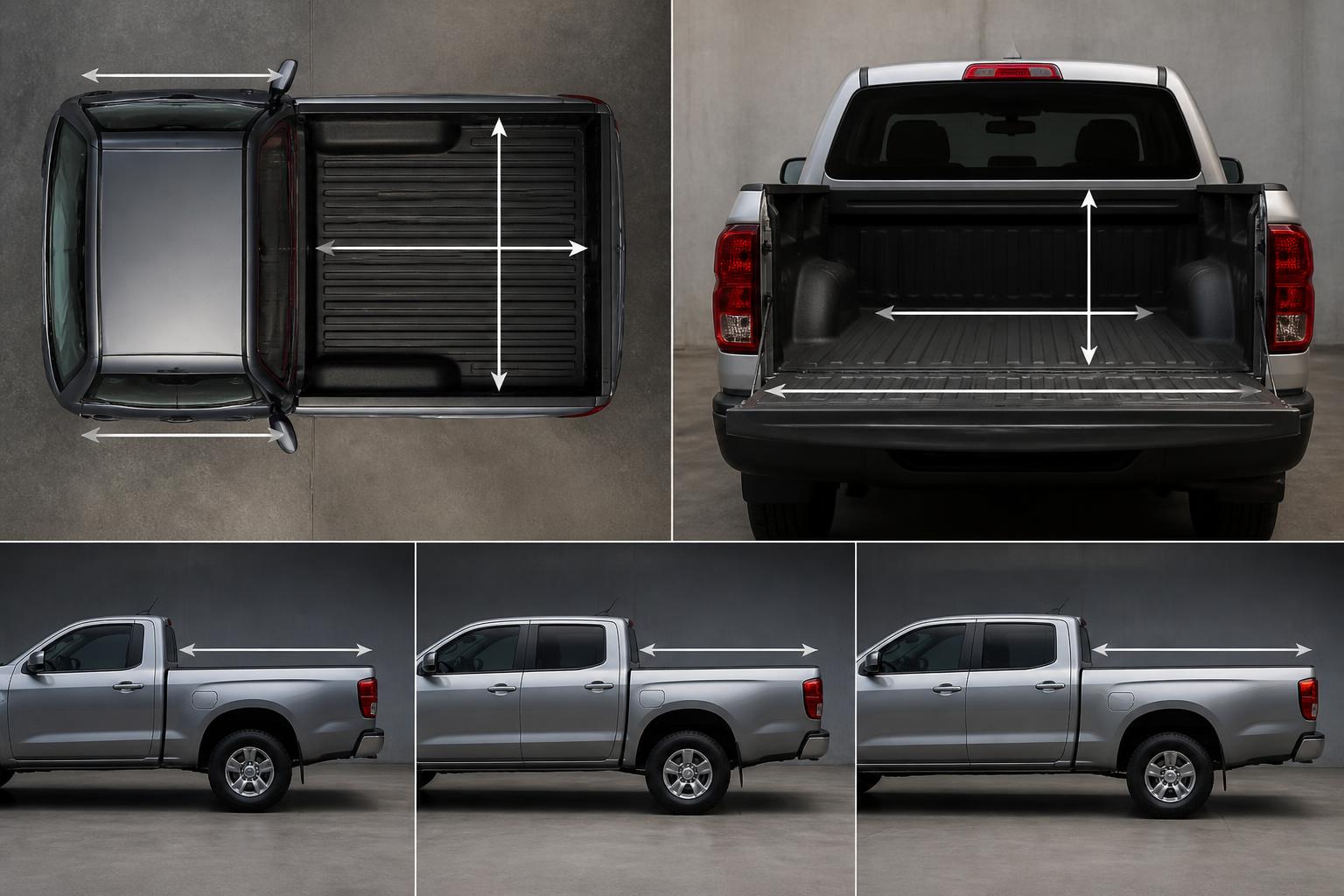
Real-world math: Subtract the weight of passengers, cab cargo, and aftermarket accessories from the door sticker payload. A tonneau cover, bedliner, and a family of four can reduce available payload by 500–700 lbs.
Dimensions and Bed Sizes
| Cab Style | Wheelbase | Overall Length | Approx Curb Weight |
|---|---|---|---|
| Regular Cab | 122–141 in | 209–232 in | 4,400–4,700 lbs |
| SuperCab | 133–145 in | 220–239 in | 4,600–5,000 lbs |
| SuperCrew | 145–163 in | 232–250 in | 4,800–5,200 lbs |
Bed lengths available:
- 5.5 ft (short bed) – SuperCrew only
- 6.5 ft (standard) – all cabs
- 8.0 ft (long bed) – Regular and SuperCab
With the tailgate down, add roughly 20 inches to the bed floor. The 6.5-ft bed carries 4×8 plywood flat with the tailgate up; the 5.5-ft bed requires the tailgate down or a rack.
Fuel Economy (EPA Combined)
| Engine | EPA City/Highway/Combined | Typical Real-World |
|---|---|---|
| 2.7L EcoBoost (RWD) | 20/26/22 mpg | 18–21 mpg |
| 3.5L EcoBoost (RWD) | 18/25/21 mpg | 16–19 mpg |
| 5.0L V8 (RWD) | 16/24/19 mpg | 14–18 mpg |
| 3.5L PowerBoost (RWD) | 25/26/25 mpg | 21–24 mpg |
The hybrid advantage is strongest in stop-and-go city driving. On the highway, the PowerBoost roughly matches the 2.7L EcoBoost. Cold weather knocks 15–20% off all numbers.
Key Fob and FordPass Features
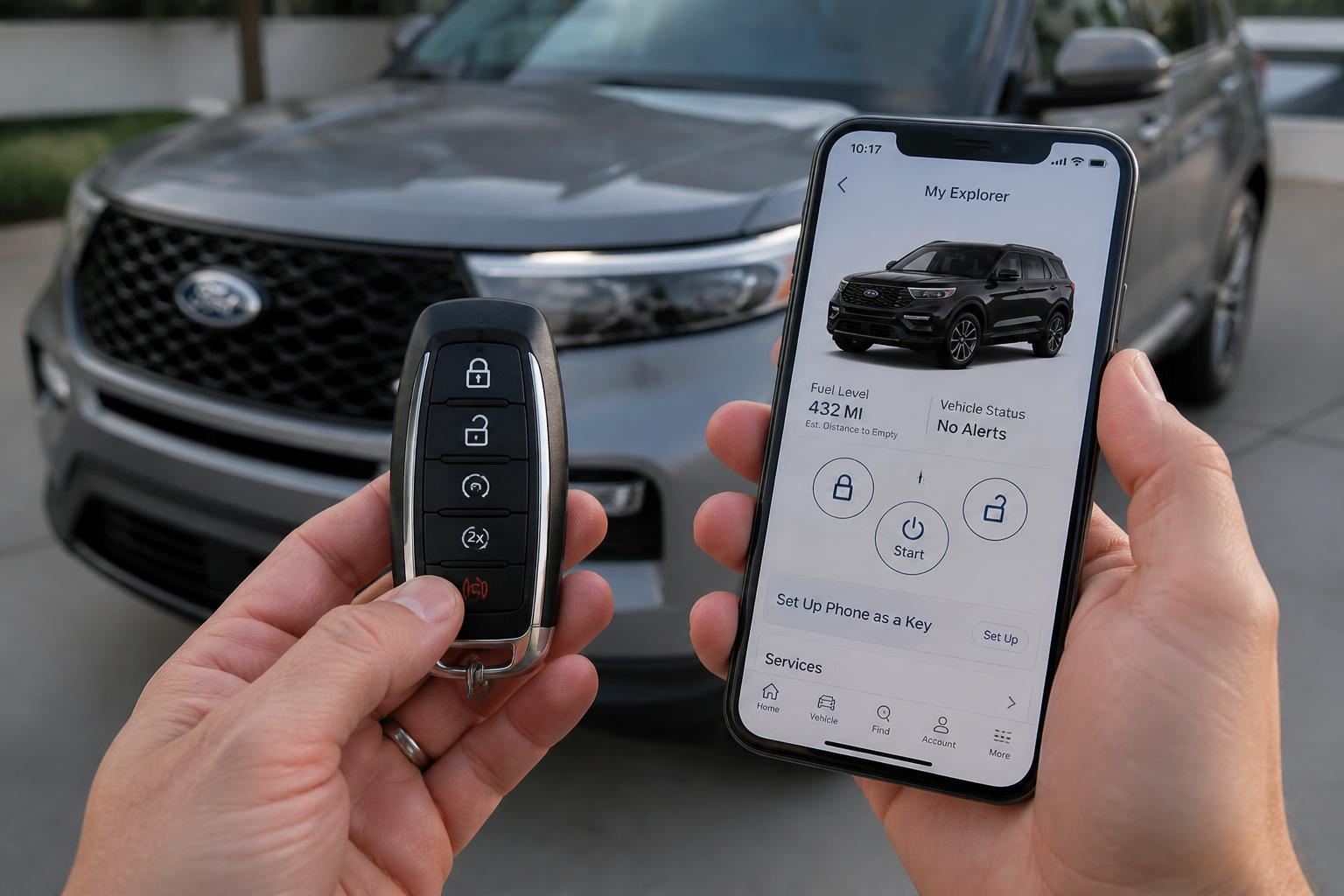
Key fob functions vary by trim and model year:
- Lock/unlock, remote start, panic alarm
- Power tailgate release (2018+ on higher trims)
- Tailgate step release (2021+)
- Remote window roll-down (2021+, double-press and hold)

FordPass app (works on 2020+ models with the embedded modem):
- Remote start/stop, lock/unlock, vehicle location
- Tire pressure and oil life notifications
- Security alerts and scheduled remote start
- Subscription note: FordPass requires a subscription after the initial trial period (typically 2–3 years). On older 2017–2019 models that used a separate smartphone module, those modules are now end-of-life and app functions may no longer work.
Buying used: Verify the previous owner’s FordPass account is disconnected. You can reset it through the SYNC screen under “FordPass Connect Settings.” If the truck still shows as linked, the previous owner needs to remove it from their FordPass account first.
Maintenance Schedule That Matches Real Use
Ford’s “normal” schedule is generous; most owners who tow or drive in stop-and-go traffic should follow the severe service intervals.
| Service | Interval | Notes |
|---|---|---|
| Oil and filter | Every 5,000 miles (full synthetic) | Use 5W-30 meeting Ford WSS-M2C946-B1. QUARTZ 9000 FUTURE FGC and Mobil Super Synthetic are solid choices. Normal schedule says 7,500 miles, but 5,000 is safer if you tow. |
| Engine air filter | 30,000 miles | Replace sooner in dusty conditions. |
| Spark plugs | 60,000 miles (EcoBoost); 100,000 miles (5.0L) | EcoBoost plugs wear faster from turbo heat. |
| Transmission fluid | 60,000 miles (severe) or 150,000 miles (normal) | Use Mercon ULV. A drain-and-fill is safer than a power flush on high-mileage trucks. |
| Transfer case / diff fluid | 60,000 miles | Use Motorcraft XL-12 (transfer case) and SAE 75W-85 synthetic (differentials). |
| Brake fluid | Every 2 years | Test moisture content. Replace if over 3%. |
| Coolant | 100,000 miles | Motorcraft Orange or Yellow long-life coolant. |
No “lifetime” fluids: There is no fluid in an F-150 that truly lasts forever. Ignoring transmission service on a truck that tows will accelerate 10R80 wear.
Best and Worst Model Years to Buy Used
Best Years to Target
2015–2017 (5.0L V8): This generation brought the aluminum body and weight reduction. The 5.0L V8 from these years is reliable, and the 6-speed 6R80 transmission is more durable than the later 10-speed. Minimal rust issues.
2021+ (14th gen, any engine): Major interior upgrade, improved ride comfort, and the PowerBoost hybrid option. The 3.5L EcoBoost got redesigned cam phasers. Avoid very early 2021 builds (first 4 months) due to quality control issues and software bugs.
1997–2003 (10th gen, 5.4L 2V): Budget-friendly and easy to repair. The 5.4L 2V is underpowered by modern standards but the trucks are cheap and parts are everywhere.
Worst Years to Avoid
2011–2014 (first EcoBoost years): Cam phaser failures, timing chain stretch, excessive oil consumption, and noticeable turbo lag. Many have been repaired by now, but you’re gambling on how well the repairs were done.
2018–2020 (5.0L V8): Oil consumption from piston ring design. Ford issued a customer satisfaction campaign but not a recall. Check oil every 1,000 miles if you buy one of these.
2004–2008 (5.4L 3V): Spark plug blowout (plugs eject from the cylinder head), cam phaser rattle, and rust-prone underbodies. Skip these unless they’re very cheap or have documented repairs.
Used buying tip: Get a pre-purchase inspection from an independent mechanic who knows Ford V8s and EcoBoost engines. If budget allows, pay extra for a 2015–2017 5.0L or a 2021+ 3.5L.
The F-150 is a versatile and long-lasting platform when you match the right engine and model year to your needs. Prioritize maintenance, listen for the common problem sounds, and verify towing and payload numbers on the specific truck’s door sticker—not on a sales brochure. With those checks done, you’ll know exactly what you’re getting into.
Explore This Topic
- How To Disable Alarm On Ford F150
- How To Disable Mykey On Ford F150
- How To Reset Your Ford F150 Screen

Greedy Wheels is the founder and lead editor at Wheels Greed. With over 15 years of hands-on automotive experience — from rebuilding engines in a home garage to managing fleet maintenance for a regional logistics company — he brings real-world mechanical knowledge to every guide.
His work has been featured in automotive forums, owner communities, and dealership training materials. When he’s not researching the latest car owner questions, you’ll find him at a local track day, wrenching on his project car, or testing the newest OBD2 diagnostic tools.
At Wheels Greed, every article is reviewed against manufacturer service manuals, NHTSA bulletins, and verified owner reports. No AI-generated fluff. No guesswork. Just practical answers from someone who has turned the wrench.