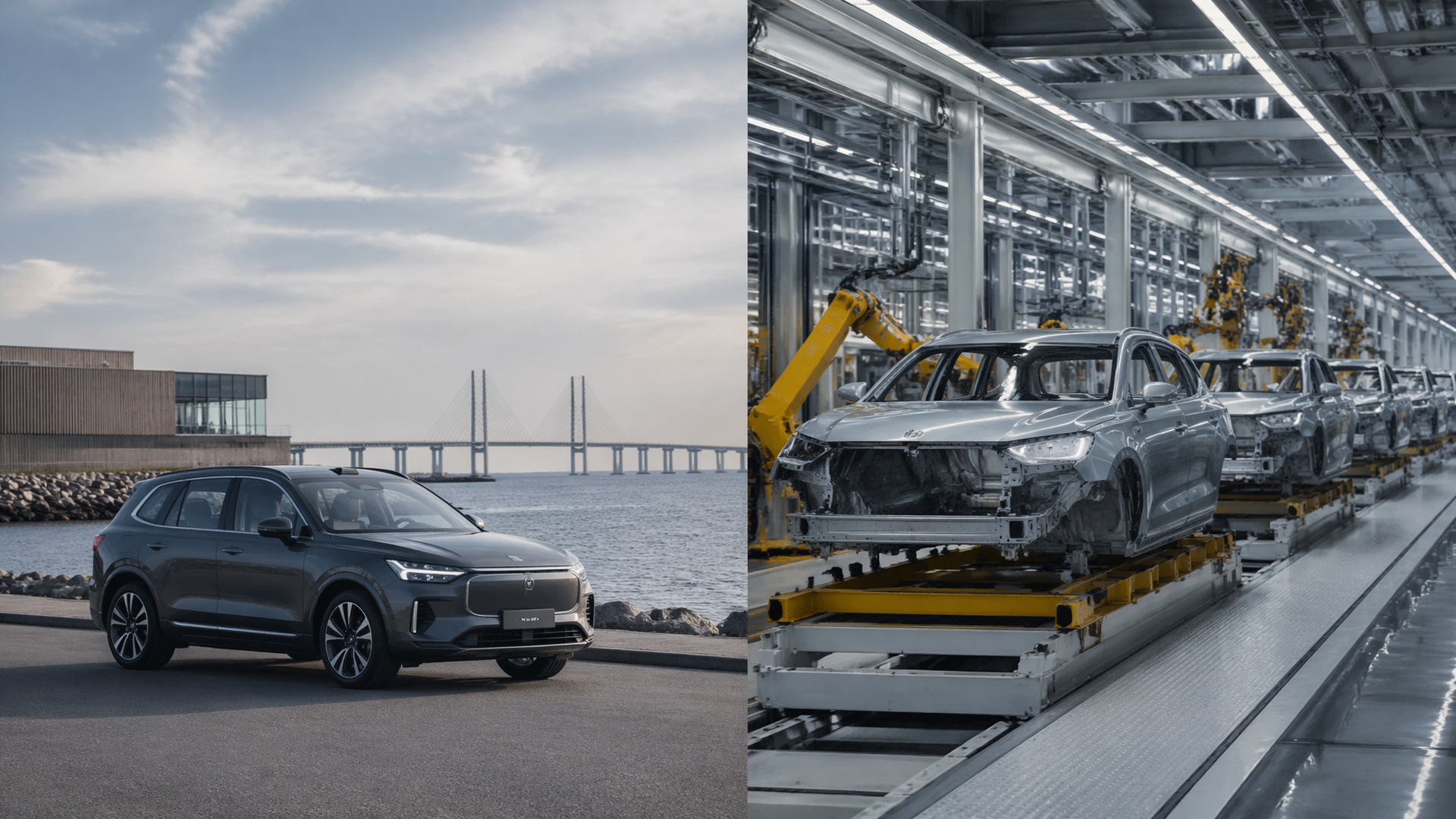
Where Volvo cars are built and how ownership differs from production
Volvo cars are manufactured in several key locations globally, including Sweden, China, and Belgium, with a notable plant in the United States. While the production facilities are spread across different continents, it’s important to understand that Volvo Cars is now fully owned by a Chinese company, Zhejiang Geely Holding Group, since 2010. This ownership structure means that while the cars might be built in various countries, the strategic decisions and financial backing come from a Chinese parent company, though Volvo maintains significant operational independence and adheres to its Swedish heritage in design and safety.
Volvo’s Global Manufacturing Network
Volvo strategically places its manufacturing plants to serve major markets efficiently and to adapt to regional demands. The primary production sites include:
- Sweden: The historical home of Volvo, with major facilities in Torslanda and Uddevalla. These plants continue to be vital for producing many core Volvo models and embody the brand’s long-standing engineering and quality standards.
- China: Volvo operates several manufacturing plants in China, such as those in Chengdu, Daqing, and Taizhou. These facilities are crucial for supplying the large Chinese market and are increasingly involved in exporting vehicles to other regions.
- Belgium: The plant in Ghent is a significant European manufacturing hub, producing a variety of Volvo models for the continent.
- United States: Volvo has a production facility in Ridgeville, South Carolina, dedicated to building models like the S60 primarily for the North American market, but also for export.
This global footprint allows Volvo to optimize supply chains, manage costs, and respond to local consumer preferences.
Understanding Geely’s Ownership of Volvo Cars
The acquisition of Volvo Cars by Zhejiang Geely Holding Group in 2010 marked a significant shift in the brand’s corporate structure. Geely, a major Chinese automotive conglomerate, provided Volvo with substantial financial resources. This investment has been instrumental in enabling Volvo to develop new technologies, electrify its model range, and expand its global presence.
Despite the change in ownership, Volvo has largely retained its operational autonomy and Swedish identity. The company’s headquarters, design centers, and core engineering functions remain based in Gothenburg, Sweden. The brand’s commitment to safety, sustainability, and Scandinavian design principles continues to be a guiding force. Geely’s approach has been to support Volvo’s existing strengths and culture rather than to impose a drastic change in direction.
Practical Implications for Volvo Owners
For most Volvo owners, the distinction between where a car is built and who owns the company has subtle but important practical implications. Geely’s ownership has fueled significant investment in research and development, leading to advancements in areas like electrification, driver-assistance systems, and in-car technology. This means drivers benefit from a continuous stream of innovative features and a modern, evolving product line.
However, the specific manufacturing location of your Volvo can sometimes influence the exact specifications or available options. For instance, vehicles produced at the South Carolina plant are configured with North American market preferences and regulations in mind. Similarly, cars built in China may feature configurations tailored for that market. While Volvo strives for global consistency, minor variations in trim, features, or even suspension tuning can exist based on the plant of origin and its target market.
Verifying Your Vehicle’s Origin
To understand the specific origin and potential configuration nuances of your Volvo, you can typically find this information on a sticker located on the driver’s side doorjamb. This sticker usually contains the Vehicle Identification Number (VIN) and details about where the car was manufactured. Consulting your vehicle’s owner’s manual or the Volvo Cars app can also provide insights into model-specific features and their origins.
Potential Trade-offs and Considerations
While Volvo maintains high quality standards across all its production facilities, a potential trade-off to consider is the subtle influence of regional manufacturing on specific vehicle characteristics. For example, while safety standards are paramount globally, minor variations in material sourcing or assembly line practices between plants could theoretically lead to slight differences in the perception of build quality or feature integration. However, Volvo’s rigorous quality control processes aim to minimize these discrepancies, ensuring that the core Volvo experience remains consistent.
The primary benefit of this distributed production model is increased accessibility and potentially more competitive pricing in various markets. Conversely, a limitation might be that certain cutting-edge features or specialized models might initially debut from a specific plant before being rolled out to others, leading to a temporary disparity in availability.
How Ownership Differs from Production Location
The key difference lies in strategy and finance versus assembly. Ownership by Geely dictates the long-term vision, investment strategy, and global market approach for Volvo. This includes decisions on electrification targets, new model development, and expansion into new territories. Production location, on the other hand, refers to the physical act of assembling the vehicle. While the production plant adheres to Volvo’s global engineering and design blueprints, local economic factors, supply chain logistics, and regional market demands can influence the specific assembly process and vehicle configuration. For consumers, the brand’s core values of safety, design, and quality are intentionally preserved, regardless of whether their Volvo was assembled in Sweden, China, Belgium, or the U.S.

Greedy Wheels is the founder and lead editor at Wheels Greed. With over 15 years of hands-on automotive experience — from rebuilding engines in a home garage to managing fleet maintenance for a regional logistics company — he brings real-world mechanical knowledge to every guide.
His work has been featured in automotive forums, owner communities, and dealership training materials. When he’s not researching the latest car owner questions, you’ll find him at a local track day, wrenching on his project car, or testing the newest OBD2 diagnostic tools.
At Wheels Greed, every article is reviewed against manufacturer service manuals, NHTSA bulletins, and verified owner reports. No AI-generated fluff. No guesswork. Just practical answers from someone who has turned the wrench.