Wheel Bearing and CV Axle Noise: Humming, Clicking, and Replacement
Several car noises mimic a bad wheel bearing: tire cupping, a worn inner CV joint, brake drag, loose suspension components, and differential wear. The wrong guess can cost you hundreds on parts you didn’t need. This diagnostic guide applies to most passenger cars, SUVs, and light trucks from the mid-2000s onward. If you drive a heavy-duty truck with solid axles or a vehicle with active noise cancellation, symptoms may differ—consult a service manual specific to your model.
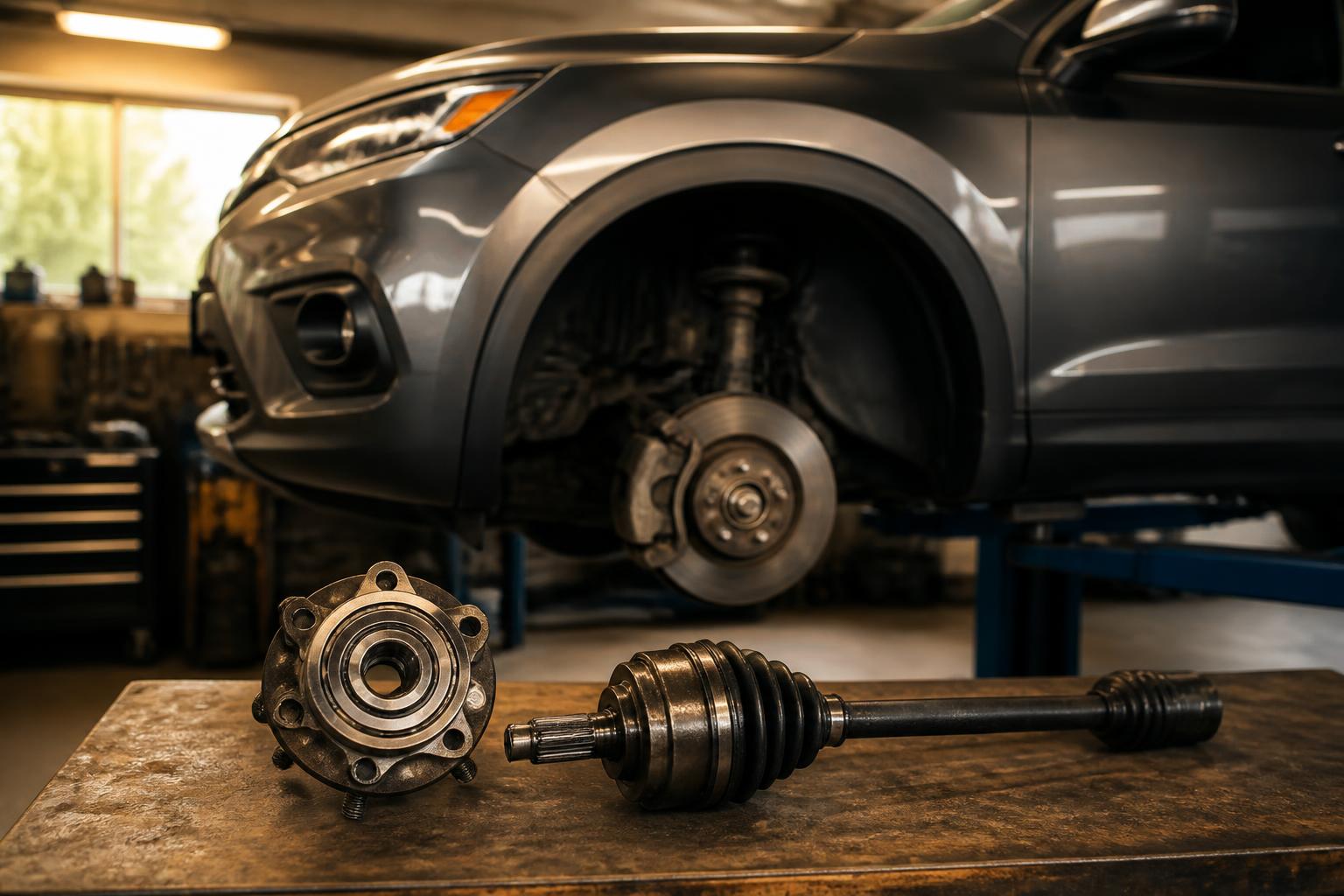
What Can Be Mistaken for Wheel Bearing Noise?
Wheel bearing failures produce a rhythmic hum or growl that changes with speed and gets louder when you turn one direction. But other systems make similar sounds under specific conditions. Each has a distinct pattern and a quick check you can do without a lift.
Tire Noise (Cupping or Feathering)
A tire with uneven tread wear—especially cupping (scalloped dips) or feathering (angled edges on individual tread blocks)—generates a drone or vibration that rises and falls with road speed. It’s often confused with a rear wheel bearing because the sound seems to come from the back of the car. On a 2012 Honda Civic, for example, owners frequently report a drone at 40 mph that sounds identical to a bad rear bearing. Rotating tires front-to-back reveals the culprit immediately.
How to tell: Run your hand across the tread surface. Cupping feels like a washboard. Feathering feels smooth in one direction and rough in the other. Rotate the noisy tire to a different position. If the sound moves with the tire, it’s the tire, not a bearing.
CV Axle Clicking or Humming
Worn constant-velocity (CV) joints produce a sharp click or pop during tight turns, not a constant drone. But here’s the counter-intuitive angle most articles skip: a failing inner CV joint on a front-wheel-drive car can hum steadily at highway speeds in a straight line. The hum changes pitch when you lift off the gas or when you turn in one specific direction.
Many drivers assume a humming sound that appears only in a straight line must be a wheel bearing. In reality, an axle with a torn boot and contamination can make that same noise.
Quick test: Find an empty parking lot. Drive in tight circles in both directions. Sharp clicking that gets louder in one direction? That’s a worn outer CV joint. A dull hum that gets louder turning left but fades turning right? That’s more often a wheel bearing on the right side.
Brake Drag or Worn Pads
A brake pad dragging against the rotor—caused by a sticking caliper, a rust ridge, or a worn-out backing plate—can create a grinding or rubbing noise that varies with wheel speed. It can sound like a bearing getting worse over time. A sticking caliper pin is a common cause on many makes; if you find one rotor significantly hotter than the others, inspect the caliper slide pins for corrosion or lack of grease.
How to tell: The noise usually changes when you lightly apply the brakes. If it gets quieter or disappears, suspect brake drag. After a short drive, check rotor temperature at each wheel by carefully hovering your hand near the center hub. An abnormally hot rotor points to a stuck caliper or collapsed brake hose.
Suspension Components (Loose Ball Joint or Bushing)
A worn ball joint, control arm bushing, or sway bar link can produce a clunk, rattle, or even a low hum if it’s causing the tire to move out of alignment intermittently. That vibration travels through the steering wheel or floor.
How to tell: The noise is more random or happens only over bumps. A wheel bearing hum is rhythmic and speed-dependent, not triggered by potholes. If you can make the noise happen by rocking the car side to side at a stop, it’s suspension, not a bearing.
Differential or Transmission Noise
On rear-wheel and all-wheel-drive vehicles, differential bearings, ring-and-pinion wear, or low gear oil can produce a whine that sounds like a rear wheel bearing. Front-wheel-drive cars with transaxles can also transmit gear noise that seems to come from one corner.
How to tell: Differential noise often changes pitch when you coast versus accelerate. A wheel bearing noise usually stays proportional to vehicle speed regardless of throttle position. To be sure, lift the car and spin each wheel by hand—a bad bearing will feel rough or make a grinding sound.
How to Pin Down the Real Source
Follow this sequence in a safe, flat area with the parking brake on and wheels chocked. You’ll need a jack, jack stands, and a helper for the final test.
Step 1 – Drive for the pattern
Find a smooth road and drive at 30–50 mph. Note whether the sound changes when you make gentle S-turns. If the noise gets louder turning left and quieter turning right, the right wheel bearing is the likely culprit. No change during turns? Look at tires or inner CV joints.
Likely cause checkpoint: Sound changes with steering angle → wheel bearing. Sound is constant regardless of steering → check tires, inner CV joints, or differential.
Step 2 – Inspect and rotate tires
Check all four tires for cupping, bulges, and uneven wear. Rotate the tire from the noisy corner to a different position. Test drive. If the sound moves with the tire, you’ve found the problem.
Step 3 – Lift and spin
Raise the suspected wheel off the ground. Rotate the tire by hand. Feel for roughness, clicking, or a grinding sensation. A smooth spin with no noise points away from the bearing. A gritty feel almost always means a bad wheel bearing hub. For extra precision, use a digital temperature gun after a 10-minute drive; a bad bearing will run 20–30°F hotter than the opposite side.
Step 4 – Check for play
Grasp the tire at 12 and 6 o’clock and push/pull. Excessive movement (more than a slight wiggle) indicates a worn wheel bearing or a loose ball joint. Repeat at 9 and 3 o’clock to check for tie rod looseness.
Step 5 – Test the brakes
With the wheel still lifted, have a helper press the brake pedal firmly. Try spinning the wheel again. If the noise you heard on the road disappears, the brake is dragging. If the grit remains even with the brake engaged, the bearing is bad.
Success check: If a tire rotation or a brake pad replacement eliminates the noise, you’re done. If the hum persists and you’ve ruled out tires, brakes, and suspension, order a wheel bearing hub assembly for the side that got louder during turns. If the noise only appears during turns and includes clicking, replace the CV axle instead.
Escalation signal: If you feel vibration through the steering wheel or floor at highway speeds, or if the wheel has more than about 1/8 inch of play at 12 and 6 o’clock, do not drive the car until the bearing is replaced. A failed bearing can lock the wheel or separate from the hub.
What Your Diagnosis Means for Your Wallet
Getting the source wrong has real consequences. A wheel bearing assembly costs $100–$300 for an aftermarket part; a CV axle runs $60–$200; a new tire can be $80–$200. Swapping the wrong part wastes money and time, and may leave the real problem unfixed, causing further damage. That’s why working through the sequence above is worth the extra 20 minutes.
Also keep in mind that not all wheel bearings are the same type. Many vehicles use a separate bearing pressed into the knuckle, requiring a hydraulic press for replacement. Others use a bolt-on hub assembly you can swap with basic hand tools. If you’re DIY, check your vehicle’s service manual before ordering parts. Attempting to press out a bearing without proper tooling can damage the knuckle or the new part. In those cases, a pre-assembled hub bearing unit costs more ($150–$400) but simplifies the job and reduces the risk of mistakes.
Quick Identification Checklist
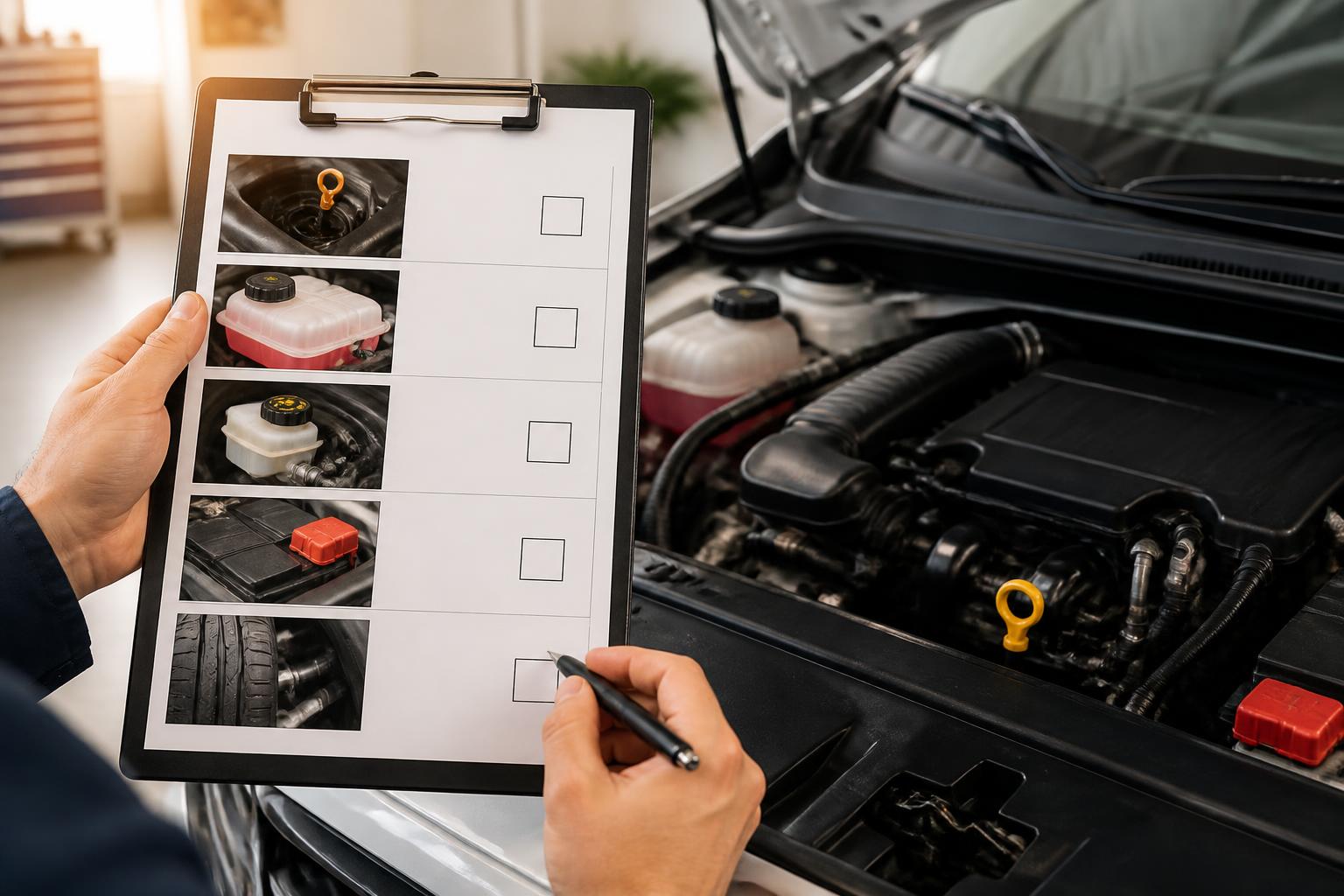
Use this list to narrow down the source before buying parts. Check each item with a pass/fail.
- Sound changes with steering angle? Yes = likely wheel bearing on the side you’re turning away from. No = look elsewhere.
- Sound moves after tire rotation? Yes = tire cupping or feathering.
- Sharp clicking in tight turns? Yes = CV axle (outer joint).
- Sound disappears when braking? Yes = brake drag or worn pads.
- Rough feel when spinning lifted wheel? Yes = wheel bearing or brake drag (brake drag often feels smooth but rubs audibly; a bad bearing feels gritty).
- Temperature difference between wheels after drive? Yes = bad bearing (hotter side) or brake drag (hotter rotor).
Frequently Asked Questions
Can a bad CV axle make a humming noise like a wheel bearing?
Yes. A failing inner CV joint, especially on a front-drive car, can produce a constant hum under load that mimics a bearing. The difference: the hum often changes pitch when you lift off the gas or when you turn sharply in one direction. A wheel bearing hum changes with steering angle but stays at the same pitch regardless of throttle position.
Why does my wheel bearing noise go away when I turn left?
When you turn left, the vehicle’s weight shifts to the right side. If the left bearing is the culprit, unloading it makes the noise fade. That’s a classic sign of a worn bearing on the opposite side of the turn.
Is it safe to drive with a suspected bad wheel bearing?
Not for long. A failed bearing can lock up the wheel or separate from the hub. If the noise is bad enough to hear inside the cabin, plan to replace it within a few hundred miles. If you feel vibration or looseness, do not drive until repaired.
Explore This Topic
- Back to Wheel Bearing Cv
- Back to Automotive Repair
Related guides in this cluster:
- Car Battery Replacement: When, Which Type, and Cost
- Fuel Pump, Fuel Filter, and Fuel Injector: Diagnosis and Replacement
- Suspension Noise, Struts, Shocks, and Control Arms: Diagnosis

Greedy Wheels is the founder and lead editor at Wheels Greed. With over 15 years of hands-on automotive experience — from rebuilding engines in a home garage to managing fleet maintenance for a regional logistics company — he brings real-world mechanical knowledge to every guide.
His work has been featured in automotive forums, owner communities, and dealership training materials. When he’s not researching the latest car owner questions, you’ll find him at a local track day, wrenching on his project car, or testing the newest OBD2 diagnostic tools.
At Wheels Greed, every article is reviewed against manufacturer service manuals, NHTSA bulletins, and verified owner reports. No AI-generated fluff. No guesswork. Just practical answers from someone who has turned the wrench.