Car Battery Replacement: When, Which Type, and Cost
Short answer: A failed alternator won’t actively drain your battery—it stops recharging it. With a fully charged battery and typical electrical loads (headlights, radio, ECU), you’ll get 30–60 minutes of driving before the battery dies. But the more common hidden problem is a bad alternator diode that does drain the battery when the car is off, killing it overnight. The practical takeaway: if your battery is dead after sitting, test for parasitic draw first—don’t automatically replace the alternator.

How long does it take for an alternator to drain your battery?
The question itself is slightly misleading. An alternator’s job is to recharge, not consume. When it fails, the battery alone powers everything. How fast it runs down depends on:
- State of charge – A fully charged battery at 12.6V lasts much longer than one at 12.2V (about 60% charged).
- Electrical load – Headlights (55W each) plus blower motor and stereo pull 10–15 amps. On a typical 60Ah battery, that’s 4–6 hours of continuous use with the engine off. But real-world driving when the alternator stops charging is shorter because the battery also runs the fuel pump and ignition until the engine stalls.
- Parasitic draw – A stuck relay, trunk light, or aftermarket dashcam can pull 500mA or more. At that rate, a healthy battery goes flat in under 24 hours.
What that means for your next step: If your car died while driving and won’t restart, the alternator likely failed – you need a tow and a charge system test. If it died after sitting overnight, measure for parasitic draw first. A simple multimeter test (negative cable disconnected, meter set to amps) takes 30 seconds and tells you whether the battery or a drain is the problem.
Counter-intuitive reality: the alternator diode drain
Most car owners blame a dead battery on the alternator not charging. But the most common alternator failure mode is a shorted diode that allows current to leak backward through the alternator when the engine is off. This can drain a battery completely in 8–12 hours. If your battery is new and dead again after a night of sitting, suspect a diode – not a bad battery. A quick check: with the engine off, measure voltage across the battery. If it’s below 12.4V and you see a small voltage drop with the alternator connected vs. disconnected, the diodes are bad.
When to replace your car battery
Car batteries typically last 3–5 years (flooded) or 5–7 years (AGM). Watch for:
- Slow crank – Engine turns sluggishly, worse in cold weather.
- Dimming lights – Headlights or dash lights fade during cranking.
- Swollen case – Physical bulge indicates overcharging or excessive heat.
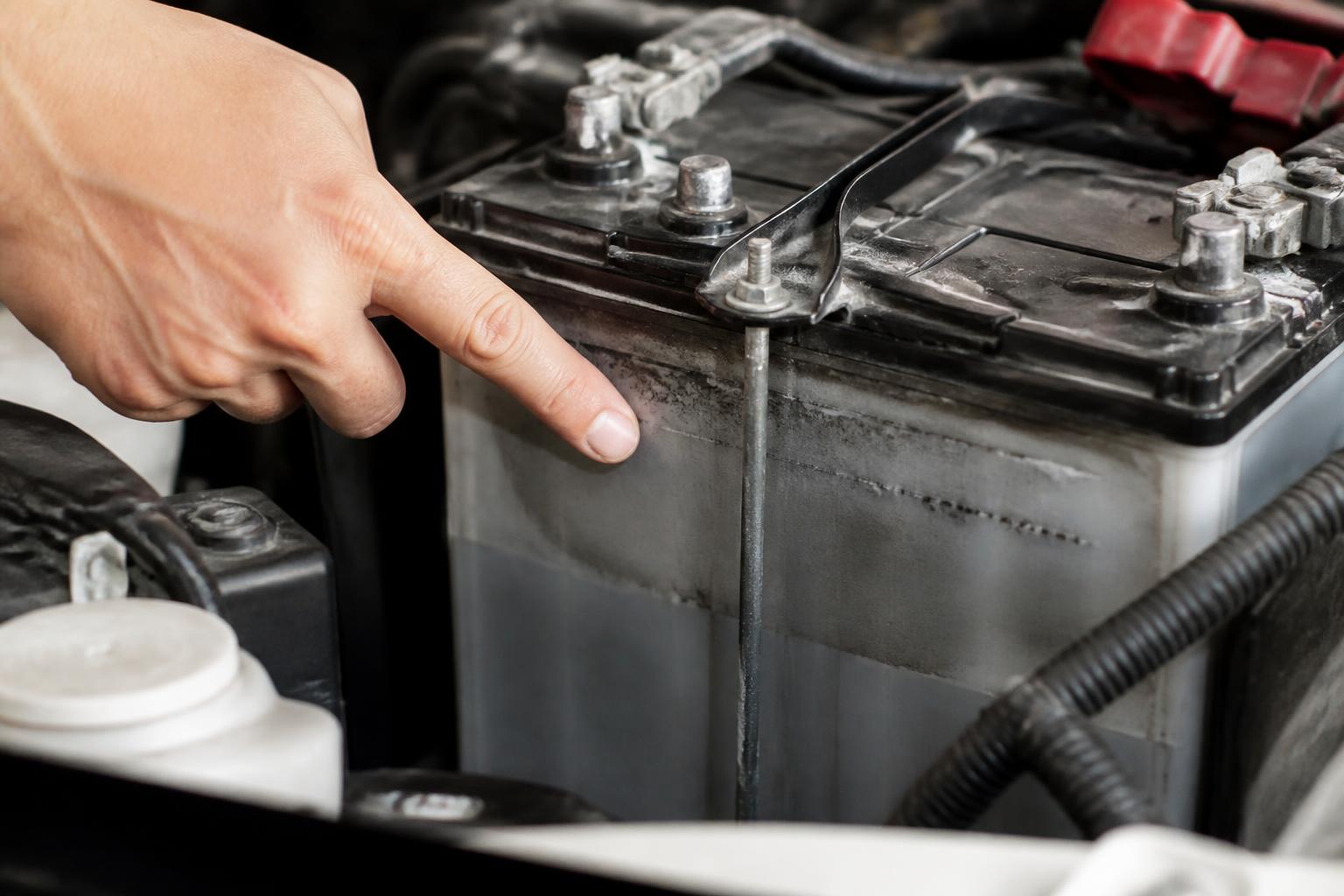
- Corroded terminals – White/blue crust reduces current flow.
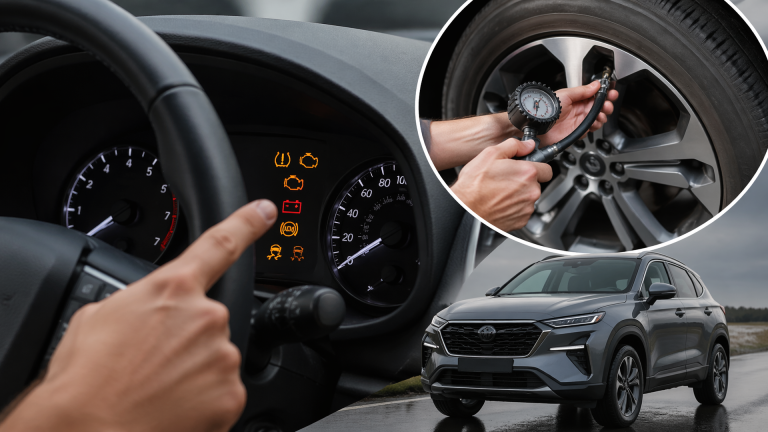
- Check engine light – Code P0562 (system voltage low) often accompanies a weak battery.
If your battery is 4+ years old and showing any of these, replace it before it leaves you stranded. But first, rule out an alternator or parasitic issue—otherwise a new battery will suffer the same fate.
Decision checklist
Run through these checks before buying a new battery:
- [ ] Battery posts are clean and tight (no corrosion or loose cables).
- [ ] Alternator output is 13.8–14.6V at idle (multimeter test).
- [ ] No parasitic draw above 50mA after 10 minutes of car-off cooldown.
- [ ] Cold Cranking Amps (CCA) matches or exceeds OEM spec (check owner’s manual or old battery label).
- [ ] Battery group size fits your tray and hold-down without forcing (wrong size can cause vibration damage or terminal shorts).
Fail any of these? Fix the underlying issue first. Installing a new battery on a car with a 200mA parasitic drain will leave you with a dead battery in 2–3 days, and repeated deep discharges cut its life in half.
Which battery type do you need?
Batteries are grouped by physical size (group number), terminal location, and chemistry. Use the group size from your owner’s manual or check the label on the old battery. Forcing a different size risks a loose hold-down or terminals touching metal.
| Type | Best for | Pros | Cons |
|---|---|---|---|
| Flooded Lead-Acid | Most daily drivers | Lowest cost ($100–$150), widely available | Needs occasional water check, shorter lifespan (3–5 yrs) |
| AGM (Absorbed Glass Mat) | Start-stop vehicles, luxury cars, off-road | Longer life (5–7 yrs), vibration resistant, spill-proof | 30–50% more expensive ($200–$400) |
| Enhanced Flooded (EFB) | Entry-level start-stop systems | Better cycle life than standard flooded | Moderate cost ($150–$250) |
Cold Cranking Amps (CCA): Always match or exceed your original rating. Most cars need 600–800 CCA. Going higher is fine, but lower CCA will cause hard starts in winter – especially in a 10°F morning.
Trade-off you need to know: AGM batteries charge at a slightly higher voltage (14.4–14.8V) than flooded (13.8–14.2V). If your car’s charging system is not designed for AGM, it may undercharge or overcharge it. Check your owner’s manual: if the factory installed an AGM, the alternator’s voltage regulator is already set correctly. If you retrofit AGM into a car designed for flooded, you may shorten the battery’s life or risk a check engine light.
Car battery replacement cost
- Battery itself: $100–$250 (flooded), $200–$400 (AGM) at major auto parts stores.
- Labor (if installed): $20–$40 at parts stores (some free), $50–$100 at a mechanic.
- Core charge: $10–$20 refundable when you return the old battery.
- Total installed: $130–$290 for flooded, $250–$450 for AGM.
Reality check: The cheapest battery is not always the best value. A $100 flooded battery may last 3 years; a $250 AGM can last 7. You also pay for peace of mind in cold weather – AGM batteries retain more starting power below freezing.
Step-by-step battery replacement
Before you start: Turn off the engine, remove the key, and let the car sit for 10 minutes. Wear safety glasses and gloves – battery acid can burn. Verify fit: Place the new battery in the tray without connecting cables first. If the hold-down bracket doesn’t line up or the terminals hit the hood, you have the wrong group size. Return it before proceeding.
1. Remove the negative terminal first – Use a 10mm or 13mm wrench. Loosen the bolt, wiggle the cable off, and tuck it away from metal.
2. Remove the positive terminal – Same process. Never let a tool touch both terminals.
3. Unfasten the hold-down bracket – Typically a strap or J-bolt at the bottom.
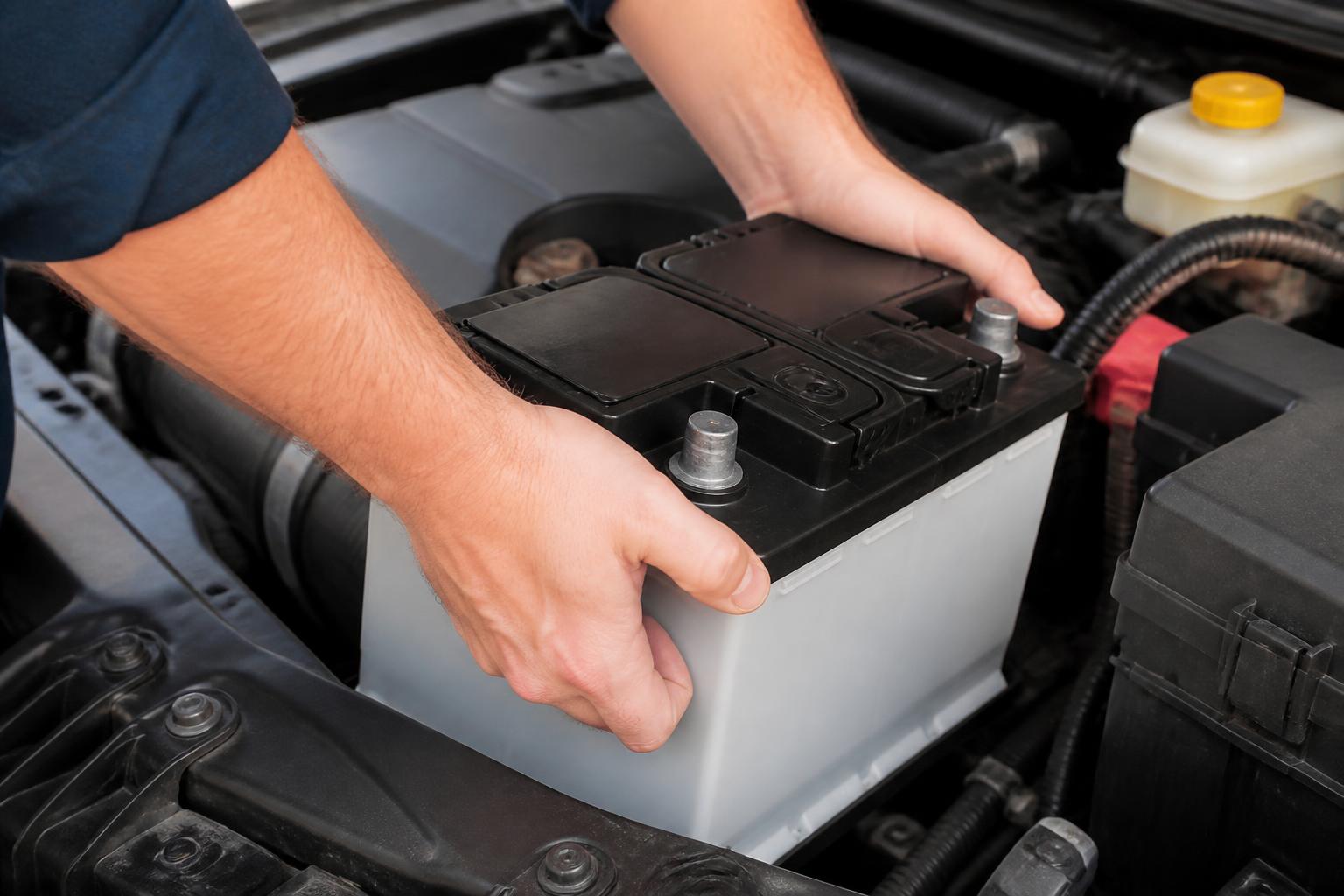
4. Lift out the old battery – Use both hands (30–50 lbs). Avoid tilting – acid can spill.
5. Clean the tray and terminals – Use a wire brush or terminal cleaner to remove corrosion.
6. Place the new battery – Positive (+) post aligned with the positive cable. Tighten the hold-down snugly – over-tightening can crack the case.
7. Connect the positive cable – Secure it snugly, then tighten.
8. Connect the negative cable – Do this last. Tighten fully.
9. Test – Start the engine. Confirm the battery light goes off. Measure voltage across the terminals: it should read 13.8–14.6V with the engine running.
10. Reset electronics – On many newer cars (BMW, GM, Mercedes), you must perform a battery registration procedure using a scan tool. Skipping this can cause the charging system to undercharge or overcharge the new battery. Check your owner’s manual or a forum for your specific model.
Success check: The engine cranks quickly, all lights work normally, and the charging voltage stays above 13V at idle.
Replacing the battery in your remote key
Most key fobs use a CR2032 coin cell. Here’s how:
- Open the fob – Use a flat-head screwdriver or coin to pry the halves apart.
- Note orientation – Positive (+) side usually faces up. Take a photo if unsure.
- Remove the old battery – Carefully slide it out.
- Insert the new one – Press until it clicks.
- Snap the case closed – Test all buttons immediately.
Mismatch risk: Some fobs require CR2450 or other sizes. Check the old battery’s markings before buying. Using the wrong thickness can prevent the case from sealing, letting moisture in.
Will a parasitic drain ruin a new battery?
Yes. A parasitic draw above 50mA will slowly discharge any battery, new or old. A new battery may have higher capacity, but a persistent 200mA drain will flat it in 2–3 days. Repeated deep discharges degrade the internal plates, reducing lifespan significantly. If you install a new battery and find it dead within a week, don’t blame the battery – measure the drain with a multimeter. Common culprits: trunk light, glovebox light, aftermarket alarm, or a stuck relay.
FAQ
How long will a 10% iPhone battery last?
At 10%, an iPhone will last about 10–20 minutes of normal use (texting, browsing) and 2–3 minutes of heavy tasks like video recording. Standby time is about 30 minutes.
How long will a 5% battery last?
With 5%, expect 5–10 minutes of light use or 10–15 minutes of standby. The phone enters low-power mode automatically, but it’s best to plug in immediately.
Will a parasitic drain damage a new battery?
Yes. Even a new battery loses capacity after repeated deep discharges. A drain above 50mA should be fixed to protect your new battery’s life.
Explore This Topic
- Back to Car Battery Replacement
- Back to Automotive Repair
Related guides in this cluster:
- Car Battery Draining Overnight: Find and Fix Parasitic Draw
- Alternator Failure: Warning Signs, How to Test, and Replacement
- Timing Belt, Timing Chain, and Serpentine Belt: Replacement Guide

Greedy Wheels is the founder and lead editor at Wheels Greed. With over 15 years of hands-on automotive experience — from rebuilding engines in a home garage to managing fleet maintenance for a regional logistics company — he brings real-world mechanical knowledge to every guide.
His work has been featured in automotive forums, owner communities, and dealership training materials. When he’s not researching the latest car owner questions, you’ll find him at a local track day, wrenching on his project car, or testing the newest OBD2 diagnostic tools.
At Wheels Greed, every article is reviewed against manufacturer service manuals, NHTSA bulletins, and verified owner reports. No AI-generated fluff. No guesswork. Just practical answers from someone who has turned the wrench.