Rough Idle: Causes, Diagnosis, and How to Fix It
Short answer: Injector cleaner can fix a rough idle, but only when clogged fuel injectors are the root cause. If the problem is a vacuum leak, bad spark plugs, a dirty throttle body, or a failing sensor, pouring cleaner into the tank won’t help. Run these checks first so you don’t waste time and money.

When Injector Cleaner Actually Works
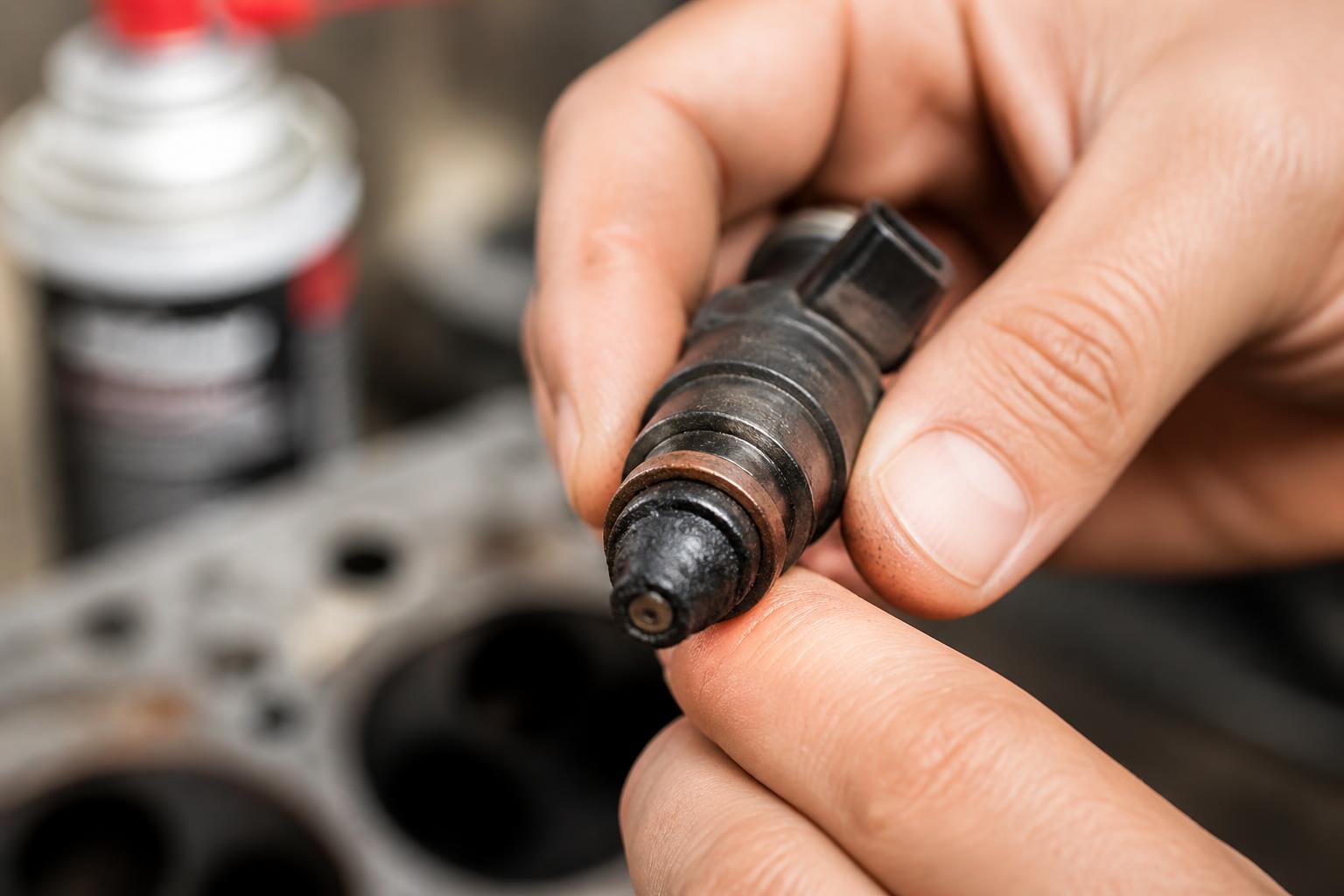
If your engine hunts at idle, stumbles when you take off from a stop, or feels flat on the highway, dirty fuel injectors might be the culprit. Over time, deposits from low-quality fuel or short-trip driving narrow the injector nozzle, breaking up the spray pattern. That lean or uneven fuel delivery causes a rough idle.
Example where it helps: A 2015 Honda Civic with 90,000 miles and no Check Engine light. The idle drops to 500 rpm and shudders in gear. After a bottle of PEA-based injector cleaner (polyetheramine is the active ingredient), the idle smooths out over a full tank. The owner saved a $200 shop cleaning.
How to confirm injectors are the likely cause:
- The rough idle improves after the engine warms up (carbon deposits soften with heat).
- You smell raw fuel at idle (poor atomization).
- OBD2 codes P0201–P0204 (injector circuit) or P0300 random misfire appear.
When Injector Cleaner Won’t Help
Many rough idle causes won’t respond to cleaner. Ignoring them can lead to engine damage or a tow bill.
Vacuum Leaks
A cracked hose or a bad intake gasket lets unmetered air into the engine. The idle gets high (1,200–1,500 rpm) or surges. A bottle of cleaner won’t fix a 2-inch tear. Quick check: spray carb cleaner around intake joints while idling; if the engine revs, you found the leak.
Real-world branch: On a 2013 Ford F-150 with a P0171 lean code, carb cleaner near the intake manifold gasket causes the engine to rev. Replacing the gasket ($12 and 45 minutes) fixes the idle. If the leak is behind the intake manifold or under the throttle body, the repair is more involved—plan for 2–3 hours or shop labor. In that case, stop DIY and escalate to a mechanic unless you have experience with intake removal.
Spark Plugs and Ignition Coils
Worn spark plugs or a failing coil cause a misfire that feels like a harsh shake at idle. Usually the Check Engine light flashes. A set of plugs runs $20–$60; coils are $40–$120 each. Injector cleaner does nothing here.
How to tell: If the misfire follows one specific cylinder (P0301, P0302, etc.) and the plug looks fine, swap the coil with a neighboring cylinder. If the code moves, the coil is bad. This is a quick $50–$80 fix you can do in 15 minutes.
Throttle Body and Idle Air Control Valve
Carbon buildup on the throttle plate restricts airflow. The engine struggles to maintain idle speed, especially after a cold start. A simple cleaning with throttle-body cleaner and a toothbrush fixes it for about $10.
Failure pattern to watch for: The idle drops to 400–500 rpm when you come to a stop (like at a red light), then surges back to 800 rpm. That’s classic throttle body deposit behavior. Clean it before you try any additive.
Mass Airflow (MAF) Sensor
A dirty MAF sensor sends wrong air-density readings, causing a lean or rich mixture that shakes the idle. Cleaning with a dedicated MAF sensor spray ($8) restores normal operation. Injector cleaner never reaches the sensor.
Distinguishing it from a vacuum leak: A dirty MAF causes rough idle at both cold and warm idle, but usually smooths out under load. A vacuum leak gets worse as engine load increases. Spraying carb cleaner around the intake won’t change the idle if the MAF is the problem—but a brief unplug test will. Unplug the MAF connector with the engine idling; if the idle steadies, the sensor is likely dirty or failing.
Engine Mechanical Issues
Worn piston rings, a blown head gasket, or a stretched timing chain produce a rough idle that no additive can cure. These require a compression test and professional diagnosis.
Diagnose the Real Cause: A Step-by-Step Operator Flow
Follow this sequence. Each step includes a checkpoint that tells you whether to proceed, branch to a different fix, or stop and escalate.
Step 1 – Scan for Codes
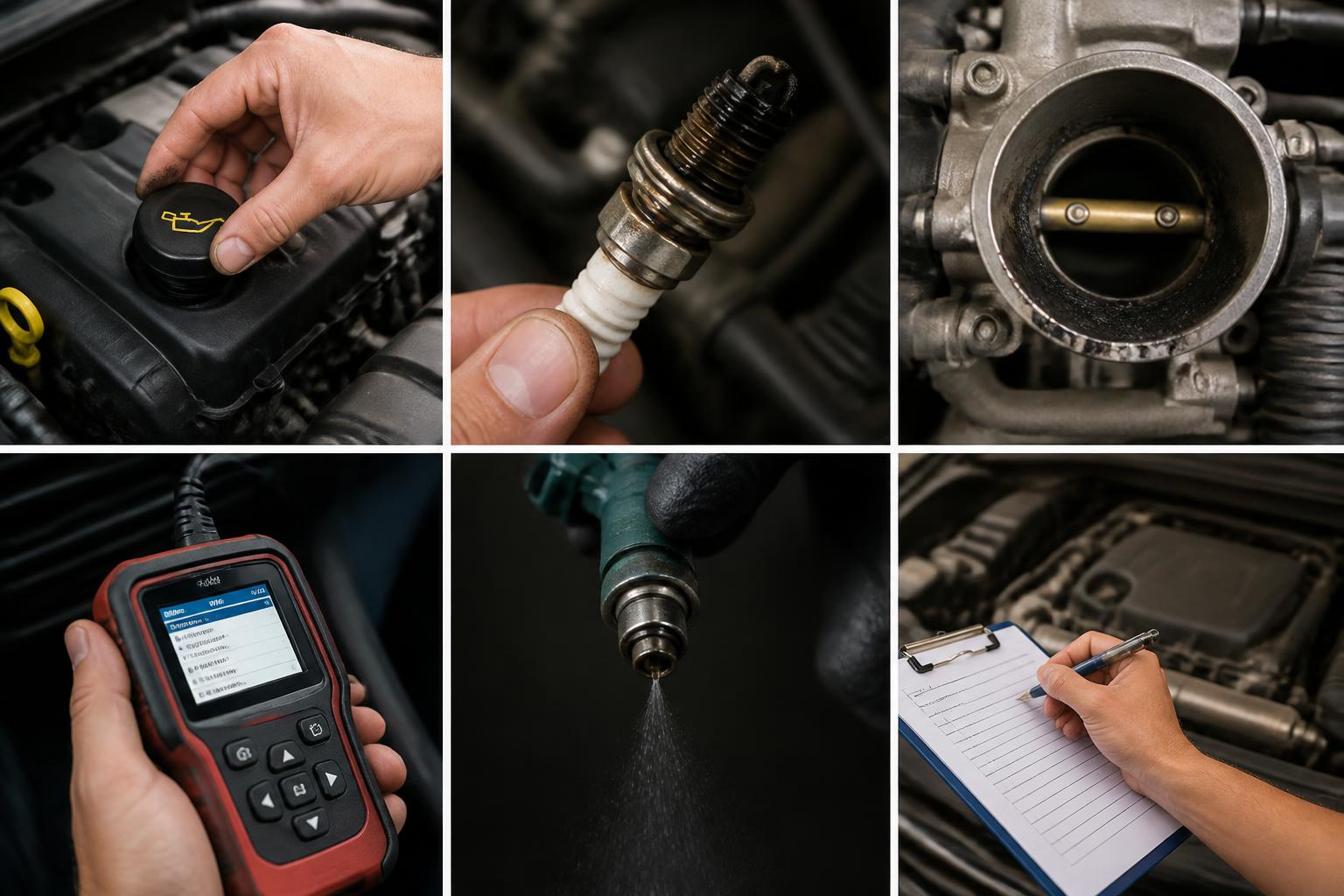
Use an OBD2 reader (most auto parts stores scan for free). Note any codes.
- Checkpoint: If you see injector-related codes (P0201–P0204) or a random misfire (P0300), injector cleaner is a reasonable first try.
- Branch: If you see a lean code (P0171 or P0174) with no vacuum leak found in Step 2, or if the code is a specific misfire (P0301–P0308) that points to one cylinder, skip the cleaner and move to Step 3.
Step 2 – Check for Vacuum Leaks
With the engine idling, spray carb cleaner along intake manifold gaskets, vacuum hoses, and the brake booster line. If the engine revs, you have a leak.
- Checkpoint: A leak found near a visible hose or gasket? Replace it yourself (small rubber cap or hose section costs under $5).
- Branch: If the leak is behind the intake manifold or requires removing the throttle body to access, stop here and decide: do you have tools and time for a 2–3 hour job? If not, call a mechanic.
- No leak found? Move to Step 3.
Step 3 – Inspect Spark Plugs and Coils
Pull one plug from an easy-to-reach cylinder. Look for black sooty deposits (rich mixture), white deposits (lean), or worn electrodes. Check the gap with a feeler gauge.
- Checkpoint: If plugs are worn or discolored, replace all plugs. Gap new plugs to spec.
- Branch: If the engine still misfires after new plugs, swap the coil from the misfiring cylinder to a neighbor. If the code follows, replace that coil ($40–$120).
- If plugs look normal and no misfire persists, move to Step 4.
Step 4 – Clean the Throttle Body
Disconnect the intake hose, open the throttle plate with the engine off, and spray throttle-body cleaner onto a rag to wipe carbon off the plate and bore. Reassemble.
- Checkpoint: After 10 minutes of driving, does idle improve?
- Yes → you’re done. The cause was carbon buildup.
- No, or only slight improvement → proceed to Step 5.
Step 5 – Try Injector Cleaner (Only Now)
Choose a cleaner with PEA (e.g., Techron, Gumout Regane, Liqui Moly). Add to a near-empty tank (1/4 tank or less) for maximum concentration, then drive a full tank (300–400 miles).
- Checkpoint: If idle improves within 50 miles, the cleaner is working. Keep driving the tank to finish cleaning.
- Stop and escalate: If no change after a full tank, do not buy a second bottle. The problem is not injector-related. Also stop immediately if you notice the Check Engine light start flashing—that signals a catalytic converter-damaging condition. Tow the car to a professional.
Verification Step – Confirm the Fix Worked
After completing the steps above, let the engine reach operating temperature (coolant at 190°F or the upper radiator hose feels hot). Park on level ground, put the car in gear (automatic) or let it idle in neutral (manual). The idle should stay steady between 600–800 rpm in gear, 800–1,000 rpm in park, with no more than a 50 rpm fluctuation. If you see the needle drop and recover more than 100 rpm, or if the car still shakes the steering wheel, the issue is still present. Drive the car 5–10 miles, then recheck at a full stop. A steady, vibration-free idle at normal operating temperature means you’ve solved it.
Quick Rough Idle Checklist
| Check | Pass / Fail | Action if Failed |
|---|---|---|
| Check Engine Light on? | ☐ Pass (no light) / ☐ Fail (light on) | Scan codes immediately – injector cleaner is not a code fix |
| Vacuum gauge steady at 17–22 inHg at idle? | ☐ Pass / ☐ Fail | Inspect hoses and gaskets for leaks |
| Spark plugs clean and properly gapped? | ☐ Pass / ☐ Fail | Replace all plugs (and coils if misfire persists) |
| Throttle body free of heavy carbon? | ☐ Pass / ☐ Fail | Clean with throttle-body cleaner |
| Injector cleaner used (PEA-based) only after other checks? | ☐ Pass (used correctly) / ☐ Fail (used before checks) | Go back to Step 1 – you may have masked the real problem |
| Idle stable within 50 rpm of target after full warm-up? | ☐ Pass / ☐ Fail | Repeat verification step or escalate to mechanic |
If you answered “Fail” on any of the first four items, address that issue first. Only if all four are clean should you invest in injector cleaner.
Frequently Asked Questions
Will injector cleaner fix a rough idle caused by a vacuum leak?
No. Vacuum leaks need a physical repair—replace the cracked hose or gasket. Cleaner cannot seal an air leak.
How long does it take for injector cleaner to work?
Most cleaners need a full tank of driving (300–400 miles) to dissolve deposits. You may notice improvement within 50 miles if the clog is light.
Can too much injector cleaner damage the engine?
Overdosing (more than twice the recommended amount) can dilute fuel and reduce lubricity, risking injector wear. Stick to the bottle’s instructions.
Should I use injector cleaner regularly as prevention?
If your car is high-mileage (80k+), a PEA-based cleaner every 3,000–5,000 miles can prevent deposits. It’s cheap insurance, but it won’t fix mechanical failures.
If the idle remains rough after all these checks, see a mechanic for a compression test or fuel pressure test. Injector cleaner is a $10 gamble—not a cure-all.
Explore This Topic
- Back to Rough Idle Causes
- Back to Automotive Repair
Related guides in this cluster:
- Exhaust Smoke Color: White, Blue, Black — Diagnosis Guide
- Engine Misfire: Causes, Spark Plugs, and Ignition Coil Diagnosis
- Catalytic Converter Cleaner, Clogging, and Replacement Cost

Greedy Wheels is the founder and lead editor at Wheels Greed. With over 15 years of hands-on automotive experience — from rebuilding engines in a home garage to managing fleet maintenance for a regional logistics company — he brings real-world mechanical knowledge to every guide.
His work has been featured in automotive forums, owner communities, and dealership training materials. When he’s not researching the latest car owner questions, you’ll find him at a local track day, wrenching on his project car, or testing the newest OBD2 diagnostic tools.
At Wheels Greed, every article is reviewed against manufacturer service manuals, NHTSA bulletins, and verified owner reports. No AI-generated fluff. No guesswork. Just practical answers from someone who has turned the wrench.