Exhaust Leaks, O2 Sensor Failure, and Emissions Codes
A failing oxygen sensor makes the car run noticeably worse: the check engine light comes on, fuel economy drops 10–20%, the engine idles rough, and acceleration feels flat or jerky. You might also smell sulfur from the exhaust. The quickest first move is to scan the OBD2 system—most auto parts stores do it free—and write down the codes before buying any parts.

What a Bad O2 Sensor Feels Like Behind the Wheel
The oxygen sensor tells the engine computer how much unburned oxygen is in the exhaust. When the sensor fails, the computer gets bad data and adjusts the air-fuel mixture incorrectly. Here’s what you’ll actually notice:
- Check engine light on – almost always. Common codes include P0135 (heater circuit failure), P0138 (high voltage), and P0420 (catalyst efficiency below threshold).
- Fuel economy takes a visible hit – a bad sensor can force the engine to run rich (too much fuel). On a 2015 Honda CR-V, a failing downstream sensor dropped mileage from 28 MPG to 22 MPG over three months.
- Rough idle or stalling – especially on cold starts. The computer hunts for the right mix, so the engine may stumble or die.
- Hesitation or surging on acceleration – the car feels flat when you press the gas, or it surges forward unpredictably.
- Sulfur or rotten-egg smell – running rich overloads the catalytic converter, making it overheat and produce that odor.
- Failed emissions test – high hydrocarbons (HC) or carbon monoxide (CO) readings.
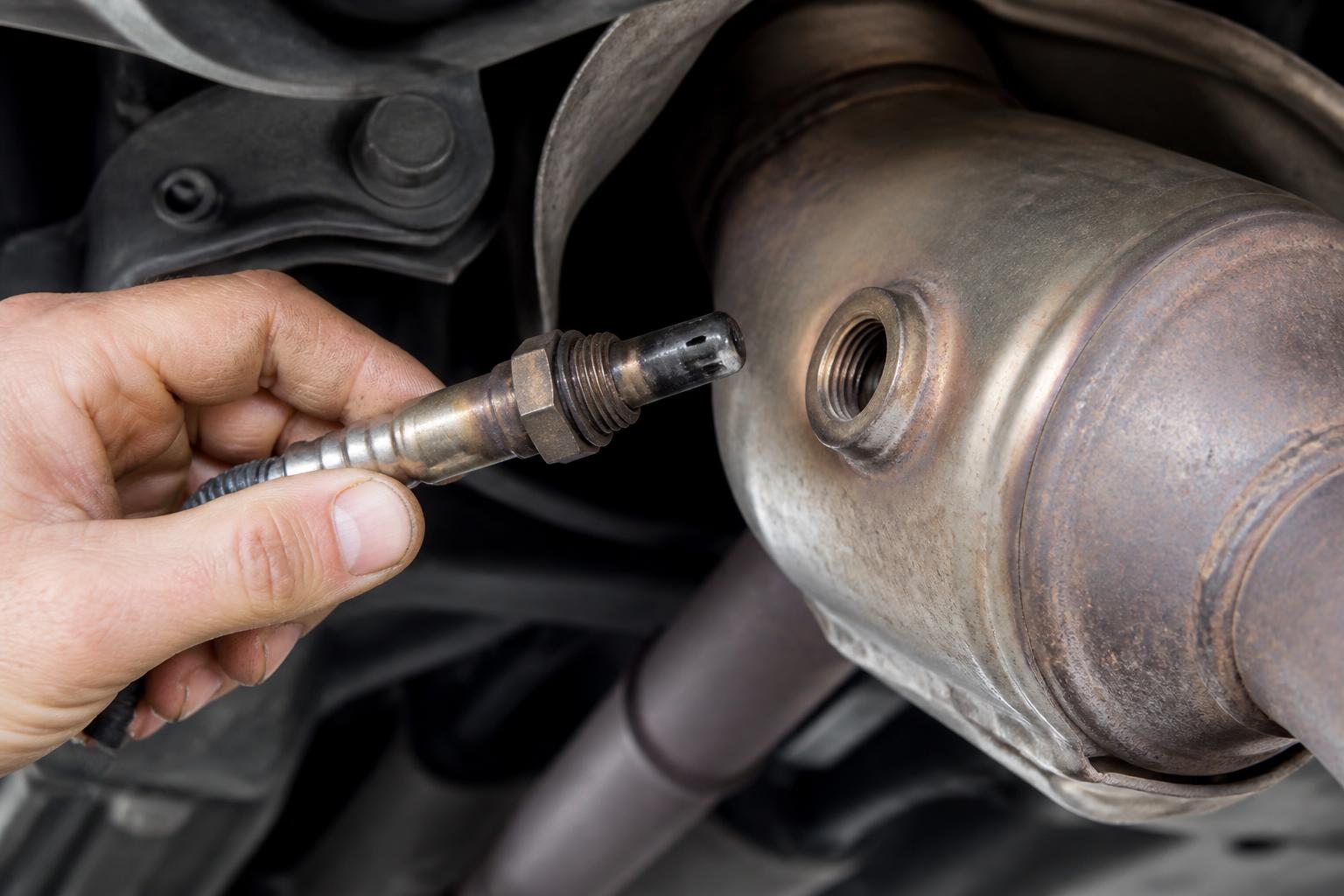
Example of early detection: On a 2018 Ford F-150 with 60,000 miles, the owner noticed the check engine light and a slight hesitation during highway merging. The OBD2 scan showed P0135 (upstream O2 heater circuit). Replacing the sensor restored normal drivability and fuel economy within one tank of gas.
Is It the O2 Sensor or the Catalytic Converter?
Code P0420 causes the most confusion. It means the computer detected low catalytic converter efficiency, but the root cause could be a bad O2 sensor, a failed cat, or an exhaust leak. Here’s how to separate them.
Check Live O2 Voltage and Fuel Trim
Use an OBD2 scanner that shows live data. You want two numbers:
- O2 sensor voltage – A healthy upstream sensor cycles rapidly between 0.1V (lean) and 0.9V (rich). A dead sensor stays flat at around 0.45V or near 0V for 10 seconds or longer.
- Long-term fuel trim (LTFT) – Normal is ±10%. Above +15% means the computer is adding fuel to compensate for a lean condition (vacuum leak, exhaust leak, or bad O2 sensor reading lean). Below -15% means it’s pulling fuel (high fuel pressure or sensor stuck rich).
Branch point after this check:
- If O2 voltage is flat and LTFT is near zero → replace the stuck O2 sensor.
- If O2 voltage cycles normally but LTFT is above +15% → look for a vacuum leak or exhaust leak before replacing parts.
- If the downstream sensor mimics the upstream sensor (cycling together) → the catalytic converter is likely bad.
Catalytic Converter Temperature Test
This is a concrete way to confirm a bad cat without guessing.
1. Warm the engine to operating temp (drive for 15–20 minutes).
2. Use an infrared thermometer to measure the cat’s inlet and outlet temperatures.
3. A working cat should be 50–100°F hotter at the outlet. If the outlet is cooler than the inlet, the cat is clogged or dead.
4. If both inlet and outlet are close to ambient exhaust temperature, the cat is empty (gutted) or broken.
Verification step: After replacing a confirmed bad O2 sensor, clear the codes and drive 20–30 miles under mixed conditions. The check engine light should stay off, fuel trim should return to ±10%, and O2 voltage should cycle normally. If the code returns within 50 miles, the cat itself is the problem.
| Symptom | Likely Cause | Next Action |
|---|---|---|
| P0420 + O2 voltage flat + LTFT near zero | Bad O2 sensor | Replace the sensor that isn’t cycling |
| P0420 + LTFT above +15% | Vacuum leak or exhaust leak | Smoke test intake, inspect exhaust manifold |
| P0420 + LTFT below -15% | Fuel pressure high or sensor stuck rich | Check fuel trim and O2 voltage |
| Downstream sensor mimics upstream | Failed catalytic converter | Confirm with temperature test, then replace cat |
Does P0420 Mean Bad O2 Sensor?
Not directly. P0420 means the computer thinks the catalytic converter isn’t cleaning exhaust properly. A bad downstream O2 sensor can cause a false P0420 by reporting incorrect data, but the most common root cause is a worn-out cat on vehicles over 100,000 miles. Diagnose with live data before replacing either part.
What About an Exhaust Leak?
An exhaust leak—especially between the engine and the upstream O2 sensor—can mimic both a bad sensor and a failing cat. Here’s what to look for:
- Ticking noise that gets faster as RPM rises, often from a cracked exhaust manifold or blown gasket.
- Poor acceleration and fuel economy because the leak pulls in fresh air, skewing the O2 reading lean.
- Check engine light with lean codes (P0171, P0174) or P0420.
Is it worth fixing an exhaust leak? Yes, almost always. A small leak at a gasket costs $50–$150 to repair at a shop, and fixing it can restore proper O2 readings, turn off the check engine light, and prevent the catalytic converter from being damaged by a false lean condition. Leaving a leak can also let exhaust gases enter the cabin.
Step-by-Step Diagnosis Operator Flow
Follow this sequence in order. Pause at each checkpoint to decide the next move.
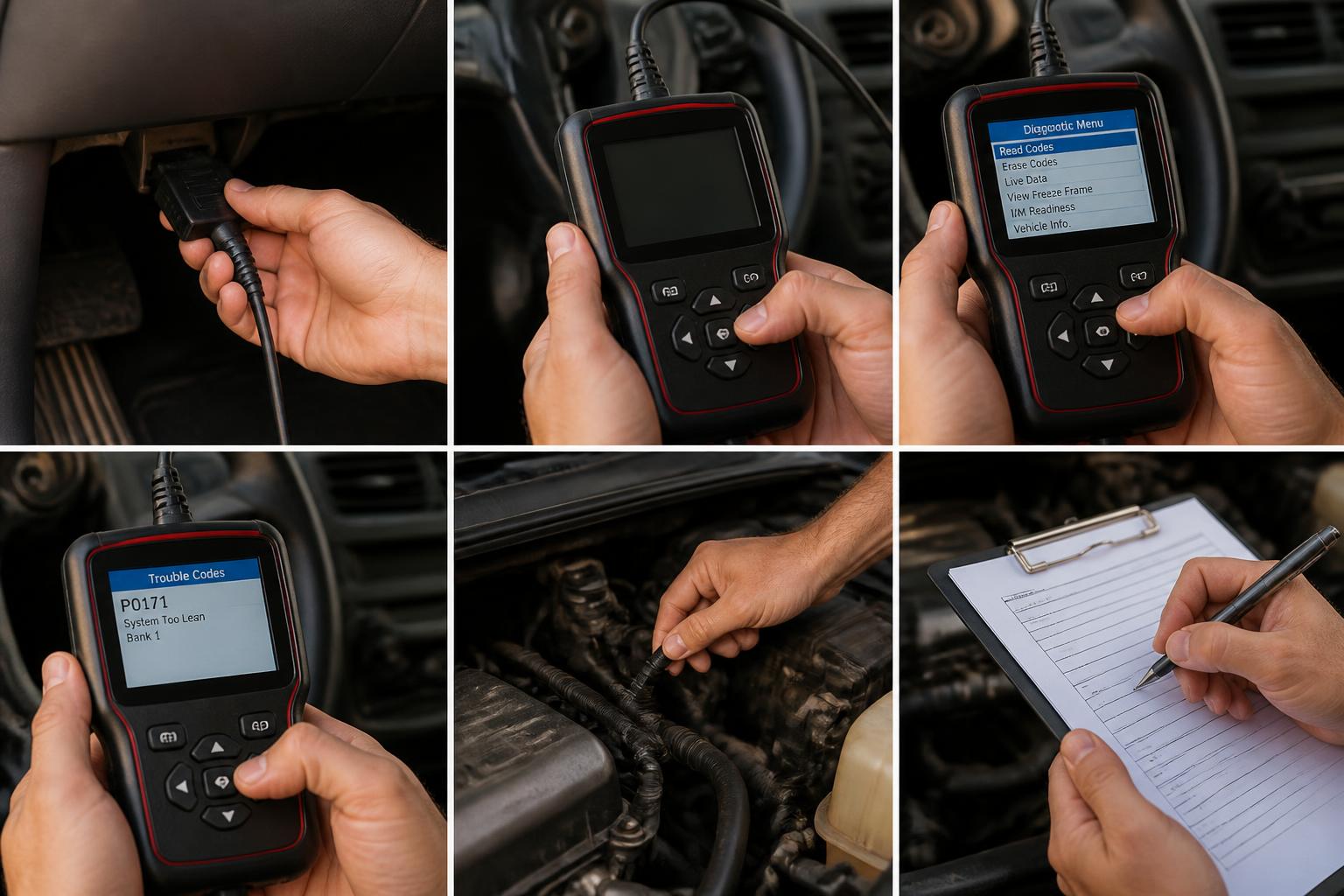
Step 1: Read the Codes
Use an OBD2 scanner. Write down all codes. Do not clear them yet.
Step 2: Check Live O2 Voltage
Idle the engine and watch the upstream O2 sensor voltage for 30 seconds. Normal behavior is cycling between 0.1V and 0.9V. A bad sensor shows a flat reading at 0.45V, near 0V, or stuck at a fixed value.
Step 3: Check Long-Term Fuel Trim
Note the LTFT value at idle and at 2000 RPM. ±10% is normal. Above +15% or below -15% means something is off.
Step 4: Inspect for Exhaust Leaks
With the engine cold, look for black soot around gaskets or rust holes. Start the engine and listen for ticking near the exhaust manifold. Feel for puffs of air (careful—pipes get hot fast).
Step 5: Do the Temperature Test (if P0420 is present)
After a 20-minute drive, use an infrared thermometer on the catalytic converter body. Compare inlet to outlet.
Step 6: Make a Decision
- Exhaust leak found? Fix the leak first. Clear codes and recheck.
- O2 sensor voltage flat + no leak? Replace the affected O2 sensor.
- O2 sensor cycles normally + P0420 remains + outlet cooler than inlet? The catalytic converter is likely bad. Shop work recommended.
Quick Decision Aid
- [ ] Check engine light on with a diagnostic code (P0420, P0135, P0171, etc.)
- [ ] Upstream O2 voltage stays stuck at ~0.45V or near 0V for more than 10 seconds
- [ ] Long-term fuel trim above +15% or below -15%
- [ ] Ticking exhaust noise or visible rust hole before the catalytic converter
- [ ] Catalytic converter outlet temperature 50°F+ cooler than the inlet
- [ ] Code returns within 50 miles after replacing the O2 sensor
How to use this: If you checked yes for items 1 and 2 and no for an exhaust leak, replace the O2 sensor first. If the code returns, the cat is the next suspect.
When to Stop DIY and Escalate
- You’ve confirmed a bad catalytic converter – replacement requires a lift, a torch for rusted bolts on welded-in cats, and sometimes cutting and welding. Leave this to a shop.
- The engine has a constant misfire – a bad O2 sensor won’t cause a steady misfire. That points to ignition or fuel issues (spark plugs, coils, injectors).
- Fuel trim numbers swing wildly – this suggests a vacuum leak, MAF sensor problem, or internal engine issue that needs professional smoke testing.
- You replaced the O2 sensor and the code returned within 50 miles – deeper diagnosis is needed. The cat, wiring harness, or exhaust manifold gasket may be the real problem.
Stop threshold: If you’ve done the checks above and can’t find a clear cause, or if the P0420 code comes back after replacing the O2 sensor, take the car to a shop. You’ve done the safe DIY work—now it needs a lift, scope, and someone who can safely handle a cat replacement.
FAQ
How does a car act when the O2 sensor is bad?
It runs poorly: lower MPG, rough idle, hesitation on acceleration, and a check engine light. You may also smell sulfur from the exhaust.
Does P0420 mean bad O2 sensor?
Not necessarily. P0420 means the computer detected low catalytic converter efficiency. A bad downstream O2 sensor can cause a false reading, but a failed cat is the more common cause on vehicles over 100,000 miles.
How to tell the difference between a bad catalytic converter and an O2 sensor?
Check O2 voltage cycling. A bad cat makes the downstream sensor mimic the upstream sensor. A bad O2 sensor shows a flat voltage reading. A temperature test also helps: a working cat has a hotter outlet than inlet.
Is it worth fixing an exhaust leak?
Yes. A small leak is cheap to repair ($50–$150) and can restore proper O2 readings, improve fuel economy, and prevent catalytic converter damage.
How do I know if it’s the O2 sensor or catalytic converter?
Use a scanner to view live O2 voltage and fuel trims. If the upstream O2 voltage is stuck, replace the sensor. If it cycles normally but P0420 persists and the downstream sensor mirrors the upstream, replace the cat. Confirm with the temperature test.
Explore This Topic
- Back to Exhaust Leak O2
- Back to Automotive Repair
Related guides in this cluster:
- CVT Transmission, Shift Solenoid, and Torque Converter Problems
- Catalytic Converter Cleaner, Clogging, and Replacement Cost
- Head Gasket Failure, Oil Leaks, and Engine Seal Diagnosis

Greedy Wheels is the founder and lead editor at Wheels Greed. With over 15 years of hands-on automotive experience — from rebuilding engines in a home garage to managing fleet maintenance for a regional logistics company — he brings real-world mechanical knowledge to every guide.
His work has been featured in automotive forums, owner communities, and dealership training materials. When he’s not researching the latest car owner questions, you’ll find him at a local track day, wrenching on his project car, or testing the newest OBD2 diagnostic tools.
At Wheels Greed, every article is reviewed against manufacturer service manuals, NHTSA bulletins, and verified owner reports. No AI-generated fluff. No guesswork. Just practical answers from someone who has turned the wrench.