Car AC Not Cold: Compressor, Freon Recharge, and Diagnosis
If your 2016 Cadillac SRX is blowing warm air instead of cold, the fix is often simpler than you think. Start with the compressor clutch and refrigerant level—those two checks catch the majority of AC failures on this model. This guide walks you through the diagnosis, a safe DIY recharge, and how to reset the system. You’ll also find the transmission fluid capacity for your SRX and which model years to avoid if you’re shopping used.

Quick Checks Before You Open the Hood
Spend five minutes on these visual and audible checks before buying a recharge kit or replacing parts. They’ll point you in the right direction fast.
- Compressor clutch – With the engine running and AC set to MAX, look at the front of the compressor pulley. The clutch plate should spin with the pulley. If it doesn’t move, you have an electrical problem (fuse, relay, or clutch coil) or low refrigerant that’s preventing engagement.
- Condenser fins – Look through the front grille. If the radiator-style fins are clogged with bugs, dirt, or bent over, airflow is blocked. A gentle spray from a garden hose can clean surface debris.
- Drive belt – A cracked, glazed, or loose belt won’t spin the compressor efficiently. Replace if damaged.
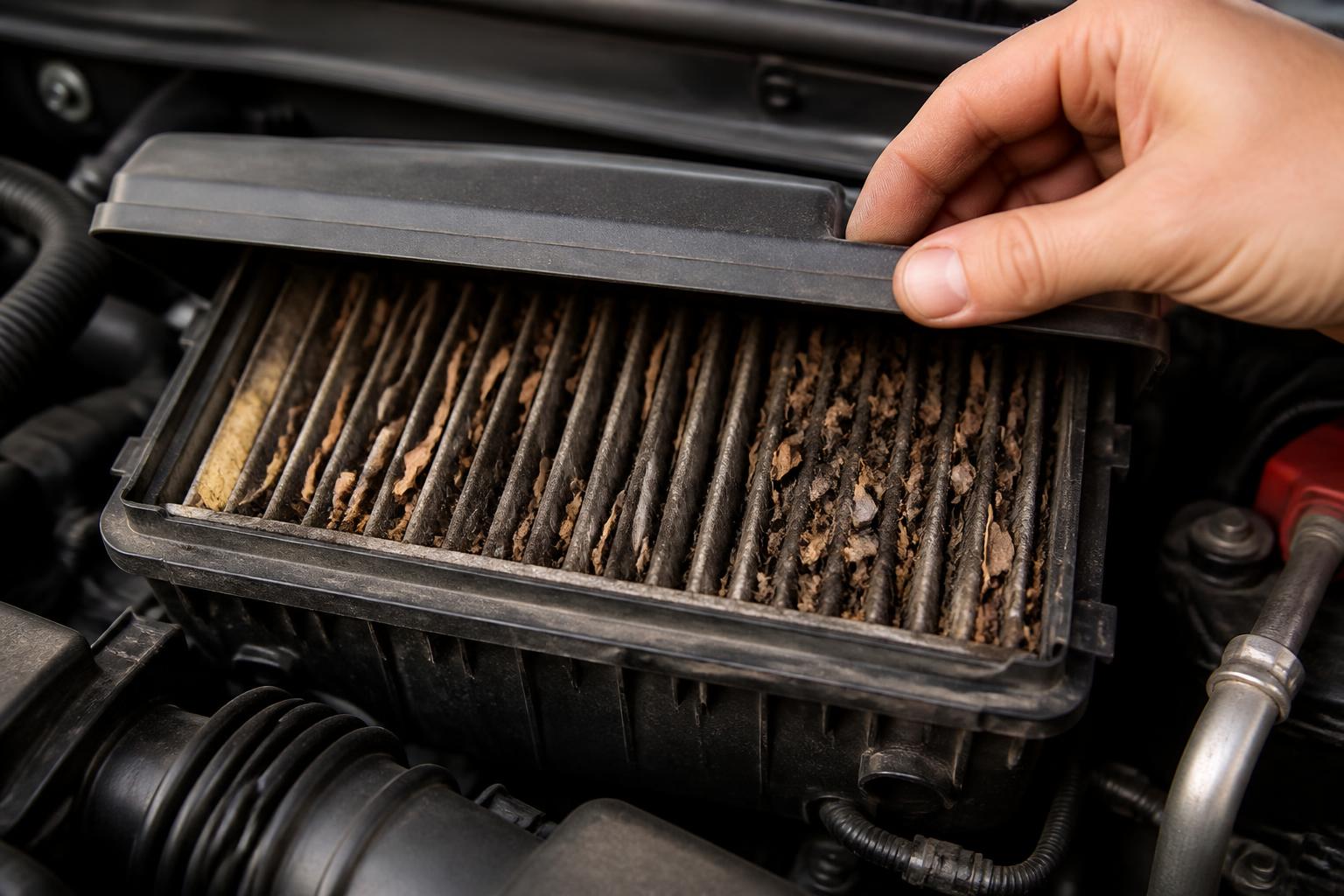
- Cabin air filter – A clogged filter reduces airflow, making the AC feel weak even when the system is cold. Replace every 15,000–20,000 miles.
- Short-cycling – If the compressor turns on and off every few seconds, refrigerant is likely low. This is the most common cause of “AC not cold” on vehicles with 5+ years of service.
AC Diagnosis Checklist
Use this quick pass/fail checklist before diving deeper:
- [ ] Compressor clutch engages when AC is ON?
- [ ] Condenser fins clear of debris?
- [ ] Drive belt intact and properly tensioned?
- [ ] Cabin air filter replaced within the last two years?
- [ ] No oily residue at hose connections or the compressor? (Indicates a leak)
- [ ] AC feels colder at highway speed than at idle? (Classic sign of low refrigerant)
If all items pass but the air is still warm, move to the next section.
Why the Air Went Warm
Most sudden AC failures on the 2016 SRX fall into one of three categories. Here’s how to tell them apart.
Low Refrigerant (The Most Common Cause)
The AC system is sealed, but microscopic leaks develop over time at seals, O-rings, and the compressor shaft. By 5–7 years, many vehicles have lost enough refrigerant that cooling drops off noticeably. You’ll feel the air is barely cool at idle but gets slightly colder when you drive—the higher engine speed helps the compressor push the remaining refrigerant. A recharge kit with a pressure gauge will confirm low pressure.
Compressor or Clutch Failure
If the clutch never engages, no refrigerant is being circulated. Common causes in order of likelihood:
- Blown fuse – Check the AC compressor fuse in the underhood fuse box (position varies by build date; consult your owner’s manual).
- Faulty relay – Swap the AC relay with an identical one from another circuit (like the horn relay) to test.
- Clutch coil failure – If the fuse and relay check out but the clutch still doesn’t engage, the electromagnetic coil inside the compressor has failed. This requires compressor replacement.
- Bad ground or wiring – A corroded connector at the compressor can interrupt power.
Listen for a single click from the compressor when you turn on the AC. No click = electrical issue. A grinding or squealing noise when the compressor runs means the bearing is failing.
Expansion Valve or Orifice Tube Clog
These small components regulate refrigerant flow into the evaporator. When blocked, the system loses cooling capacity. You may see frost or ice on the low-side aluminum line near the firewall, or the vent temperature fluctuates between cold and warm. This is not a DIY fix—a shop needs to recover the refrigerant, replace the restriction, and perform a vacuum test.
Recharging the Refrigerant
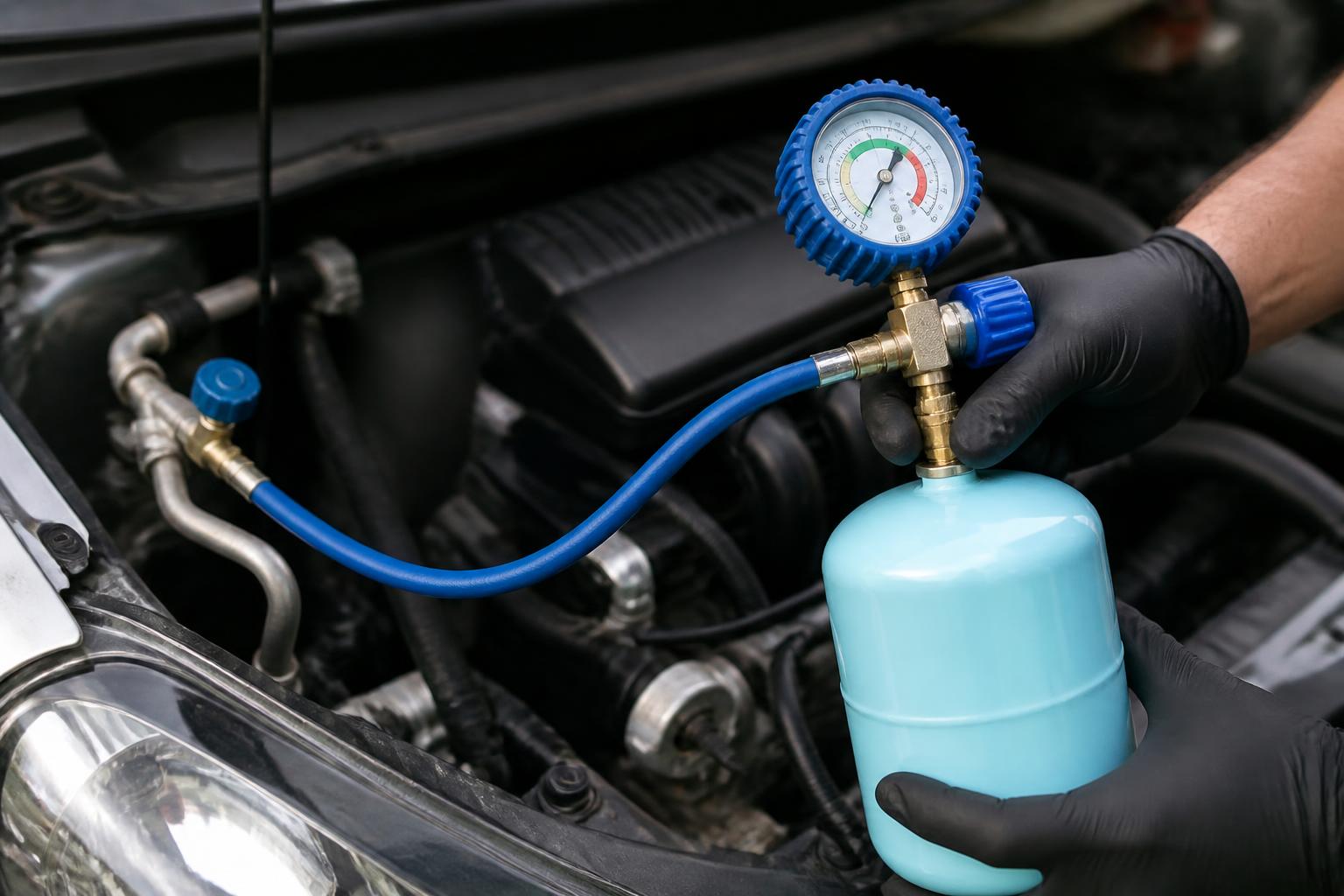
If you’ve confirmed the compressor clutch engages and the condenser is clean, a recharge is the next step. Use a kit with a pressure gauge—do not use a can without one, as overcharging damages the compressor.
What You’ll Need
- R-134a refrigerant with a gauge hose (the 2016 SRX uses R-134a, not the newer R-1234yf)
- Safety glasses and gloves
- A thermometer for the vent (optional but helpful)
Step-by-Step Procedure
1. Locate the low-pressure service port – On the SRX, it’s on the larger aluminum line near the passenger-side firewall. The cap is black or blue with an “L” on it. The high-pressure port (marked “H”) is smaller—do not connect to that port.
2. Attach the recharge hose – Screw the coupler onto the low-pressure port until it clicks. The gauge should read some pressure even before you start—if it reads 0 psi, the system is fully empty and has a major leak. Stop and visit a shop.
3. Start the engine and set the AC to MAX – Turn the blower to high, recirculation ON, windows closed.
4. Read the starting pressure – On a 70–90°F day, a properly charged system reads 25–45 psi on the low side. Below 25 psi means low refrigerant.
5. Add refrigerant – Hold the can upright (not upside down) and open the valve slowly. Tilt the can and shake it occasionally to keep the flow steady. Add in short bursts—5–10 seconds at a time—and let the pressure stabilize between bursts.
6. Stop at the right pressure – Aim for the middle of the normal range: 35–40 psi on a warm day. Do not exceed 45 psi.
7. Check the vent temperature – Point a thermometer into the center vent. After 2–3 minutes of the compressor running, the temp should drop to 40–50°F. If it stays in the 60s or higher, you may still have a low charge or a different problem.
Branching After Recharge
- Vent temp drops to 40–50°F and stays there → Success. The system is properly charged.
- Pressure rises quickly but vent temp stays warm → Possible blockage in the expansion valve or orifice tube. Stop recharging and take the vehicle to a shop.
- Pressure never increases above 20 psi → There may be a large leak or the compressor isn’t circulating refrigerant. Check compressor clutch engagement again. If it’s cycling on and off rapidly, you likely have a leak that needs professional repair.
How to Confirm the Fix Worked
After recharging, drive the SRX for 10–15 minutes with the AC on MAX and the recirculation setting active. The air should feel consistently cold at both idle and highway speeds. At the end of the drive, feel the low-side line near the evaporator—it should be cold to the touch, and you may see light condensation. If the line is warm or only slightly cool, the system isn’t fully charged or there’s a deeper issue.
Resetting the AC Control Module
After a battery replacement, a dead battery, or any electrical disconnect, the AC control module can lose its calibration. There’s no dedicated reset button, but you can force a relearn.
1. Disconnect the negative battery cable with a 12mm wrench. Wait 10 minutes.
2. Reconnect the cable and tighten it securely.
3. Start the engine. Turn the AC to MAX cold, then turn it off. Repeat this on/off cycle three times, waiting 10 seconds between each toggle.
4. Drive for 5–10 minutes with the AC on. The system will recalibrate and resume normal operation.
If the AC still blows warm after the reset, the problem is mechanical or refrigerant-related, not electronic.
Transmission Fluid Capacity for a 2016 SRX
While you’re under the hood, it’s common to wonder about other fluids. The 2016 Cadillac SRX uses a 6-speed automatic transmission—GM’s 6T70 for front-wheel drive and 6T75 for all-wheel drive. Both take Dexron VI ATF.
How Many Quarts Does a 2016 Cadillac SRX Take?
The answer depends on what kind of fluid change you’re doing:
| Procedure | Approximate Fluid Needed | Notes |
|---|---|---|
| Drain and fill (pan drop) | 7.5 quarts | Replaces about half the total fluid; use a new pan gasket. |
| Full flush (machine exchange) | 12–14 quarts | Rarely needed; only if the fluid is burnt or contaminated. |
| Torque converter drain | +1–2 quarts extra | Only if you remove the converter drain plug during a rebuild. |
Decision criterion: If you’re doing routine maintenance and the fluid looks dark red and smells normal, a drain and fill with 7.5 quarts is the right call. If the fluid is brown, has a burnt odor, or you’re troubleshooting a shifting issue, a full flush (12–14 quarts) becomes necessary. Always confirm exact capacity in your owner’s manual—there can be slight variations depending on cooler size and AWD configuration.
For engine oil, the 3.6L V6 takes 6.0 quarts of 5W-30 with a new filter.
SRX Model Years to Avoid
If you’re considering a used Cadillac SRX, the 2016 is the most dependable year of the first-generation (2010–2016). Earlier years had recurring problems:
- 2010–2012: Higher rates of timing chain wear and transmission solenoid failures. Timing chain issues can lead to catastrophic engine damage; listen for a rattling noise on startup.
- 2013–2015: Improved reliability, but the HVAC blend door actuators are known to fail—you’ll hear a clicking or tapping noise behind the dashboard when changing temperature or mode settings. The repair is labor-intensive.
- 2016: Benefits from all the updates and early-model fixes. It’s the best year to buy if you’re shopping used.
FAQ: Common Owner Questions
How do I reset my AC in my car?
Use the battery-disconnect method described above. For a quick reset without tools, turn the AC off, wait 30 seconds, then turn it back on with the engine running.
Why is my car AC suddenly not blowing cold air?
Low refrigerant is the most likely cause, especially if the compressor clutch still engages. Check the clutch engagement first; if it’s working, do a pressure read and recharge.
What year to stay away from a Cadillac SRX?
Avoid 2010–2012 models without documented repair history. The 2016 is the most reliable year.
What kind of transmission is in a 2016 Cadillac SRX?
A 6-speed automatic—GM’s 6T70 (FWD) or 6T75 (AWD)—using Dexron VI ATF.
Explore This Topic
- Back to Car Ac Not
- Back to Automotive Repair
Related guides in this cluster:
- Transmission Fluid: When to Change, How to Check, and DIY Guide
- Check Engine Light: Most Common Causes and What to Do First
- Thermostat, Water Pump, and Overheating: Diagnosis and Repair

Greedy Wheels is the founder and lead editor at Wheels Greed. With over 15 years of hands-on automotive experience — from rebuilding engines in a home garage to managing fleet maintenance for a regional logistics company — he brings real-world mechanical knowledge to every guide.
His work has been featured in automotive forums, owner communities, and dealership training materials. When he’s not researching the latest car owner questions, you’ll find him at a local track day, wrenching on his project car, or testing the newest OBD2 diagnostic tools.
At Wheels Greed, every article is reviewed against manufacturer service manuals, NHTSA bulletins, and verified owner reports. No AI-generated fluff. No guesswork. Just practical answers from someone who has turned the wrench.