Catalytic Converter Theft and Scrap Value: Which Cars Are Targeted
A catalytic converter’s scrap value typically ranges from $50 to over $1,200, depending on the vehicle’s make, model, and year. The most valuable units come from hybrids like the Toyota Prius (2004–2009), heavy-duty Ford gas trucks, and certain GM SUVs—cars that use higher amounts of platinum, palladium, and rhodium. If you’re wondering what your converter is worth, the first step is finding the part number stamped on the shell or using your VIN, then checking current precious-metal prices and calling a few local buyers.
Important applicability boundary: These values assume the converter is OEM (original equipment) and physically intact. Aftermarket replacements typically fetch 30–50% less, and converters from diesel vehicles are worth $50–$150 regardless of size because they use different catalyst chemistry. Local scrap yard demand and current metal spot prices also shift the range by 15–25% week to week.

How to Estimate Your Converter’s Value in 4 Steps
This operator flow walks you through the process with clear checkpoints so you know when to proceed and when to stop.
Step 1: Identify the Converter by Part Number
Look for a stamped alphanumeric code on the converter body. On most cars it’s on the upper or side shell near the outlet pipe. Common locations:
- Honda/Toyota: On the flat top between the heat shield tabs.
- GM trucks: On the side near the O2 sensor boss.
- Ford vans: Facing the engine, visible with a flashlight.
If you can’t see it while the converter is still on the car (and you’re not removing it yourself), use a free VIN decoder to pull up the OEM part number from your vehicle’s emissions system diagram.
Verification step to confirm the part: Once you have a suspected part number, cross-check it on an online catalog like RockAuto or a scrap price lookup site (e.g., CatalyticConverterPrice.com). If the part number pulls up a listing for your exact year/make/engine, you’ve confirmed it.
Checkpoint: If you only have aftermarket replacement info, expect 30–50% less value than OEM.
Checkpoint: If you cannot find any part number or VIN match, move to Step 2 for a rough estimate based on vehicle class.
Step 2: Determine Precious Metal Content by Vehicle Type
Scrap yards pay primarily for the platinum, palladium, and rhodium inside. Certain vehicles are known to have higher loads:
| Vehicle Example | Typical Scrap Range | Why |
|---|---|---|
| Toyota Prius (2004–2009) | $600 – $1,200 | Two converters; high rhodium content |
| Ford F-250/F-350 (6.0L, 6.4L gas) | $400 – $800 | Large catalyst brick, dense metals |
| Honda Accord (2000–2010) | $200 – $500 | Consistent platinum/rhodium mix |
| Chevy Suburban / GMC Yukon (2000–2010) | $300 – $700 | Two converters, heavy chassis |
| Honda CR-V (2004–2012) | $250 – $450 | Reliable rhodium load |
| Toyota Tacoma V6 | $350 – $600 | Strong palladium content |
| Diesel trucks (any) | $50 – $150 | Different catalyst chemistry, less precious metal |
Checkpoint: If you have a diesel vehicle, skip ahead to Step 4 – your converter is likely worth under $200.
Step 3: Inspect Physical Condition
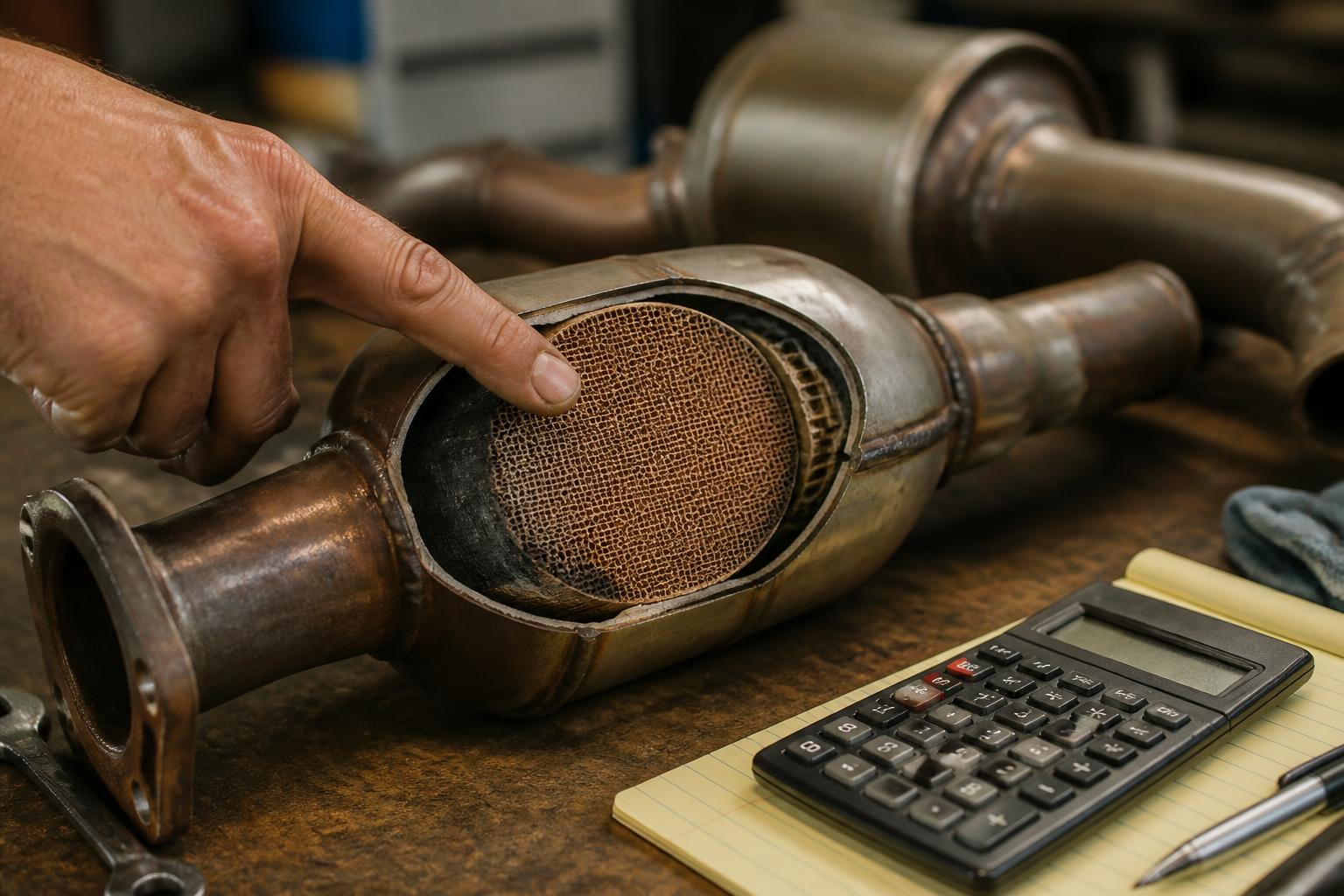
An intact converter with no cracks, missing heat shields, or weld repairs fetches full price. Damage reduces value quickly.
- Gutted internals (from theft or prior removal) → $0–$10 as scrap steel.
- Cracked shell → 30–60% deduction.
- Heat shield missing → not a big hit unless it’s the only shell protection.
Likely cause of low value: Many older GM “bread loaf” converters (large oval shape, common on 1990s–2000s trucks) look big but have low rhodium content. They often bring only $80–$200, a common surprise for first-time sellers.
Realistic mismatch to watch for: If a converter appears large but is aftermarket (no OEM stamp), its scrap value can be as low as $30–$60. Size alone does not indicate value. A small Prius converter can be worth 10× more than a massive bread-loaf unit.
Step 4: Get Two or Three Quotes from Local Scrap Yards
Call yards that specialize in catalytic converters. General metal recyclers may offer 20–30% less. Have your part number (or at least the vehicle year/make/model) ready.
Escalation signal: If two yards give wildly different quotes (e.g., $150 vs. $400), the low offer might be a lowball. Call a third yard or use a free online scrap price database to check the part number’s current bid.
Stop point: You now have a realistic price range. If you’re satisfied, sell. If you think it’s worth more, wait for metal prices to rise – but rhodium can drop 20% in a month, so don’t chase peaks.
What Your Converter’s Value Means for Your Next Move
Now that you have a ballpark number, here’s the practical implication for your decision:
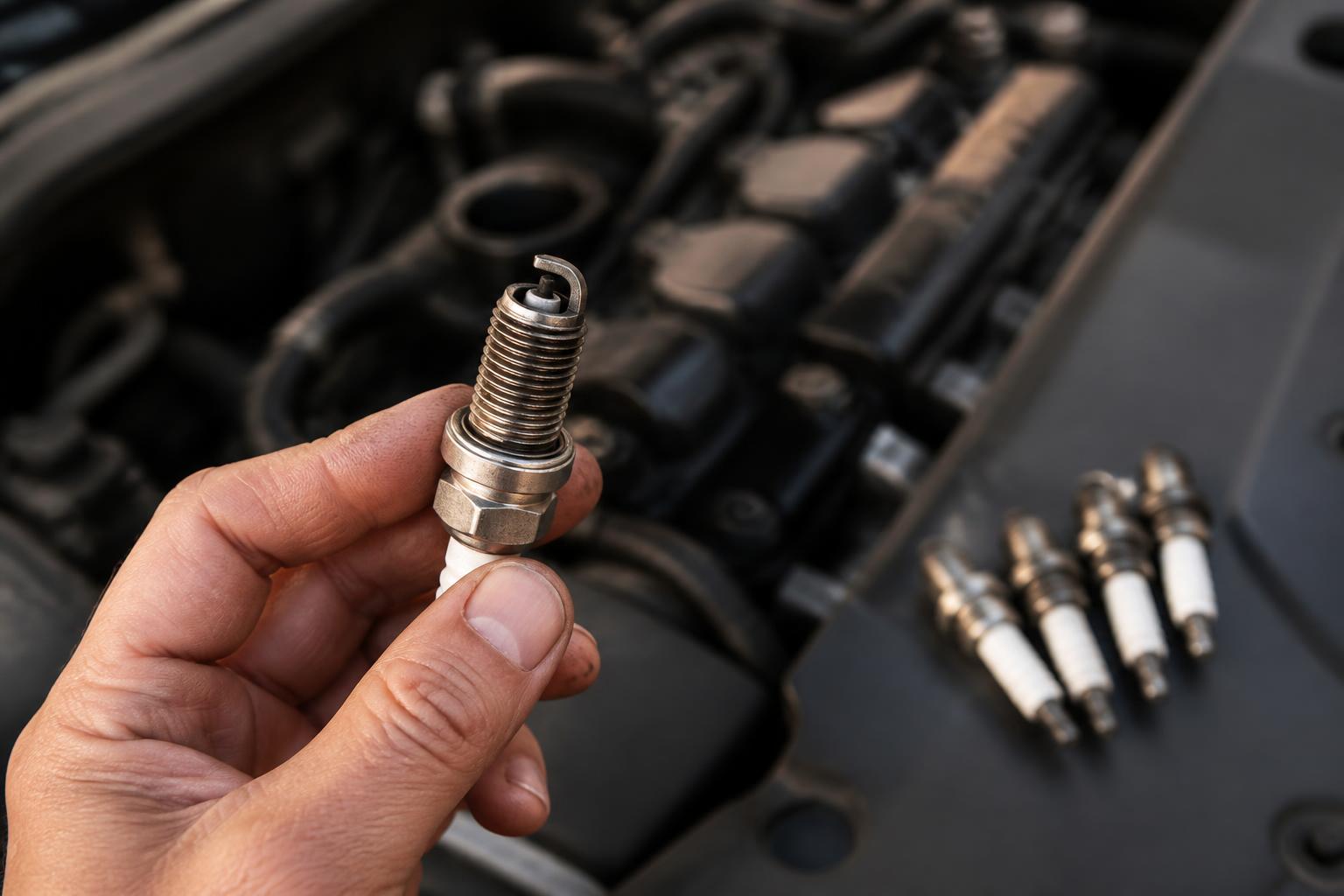
- If the converter is still on a running car and you’re thinking of removing it to sell: Don’t. Removing a working, legally required emissions part is illegal under the Clean Air Act (EPA tampering rules) in most states. You can be fined up to $10,000. Only sell if the converter is already off the vehicle (from a replacement job) or the car is being scrapped.
- If you have a removed converter and the price is $300+: Sell now unless you’re willing to gamble on metal markets. The premium for waiting is rarely worth the volatility.
- If the price is under $150: It’s probably not worth your time to drive to the yard. Hold it until metal prices rise, or bundle it with other scrap.
- If you’re buying a used car and want to avoid theft risk: Cross-reference the model against the high-value list above. A 2004–2009 Prius parked on the street is a theft magnet; consider an aftermarket shield or a garage spot.
Quick Decision Checklist
Use these five checks to decide whether your converter is worth selling now or whether it’s better to scrap later – or not at all.
1. Is the converter OEM?
☐ Yes → Higher value (keep it or sell for fair price).
☐ No (aftermarket) → Lower value; sell now if price is decent.
2. Is the converter physically intact?
☐ Yes → Proceed.
☐ No (cracked, welded, gutted) → Scrap value near zero; do not sell.
3. Is your vehicle a diesel?
☐ Yes → Expect $50–$150. Sell only if you need quick cash.
☐ No → Continue to next check.
4. Is the converter from a known high-value model (Prius, heavy-duty gas truck, Honda)?
☐ Yes → Worth waiting for a higher metal price.
☐ No → Average value; selling now is fine.
5. Have you called at least two specialized scrap yards?
☐ Yes → You have a market rate.
☐ No → Do not sell until you get a second quote.
Common Pitfalls That Lower Your Payout
- Selling to a roadside “cash for cats” sign. These offers are usually 40–60% below market. Always call a legit recycler.
- Assuming bigger means more valuable. “Bread loaf” converters on older GM trucks are large but low in rhodium. Size doesn’t equal money.
- Selling without a part number. Without one, you’re at the mercy of the buyer’s guess. Spend 10 minutes finding the code.
- Ignoring metal price trends. Rhodium hit $20,000/oz in 2021 and dropped below $5,000 in 2023. Check current spot prices before selling.
- Scrapping a converter from a car that still runs fine. Removal is illegal without a shop license in many states (EPA tampering rules). Only sell if the converter is already removed or the vehicle is being junked.
FAQ: Quick Answers on Common Vehicles
How much is a 2008 Honda Civic catalytic converter worth?
Typically $200–$350 depending on trim. The DX trim has less precious metal than the LX.
How much is a 2004 Honda CR-V catalytic converter worth?
$250–$450. It’s similar to the Civic but slightly larger.
How much is a GMC catalytic converter worth?
Varies: a GMC Sierra 1500 gas converter is $300–$500; a diesel Sierra 2500 is $80–$150. Check the part number.
How much is a Chevy Silverado catalytic converter worth?
2010+ 5.3L V8 models: $350–$700. Older 1999–2007 1500s: $200–$400.
How much is a 2001 Chevy Suburban 1500 catalytic converter worth?
Two converters, each $250–$400. A pair can bring $500–$800.
What is the highest paying catalytic converter scrap price?
As of late 2024, the 2004–2009 Toyota Prius converter consistently tops the range at $600–$1,200. Some hybrid-specific units have exceeded $1,400.
How can I tell if my catalytic converter is worth money without a part number?
Look up your vehicle’s year, make, and engine on a free scrap price database. Use the VIN to get the OEM part number. If you have the converter off the car, weigh it – a heavy (10+ lb) gas-engine converter typically has more value than a light (3–5 lb) one.
The only way to know your exact payout is to call a local buyer with the part number in hand. Use the checklist above to decide if it’s worth selling now, and never accept a first offer without a second quote.
Explore This Topic
- Back to Catalytic Converter Theft
- Back to Automotive Repair
Related guides in this cluster:
- Catalytic Converter Cleaner, Clogging, and Replacement Cost
- Exhaust Leaks, O2 Sensor Failure, and Emissions Codes
- Transmission Slipping and Shifting Problems: Diagnosis Guide

Greedy Wheels is the founder and lead editor at Wheels Greed. With over 15 years of hands-on automotive experience — from rebuilding engines in a home garage to managing fleet maintenance for a regional logistics company — he brings real-world mechanical knowledge to every guide.
His work has been featured in automotive forums, owner communities, and dealership training materials. When he’s not researching the latest car owner questions, you’ll find him at a local track day, wrenching on his project car, or testing the newest OBD2 diagnostic tools.
At Wheels Greed, every article is reviewed against manufacturer service manuals, NHTSA bulletins, and verified owner reports. No AI-generated fluff. No guesswork. Just practical answers from someone who has turned the wrench.