Timing Belt, Timing Chain, and Serpentine Belt: Replacement Guide
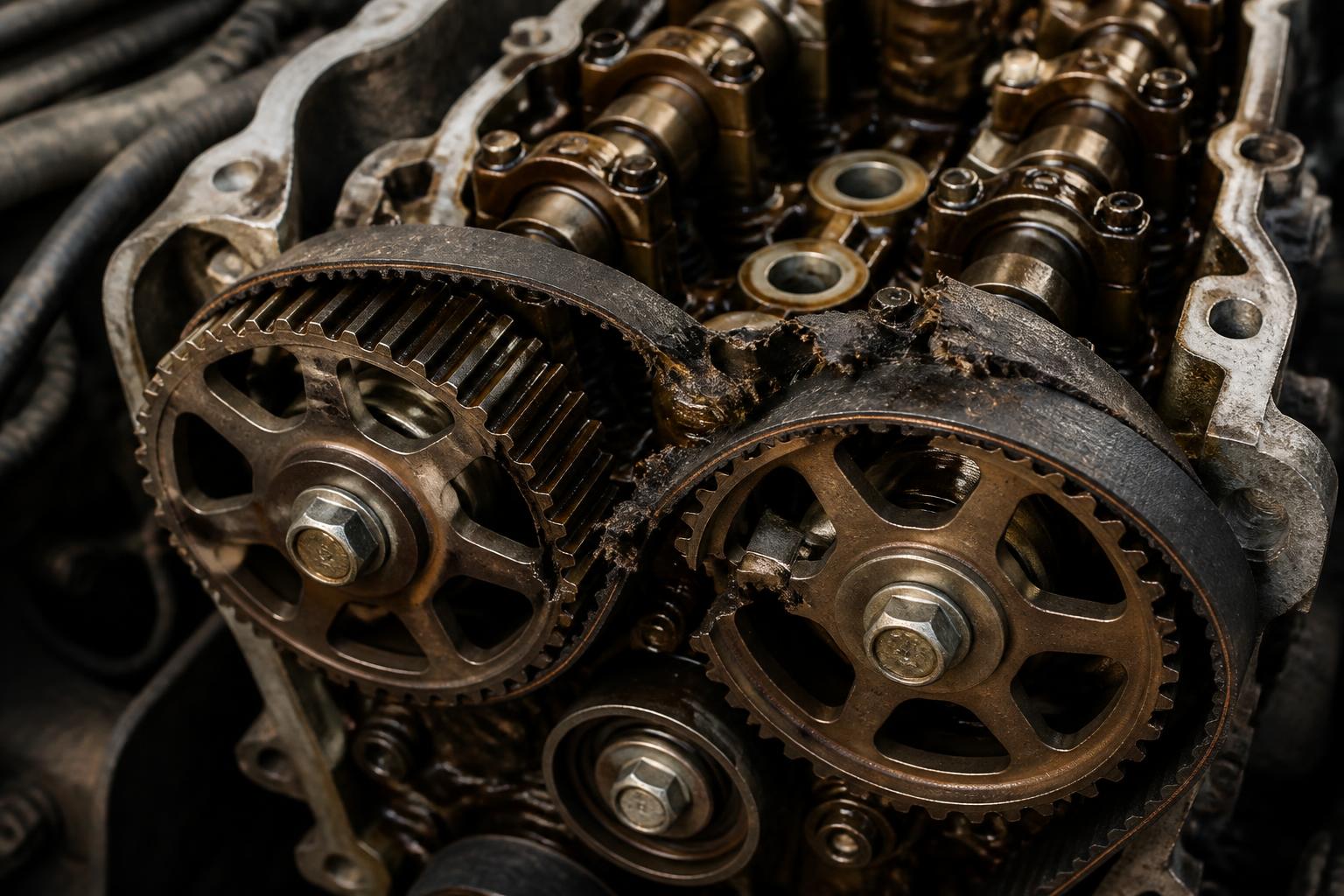
If your timing belt snaps while the engine is running, the answer depends entirely on your engine type. Interference engines let the pistons and valves share the same space at different points in the cycle. When the belt breaks, the pistons smash into open valves, bending them and often damaging cylinder heads, pistons, or the block. Non-interference engines leave enough clearance that a broken belt simply stalls the car with no internal damage.
Your first action: stop trying to start the car and verify whether your engine is interference or non-interference. That single fact tells you whether you’re looking at a belt replacement or a full engine swap.
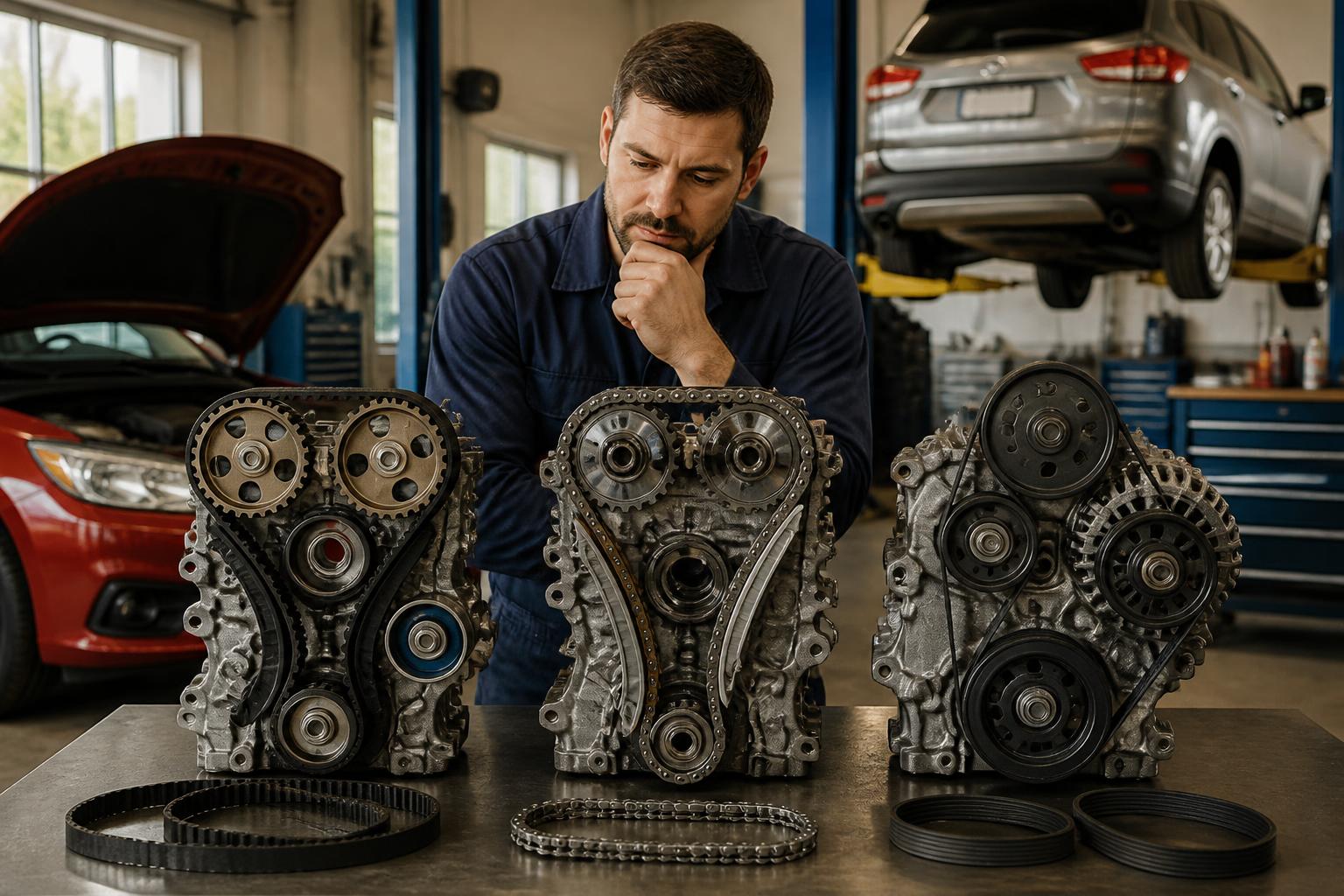
Engine Type Decides Your Fate: Interference vs. Non-Interference
Interference Engines (High Risk of Catastrophic Damage)
In an interference engine, pistons and valves occupy the same space at different crank angles. A broken timing belt stops the camshaft instantly while the crankshaft continues turning for a fraction of a second. Pistons hammer into valves that are stuck open. The result: bent valves, cracked pistons, broken valve guides, and sometimes a destroyed cylinder head.
Common interference engines include:
- Honda Odyssey V6 (1999–present)
- Toyota Camry 2.4L (2002–2011)
- Subaru 2.5L (most years)
- Honda Civic 1.8L (2006–2015)
- Volkswagen/Audi 1.8T and 2.0T
- Ford 2.0L and 2.3L Duratec
- Nissan 2.5L QR25DE
Non-Interference Engines (Low Risk – Stranded but Salvageable)
These engines leave enough piston-to-valve clearance so that when the belt breaks, nothing touches. The engine stops; you’re stranded. Replace the belt, tensioner, and any driven components, set timing correctly, and drive away.
Common non-interference engines include:
- GM 2.2L Ecotec (pre-2005)
- Honda D-series 1.5L–1.6L (1988–2000)
- Nissan KA24 (1990–2004)
- Ford 2.3L Lima (1974–1997)
- Chrysler 2.2L and 2.5L (1981–1995)
How to check your engine: Use your owner’s manual or enter your exact year, make, model, and engine code into a search engine (or call a dealership parts counter). Write down “interference” or “non-interference” before ordering any parts.
What Happens When a Timing Belt Breaks
The damage chain differs by when and how the belt fails.
Breaks While Driving (Interference Engine)
You’ll hear a loud clunk or bang from the front of the engine. The engine stalls immediately and will not restart. If you try to crank it, the starter spins faster than normal because compression is lost on one or more cylinders. Do not keep cranking. Each rotation can drive bent valves deeper into pistons, turning a head-only repair into a complete engine swap.
Real example: A 2010 Honda Odyssey with 112,000 miles on the original timing belt snapped on the highway. The owner cranked it twice trying to restart. Estimate: $3,800 for a used engine swap, or $2,200 to rebuild the heads. The car was worth about $6,000.
Breaks While Starting (Interference Engine)
If the belt breaks during cranking (not running), damage is less likely but still possible. Cranking speed is far slower than idle, so impact force is lower. A compression test will tell you whether valves are sealing. If compression is normal on all cylinders, you got lucky—replace the belt set and drive on.
Breaks on a Non-Interference Engine
The engine stops and will not restart. No internal damage occurs. Replace the belt, tensioner, pulleys, and water pump (if belt-driven), set timing correctly, and the engine runs as before. A compression test is still a good idea to confirm.
Timing Chain Failure: Less Common but Just as Serious
Timing chains rarely snap, but they can stretch over time, especially if oil changes are neglected. A stretched chain can skip teeth on the camshaft or crankshaft sprockets, causing the same interference damage as a broken belt.
Key symptoms of a failing timing chain:
- Rattling noise from the front of the engine, especially on startup
- Check Engine codes P0016 or P0017 (cam/crank correlation)
- Rough idle or poor acceleration
- Metal flakes in the oil (advanced wear)
If you hear a rattle from the chain area, have it inspected immediately. A chain replacement costs $800–$2,500+ because it requires removing the timing cover, guides, tensioner, and often the oil pan. On many engines, the chain is designed to last the life of the vehicle with proper maintenance—but “life” can be shortened by low oil pressure or sludge.
Do you need a new engine if the timing chain breaks? Yes, if it breaks while running on an interference engine. The result is the same as a broken belt: piston-to-valve contact, bent valves, and likely a destroyed cylinder head. On a non-interference engine, you might get lucky—but chain breaks are so rare that most mechanics have never seen one.
Serpentine Belt: The One That Squeals (and What It Means)
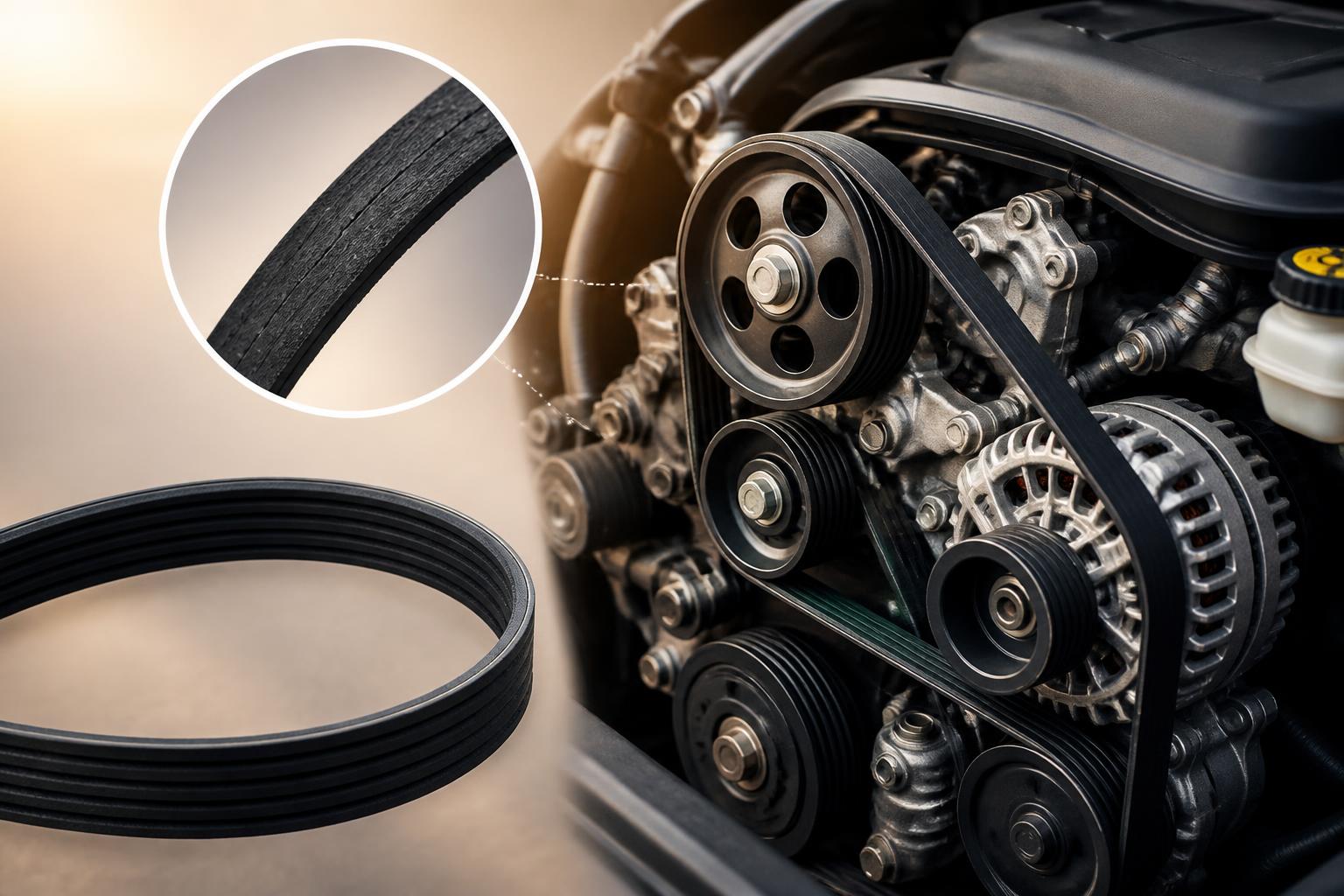
Unlike a timing belt, the serpentine belt drives the alternator, power steering pump, A/C compressor, and water pump (on most cars). It’s visible on the front of the engine and easy to inspect.
When your serpentine belt squeals:
- A high-pitched squeal when starting the engine or turning the steering wheel usually means the belt is loose, glazed, or worn
- A chirping noise that speeds up with RPM often points to a misaligned pulley or a failing tensioner
- A grinding or honking sound may indicate a seized accessory bearing (alternator, power steering pump, or idler pulley)
What not to do: Never spray WD-40 on any belt to stop noise. WD-40 degrades rubber, reduces grip, and can cause the belt to slip or fail sooner. If you need a temporary fix, use a belt dressing spray designed for serpentine belts, but replacement is the real cure.
Serpentine belt replacement intervals: Most manufacturers recommend 60,000–100,000 miles, but replace it immediately if you see cracking, fraying, or missing ribs. A broken serpentine belt means instant loss of charging, power steering, and A/C—but no engine damage. You’ll be stranded, not destroyed.
Warning Signs Before a Timing Belt Breaks
Timing belts rarely give long warnings like a squealing serpentine belt, but these clues mean you need to act now:
- Age or mileage past the recommended interval. If you’re over 105,000 miles or 7 years on a Honda Odyssey, Toyota 2.4L, or any interference engine, you’re on borrowed time.
- Oil leaking near the timing cover. Oil soaks the belt, causing rubber degradation. A seep from the camshaft or crankshaft seal often drips directly onto the belt.
- Engine misfire or rough idle. A slightly stretched belt can drift cam timing, triggering P0016 or P0017 codes. The engine may run poorly or hesitate under load.
- Ticking or chirping noise from the front of the engine. Usually a worn tensioner bearing or belt glazing. Replace belt and tensioner together. Don’t confuse this with serpentine belt noise.
- Visible cracking, fraying, or missing teeth. Inspect through a timing cover access hole if your car has one. Cracks between teeth are a red flag.
No warning at all is also common. Many drivers discover a broken belt only when the engine dies mid-turn. If you’re past the recommended interval, don’t wait for symptoms.
Service and Replacement Intervals
Always consult your owner’s manual, but here are common recommendations:
- Honda Odyssey (V6): 105,000 miles or 7 years (many owners push to 10 years on low mileage, but rubber ages even without miles)
- Honda Civic/CR-V 1.8L (2006–2015): 105,000 miles or 7 years
- Toyota Camry/Corolla 1.8L/2.4L: 90,000 miles or 9 years (belt); newer models use a chain (100,000 miles recommended inspection)
- Subaru 2.5L: 105,000 miles or 10 years
- Ford/Mazda 2.0L/2.3L Duratec: 105,000 miles
- Volkswagen 2.0T (EA888 Gen 1–3): 90,000 miles or 6 years
- Nissan Altima 2.5L (2002–2012): 105,000 miles or 8 years
Important: If your water pump is driven by the timing belt (common on most modern cars), replace the water pump and thermostat when you do the belt. The labor is already paid for. A water pump failure a year after a belt change means paying that same labor twice.
Decision Checklist: Do You Need a New Engine After a Belt Break?
Use this checklist immediately after a suspected timing belt failure.
- [ ] Was the engine running when the belt broke? If yes, proceed. If the belt broke only during cranking (parked or failed start), damage is unlikely.
- [ ] Do you know if your engine is interference or non-interference? Look it up. If non-interference, stop here – replace the belt and you’ll likely drive away with no internal damage.
- [ ] Did you hear a loud clunk or bang when it stopped? That’s metal contact. Expect bent valves and possibly piston damage.
- [ ] Have you tried to restart the engine? If you cranked it even once after the break, you may have hammered valves deeper. Do not crank again.
- [ ] Can you turn the crankshaft pulley by hand? Remove spark plugs, then use a breaker bar and socket on the crank bolt to rotate clockwise. If it hits solid resistance within one full rotation, valves are contacting pistons – the engine needs a teardown. If it turns freely with no binding, you likely avoided major damage.
Stop threshold: If you checked yes to item 1, interference for item 2, and yes to item 3 or 4, stop all DIY attempts and tow the car to a shop. The engine is almost certainly damaged. Attempting further disassembly without professional diagnosis can turn a repairable engine into a full loss.
Cost Analysis: Preventative Belt Replacement vs. Engine Repair After Failure
| Scenario | Typical Cost | Outcome |
|---|---|---|
| Replace timing belt on schedule (every 60,000–105,000 miles) | $400–$900 (belt, tensioner, water pump, pulleys, labor) | Engine runs reliably for another interval. No risk of catastrophic failure. |
| Broken belt on interference engine | Engine swap: $3,000–$6,000 (used motor + labor). Head rebuild: $1,500–$3,000 | Car may be totaled if market value is under $5,000. |
| Broken belt on non-interference engine | $400–$800 (belt + tensioner + labor) | No internal damage. Car back on road for cost of belt job. |
| Serpentine belt replacement | $50–$200 (belt + tensioner if needed) | Quick fix; no engine risk. |
Is it worth fixing a car with a broken timing belt? For an interference engine on a high-mileage vehicle worth under $5,000, a used engine swap often exceeds the car’s value. A non-interference failure is almost always worth repairing. If you can do the labor yourself and the car is in good condition, a used engine from a salvage yard may make sense even on a lower-value car.
FAQ
How long can you drive with a bad timing belt?
Zero miles. A failing timing belt can snap without additional warning. Stop driving and replace it immediately.
Is WD-40 bad for timing belts?
Yes. WD-40 degrades rubber and reduces grip. Never apply any lubricant to a timing belt.
Can a timing belt last 15 years?
Not safely. Rubber degrades with age even at low mileage. Replace it after 7–10 years regardless of miles.
How do you know if your engine is damaged by a timing belt?
A compression test will show low or zero compression on cylinders with bent valves. A borescope can also show valve marks on pistons.
Do you need a new engine if the timing chain breaks?
If the chain breaks while running on an interference engine, you likely need a replacement or major rebuild. Non-interference may survive, but chain failures are extremely rare.
How much will a mechanic charge to replace a timing belt on a Honda Odyssey?
Expect $600–$1,100 for the belt, tensioner, water pump, and labor. The exact cost varies by shop and region.
Can you still drive with a bad timing belt?
No. A bad timing belt can fail at any moment. Do not drive the vehicle.
Explore This Topic
- Back to Timing Belt Chain
- Back to Automotive Repair
Related guides in this cluster:
- Alternator Failure: Warning Signs, How to Test, and Replacement
- Transmission Slipping and Shifting Problems: Diagnosis Guide
- Starter Motor Failure: Symptoms, Diagnosis, and When to Replace

Greedy Wheels is the founder and lead editor at Wheels Greed. With over 15 years of hands-on automotive experience — from rebuilding engines in a home garage to managing fleet maintenance for a regional logistics company — he brings real-world mechanical knowledge to every guide.
His work has been featured in automotive forums, owner communities, and dealership training materials. When he’s not researching the latest car owner questions, you’ll find him at a local track day, wrenching on his project car, or testing the newest OBD2 diagnostic tools.
At Wheels Greed, every article is reviewed against manufacturer service manuals, NHTSA bulletins, and verified owner reports. No AI-generated fluff. No guesswork. Just practical answers from someone who has turned the wrench.