Engine Oil Type and Capacity Lookup: Every Brand and Engine
Engine oil type and capacity vary by make, engine family, and model year. The quickest way to confirm what your car needs is the owner’s manual or oil filler cap, but this guide covers popular engines across major brands so you know what to expect before you buy. Use the tables and verification steps below to get the right oil the first time.
Every Brand” /> and Engine
Toyota 2.5L and 3.5L
2.5L 4-Cylinder (A25A-FX / 2AR-FX)
Toyota’s 2.5L engines use 0W-16 on 2018–2022 models and 0W-20 on earlier years. Full synthetic is required. Capacity with filter is 4.4–5.1 quarts.
Branch to watch: If your car is a 2018 or newer Camry, RAV4, or Avalon, check the oil filler cap first. Toyota printed 0W-16 on many of these caps. If you see 0W-16 printed, do not use 0W-20 – the tighter oil passage clearances rely on the lower viscosity. Using 0W-20 may cause sluggish oil flow at cold starts and reduced fuel economy.
Example: 2020 Toyota Camry 2.5L – 0W-16, 4.4 quarts. A 2016 Camry with the same 2.5L uses 0W-20, 4.6 quarts.
3.5L V6 (2GR-FE / 2GR-FKS)
The 3.5L V6 requires 0W-20 full synthetic. Capacity with filter is about 6.3 quarts.
Model-year split: Early 3.5L applications (2007–2010) specify 5W-30 conventional or synthetic blend. Toyota switched to 0W-20 around 2011. Using 5W-30 in a newer 3.5L won’t cause immediate failure, but cold-weather starts will be harder on the timing chain tensioners.
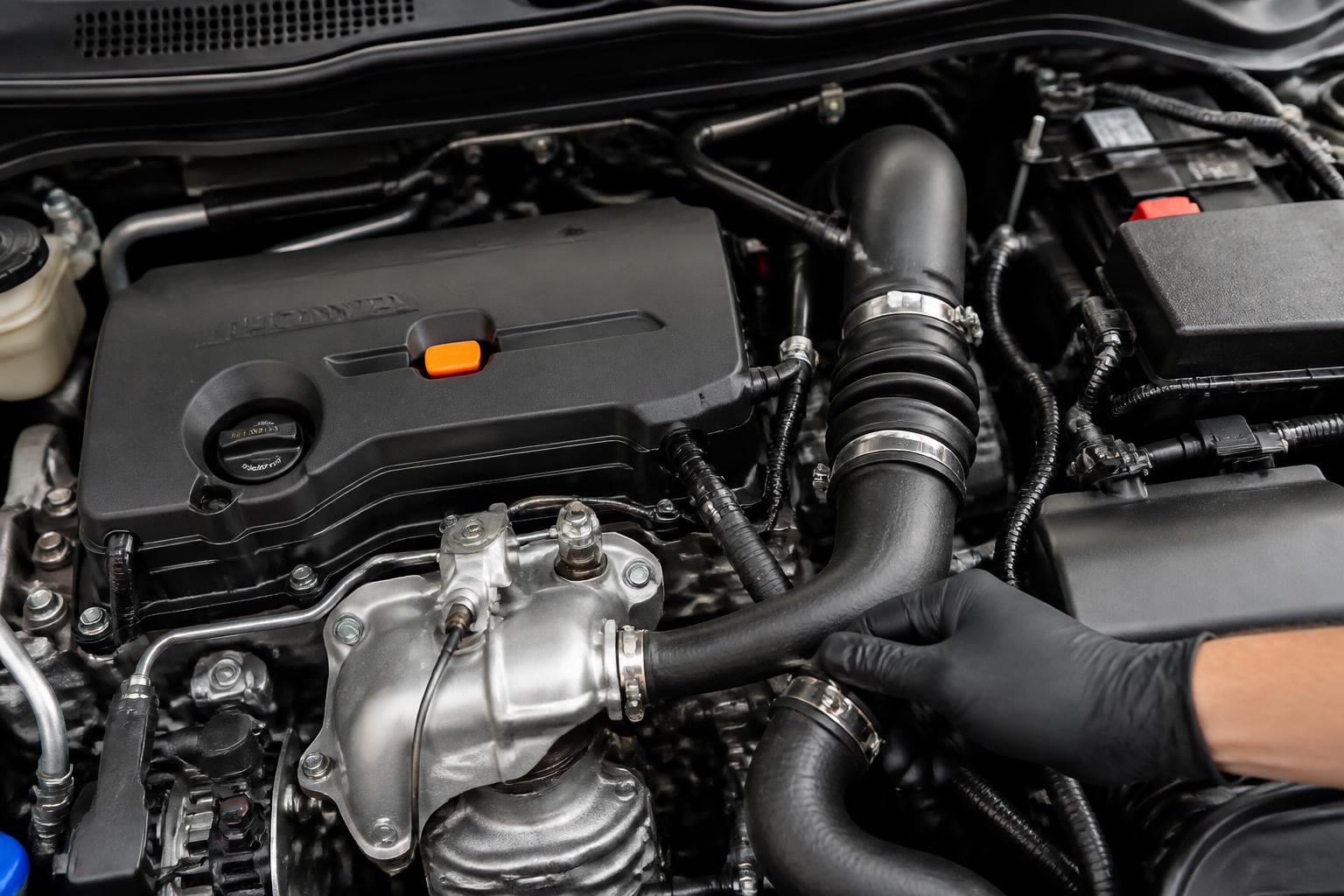
Example: 2021 Toyota Highlander 3.5L – 0W-20, 6.3 quarts. A 2009 Highlander 3.5L – 5W-30, 6.0 quarts.
Honda 1.5T and 2.0T
1.5L Turbo (L15B7 / L15BA)
Honda’s 1.5T uses 0W-20 full synthetic. Capacity with filter is 3.7 quarts.
Failure mode to watch: This engine is prone to fuel dilution in cold-weather short-trip driving. If the oil on your dipstick smells strongly of gasoline, extending the interval can cause sludging. Switch to shorter intervals (every 4,000–5,000 miles) and use a high-shear stable 0W-20 that meets Honda’s HTO-06 specification.
Example: 2022 Honda Civic 1.5T – 0W-20, 3.7 quarts. Do not substitute conventional oil; the turbocharger needs synthetic protection. The 2017–2021 CR-V 1.5T uses the same oil and capacity.
2.0L Turbo (K20C1 / K20C4)
The 2.0T in models like the Civic Type R and Accord 2.0T uses 0W-20 full synthetic. Capacity with filter is 5.1 quarts.
Verification step: After filling, run the engine for 2 minutes, shut it off, wait 3 minutes, then check the dipstick. The level should sit between the upper and lower marks – not above the top hole. Overfilling the 2.0T by even half a quart can cause crankcase pressure issues that blow oil past the rear main seal.
Example: 2020 Honda Accord 2.0T – 0W-20, 5.1 quarts. The 2019 Civic Type R uses the same spec.
Ford EcoBoost Engines
2.0L and 2.3L EcoBoost
Both engines call for 5W-30 full synthetic. Capacity with filter is 5.7 quarts for most applications.
Stop/escalate threshold: If your engine exhibits a persistent oil smell after a change or the low oil pressure light flickers at idle, stop immediately. The 2.3L EcoBoost has a known issue with the oil pressure sensor connector loosening during filter changes. Do not drive – tighten the sensor connector (located near the oil filter housing) before checking the level again.
Example: 2021 Ford Mustang EcoBoost (2.3L) – 5W-30, 5.7 quarts. The 2020 Ford Escape 2.0L EcoBoost also takes 5W-30 but capacity is slightly less at 5.2 quarts – verify with your dipstick.
3.5L EcoBoost
The 3.5L twin-turbo requires 5W-30 full synthetic. Capacity with filter is approximately 6.0 quarts.
Failure mode: Oil leaks from the front timing cover are common on 2017–2020 models. After a change, wipe the front of the engine clean and check for fresh oil weeping from the seam between the timing cover and block after 100 miles. If you see a drip, the cover gasket has failed – this is a dealer repair, not a DIY fix.
Example: 2020 Ford F-150 3.5L EcoBoost – 5W-30, 6.0 quarts. The 2018 Ford Explorer Sport 3.5L EcoBoost uses the same oil but capacity is 5.8 quarts – check your manual.
Subaru Boxer Engines
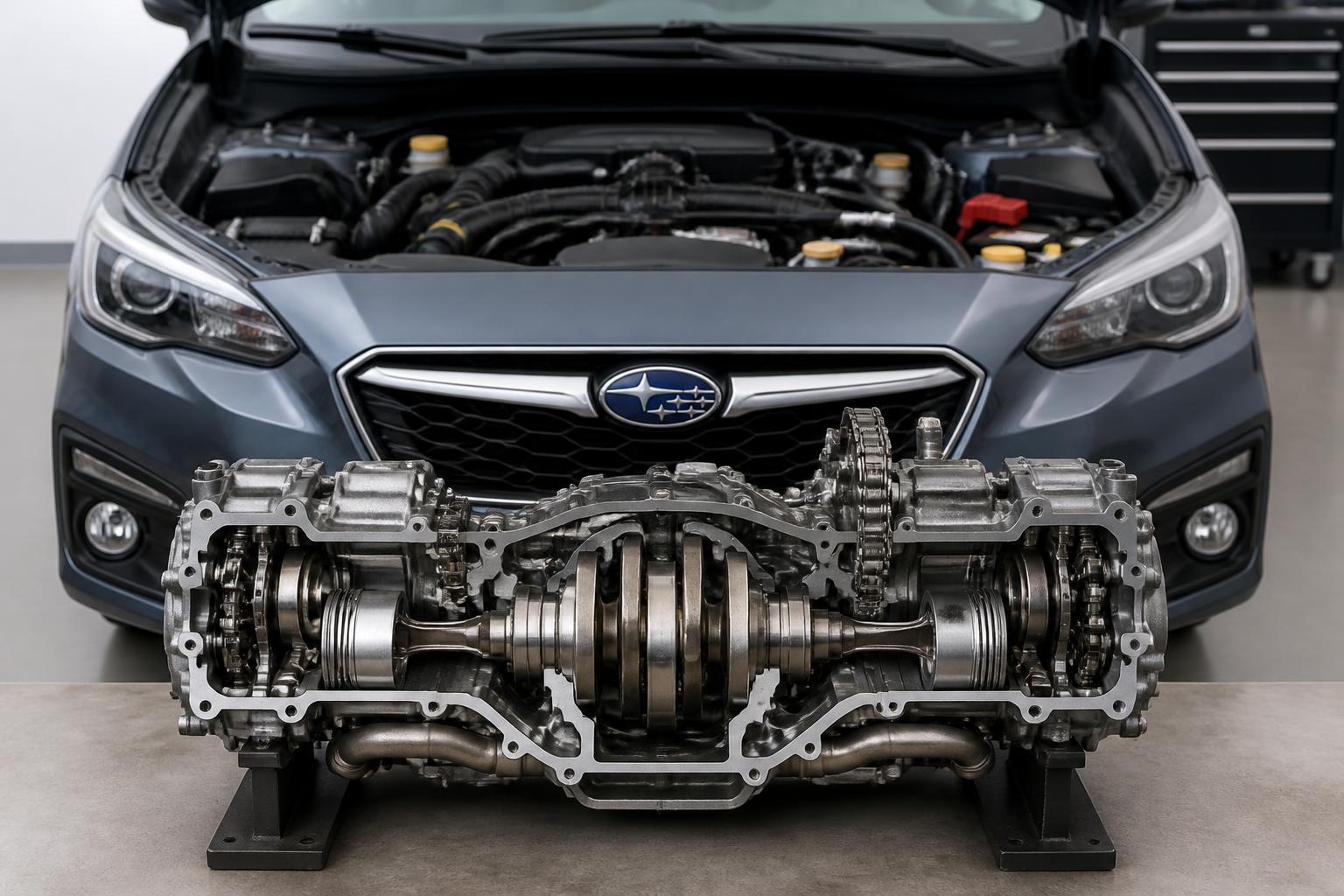
2.0L / 2.5L Naturally Aspirated (FB20 / FB25)
Subaru specifies 0W-20 full synthetic. Capacity varies by model: 4.8–5.3 quarts with filter.
Branch based on age: 2020 and newer Subarus use a different oil pan design than 2015–2019 models. If you have a 2021 Outback 2.5L, you need exactly 5.1 quarts. Using the old spec of 4.8 quarts will leave the engine a half quart low. Measure carefully.
Example: 2021 Subaru Outback 2.5L – 0W-20, 5.1 quarts. A 2018 Subaru Forester 2.5L uses 0W-20, 4.8 quarts.
2.4L Turbo (FA24)
The turbocharged 2.4L in the Ascent, Outback XT, and WRX uses 5W-30 full synthetic. Capacity with filter is about 5.3 quarts.
Verification step: Boxer engines take time for oil to drain from the heads. After filling, let the engine idle for 5 minutes, then shut it off and wait 10 minutes before checking the level. If you check too soon, you’ll get a false low reading and risk overfilling.
Example: 2022 Subaru Outback XT – 5W-30, 5.3 quarts. The 2023 Subaru Ascent uses the same spec.
BMW B-Series Engines
B48 (2.0L Turbo)
The B48 takes 0W-20 or 5W-30 meeting BMW Longlife-17 (LL-17) specification. Capacity with filter is approximately 5.3 quarts.
Stop/escalate threshold: If your BMW has an electronic oil level sensor (most 2016+ models), the dash reading may not update for 20–30 minutes of driving after a change. Do not add oil based on a cold-start reading – the sensor requires the engine to reach operating temperature. If the dash shows a red warning immediately after a change, stop and check for a drain plug leak or filter housing leak before driving.
Example: 2021 BMW 330i (B48) – 0W-20 LL-17, 5.3 quarts. The 2022 BMW X3 xDrive30i with the same B48 uses identical specs.
B58 (3.0L Turbo)
The B58 requires 0W-20 or 5W-30 LL-17. Capacity with filter is about 6.9 quarts.
Failure mode: The B58’s oil filter cap is plastic and cracks if over-tightened. Torque it to 25 Nm (18 lb-ft) – hand tight plus a quarter turn is not enough. Replace the cap if you see any cracks or if oil seeps around the cap seal after a change.
Example: 2020 BMW M340i (B58) – 5W-30 LL-17, 6.9 quarts. The 2021 BMW X5 xDrive40i with the B58 also takes 6.9 quarts.
GM 2.0L Turbo (LTG / LSY)
The GM 2.0T found in Chevrolet Malibu, Buick Regal, and Cadillac CT4 uses 5W-30 full synthetic. Capacity with filter is 5.0 quarts.
Model-year detail: 2016–2018 versions (LTG) specify dexos1 Gen 2. 2019+ versions (LSY) require dexos1 Gen 3. Both are backward-compatible. The oil filter location is below the intake manifold – access is tight; use a filter cap wrench to avoid rounding the plastic housing.
Example: 2020 Buick Regal Sportback 2.0T – 5W-30, 5.0 quarts. Always use an oil that carries the dexos1 logo to maintain warranty coverage.
Quick-Reference Table
| Brand/Engine | Oil Viscosity | Capacity (quarts) | Notes |
|---|---|---|---|
| Toyota 2.5L (2018+) | 0W-16 | 4.4–5.1 | Check cap for 0W-16 label |
| Toyota 2.5L (pre-2018) | 0W-20 | 4.4–4.6 | |
| Toyota 3.5L V6 (2011+) | 0W-20 | 6.3 | Older models use 5W-30 |
| Honda 1.5T | 0W-20 | 3.7 | HTO-06 spec required |
| Honda 2.0T | 0W-20 | 5.1 | Do not overfill |
| Ford 2.0L/2.3L EcoBoost | 5W-30 | 5.7 | Check sensor connector |
| Ford 3.5L EcoBoost | 5W-30 | 6.0 | Watch for timing cover leaks |
| Subaru 2.0L/2.5L NA (2020+) | 0W-20 | 5.1 | New pan design |
| Subaru 2.4T | 5W-30 | 5.3 | Wait 10 min after idle |
| BMW B48 | 0W-20/5W-30 LL-17 | 5.3 | Electronic sensor delay |
| BMW B58 | 0W-20/5W-30 LL-17 | 6.9 | Tighten filter cap to 25 Nm |
| GM 2.0T (LTG/LSY) | 5W-30 | 5.0 | dexos1 Gen 2/3 |
How to Verify for Your Exact Model Year
- Owner’s manual – the definitive source. Look in the “Capacities & Specifications” section or the maintenance chart.
- Oil filler cap – many newer cars have the viscosity printed on the cap. If the cap says 0W-16, use 0W-16 regardless of what a generic chart says.
- VIN lookup – use the manufacturer’s online parts/service portal or Mobil 1’s lookup tool. This catches mid-year specification changes.
- Dealer parts counter – call with your VIN. They will tell you exactly what the factory fills.
Always use an oil that meets the manufacturer’s approval (e.g., API SP, ILSAC GF-6, BMW LL-17, or dexos1) and the correct viscosity for your climate. If you’re unsure, stick with a reputable full synthetic of the recommended grade – it will protect your engine better than guessing.
Frequently Asked Questions
Can I use conventional oil instead of synthetic in an engine that requires synthetic?
No. Engines that require full synthetic (most turbocharged and modern high-compression engines) rely on the thermal stability and film strength that conventional oil cannot provide. Using conventional oil can lead to sludge buildup, turbo failure, or premature wear, especially during cold starts.
What happens if I accidentally put 5W-30 in an engine that specifies 0W-20?
In most modern engines, the difference in viscosity is relatively small. You may notice slightly sluggish cold starts and a small decrease in fuel economy, but no immediate damage. However, for engines that require 0W-16, using 0W-20 (or thicker) can cause insufficient oil flow to variable valve timing components. If you used the wrong oil, change it at your next opportunity.
How often should I check my oil level?
At least once a month and before any long trip. For turbocharged engines, check every other fuel fill-up. Low oil is the most common cause of turbocharger failure.
Do I need to use a special oil filter?
Yes – always use a filter that meets the manufacturer’s specifications. Many modern engines use a cartridge-style filter with a specific bypass valve pressure. Using an aftermarket filter with a different bypass setting can starve the engine of oil during cold starts.
The information in this guide covers the most common engine families, but always confirm with your vehicle’s manual or a VIN-based lookup for your specific model year and trim. Proper oil selection is one of the simplest ways to extend engine life and avoid costly repairs.
Explore This Topic
Related guides in this cluster:
- Suv Towing Capacity Comparison
- Truck Towing Capacity Comparison
- How To Reset Oil Change Light Every Brand

Greedy Wheels is the founder and lead editor at Wheels Greed. With over 15 years of hands-on automotive experience — from rebuilding engines in a home garage to managing fleet maintenance for a regional logistics company — he brings real-world mechanical knowledge to every guide.
His work has been featured in automotive forums, owner communities, and dealership training materials. When he’s not researching the latest car owner questions, you’ll find him at a local track day, wrenching on his project car, or testing the newest OBD2 diagnostic tools.
At Wheels Greed, every article is reviewed against manufacturer service manuals, NHTSA bulletins, and verified owner reports. No AI-generated fluff. No guesswork. Just practical answers from someone who has turned the wrench.