Car Fuel Economy Guide: MPG, Tank Size, and Fuel Type by Brand
The three numbers that determine your real-world fuel costs and driving range are miles per gallon (MPG), gas tank capacity in gallons, and the fuel type your engine requires. A car that gets 30 MPG with a 15-gallon tank gives you about 450 miles of range; the same MPG with a 20-gallon tank gives you 600 miles. Below is a brand-by-brand breakdown of real-world MPG, typical tank sizes, and octane requirements so you can compare vehicles on the numbers that actually affect your wallet.

Real-World MPG by Brand and Model
EPA estimates are a useful baseline, but real-world driving—city traffic, highway speed, climate, and driving style—can shift MPG by 10 to 20 percent. The table below shows representative figures for popular models across major brands, based on the most common engine and drivetrain configurations for recent model years.
| Brand | Model | City MPG | Highway MPG | Combined MPG | Fuel Type |
|---|---|---|---|---|---|
| Toyota | Camry LE (4-cyl) | 28 | 39 | 32 | Regular |
| Toyota | RAV4 Hybrid | 41 | 38 | 40 | Regular |
| Toyota | Tundra (V8) | 17 | 22 | 19 | Regular |
| Honda | Accord LX (1.5T) | 30 | 38 | 33 | Regular |
| Honda | CR-V (1.5T) | 28 | 34 | 30 | Regular |
| Ford | F-150 (2.7L EcoBoost) | 20 | 26 | 22 | Regular |
| Ford | Mustang GT (V8) | 15 | 24 | 18 | Premium |
| Subaru | Outback (2.5L) | 26 | 33 | 29 | Regular |
| Subaru | Crosstrek (2.0L) | 28 | 33 | 30 | Regular |
| Hyundai | Elantra SE | 33 | 42 | 36 | Regular |
| Hyundai | Tucson (2.5L) | 25 | 32 | 28 | Regular |
| Kia | Telluride (V6) | 20 | 26 | 22 | Regular |
| Kia | Sportage Hybrid | 42 | 44 | 43 | Regular |
| BMW | 330i (2.0T) | 26 | 36 | 30 | Premium |
| BMW | X5 xDrive40i | 22 | 27 | 24 | Premium |
These figures are for current or recent model years. Actual numbers vary by trim, drivetrain (AWD vs. FWD), and options. Check the window sticker or the EPA website for the exact configuration you are considering.
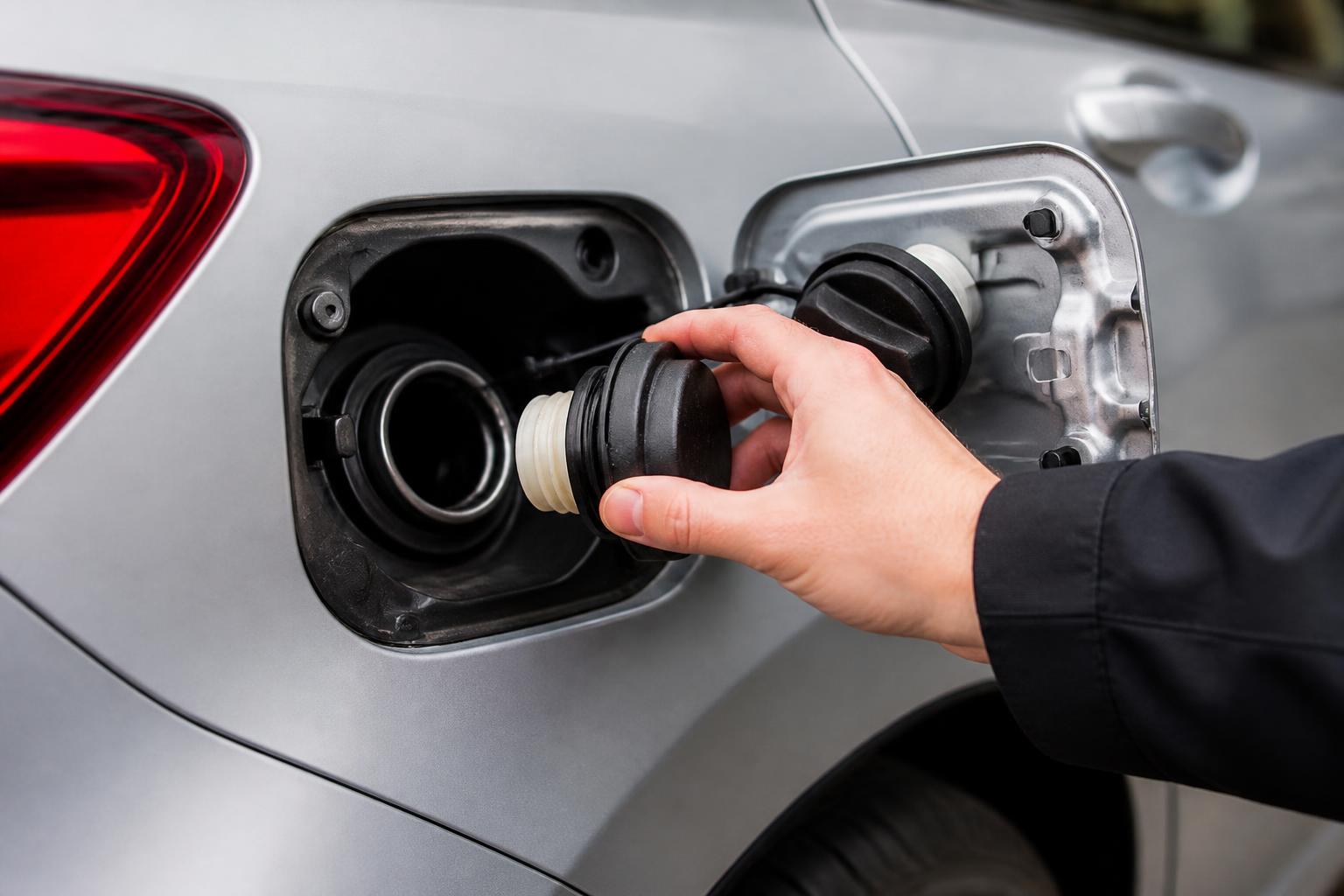
Why the spread matters. A difference of 5 MPG combined translates to about $200 per year in fuel cost for a 12,000-mile driver at $3.50 per gallon. Between a Toyota RAV4 Hybrid (40 MPG) and a Ford Mustang GT (18 MPG), the annual fuel cost difference is roughly $1,100.
Gas Tank Capacity and What It Means for Your Range
Tank size is the second variable in the range equation. A larger tank does not mean better MPG—it means you can travel farther between fill-ups. Here are typical tank capacities for the same brands and model categories.
| Brand / Model Category | Typical Tank Capacity (gallons) | Estimated Range (combined MPG × tank) |
|---|---|---|
| Toyota Camry | 15.8 | 475–505 miles |
| Toyota RAV4 Hybrid | 14.5 | 580 miles |
| Toyota Tundra | 26.4 | 500–515 miles |
| Honda Accord | 14.8 | 475–490 miles |
| Honda CR-V | 14.0 | 420 miles |
| Ford F-150 (regular cab) | 23.0 | 505 miles |
| Ford Mustang GT | 16.0 | 290 miles (premium fuel) |
| Subaru Outback | 18.5 | 535 miles |
| Subaru Crosstrek | 16.6 | 500 miles |
| Hyundai Elantra | 14.0 | 505 miles |
| Kia Telluride | 18.8 | 415 miles |
| Kia Sportage Hybrid | 13.7 | 590 miles |
| BMW 330i | 15.6 | 470 miles |
| BMW X5 | 21.9 | 525 miles |
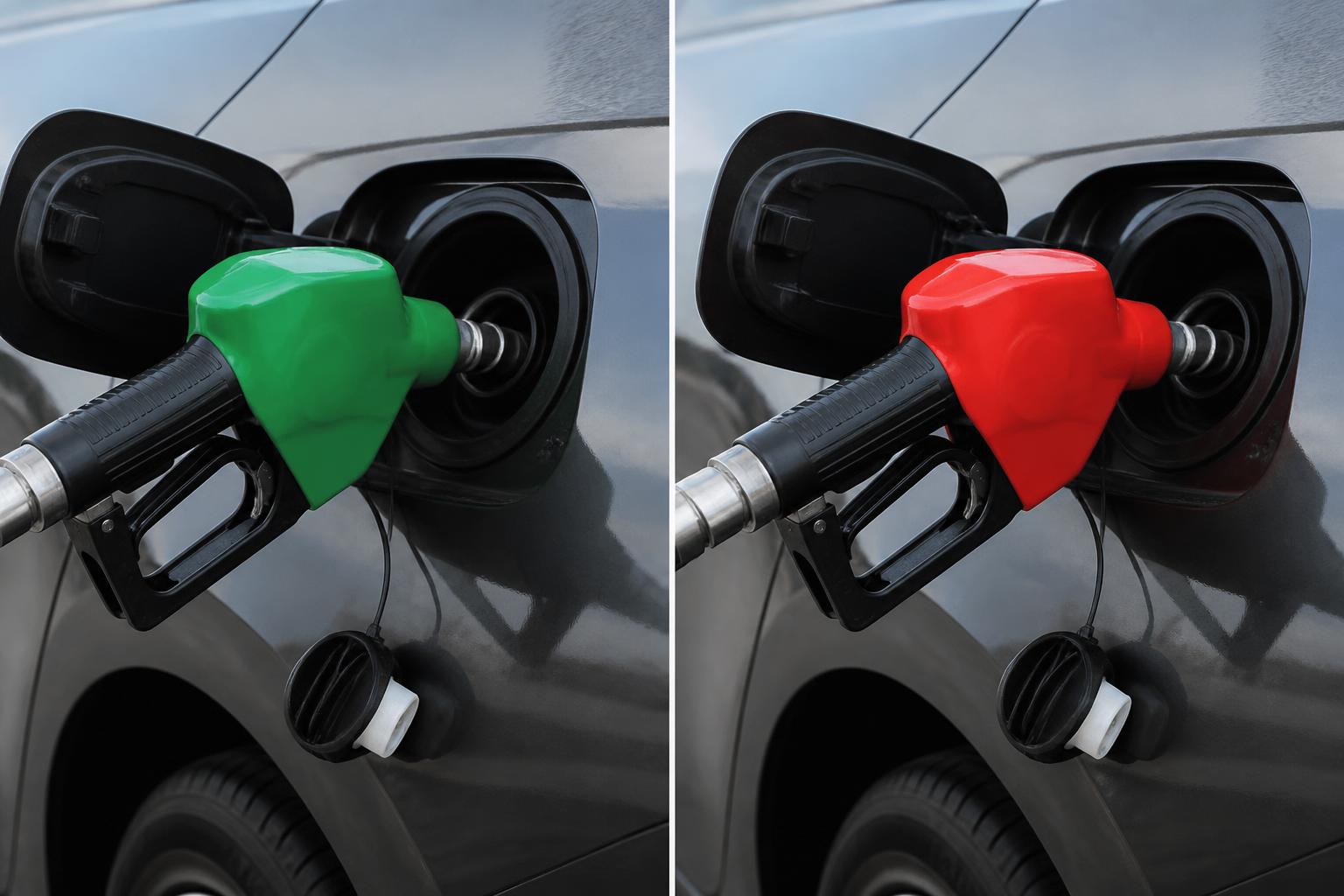
Notice the range outliers. The Kia Sportage Hybrid and Toyota RAV4 Hybrid both clear 575 miles per tank because of their high combined MPG. The Mustang GT drops below 300 miles due to its combination of low MPG, premium fuel requirement, and moderate tank size. The Tundra uses a huge 26.4-gallon tank to offset its low MPG and still lands around 500 miles.
Check your owner manual or the fuel door for your exact tank capacity. Multiply it by your car’s combined MPG to get your realistic range. If you routinely drive more than 80 percent of that number before refueling, you are running closer to empty than is safe for the fuel pump and fuel system.
Fuel Type Requirements: Regular vs. Premium
Using the wrong octane will not damage most modern engines immediately, but it can cost you power and efficiency. Here is the breakdown by brand policy and engine type.
Brands That Specify Premium for Specific Engines
BMW requires 91 octane or higher for all turbocharged gasoline engines, which includes nearly every model. Running regular on a 330i reduces power output and may trigger knock sensors that retard timing, lowering MPG by 2 to 3 points. If your BMW says “Premium required,” do not use regular long-term.
Ford specifies premium for the Mustang GT (5.0L V8) and the F-150 Raptor (3.5L EcoBoost high-output). Standard F-150 EcoBoost engines run fine on regular but gain about 10 to 15 hp on premium.
Subaru specifies premium for the WRX and BRZ. Standard Outback and Crosstrek engines use regular.
Hyundai and Kia specify premium only for high-performance variants such as the Hyundai Elantra N and Kia Stinger GT. All mainstream engines including turbocharged 1.6L and 2.5L units accept regular.
Brands That Nearly Always Use Regular
Toyota specifies regular for all non-performance models, including turbocharged and hybrid versions. The GR Supra and GR Corolla are exceptions that require premium.
Honda specifies regular for all Civic, Accord, CR-V, and Pilot engines. The Civic Type R requires premium.
Ford specifies regular for most trucks and SUVs, excluding Raptor and GT350 models.
Subaru specifies regular for all naturally aspirated engines and the standard Outback and Crosstrek lineups.
The Practical Rule
If your fuel door or owner manual says Premium fuel recommended, you can still safely use regular in a pinch for one tank, but long-term use will reduce performance and efficiency. If it says Premium fuel required, use only 91+ octane. The price difference between regular and premium is typically $0.40 to $0.70 per gallon, which adds about $140 to $245 per year for a 15,000-mile driver in a car that gets 25 MPG. That is a real cost difference worth considering when choosing between two vehicles.
Hybrid vs. Gas Savings: What You Actually Gain
Hybrids deliver their biggest advantage in stop-and-go city driving. On the highway, the gap narrows significantly because the electric motor assists less at steady cruising speeds.
| Scenario | Typical Gas-Only MPG | Typical Hybrid MPG | Savings per 12,000 miles |
|---|---|---|---|
| City driving (Toyota RAV4) | 25–27 | 41 | $340–$400 at $3.50/gal |
| Highway driving (RAV4) | 31–33 | 38 | $100–$130 |
| Combined (Honda Accord) | 30–33 | 44–48 | $250–$320 |
The real-world trade-off is straightforward. You will see the strongest savings if your daily commute is mostly city streets or heavy traffic. If you drive primarily highway miles above 55 mph, a modern turbocharged gas engine like the Honda 1.5T or Ford 2.0L EcoBoost will come much closer to a hybrid’s highway MPG, often within 3 to 5 MPG. The hybrid’s higher purchase price will take longer to recoup in that scenario.
Even with highway driving, a hybrid still makes sense if you value fewer fill-ups, a smoother driving experience, or reduced emissions. The range advantage alone—nearly 600 miles per tank on the RAV4 Hybrid and Sportage Hybrid—is a real convenience gain regardless of cost payback.
How to Calculate Your Actual Range and Verify the Numbers
The EPA combined MPG is a starting point, not a guarantee. To find your car’s real range, use this step-by-step method.
What You Need
- A full tank of the correct fuel type
- Your trip odometer or a note of the current odometer reading
- The fuel receipt showing gallons pumped at your next fill-up
- Your owner manual (for exact tank capacity)
Step-by-Step Procedure
1. Fill the tank completely and reset the trip odometer. Do not top off after the pump clicks off; that can flood the vapor recovery system.
2. Drive normally until you need to refuel. Try to use at least half a tank so the measurement is meaningful.
3. Refill the tank completely again. Record the gallons pumped from the pump display and the trip miles from your odometer.
4. Calculate your actual MPG. Divide trip miles by gallons pumped. Example: 375 miles ÷ 12.5 gallons = 30.0 MPG.
5. Calculate your range. Multiply your actual MPG by your tank capacity. Example: 30.0 MPG × 15.8 gallons = 474 miles.
6. Apply a safety buffer. Subtract 10 to 15 percent to account for the low-fuel warning light and driving conditions that reduce MPG on the final stretch of a tank. In the example, refuel by mile 425.
How to Verify the Calculation Worked
Do not trust this once and forget it. Run the calculation for three consecutive fill-ups. If your actual MPG varies by more than 2 MPG across those tanks, you may have inconsistent driving conditions or a mechanical issue. Successful verification means your MPG is stable within 1 to 2 MPG across three tanks, and your calculated range matches your real-world experience of when the low-fuel light comes on.
Stop and Escalate When You See This
If your calculated MPG drops by more than 3 MPG from one tank to the next with no change in your driving routine or route, you have a concrete warning sign. Stop relying on your calculations and check the following:
- Tire pressure: Under-inflated tires can drop MPG by 2 to 3 points. Check all four tires when cold.
- Check engine light: If the light is on or flashing, have the code read at an auto parts store or repair shop. A faulty oxygen sensor, mass airflow sensor, or ignition coil can silently cut MPG by 5 to 10 percent.
- Fuel type: Have you accidentally used a lower octane than required? One tank of regular in a premium-required engine can trigger knock and reduce efficiency.
- Visible leaks or fuel smell: Park on clean pavement overnight. If you see wet spots or smell fuel, do not drive the car. Have it towed to a repair shop.
If tire pressure is correct, the check engine light is off, and fuel type is correct, but your MPG remains 3+ points below your established baseline after two consecutive tanks, take the car to a mechanic for a fuel-system and engine-tune inspection.
FAQ
What car can go 700 miles on one tank?
Very few non-diesel cars achieve 700 miles per tank with standard fueling. The Toyota Camry Hybrid at 52 MPG combined with a 15.8-gallon tank reaches about 820 miles under ideal conditions. The Hyundai Ioniq Hybrid Blue at 59 MPG with an 11.9-gallon tank can exceed 700 miles. Most trucks and SUVs with large tanks of 26-plus gallons and modest MPG of 20 to 22 fall short of 600 miles. A diesel vehicle like the Chevrolet Cruze Diesel at 52 MPG highway with a 13.7-gallon tank can also top 700 miles on the highway.
Is 20.7 MPG good?
It depends on vehicle class. For a full-size pickup truck such as an F-150 or Ram 1500 or a mid-size SUV with a V6, 20.7 combined MPG is average to slightly above average. For a compact sedan or hybrid, it would be poor. The 2023 fleet-wide average for new cars was about 26 MPG combined, so 20.7 is below that benchmark unless you are driving a large vehicle.
Can I drive 2 miles on empty?
In most cars, yes, but it is not recommended. When the low-fuel light comes on, 2 to 3 gallons typically remain, giving you 40 to 90 miles of range depending on your MPG. Two miles is well within that margin for nearly every vehicle except in extreme cold, uphill grades, or traffic that prevents steady cruising. The bigger risk is driving on empty repeatedly, which can suck sediment from the tank bottom and strain the fuel pump.
Is a 20-gallon tank big for a car?
Yes, for a passenger car. Most sedans have 13 to 16 gallon tanks. A 20-gallon tank is more common in mid-size SUVs like the Ford Explorer or Toyota 4Runner and full-size trucks. A car with a 20-gallon tank and decent MPG of 30-plus combined will have exceptional range, roughly 600 miles per fill-up. If you have a car with a 20-gallon tank and notice fill-ups that cost over $70 at current fuel prices, that is a normal capacity, not a problem.
Explore This Topic
Related guides in this cluster:
- How to Spell and Pronounce Car Brand Names Correctly
- Car Brand Origins: Logos, Founders, and the Stories Behind Every Brand

Greedy Wheels is the founder and lead editor at Wheels Greed. With over 15 years of hands-on automotive experience — from rebuilding engines in a home garage to managing fleet maintenance for a regional logistics company — he brings real-world mechanical knowledge to every guide.
His work has been featured in automotive forums, owner communities, and dealership training materials. When he’s not researching the latest car owner questions, you’ll find him at a local track day, wrenching on his project car, or testing the newest OBD2 diagnostic tools.
At Wheels Greed, every article is reviewed against manufacturer service manuals, NHTSA bulletins, and verified owner reports. No AI-generated fluff. No guesswork. Just practical answers from someone who has turned the wrench.