High-Mileage Car Maintenance: Keep Your Vehicle Running Past 200K
A car that reaches 200,000 miles does so because someone paid attention to the parts most owners ignore after the warranty expires. The difference between a vehicle that coasts to 200K and one that runs strong past it comes down to fluid timing, belt intervals, and suspension work done before parts fail. Here is exactly what needs attention at 100K, 150K, and 200K, in the order you should tackle it.
Start by pulling the car’s service history. If you don’t have records, assume the worst. Note the current mileage and identify which maintenance events are overdue. You’ll need a basic socket set, jack stands, drain pan, funnel, and the correct fluids for your car (check the owner’s manual for viscosity and capacity). Write down the date and mileage of every job you do — this paper trail will save you from guessing later.
Mileage Car” /> Maintenance: Keep Your Vehicle Running Past 200K
Start with the Fluids: Oil, Transmission, Coolant, Brake Fluid
Most engine failures above 100K trace back to neglected lubricant or coolant. The owner’s manual intervals from when the car was new often assume ideal conditions. For a car past 100K, tighten those schedules.
Oil Change Intervals After 100K
Switch to a high-mileage formulation oil (look for the “high mileage” label on the bottle). These contain seal conditioners that reduce leaks past worn valve seals and gaskets. Drop the interval from the standard 7,500–10,000 miles down to 5,000 miles if using conventional oil, or 7,000 miles with synthetic. Engines with over 150K benefit from 5,000-mile synthetic changes regardless of what the manual says.
A 2012 Honda Accord with 170K running 5W-30 high-mileage synthetic every 5,000 miles will show far less sludge and seal weep than one on 10,000-mile intervals. The seal conditioners physically swell dried-out valve stem seals and crankshaft seals, which is why oil consumption often drops by half within two change cycles.
Transmission Fluid: Automatic vs. Manual
Automatic transmissions generate heat and friction that breaks down fluid over time. If the transmission has never been serviced past 100K, a full flush can dislodge accumulated debris and cause slipping. Instead, do a drain-and-fill (roughly 3–5 quarts, not a full machine flush) every 30,000–40,000 miles. For manual transmissions, gear oil should be changed every 50,000–60,000 miles.
A 2008 Toyota Camry with 160K that has never had transmission service should get a drain-and-fill, not a flush. The friction material that has worn off the clutches over 160K settles in the pan and valve body. A pressurized flush pushes that material into passages and causes slipping. A drain-and-fill removes the spent fluid without disturbing settled debris.
Coolant and Brake Fluid
Coolant loses its corrosion inhibitors over time, not just its freeze protection. Replace it every 60,000 miles or 5 years, whichever comes first. Brake fluid absorbs moisture from the air, which lowers its boiling point and promotes internal rust in the brake lines. Flush brake fluid every 2 years regardless of mileage. A simple test: if the fluid in the reservoir looks dark brown or greenish instead of clear or light amber, it needs replacement.
A 2015 Chevrolet Malibu driven in a humid climate will have brake fluid that absorbs roughly 2–3% water content per year. At 4% water, the boiling point drops from the factory 450°F to around 320°F, which means the pedal can go soft during a long downhill descent or panic stop.
Timing Belt or Chain: Know Your Service Interval
A broken timing belt at highway speed can destroy an engine in less than a second. This is the single most expensive preventable failure on a high-mileage car.
Timing Belt Replacement
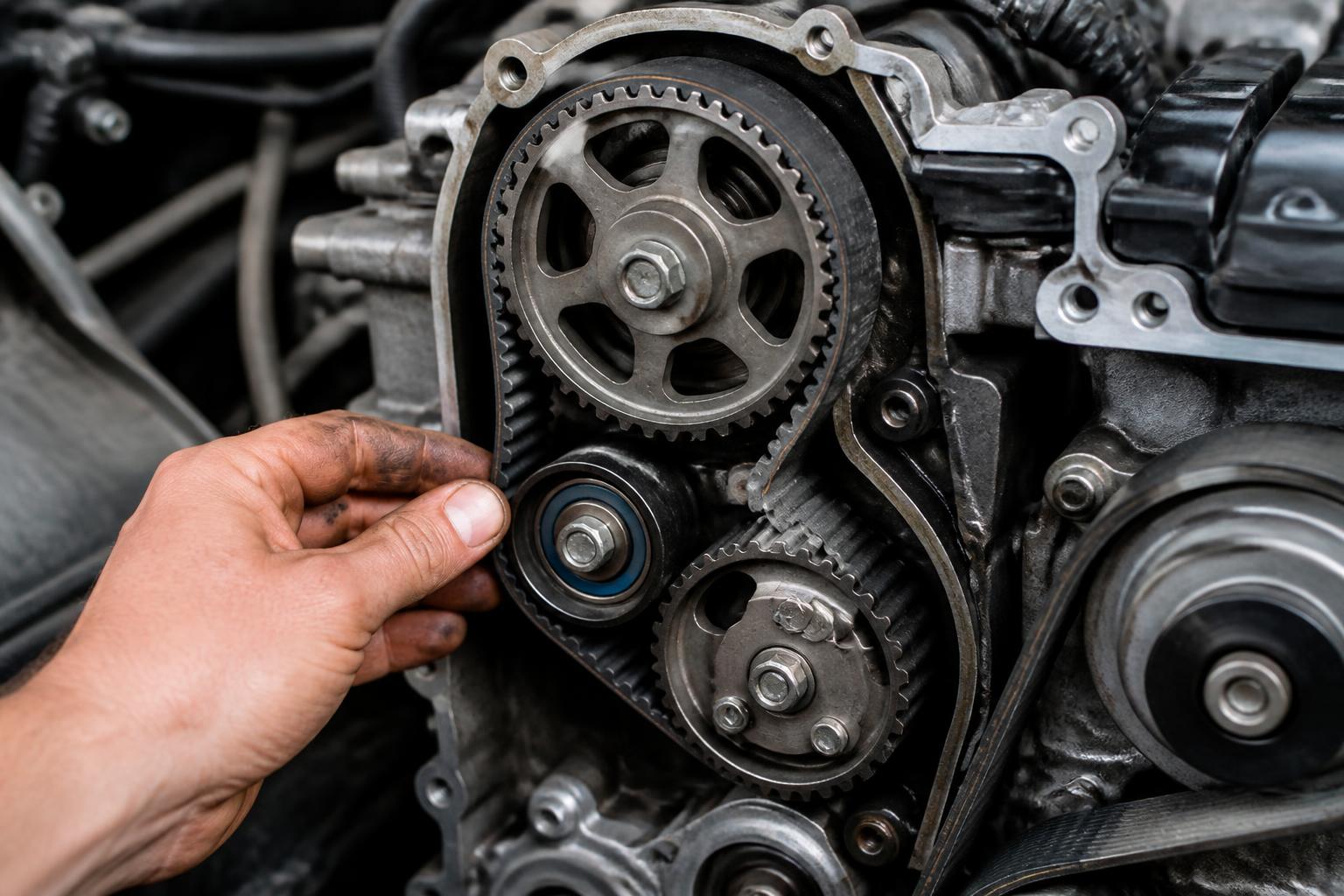
Most interference engines with timing belts require replacement at 90,000–105,000 miles. If the car is past 120K and the belt’s history is unknown, replace it immediately. The belt itself is cheap (usually $30–$60), but the labor runs $500–$1,200 because it requires disassembling the front of the engine. While the belt is off, replace the water pump, tensioner, and idler pulleys at the same time.
A 2006 Subaru Outback with 140K and no record of belt replacement should have the belt inspected visually through the access cover. If date stamps or wear marks indicate original, do not drive it until replaced. The Subaru EJ25 engine is an interference design — a belt failure bends every valve and often punches holes through pistons. The total engine replacement cost ($4,000–$6,000) dwarfs the $1,200 belt service.
Chain-Driven Engines
Timing chains typically last the life of the engine, but they do stretch and the tensioners can wear. Listen for a rattling noise from the front of the engine on cold start. If the chain slaps against the guide, it can jump time and cause the same damage as a broken belt. Chain replacement is expensive ($1,500–$2,500) but necessary if diagnosed early.
Suspension and Steering: What Wears Out
By 150K, every rubber bushing and ball joint on the car has accumulated enough heat cycles and road grit to degrade. Suspension wear does not strand you on the roadside, but it destroys ride quality, tire life, and safety.
Shocks, Struts, and Bushings
Shocks and struts lose damping ability gradually. A simple test: push down on each corner of the car. If it bounces more than once after releasing, the shock is worn. Replace struts in pairs (both front or both rear) at 100K–120K. Control arm bushings and sway bar end links should be inspected during tire rotations. If the steering wheel vibrates at highway speed or the car wanders in its lane, bushings are likely shot.
A 2011 Ford F-150 with 180K that feels “floaty” on the highway almost always needs front struts and lower control arm bushings. The original struts lose about 50% of their damping force by 100K, and by 180K they are effectively metal rods with no hydraulic resistance. Replacing both front struts and lower control arms restores highway stability and eliminates the side-to-side wandering that forces constant steering corrections.
Ball Joints and Tie Rods
Jack up the front of the car and check for play at the wheel. Grab the tire at 3 and 9 o’clock (tie rods) and 6 and 12 o’clock (ball joints). Any clunk or movement beyond minimal free play means replacement. Worn tie rods cause uneven tire wear that shortens tire life by half. Replace both outer tie rods and both lower ball joints as a set.
Brake Lines and Rust Prevention
Brake lines and underbody rust are easy to ignore because they fail progressively, then catastrophically.
Brake Line Inspection
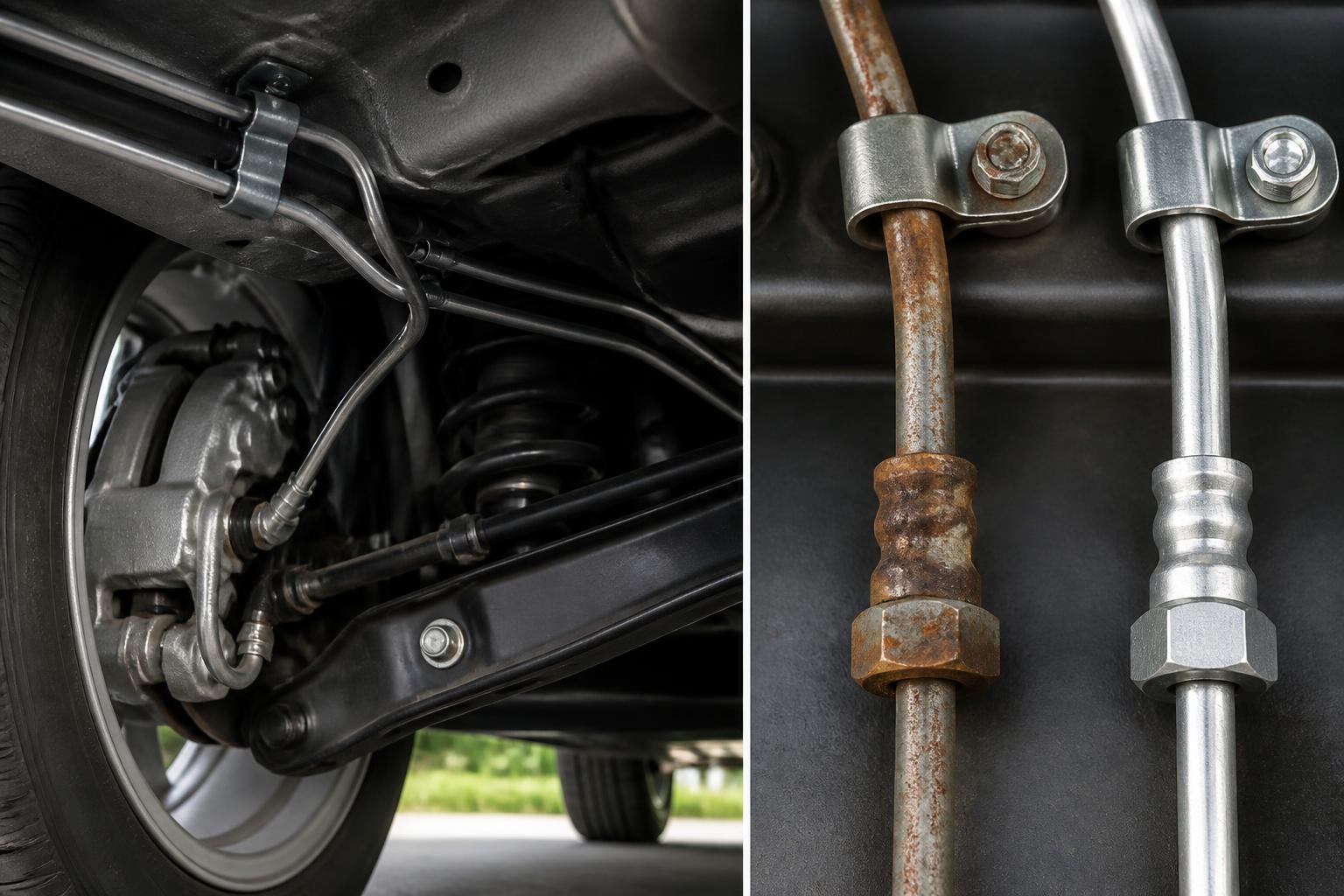
Brake lines — especially the steel ones running along the frame — rust from the outside in. A pinhole leak at highway speed means partial or total brake loss. Inspect all visible steel lines annually if you live in a salt-belt state (Northeast, Midwest, or any area with winter road salt). Look for bubbling rust, blisters under paint, or green/white corrosion crystals. Replace the entire line section rather than patching.
A 2010 Chevy Silverado with 190K driven in Ohio winters is likely to have the line running over the fuel tank rusted through. That line is hidden from view behind a plastic shield. During an annual inspection, removing the shield and running a finger along the line will reveal pitting long before a leak occurs. A $40 pre-bent replacement line prevents a $1,500 brake system rebuild.
Underbody Rust Management
Rust is not cosmetic at high mileage — it compromises subframe mounting points, brake line brackets, and exhaust hangers. Apply a lanolin-based undercoating (like Fluid Film or Woolwax) annually before winter. Do not use rubberized undercoatings — they trap moisture against the metal and accelerate rust. Wash the undercarriage with a garden hose or pressure washer after every three to four winter drives to remove road salt buildup.
A 2006 Toyota Tundra treated annually with Woolwax from 50K to 200K will show surface rust on bolts but solid subframe mounting points. The same truck without treatment typically has the rear subframe mounts rusted through by 180K in salt-belt states, totaling the vehicle because frame repair exceeds the truck’s value.
How to Verify Your Maintenance Work
After each job, confirm the fix before calling it done. Use these checks to catch problems early:
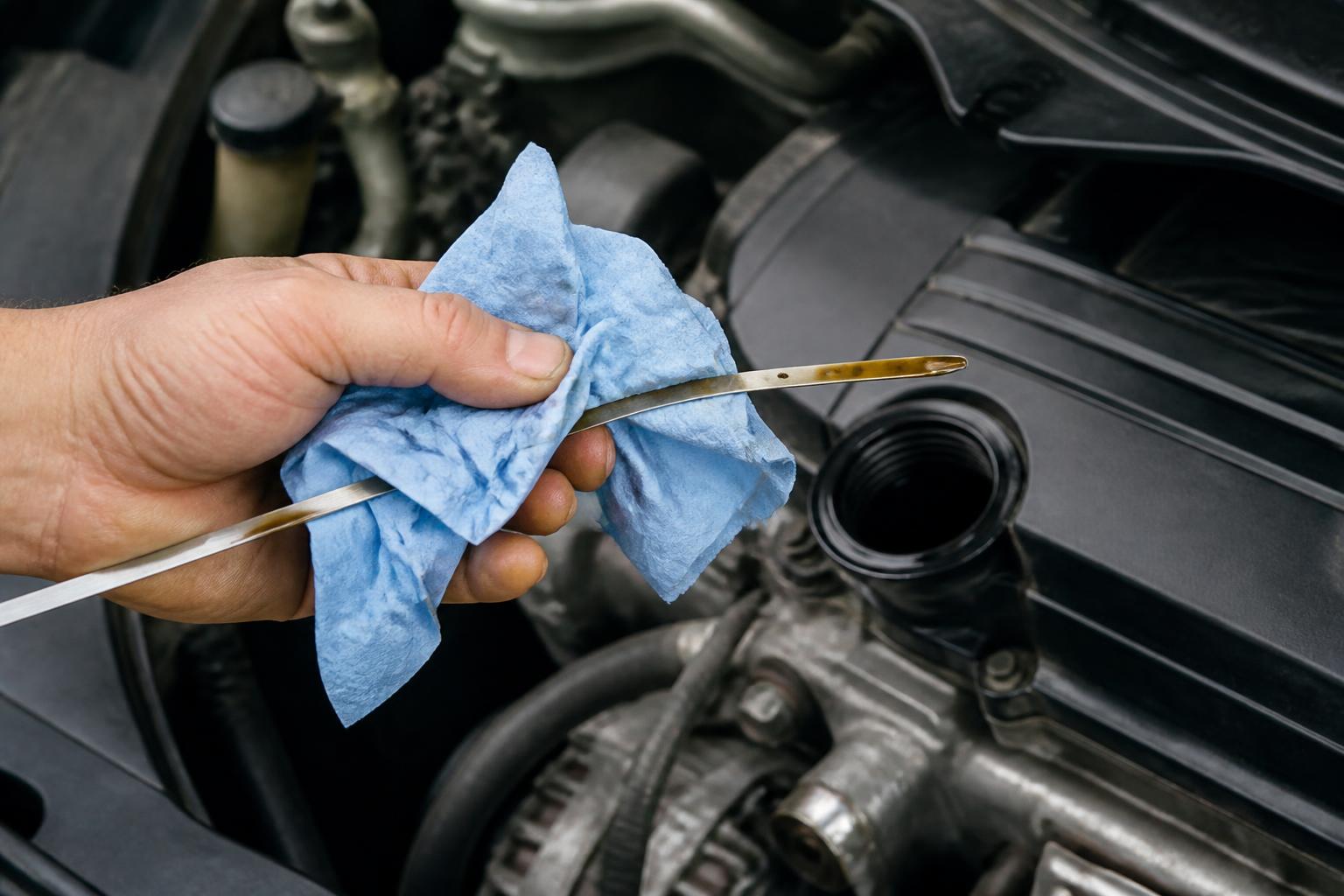
Oil change: Run the engine for 30 seconds, shut it off, wait 2 minutes, then check the dipstick. The level should be between the marks, and oil color should be golden to light brown (new oil). No leaks around the filter or drain plug after a 10-minute idle.
Transmission drain-and-fill: Drive the car gently through all gears (P, R, N, D) for 5 minutes, then recheck fluid level on a level surface with the engine running (automatic) or idling (manual). Shifts should feel smooth, not delayed or harsh.
Coolant replacement: Warm the engine to operating temp, let it cool, then check the reservoir and radiator for proper fill. Look for bubbles in the reservoir while revving — that could indicate a head gasket issue.
Timing belt replacement: After installation, rotate the crankshaft by hand two full turns. If there is no binding and the timing marks align, start the engine. Listen for smooth idle with no ticking or scraping.
Shock/strut replacement: Bounce each corner of the car. The body should rise and settle once, not oscillate. Take a short test drive over bumps and listen for clunks.
Brake line replacement: Pump the brake pedal firmly with the engine off until it feels hard, then hold pressure for 30 seconds. If the pedal sinks slowly, you have a leak. Drive slowly and test brakes at low speed first.
When to Stop DIY and Call a Mechanic
Some jobs require specialized tools, lift access, or diagnostic equipment. Stop and escalate if you encounter any of these:
- Engine oil pressure light stays on after an oil change — stop driving immediately. Could be a clogged pickup tube, worn pump, or wrong filter.
- Transmission slips or slams into gear after a drain-and-fill — internal damage likely; needs professional diagnosis.
- Timing belt overdue and you hear noise from the front of the engine — do not attempt start. Have it towed to a shop.
- Suspension work leaves wandering or pulling after replacing parts — alignment required. DIY alignment kits for some cars exist, but most owners should get a professional alignment.
- Brake fluid leak discovered — brake repairs are safety-critical. If you cannot locate the exact leak or replace the line with confidence, call a mechanic.
- Rust has perforated a subframe or mounting point — structural repairs are beyond DIY for most. Have it inspected by a frame shop; welding may be needed.
A concrete stop threshold: if you have to disassemble more than three major components to reach one part (e.g., intake manifold to access a timing chain tensioner), consider whether your tools and workspace allow that safely. Similarly, if a repair requires removing the transmission (like a rear main seal on some cars), a shop with a lift is usually the better call.
Mileage Milestone Checklist
| System | 100K Miles | 150K Miles | 200K Miles |
|---|---|---|---|
| Engine oil | Switch to high-mileage synthetic; 5K interval | Continue 5K synthetic interval | Continue 5K synthetic interval; monitor oil consumption |
| Timing belt (if equipped) | Replace if not done at 90K | Replace if overdue | Chain: inspect tensioner; Belt: already replaced or engine at risk |
| Transmission fluid | Drain-and-fill ATF every 40K | Drain-and-fill; check for slipping | Expect valve body servicing soon |
| Coolant | Replace | Replace | Replace; check for head gasket leaks |
| Brake fluid | Flush every 2 years | Flush every 2 years | Flush every 2 years |
| Shocks/struts | Replace if original | Replace if not done at 100K | Replace again if needed |
| Ball joints/tie rods | Inspect | Replace if original | Expect second replacement |
| Brake lines | Inspect (salt states) | Inspect (salt states) | Inspect (salt states); replace if suspect |
| Rust prevention | Begin annual undercoating | Continue annual undercoating | Continue; check subframe mounting points |
FAQ
Can I use conventional oil in a high-mileage engine? Yes, but high-mileage synthetic is better at reducing leaks and controlling sludge in engines past 100K. If the engine already leaks oil, switch to high-mileage conventional first. If leaks persist, go to high-mileage synthetic.
Should I flush or drain-and-fill an old transmission? Drain-and-fill only if the transmission has never been serviced after 100K. A full flush can dislodge friction material that has accumulated over miles and cause slipping.
How often should I check the timing belt on a used car with unknown history? Inspect it visually immediately. If the belt shows cracking, fraying, or missing teeth, do not drive the car until replaced. If it looks intact but the history is unknown, plan replacement within 2,000 miles.
Explore This Topic
Related guides in this cluster:
- Car Fuel Economy Guide Mpg Tank Capacity
- New Car Warranty Comparison By Brand
- Extended Car Warranty Worth It

Greedy Wheels is the founder and lead editor at Wheels Greed. With over 15 years of hands-on automotive experience — from rebuilding engines in a home garage to managing fleet maintenance for a regional logistics company — he brings real-world mechanical knowledge to every guide.
His work has been featured in automotive forums, owner communities, and dealership training materials. When he’s not researching the latest car owner questions, you’ll find him at a local track day, wrenching on his project car, or testing the newest OBD2 diagnostic tools.
At Wheels Greed, every article is reviewed against manufacturer service manuals, NHTSA bulletins, and verified owner reports. No AI-generated fluff. No guesswork. Just practical answers from someone who has turned the wrench.