Car Battery Dead: Jump Start Guide, Causes, and What to Do
You turn the key and get silence, a single click, or nothing at all. It feels like a dead battery. But your lights still work, and the radio plays. A dead battery isn’t the only thing that causes a no-start. A bad starter, a failed relay, or even a stuck thermostat can produce the same symptoms. Here’s how to pin down the real problem in under five minutes.
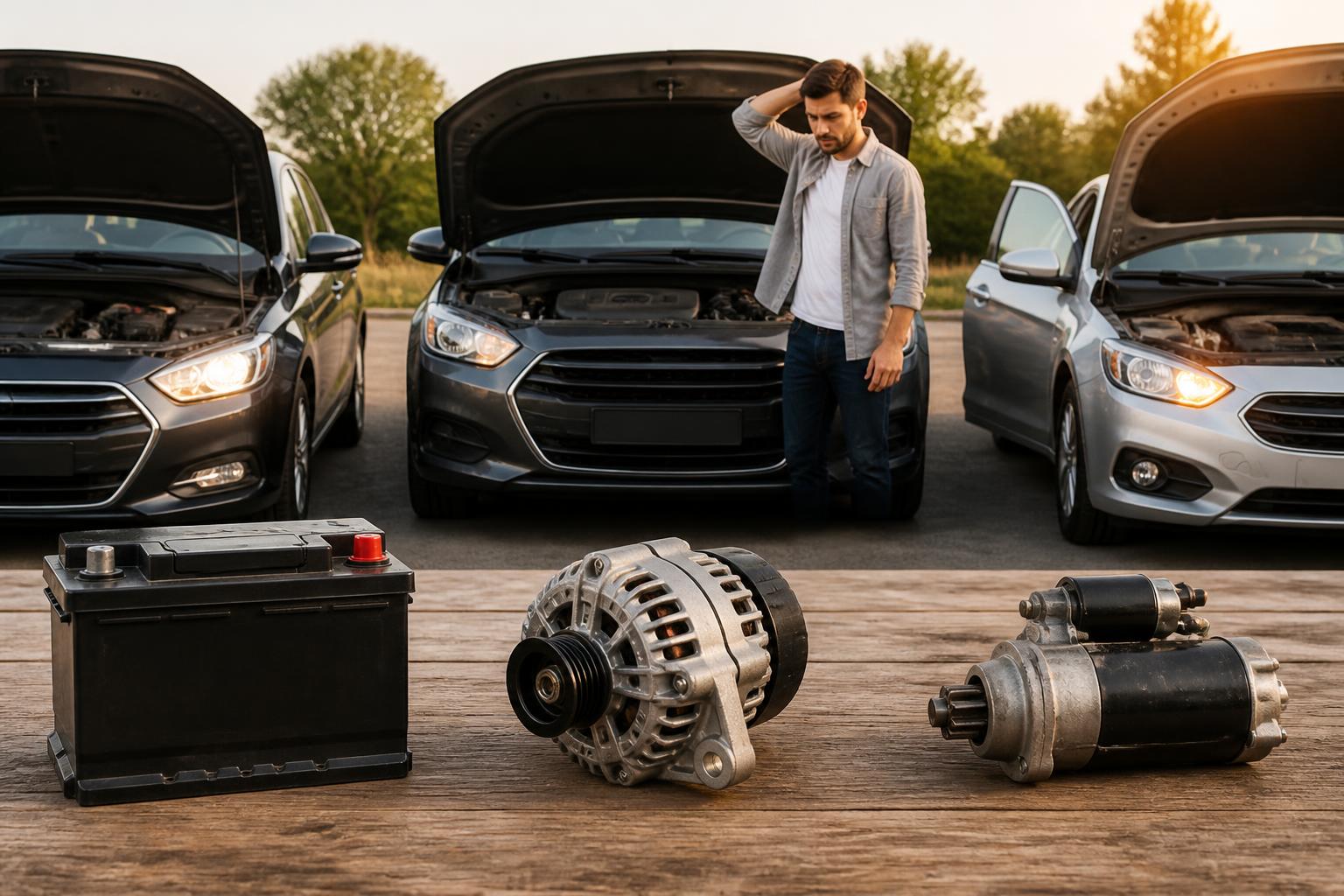
The Three Most Common Dead-Battery Mimics
Bad Starter (Solenoid or Motor)
A failing starter is the top mimic. You get one loud click or complete silence, but your headlights stay bright. That’s the giveaway: a truly dead battery can’t power bright lights.
How to check: Turn the headlights to high beam. Have someone watch them while you turn the key. If the lights stay bright and the engine doesn’t crank, the battery is fine. The problem is in the starter circuit. A rapid series of clicks means the solenoid is getting power but the starter motor isn’t engaging. No sound at all could be a dead battery or a completely failed starter.
Failure mode to watch for: Intermittent starting—the car starts fine cold but clicks dead after a long drive. This often means the starter motor’s internal windings are shorting when hot. Let the engine cool for 30 minutes and try again. If it starts, the starter is failing and should be replaced before it leaves you stranded permanently.
Stuck or Burned-Out Starter Relay
The starter relay is a small electromagnetic switch in your fuse box that sends battery power to the starter solenoid. When it fails, you get silence or a constant click—exactly like a dead battery. This is common on older Honda Civics, Ford F-150s (2004–2008), and many Toyota models where relay contacts wear out over time.
How to test: Locate the starter relay (check your owner’s manual or the fuse box diagram). Pull it out and swap it with an identical relay from another system—horn, fog lights, or fuel pump relay if it’s the same part number. Try starting. If the car cranks, the relay was bad. If not, the relay isn’t the issue.
Verification step: After swapping the relay, start the engine and let it idle for 30 seconds. Turn the engine off, then restart it twice more. If it starts consistently both times, the relay was the only problem. If the no-start returns sporadically, check the relay socket for corrosion or loose terminals.
Thermostat Stuck Open (Indirect Mimic)
A stuck-open thermostat won’t cause a no-start by itself. But in cold weather (below freezing), it can delay the engine from reaching proper operating temperature. A weak battery that barely has enough cold-cranking amps may then fail on the first or second attempt. The result feels like a dead battery, but the real issue is the thermostat letting the engine run too cold.
How to test: Start the engine from cold and feel the upper radiator hose. If it gets hot within the first 2–3 minutes, the thermostat is likely stuck open. Also watch the temperature gauge: if the needle never reaches normal operating range after 10 minutes of driving, replace the thermostat.
Concrete example: A 2012 Toyota Camry with a stuck-open thermostat will idle rough and take 15 minutes to blow warm air from the heater. The battery may crank slowly on a 20°F morning even though it passed a load test at the parts store. Replacing the thermostat—a $15 part and 30 minutes of work—fixes the cold-start issue.
How to Jump a Starter Relay to Test It (Safely)
Bypassing the starter relay sends battery voltage directly to the starter solenoid. This confirms whether the starter itself works or if the relay is the failure point.
Tools needed: A short length of 12–14 gauge wire with bare ends, or an insulated screwdriver.
Steps:
1. Confirm the transmission is in Park (automatic) or Neutral (manual). Set the parking brake.
2. Locate the starter relay in the fuse/relay box. Identify terminals 30 (battery input) and 87 (output to starter solenoid). Your owner’s manual or the relay cover diagram shows the pin layout.
3. Turn the key to the On position (not crank).
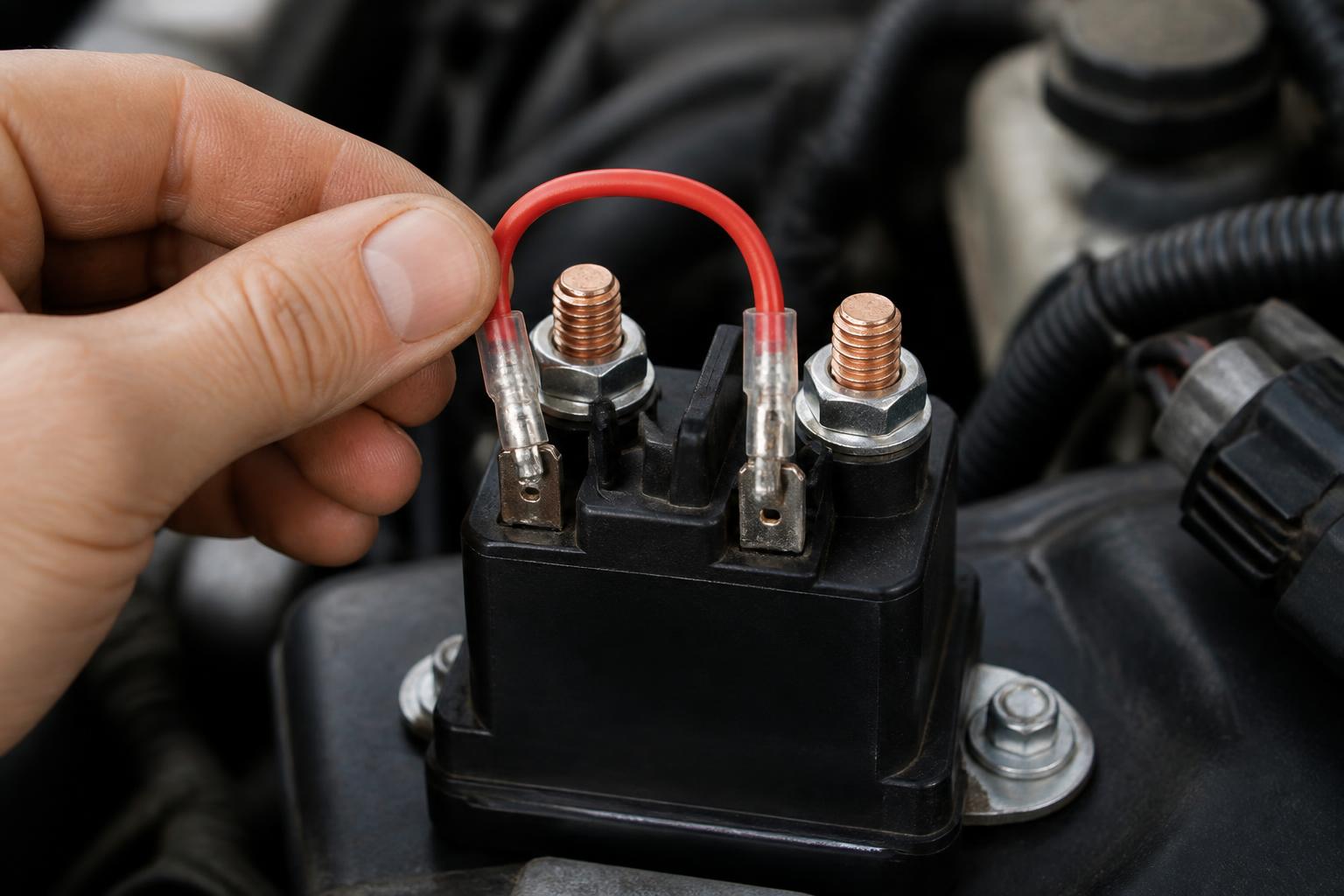
4. Briefly touch the bare wire between terminal 30 and terminal 87. If the starter engages and the engine cranks, the relay was bad.
5. To test the relay coil, touch the wire across terminals 85 and 86. You should hear a click. No click means the relay coil is open.
⚠️ Safety warnings: This creates high current. Wear safety glasses. Keep jewelry, loose clothing, and hands clear of moving belts. Never bypass the neutral safety switch—the car could lurch forward if left in gear.
Verification step after jumping: When you bridge terminals 30 and 87, the starter should crank the engine immediately (if the battery is charged). If it cranks strongly but the engine doesn’t start, the problem is fuel or spark, not the starter circuit. If the starter doesn’t crank at all and you have good battery voltage, the starter motor itself is likely seized or shorted.
How to Test a Thermostat (No Jumping Needed)
You don’t jump a thermostat electrically. The test is mechanical. Here’s the on-car method:
1. Let the engine cool completely.
2. Remove the radiator cap (cold only). Remove the thermostat housing bolts and lift out the thermostat.
3. If the thermostat is visibly open at room temperature, it’s stuck open. Replace it.
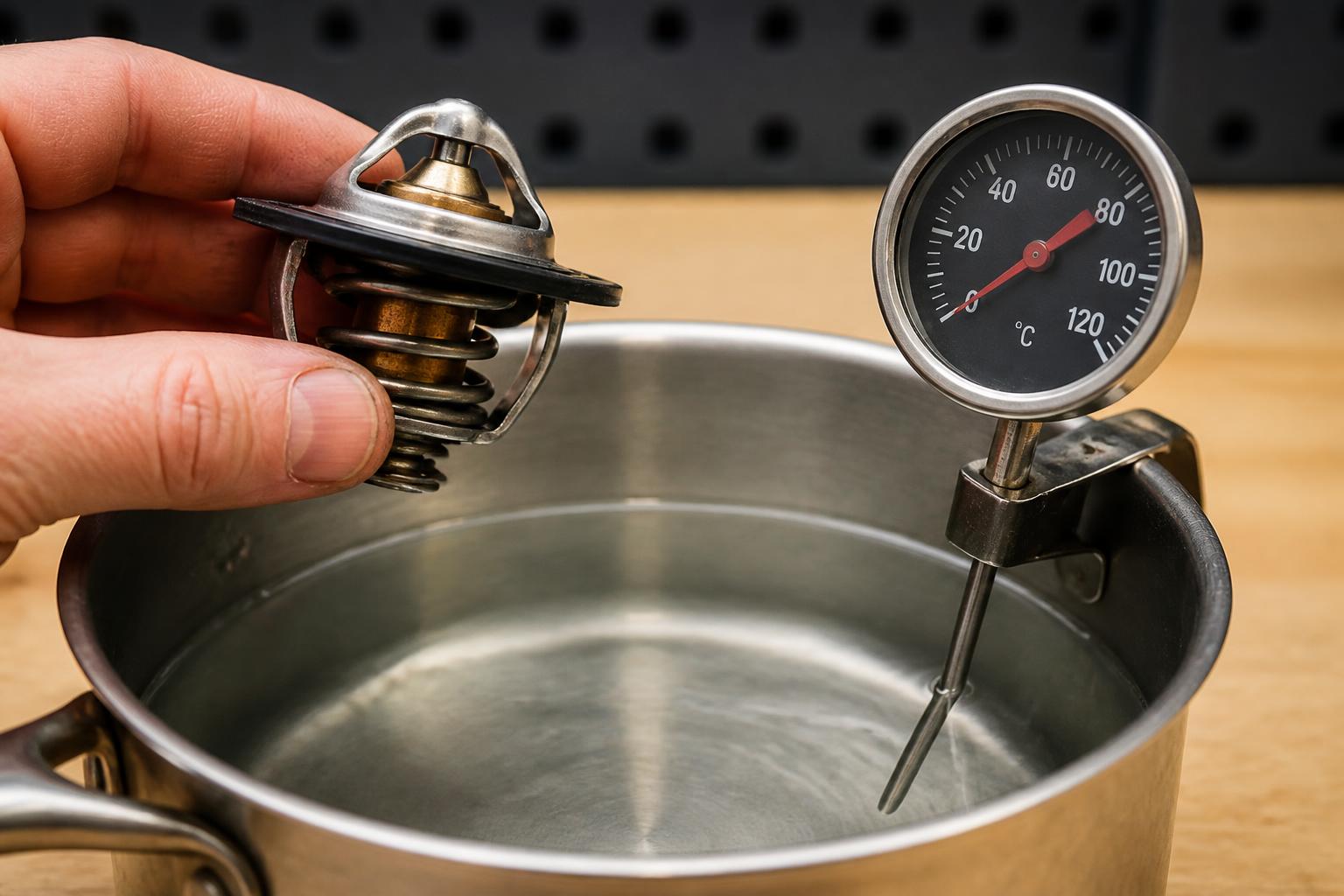
4. To confirm the opening temperature, drop the thermostat into a pot of water and heat it on the stove. Use a candy or meat thermometer. A standard thermostat should start opening around 190–195°F and be fully open by 210–215°F. If it stays closed past its rated temperature, it’s stuck closed.
A stuck-closed thermostat can cause overheating. A stuck-open thermostat wastes fuel and can make a weak battery fail in cold weather—but neither will stop the car from starting on a healthy battery.
Can a Bad Starter Mimic a Dead Battery? Yes – Here’s How to Tell
Use this symptom comparison table to decide where to look first:
| Symptom | Likely Battery Issue | Likely Starter Issue |
|---|---|---|
| Headlights dim when turning key | Yes – battery weak or discharged | No – lights stay bright |
| Single loud “clunk” or click | No | Yes – solenoid engaging but starter not turning |
| Rapid clicking (multiple clicks per second) | Yes – low voltage from battery or corrosion | No – solenoid chattering from insufficient current |
| Dash lights go out when key is turned | Yes – battery dead or terminals corroded | No – dash lights remain steady |
| Interior lights, radio, and power windows work | Possibly (surface charge only) | Yes – battery voltage is sufficient |
The 15-Second Headlight Test
1. Turn the headlights to high beam.
2. Have someone stand in front of the car and watch the lights.
3. Crank the engine.
4. If the headlights go almost dark, the battery is deeply discharged or has a bad connection at the terminals.
5. If the headlights stay bright and the engine doesn’t crank, the problem is in the starter circuit (relay, solenoid, or starter motor).
This single test eliminates the battery as the cause more than 80% of the time.
What to Do If Your Battery Dies and You Can’t Unlock the Car
A completely dead battery drains the remote key fob. Here’s how to get in:
1. Slide the release button on your key fob to pull out the hidden mechanical emergency key.
2. Look for a small cover on the driver’s door handle (usually at the bottom or rear edge). Pry it off gently with the key tip or a flat tool.
3. Insert the mechanical key into the cylinder and turn it to unlock the door.
4. Once inside, open the hood (most cars have a manual cable release near the driver’s left foot). If the hood release is electric, you won’t be able to open it without battery power—some vehicles have a secondary manual release or a hidden positive terminal under the front bumper. Check your owner’s manual.
5. Use a portable jump pack or jumper cables connected to a running vehicle to bring power to the battery. Then proceed with a normal jump start.
If you cannot access the battery at all and the hood release is electric, call roadside assistance. They have tools to force entry or apply external power.
Quick Decision Checklist: Dead Battery or Something Else?
Run through these six checks. Each is a pass/fail that tells you where to spend your time.
| # | Check | Pass (Likely) | Fail (Likely) |
|---|---|---|---|
| 1 | Headlights on high beam stay bright when you turn the key to crank | [ ] Starter circuit problem | [ ] Battery or connection issue |
| 2 | You hear a single loud click from under the hood | [ ] Solenoid engaging, starter motor likely bad | [ ] No click = relay, wiring, or battery |
| 3 | Rapid clicking (multiple clicks per second) | [ ] Low battery voltage or corroded terminals | [ ] No clicking = other problem |
| 4 | Interior lights, radio, and power windows all work normally | [ ] Battery voltage is OK, starter circuit suspect | [ ] Battery likely dead or discharged |
| 5 | Battery terminals are clean, tight, and free of white/green corrosion | [ ] Good electrical connection | [ ] Clean and tighten before retesting |
| 6 | Swapping the starter relay with an identical relay changes the behavior | [ ] Bad relay identified | [ ] Relay is not the root cause |
How to use it: If you pass #1 and fail #2, you have a starter motor problem. If you fail #1 and pass #3, start with charging or jump-starting the battery. If you pass all six and the car still won’t start, the problem is likely in the ignition switch, neutral safety switch, or wiring—not the battery or starter.
When to Escalate to a Mechanic – Stop Threshold
- Grinding, whining, or screeching when you try to start: STOP cranking immediately. That’s mechanical failure inside the starter motor or a broken flywheel tooth. Continuing can damage the flywheel ring gear and triple repair costs.
- Battery voltage below 12.4 volts after a full charge (tested with a multimeter after letting the car sit for 30 minutes): indicates a bad cell. Replace the battery; don’t waste time on the starter.
- Engine cranks normally but won’t fire: fuel, spark, or compression problem. Do not replace the starter. Check for fuel pressure, spark at the plugs, and engine timing.
- Starter replacement needed on a FWD transverse-engine car (e.g., Honda CR-V, Toyota RAV4): often requires removing the intake manifold or lowering the engine subframe. That’s a shop job unless you have a lift and engine support bar.
- Any electrical burning smell or smoke when trying to start: disconnect the battery immediately. A shorted starter or wiring could cause a fire.
FAQ: Quick Answers for Common Follow-Ups
Can a bad starter mimic a dead battery?
Yes—a failing starter that draws no current produces the same silence or single click as a dead battery. The headlight test is the fastest way to tell them apart.
How do I jump out a starter relay?
Locate the relay, identify terminals 30 and 87, and briefly bridge them with an insulated jumper wire. If the starter engages, the relay was faulty.
How to jump a thermostat to test?
Remove the thermostat and submerge it in water on the stove. Heat the water past the thermostat’s rated temperature (usually 195°F). Watch for it to open. If it stays open cold or stays closed hot, replace it.
How to tell if it’s a dead battery or starter?
Turn the headlights to high beam and crank the engine. Bright lights that don’t dim mean the battery is not the problem; focus on the starter circuit instead. Dim or dark lights mean the battery or its connections need attention first.
Explore This Topic
- Back to Car Battery Dead
- Back to Automotive Repair
Related guides in this cluster:
- Starter Motor Failure: Symptoms, Diagnosis, and When to Replace
- Fuel Pump, Fuel Filter, and Fuel Injector: Diagnosis and Replacement
- Thermostat, Water Pump, and Overheating: Diagnosis and Repair

Greedy Wheels is the founder and lead editor at Wheels Greed. With over 15 years of hands-on automotive experience — from rebuilding engines in a home garage to managing fleet maintenance for a regional logistics company — he brings real-world mechanical knowledge to every guide.
His work has been featured in automotive forums, owner communities, and dealership training materials. When he’s not researching the latest car owner questions, you’ll find him at a local track day, wrenching on his project car, or testing the newest OBD2 diagnostic tools.
At Wheels Greed, every article is reviewed against manufacturer service manuals, NHTSA bulletins, and verified owner reports. No AI-generated fluff. No guesswork. Just practical answers from someone who has turned the wrench.