Catalytic Converter Cleaner, Clogging, and Replacement Cost
Yes, catalytic converters do clog eventually. Most last between 100,000 and 150,000 miles, but a single misfire or chronic oil consumption can ruin one in as few as 10,000 miles. A partially clogged converter caused by soft carbon buildup can sometimes be cleaned for under $20. If your check engine light shows code P0420, there’s no drivability issue, and you don’t hear any rattling, a cleaner is a safe first step. If the car already feels sluggish or smells like rotten eggs, skip the bottle and plan for replacement.
Diagnose first, then decide. A cleaner is cheap insurance, but it only works for soft carbon deposits. If the converter is physically damaged – cracked honeycomb, melted ceramic, or oil-soaked – the only fix is replacement.
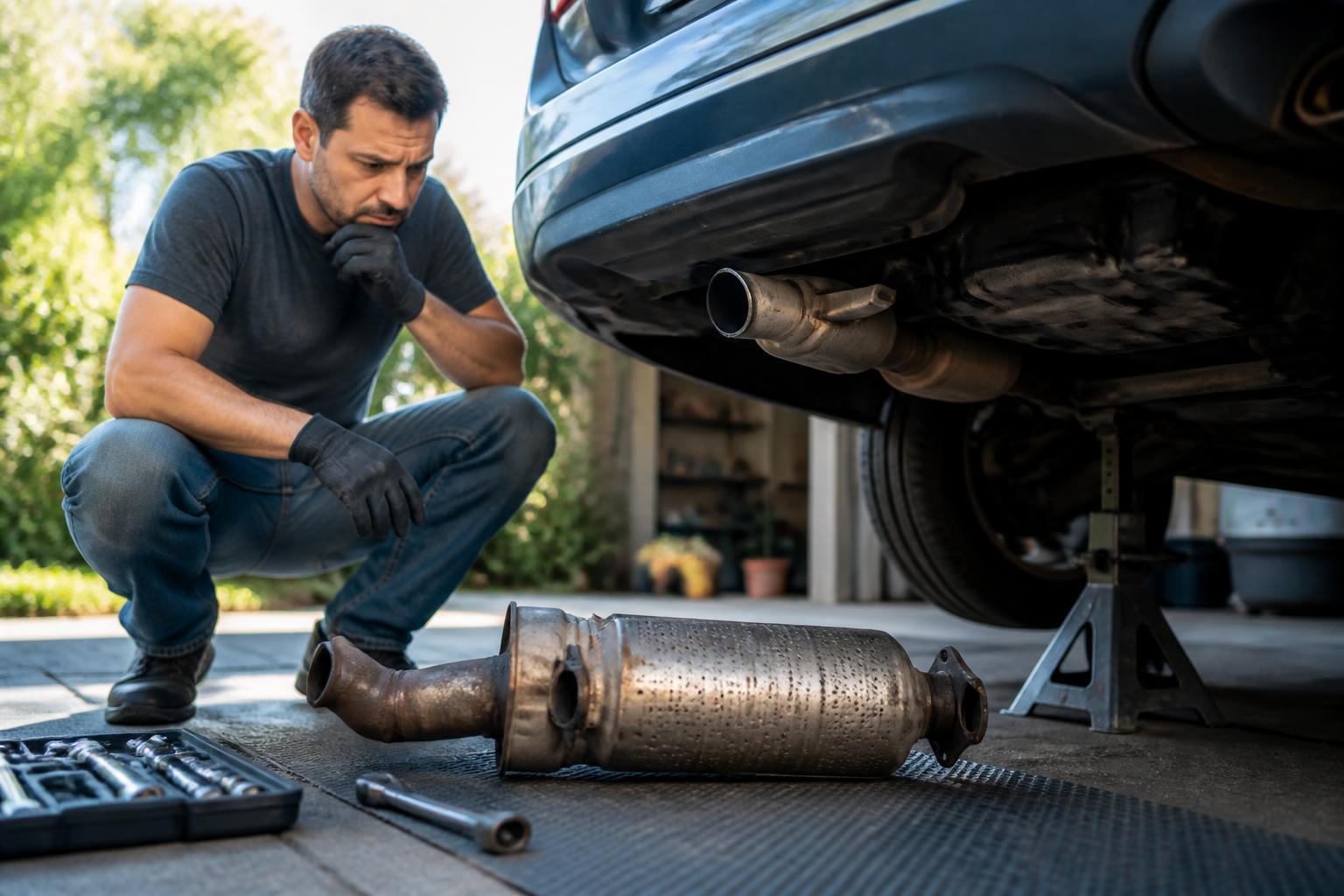
Diagnosing a Clogged Catalytic Converter Without a Mechanic
Your car gives clear clues before the problem gets expensive. Use these checks before you pull out your wallet.
Symptoms You Can Feel and Smell
- Sluggish acceleration – especially when merging onto a highway or climbing a hill. The engine may feel like it hits a wall around 3,000–4,000 RPM. On a 2016 Honda CR-V, owners often report a sudden loss of power on highway on-ramps.
- Rotten-egg smell from the exhaust – the converter is overheating and failing to process sulfur compounds in the fuel.
- Poor fuel economy – a clogged exhaust forces the engine to work harder. You may see a drop of 3–5 mpg compared to normal driving.
- Check Engine Light – the most common code is P0420 (Catalyst System Efficiency Below Threshold). On a 2016 Honda CR-V, this is the likely code for a failing converter.
- Rattle from under the car – the ceramic honeycomb has broken loose inside the converter housing. Cleaner cannot fix this.
Two Simple Tests
Backpressure test (no tools needed): Warm up the engine to normal operating temperature, let it idle, and hold your hand a few inches from the tailpipe. A weak, fluttering exhaust stream that feels more like a puff than a steady push suggests restriction. Don’t touch the pipe – it will be hot enough to burn skin.
Temperature test (needs an infrared thermometer): Measure the surface temperature at the converter inlet (where exhaust enters) and outlet (where it exits). A working converter runs 100–150°F hotter at the outlet because the chemical reaction generates heat. If the outlet is cooler than the inlet, or the same temperature, the converter is clogged and not doing its job.
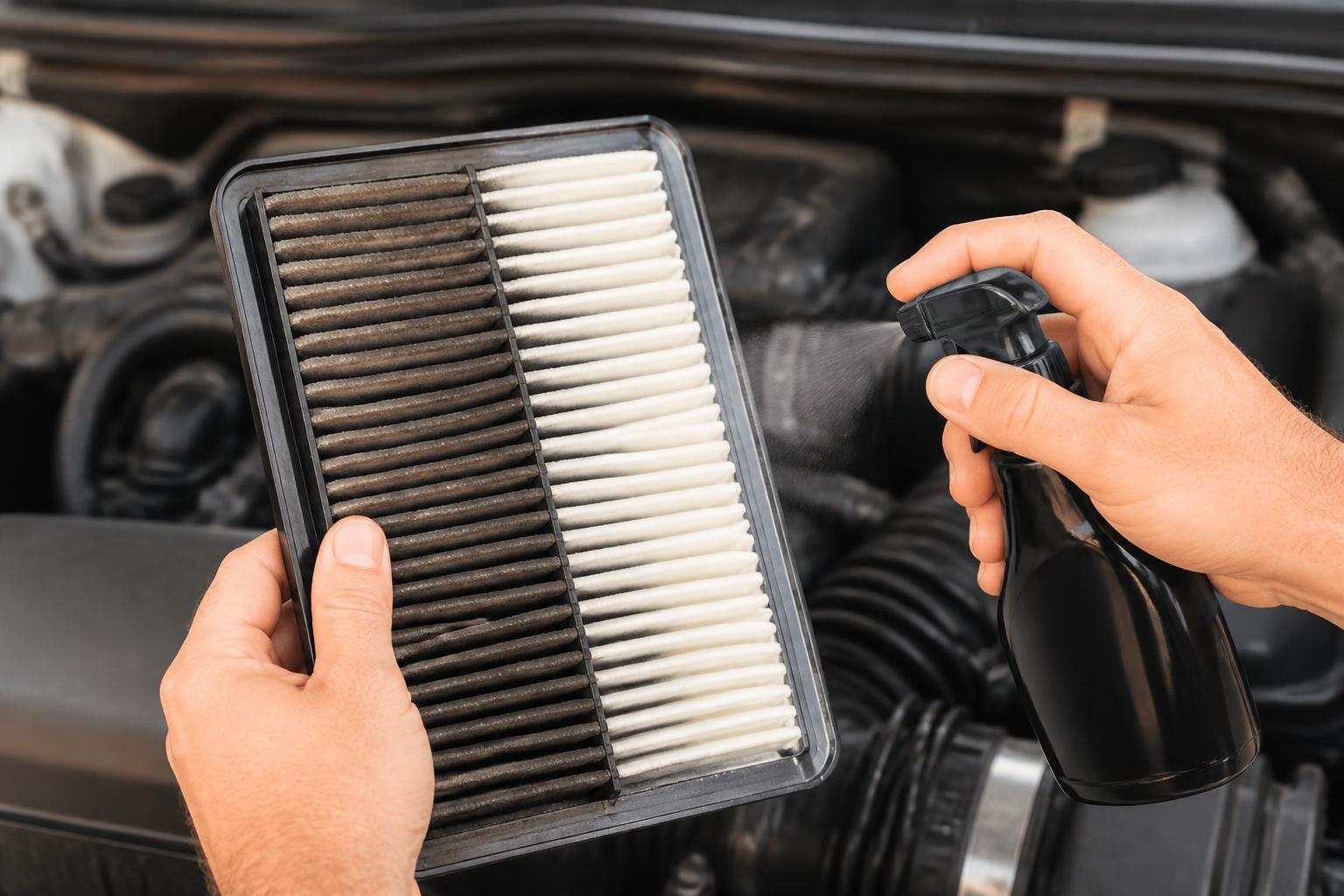
If you get a P0420 code but the car drives normally, a faulty oxygen sensor could be the real issue. A failed downstream O2 sensor can trigger the same code without any converter problem. Still, a cleaner test at $15–$20 is a cheap way to narrow it down before paying for diagnostic labor.
Choose Cleaner vs. Replacement
Catalytic converter cleaners (CRC Guaranteed To Pass, Cataclean, and similar brands) dissolve soft carbon deposits that build up from short-trip driving or a slightly rich fuel mixture. They cannot fix melted ceramic, physical cracks, or oil-soaked internals.
The trade-off: using cleaner when the converter is already physically damaged wastes $20 and delays the inevitable. If the underlying cause like a misfire isn’t fixed first, the cleaner won’t help, and a replacement converter will fail just as fast. Always resolve misfires and oil leaks before you try the bottle.
Decision checklist:
- [ ] Check Engine Light code is P0420 or P0430 – not a misfire code like P0300 or a lean code like P0171
- [ ] No drivability issues – no hesitation, stalling, or rough idle when driving
- [ ] No rattling sounds from underneath the car when you rev the engine
- [ ] Car hasn’t had a recent misfire or an oil consumption problem (using more than 1 quart per 1,000 miles)
- [ ] Exhaust temperature test shows a significant difference (100°F or more) between inlet and outlet
If all five checks pass, try a cleaner. If any single check fails, schedule a replacement.
How Much Does a Catalytic Converter Cost for a 2016 Honda CR-V?
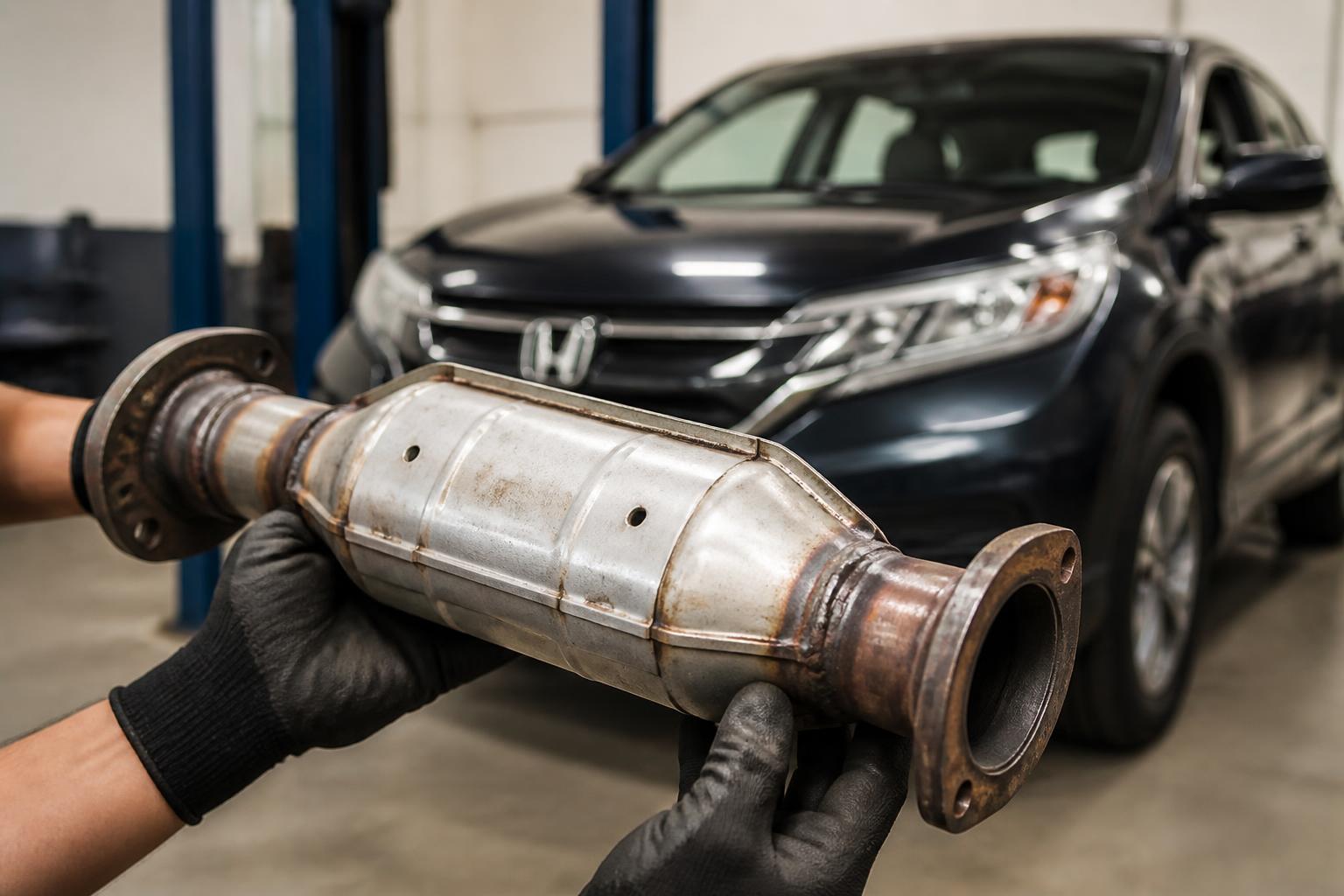
The 2016 CR-V uses an integrated manifold converter – the part is built into the exhaust manifold, making it more expensive than a standalone converter found on older vehicles. These are typical ranges; exact prices vary by location and shop.
| Option | Parts | Labor (estimated) | Total |
|---|---|---|---|
| OEM (Honda genuine) | $1,000–$1,600 | $300–$500 | $1,300–$2,100 |
| Aftermarket direct-fit (Walker, MagnaFlow) | $400–$800 | $300–$500 | $700–$1,300 |
| Universal weld-in (not recommended for OBD2 cars) | $150–$300 | $200–$400 | $350–$700 |
Ask your mechanic if the aftermarket unit is CARB-compliant if you live in California or a state that follows California emissions standards (New York, Maine, Massachusetts, Vermont, and others). Using a non-CARB part will trigger the check engine light and fail your state inspection.
How to Use a Catalytic Converter Cleaner
Follow this exact sequence to give the cleaner its best chance of working on soft carbon deposits.
Before You Start Checklist
- [ ] Fuel tank between ¼ and ½ full – most cleaners need a low tank to mix at a stronger ratio
- [ ] Engine at normal operating temperature – not overheating
- [ ] No active misfire codes on the scan tool
- [ ] No visible exhaust leaks – leaks dilute the cleaner’s effect
- [ ] Cleaner is fresh – check the expiration date if the bottle has been sitting in your garage
The Procedure
1. Pour the entire bottle into the fuel tank. Pour directly into the filler neck – no mixing required.
2. Fill the tank to ¾ full with the fuel grade your car requires (regular 87 octane for the CR-V). This ensures even distribution through the fuel system.
3. Drive for 30–60 minutes combining stop-and-go city driving (to build heat in the converter) with steady highway cruising (to sustain that heat). Avoid trips shorter than 10 minutes – the converter never reaches cleaning temperature on short runs.
4. Monitor the check engine light. After the first full tank of treated fuel, clear the code with a scanner or drive another 50 miles to see if the car resets it automatically through a complete drive cycle. If the light stays off, the cleaner worked.
5. Check for side effects. A slight change in exhaust smell is normal during the cleaning cycle. If you smell raw fuel, see white smoke from the tailpipe, or notice engine hesitation, stop driving – the converter may be too damaged to clean.
A low tank matters because most cleaners concentrate better when fuel volume is low. This gives the additive a stronger mix ratio for the first pass through the combustion chamber and converter. Filling afterward spreads it evenly without diluting the initial concentration.
Escalation Signal
If the check engine light returns within 50 miles after treatment, the converter is beyond cleaning. If you hear rattling or smell sulfur after the treatment, schedule a mechanic for a backpressure test or exhaust camera inspection. Continuing to drive with a rattling converter can send ceramic debris into the muffler and clog secondary exhaust components, making the repair more expensive.
What Usually Kills a Catalytic Converter
Two causes account for about 80% of converter failures. Understanding them helps you avoid the same problem after a replacement.
Unburnt fuel from a misfire – raw gasoline hits the hot converter and burns inside it, melting the ceramic honeycomb into a solid block. Common triggers include bad spark plugs, failing ignition coils, vacuum leaks, or a dirty mass airflow sensor. On the 2016 Honda CR-V, ignition coil failures are a known issue between 80,000 and 120,000 miles. If your CR-V has P0301, P0302, P0303, or P0304 (cylinder misfire codes), fix the misfire first before even looking at the converter.
Oil consumption – oil ash coats the inside of the converter over time, blocking exhaust flow and insulating the catalyst from exhaust heat. This happens with worn piston rings, leaking valve seals, or a failing PCV valve. A 2016 CR-V that uses more than 1 quart of oil every 1,000 miles will likely kill a new converter within 10,000 miles if the oil consumption isn’t addressed.
If you replace a converter without fixing the root cause, the new one will fail just as fast – often within 5,000 to 10,000 miles. Always diagnose and fix misfires or oil leaks first. A simple oil change won’t help if the converter is already coated with oil ash.
What Else Can You Try Before Replacing?
There is no other reliable DIY fix besides a dedicated catalytic converter cleaner. Online “blocked exhaust fix in a can” products are ineffective against physical damage. Removing the converter and soaking it in solvents rarely works because the clog is inside the honeycomb channels where liquid can’t reach.
You can delay the inevitable in three ways:
- Fix the root cause (misfires, vacuum leaks, oil consumption) to stop further damage from reaching the converter.
- Run a fuel system cleaner like Techron or Gumout Regane every 3,000 miles to keep the combustion chambers clean. This reduces the long-term carbon load that slowly clogs the converter.
- Use higher-octane fuel for a few tanks. Premium gas burns slightly cleaner and may burn off light deposits, but this is a temporary measure. It won’t clear a converter that’s already clogged.
Once the converter is physically damaged, only replacement restores performance and passes an emissions test. No additive, soak, or driving trick can fix melted ceramic or oil-soaked catalyst material.
FAQ
Do catalytic converters get clogged eventually?
Yes, especially if the engine runs rich or burns oil. Most last 100,000 miles or more, but a single severe misfire or undiagnosed oil leak can clog one in as little as 10,000 miles.
How long does it take the catalytic converter cleaner to work?
Expect results after 50–100 miles of mixed driving. Some cleaners need a full tank of treated fuel and a week of normal driving before the check engine light goes out.
How do I test if my catalytic converter is failing?
Check for a P0420 code, sluggish acceleration, rotten-egg smell, or a rattle from the exhaust. A temperature test using an infrared thermometer (inlet vs. outlet) confirms the diagnosis.
How much does a catalytic converter cost for a 2016 Honda CR-V?
Total replacement ranges from $700 (aftermarket direct-fit) to $2,100 (OEM Honda part), including labor. The integrated manifold design makes the part more expensive than standalone converters.
Can you unclog a catalytic converter instead of replacing it?
Yes, if the clog is from soft carbon buildup and the honeycomb is physically intact. Use a dedicated cleaner and drive it through a full tank on a mix of city and highway roads. If the code returns within 50 miles, replacement is the only option.
Is it a good idea to use catalytic converter cleaner?
It’s a low-cost first step (under $20) when you have a P0420 code with no drivability issues. If the car already hesitates, rattles, or smells like rotten eggs, skip the bottle and go straight to diagnosis and replacement.
How will a car act if a catalytic converter is bad?
Sluggish acceleration, reduced fuel economy by 3–5 mpg, a sulfur smell from the exhaust, and often a check engine light. In severe cases, the car may not start at all or may stall during driving.
Can I still drive if my catalytic converter is bad?
For a mild clog, yes, but you risk damaging the engine over time from excessive backpressure. A completely blocked converter can cause stalling, no-start conditions, and overheating that damages other exhaust components.
What is the most common cause of catalytic converter failure?
Unburnt fuel from a misfire is the number one cause. Oil consumption from worn rings or valve seals is number two. Together they account for roughly 80% of all converter failures.
How long can you drive with a bad catalytic converter?
If the car still runs and the check engine light is the only symptom, you can drive for months. But the underlying issue will continue to worsen. Replace it sooner to avoid being stranded or facing more expensive repairs like damaged oxygen sensors or a melted exhaust system.
Explore This Topic
- Back to Catalytic Converter Cleaner
- Back to Automotive Repair
Related guides in this cluster:
- Fuel Pump, Fuel Filter, and Fuel Injector: Diagnosis and Replacement
- Starter Motor Failure: Symptoms, Diagnosis, and When to Replace
- Steering Wheel Vibration and Wheel Alignment: Causes and Costs

Greedy Wheels is the founder and lead editor at Wheels Greed. With over 15 years of hands-on automotive experience — from rebuilding engines in a home garage to managing fleet maintenance for a regional logistics company — he brings real-world mechanical knowledge to every guide.
His work has been featured in automotive forums, owner communities, and dealership training materials. When he’s not researching the latest car owner questions, you’ll find him at a local track day, wrenching on his project car, or testing the newest OBD2 diagnostic tools.
At Wheels Greed, every article is reviewed against manufacturer service manuals, NHTSA bulletins, and verified owner reports. No AI-generated fluff. No guesswork. Just practical answers from someone who has turned the wrench.