Check Engine Light: Most Common Causes and What to Do First
Your check engine light just turned on. Here’s the short answer: A steady yellow light means a non-emergency problem – you can usually drive a short distance to get it diagnosed. A flashing light means stop immediately – you risk catalytic converter or engine damage. The light won’t reset on its own until the underlying issue is fixed, and even then you may need to drive 50–100 miles for the system to confirm the repair.
What the Check Engine Light Is Telling You
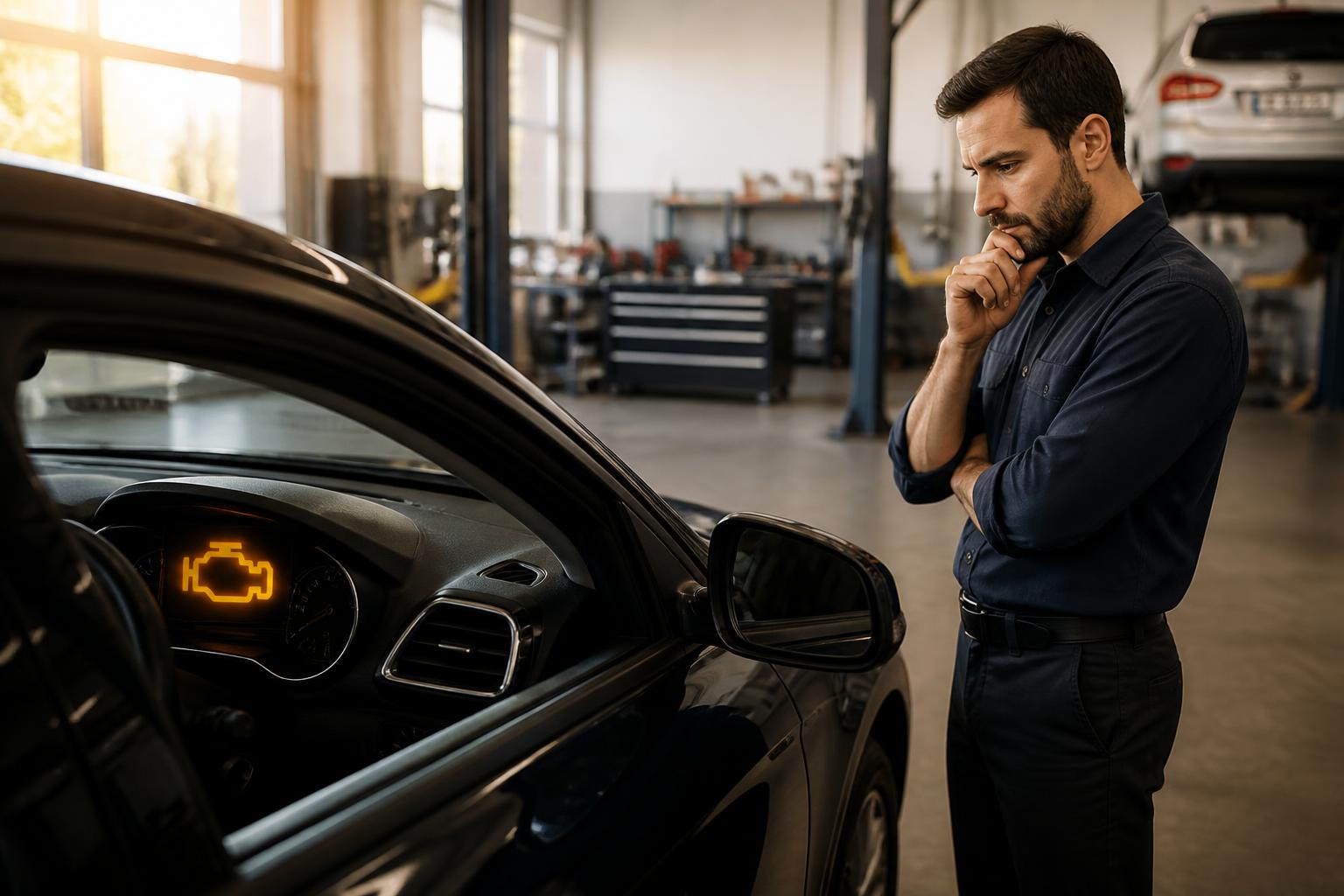
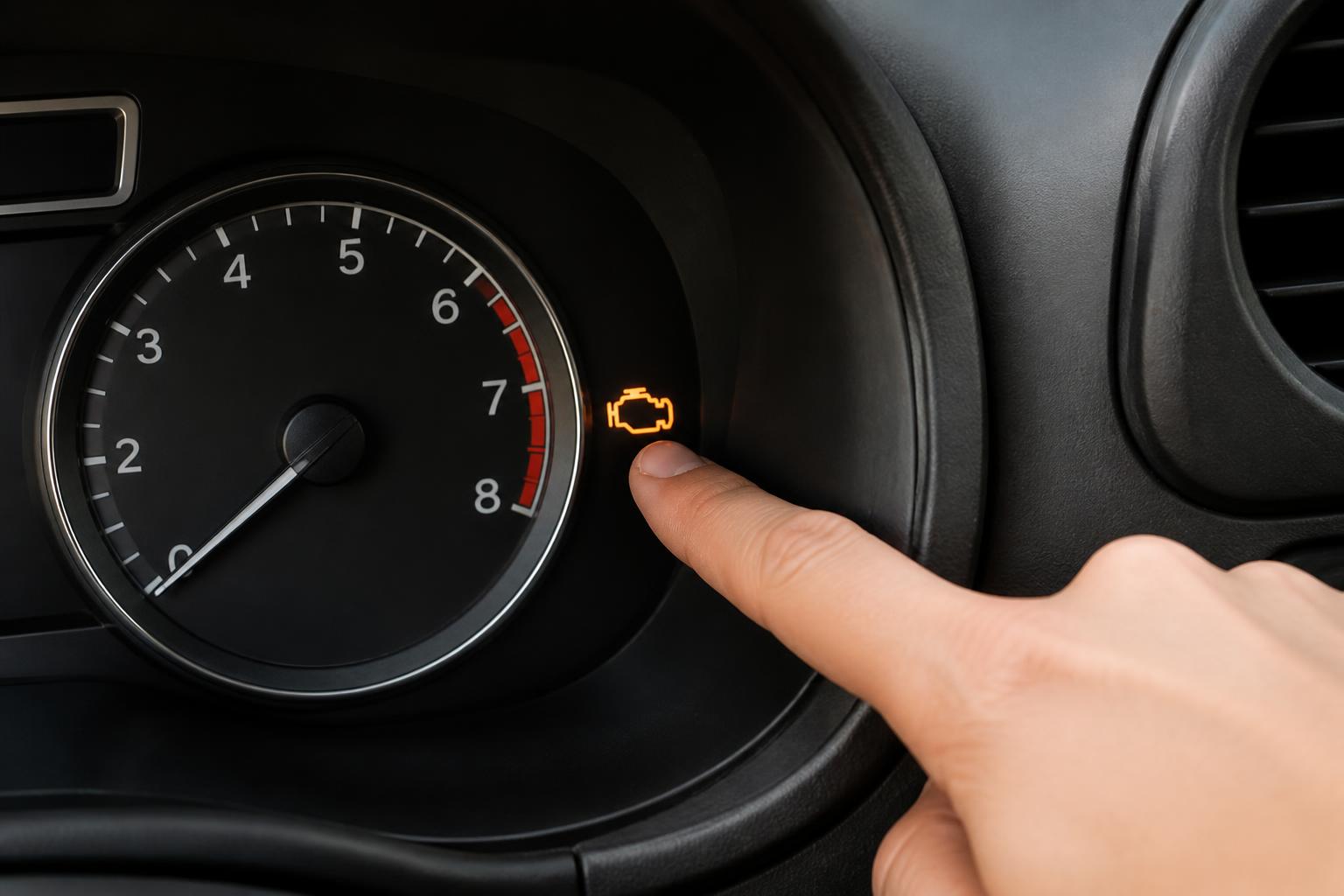
The check engine light is part of your car’s On-Board Diagnostics II (OBD2) system. When a sensor detects a reading outside normal range, the engine control module (ECM) stores a diagnostic trouble code (DTC) and turns on the light.
- Solid yellow/amber – Warning. The problem is usually emissions-related or a minor fault. You can often drive to a shop or parts store, but don’t ignore it.
- Flashing yellow/amber – Emergency. Catalyst-damaging misfire or severe fault. Pull over and have the car towed. A flashing light can destroy your catalytic converter in minutes.
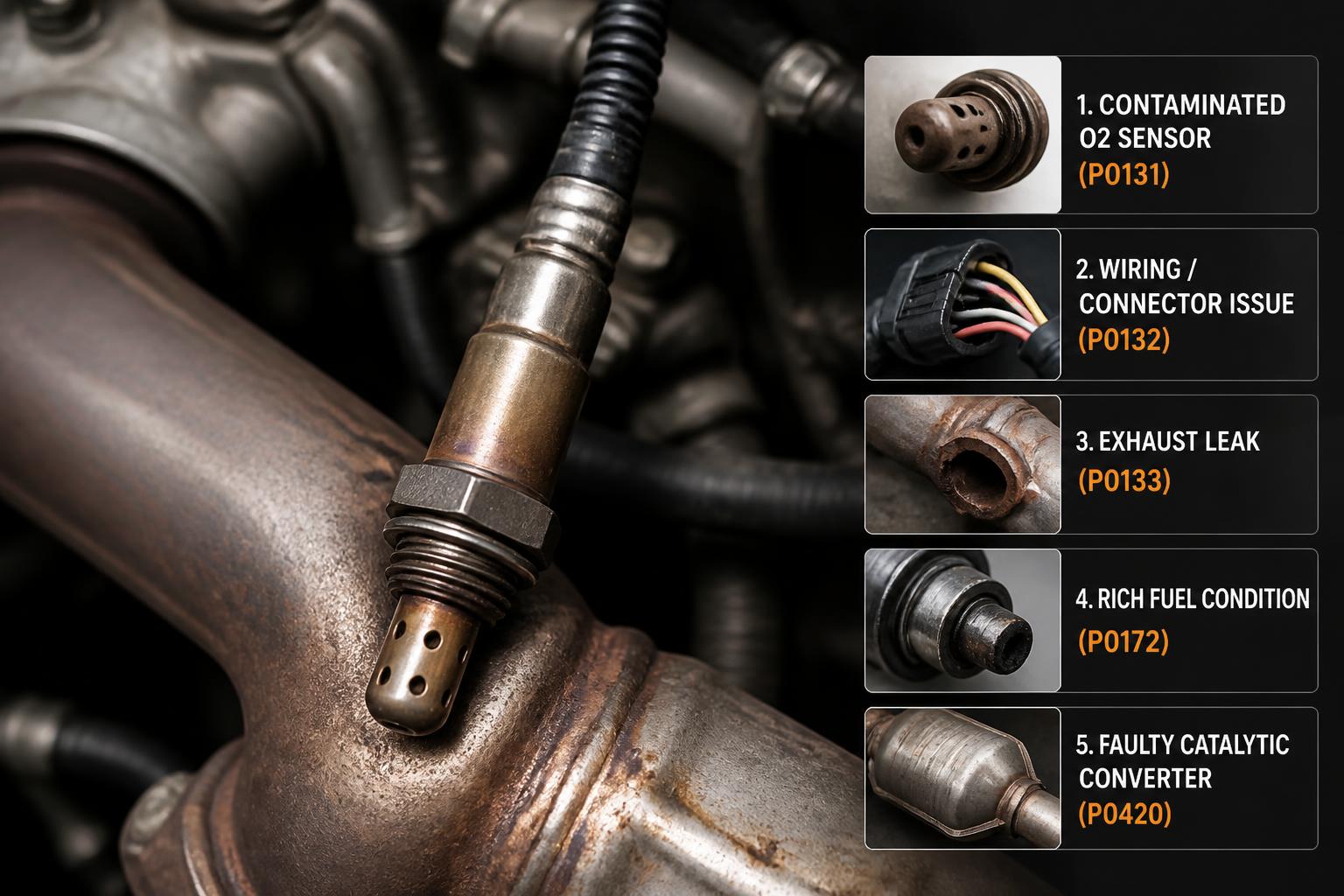
On a VW T5 (Transporter or Multivan), the light works the same way. Common T5-specific triggers include glow plug failure (diesel models), EGR valve issues, or oxygen sensor faults. The light alone doesn’t tell you which – you need a code reader.
Most Common Causes (with OBD2 Codes)
These five faults account for roughly 80% of check engine light visits, according to industry data and mechanic surveys. Each comes with a concrete code you can look up.
| Cause | Typical Code | Quick Fix | Cost Range |
|---|---|---|---|
| Loose or faulty gas cap | P0455 (large evaporative leak) | Tighten cap; if light stays, replace cap ($10–$20) | $0–$20 |
| Faulty oxygen sensor | P0420, P0430 (catalyst efficiency) | Replace sensor (bank 1 or 2) | $150–$400 |
| Mass airflow (MAF) sensor failure | P0101, P0102 (MAF circuit range/performance) | Clean or replace MAF | $80–$300 |
| Catalytic converter failure | P0420, P0430 (same as O2 but confirmed) | Replace converter | $800–$2,500 |
| Ignition coil or spark plug misfire | P0301–P0304 (cylinder-specific misfire) | Replace coil/plugs, sometimes all four | $100–$400 |
Practical implication: Knowing the code tells you whether it’s safe to keep driving or you need to head straight to a shop. For example, P0420 on a Toyota Camry doesn’t automatically mean the converter is bad – a weak oxygen sensor or even a small exhaust leak can trigger it. Always diagnose before replacing parts.
First Steps When the Light Comes On
Follow this sequence to decide what to do next. Don’t skip to “clear the code” – that hides the problem.
Step 1: Pull Over Safely and Assess Symptoms
- Is the light flashing? → Stop engine, call for tow.
- Is the light steady? → Continue to step 2.
- Do you notice rough idle, hesitation, loss of power, strange noises, or smoke? → Pull over if unsafe; otherwise proceed cautiously.
Step 2: Tighten the Gas Cap
This is the easiest fix. Turn the cap until you hear 3–4 clicks. If the light was caused by a loose cap, it may take a few drive cycles (or 50–100 miles) to turn off.
Step 3: Get the Code Read for Free
Most auto parts stores (AutoZone, O’Reilly, Advance Auto Parts) will read your check engine light for free. They do not charge, and they will print the code(s). They do not clear the code for you, though you can buy a $20–$30 code reader to clear it yourself.
- Does AutoZone clear check engine light? No. They only read it. You can request them to clear after a repair, but many stores won’t.
- Where can I clear my check engine light for free? No common chain will clear codes for free. You can buy a cheap reader or borrow one from a friend.
Step 4: Use the Code to Decide If You Can Drive
With the code in hand, look up its severity. For example:
- P0455 (gas cap) – safe to drive, get cap replaced soon.
- P0301 (misfire cylinder 1) – drive only a few miles to a shop. A misfire can dump fuel into the exhaust and ruin the converter.
- P0420 (catalyst) – driveable, but the car may fail an emissions test soon.
Quick Decision Aid – 6-Item Checklist
- [ ] Is the check engine light flashing? → STOP, do not drive.
- [ ] Do you have any performance issues (rough idle, stalling, loss of power)? → Limit driving to less than 10 miles.
- [ ] Is your gas cap tight? → Tighten it first.
- [ ] Do you have a code reader or a free reading? → Get the code before doing anything else.
- [ ] Are you near a shop you trust? → Drive there gently if light is steady and no symptoms.
- [ ] Do you need to pass an emissions test soon? → Fix the problem; resetting the code alone won’t pass (monitors need to run).
How Long Until the Engine Light Resets
This is the question behind many driver panic searches. The answer depends on how you try to reset it.
If You Disconnect the Battery
The light will turn off immediately (within 10–20 seconds after reconnecting). However, this only clears the memory – the ECM will detect the same fault again and relight the light, often within a few miles. This is not a fix. Trade-off: Disconnecting the battery also erases adaptive learning (idle speed, fuel trims) and can make the car drive poorly until it relearns. On some vehicles, it may even reset the clock and radio presets.
If You Use a Code Reader to Clear Codes
Same effect – the light goes off immediately, but if the problem is still present, the light returns within 1–50 miles. Many readers cost $20–$30 and let you clear codes yourself. This is useful for intermittent faults, but it’s not a repair.
If the Problem Is Actually Fixed
After repairing the root cause, the light may go off immediately, or it may take 50–100 miles of normal driving (sometimes called a “drive cycle”). This allows the OBD2 system to run its self-tests (monitors) and confirm the repair. Once all monitors are “ready,” the light turns off.
How many miles does it take for a check engine light to clear? Usually 50–100 miles, but some cars require specific driving conditions (e.g., highway cruise, stop-and-go, cold start).
Why do I need to drive 50 miles after resetting the check engine light? To allow the ECM to run the On-Board Diagnostic monitors. If you clear the code and immediately go for an emissions test, it will likely fail because the monitors are “not ready.”
How to Confirm the Repair Worked (Verification Step)
After you’ve replaced the suspected part, you don’t have to guess. Use a code reader to check if the same code is stored. Clear the code, then drive the car through a typical “drive cycle” (e.g., cold start, 10 minutes of highway, 5 minutes of stop-and-go). After that, plug in the reader and see if the monitor status for that system shows “Ready” or “Complete.” If the light stays off and the monitors complete, the repair is likely successful.
What About Cataclean
Will my check engine light go off after using Cataclean? Possibly, if the code is caused by carbon buildup or a mild oxygen sensor reading. It’s not a guaranteed fix. Cataclean is a fuel additive that can clean the exhaust system, but it won’t fix mechanical failures (e.g., a dead O2 sensor or a cracked catalytic converter). Use it only as a low-cost gamble, not a reliable repair.
Can You Drive with the Check Engine Light On?
How long can I drive on a solid check engine light? A few hundred to a thousand miles if the car runs fine and the light is steady. But don’t push it – minor problems can become major (e.g., a misfire can destroy the converter).
How many miles can I drive with my check engine light on? There’s no universal number. Some people drive 1,000 miles with a steady light and no symptoms. But flashing light = zero miles.
Can I drive 1000 miles with the check engine light on? Only if the code is minor (e.g., P0455 gas cap) and you have no drivability issues. Even then, you risk failing an emissions test or letting a small leak become worse.
Is a solid check engine light an emergency? No, not an emergency. But it is a priority. Schedule a diagnosis within a week. Ignoring it can lead to expensive repairs (e.g., a $1,500 catalytic converter because a $20 O2 sensor was left too long).
Trade-off to consider: If you drive for many miles with a P0420 (catalyst efficiency), the converter continues to degrade. A delay might turn a $200 sensor replacement into a $1,500 converter job. Always weigh the cost of early diagnosis vs. the risk of parts damage.
Frequently Asked Questions
Can an engine light be on for no reason?
No – there is always a stored code. The cause might be minor (loose gas cap) or intermittent, but the light does not come on without a fault detected.
Why would my check engine light just come on out of nowhere?
Common sudden triggers: a loose gas cap after refueling, a cracked vacuum hose, a failing ignition coil that finally shorted, or a sensor that degraded with temperature change.
How to quickly reset check engine light?
Disconnect the battery for 10 minutes or use a code reader to clear codes. Remember: this hides the symptom, not the cause. The light will return if the fault is still active.
How do I know if the ignition coil is bad if there’s no check engine light?
A failing coil often causes misfires that may not be severe enough to trigger the light immediately. Symptoms: rough idle, hesitation under load, reduced fuel economy. The code (P030X) will eventually appear after a few drive cycles.
Can you clear a check engine light without fixing the problem?
Yes – by battery disconnect or code reader. The light will come back, usually within 1–50 miles. This is only useful to see if the fault is intermittent.
How much does AutoZone charge to check engine light?
$0 – it’s free.
Does Meineke check engine light?
Yes, most Meineke locations will read the code for free as part of a diagnostic check, but they may charge for a full diagnostic if you want a written report.
What is worse, a solid or flashing check engine light?
Flashing – it indicates a severe misfire that can damage the catalytic converter.
Can I drive a VW with the check engine light on?
Yes, if it’s steady and the car drives normally. VW T5 diesel models with a glow plug light plus check engine light often have a glow plug fault – still driveable, but cold starts may be harder.
Where can I check my engine code on a Chrysler Town and Country?
Use the OBD2 port under the dash, same as any other car. Auto parts stores will read it for free.
Can I still drive if the check engine light is on?
Yes, if steady and no symptoms. If flashing, do not drive.
How serious is a yellow engine light?
Moderately serious – needs attention within a week, but not a roadside emergency.
The bottom line: Get the code read before you do anything else. Don’t reset the light until you know what’s wrong. If you need to drive, a solid light is usually safe for short trips. A flashing light means stop and tow. And when you finally fix the problem, expect to drive 50–100 miles before the light turns off for good.
Explore This Topic
- Back to Check Engine Light
- Back to Automotive Repair
Related guides in this cluster:
- Engine Misfire: Causes, Spark Plugs, and Ignition Coil Diagnosis
- Thermostat, Water Pump, and Overheating: Diagnosis and Repair
- Fuel Pump, Fuel Filter, and Fuel Injector: Diagnosis and Replacement

Greedy Wheels is the founder and lead editor at Wheels Greed. With over 15 years of hands-on automotive experience — from rebuilding engines in a home garage to managing fleet maintenance for a regional logistics company — he brings real-world mechanical knowledge to every guide.
His work has been featured in automotive forums, owner communities, and dealership training materials. When he’s not researching the latest car owner questions, you’ll find him at a local track day, wrenching on his project car, or testing the newest OBD2 diagnostic tools.
At Wheels Greed, every article is reviewed against manufacturer service manuals, NHTSA bulletins, and verified owner reports. No AI-generated fluff. No guesswork. Just practical answers from someone who has turned the wrench.