SUV Towing Capacity Comparison: What Every SUV Can Pull
The short answer: an SUV’s towing capacity depends on its class, engine, drivetrain, and optional equipment. Compact SUVs typically max out around 3,500 lbs, midsize models range from 5,000–7,700 lbs, and full-size SUVs can pull 8,000–9,300 lbs or more. Always check the specific trim and option package before hooking up a trailer.
Towing Capacity” /> Comparison: What Every SUV Can Pull
Towing capacity by SUV class
Compact SUVs (up to 3,500 lbs)
Most compact SUVs handle small trailers, pop-up campers, and utility trailers.
- Honda CR-V: 1,500 lbs standard, but the turbocharged CR-V with the factory towing package reaches 1,500 lbs max across all trims. Not designed for heavy towing.
- Toyota RAV4: 1,500–3,500 lbs. The Adventure and TRD Off-Road trims with the optional towing package hit 3,500 lbs. Base trims stop at 1,500 lbs.
- Ford Escape: 2,000–3,500 lbs. The 2.0L EcoBoost with Class II hitch and cooler package pulls 3,500 lbs. Without the package, max is 2,000 lbs.
- Subaru Forester: 1,500–3,000 lbs. The 2.5L engine pulls 1,500 lbs; the turbocharged Forester XT (discontinued after 2018) could reach 3,000 lbs with the factory hitch.
What you can tow: single-jet skis (1,500–2,000 lbs), small utility trailers (1,000–2,500 lbs), teardrop campers (2,000–3,000 lbs), aluminum fishing boats (1,500–2,500 lbs).
Midsize SUVs (5,000–7,700 lbs)
Midsize SUVs bridge the gap between daily driver and serious towing. Capacity jumps with V6 or turbo-4 powertrains and optional tow packages.
- Toyota 4Runner: 5,000 lbs. All trims rated the same. No factory receiver on SR5; you need the dealer-installed hitch. The 4.0L V6 is reliable but manages only 5,000 lbs in an era where rivals exceed 7,000.
- Ford Explorer: 5,000–5,600 lbs. The 2.3L EcoBoost and 3.0L EcoBoost both cap at 5,600 lbs with the Class III hitch. Rear-wheel drive models pull slightly less.
- Jeep Grand Cherokee: 3,500–7,200 lbs. The 3.6L V6 with optional tow package pulls 6,200 lbs. The 5.7L Hemi V8 hits 7,200 lbs. The high-end Grand Cherokee L (three-row) derates to 6,200 lbs with the V8.
- Dodge Durango: 6,200–8,700 lbs (GT trims with V6 sit at 6,200; V8 trims hit 8,700 when properly equipped). The Durango pulls more than many full-size SUVs in its V8 configuration.
- Chevrolet Traverse: 5,000 lbs. The 3.6L V6 is consistent across trims. No real variation between front- and all-wheel drive versions.
- Honda Pilot: 3,500–5,000 lbs. The standard Pilot pulls 3,500 lbs. The optional towing package adds transmission cooler and ups capacity to 5,000 lbs.
What you can tow: dual-jet skis with trailer (2,500–3,500 lbs), 16–20 ft travel trailers (4,000–5,500 lbs), campervans (5,000–6,500 lbs), single-horse trailers (3,500–6,000 lbs), small boats and runabouts (4,000–7,000 lbs).
Full-size SUVs (8,000–9,300+ lbs)
Full-size SUVs on truck platforms pull the most weight. These vehicles use body-on-frame construction, heavy-duty cooling, and larger brakes.
- Chevrolet Tahoe / Suburban: 8,000–9,300 lbs. The 5.3L V8 with Max Trailering Package (includes integrated trailer brake controller, heavy-duty air cleaner, high-output alternator) hits 8,400 lbs (Tahoe) or 8,300 lbs (Suburban). The 6.2L V8 with Max Trailering Package reaches 8,300 lbs. The diesel Duramax 3.0L inline-six with the towing package pulls 8,000 lbs. Max ratings for both gas engines require the Max Trailering Package.
- GMC Yukon / Yukon XL: 8,000–9,500 lbs. Similar ratings to the Chevy twins. The 6.2L V8 with Max Tow Package on the regular Yukon reaches 8,400 lbs; the Yukon XL with the same setup hits 8,300 lbs. The diesel stays at 8,000 lbs.
- Ford Expedition / Expedition Max: 9,300–9,600 lbs. The 3.5L EcoBoost V6 is the sole engine. Standard Expedition hits 9,300 lbs. Expedition Max with Heavy-Duty Trailer Tow Package (integrated brake controller, Pro Trailer Backup Assist, extended-range fuel tank) reaches 9,300 lbs. The standard wheelbase Expedition with the towing package can hit 9,600 lbs in some configs.
- Toyota Sequoia: 9,000+ lbs. The 2023+ model uses the i-FORCE MAX hybrid V6 with 10-speed automatic. Base trims and hybrids derate slightly below 9,000 lbs; properly optioned it reaches 9,520 lbs. The previous-generation Sequoia (2008–2022) with the 5.7L V8 pulled 7,400–7,600 lbs depending on two- or four-wheel drive.
What you can tow: 24–30 ft travel trailers (6,500–8,500 lbs), multi-horse trailers (7,000–9,000 lbs), larger bass boats and center consoles (5,000–8,000 lbs), equipment trailers (7,000–9,000 lbs).
Luxury SUVs (7,700–8,500 lbs)
Luxury SUVs often match midsize or full-size capacities but package them in quieter, more refined cabins.
- BMW X5: 6,600–7,716 lbs. The 3.0L turbocharged inline-six and 4.4L V8 both hit 7,716 lbs with the optional factory hitch. Self-leveling air suspension is available and recommended for towing.
- Mercedes-Benz GLE: 6,600–7,700 lbs. The GLE 350 with the 2.0L turbo four maxes at 6,600 lbs. The GLE 450 3.0L inline-six with EQ Boost hits 7,700 lbs. Requires the optional Trailer Coupling Package.
- Lexus GX 460: 6,500 lbs. The 4.6L V8 with full-time four-wheel drive holds steady at 6,500 lbs regardless of trim. Body-on-frame construction like the Toyota 4Runner, but heavier curb weight cuts the rating.
- Lincoln Navigator: 8,400–8,700 lbs. The twin-turbo 3.5L V6 matches the Ford Expedition. Standard Navigator hits 8,400 lbs; Navigator L (extended) reaches 8,700 lbs with the Heavy-Duty Trailer Tow Package.
- Cadillac Escalade: 7,800–9,300 lbs. The 6.2L V8 with Max Trailering Package pulls 9,300 lbs. The diesel 3.0L tops at 8,000 lbs. The Escalade-V (supercharged V8) is not rated for towing by Cadillac.
How to find your SUV’s actual towing limit
The max rating in the brochure is the best-case number. Your real-world limit is often lower because of payload, equipment, and trailer type. Follow these steps to find the safe number for your specific SUV.
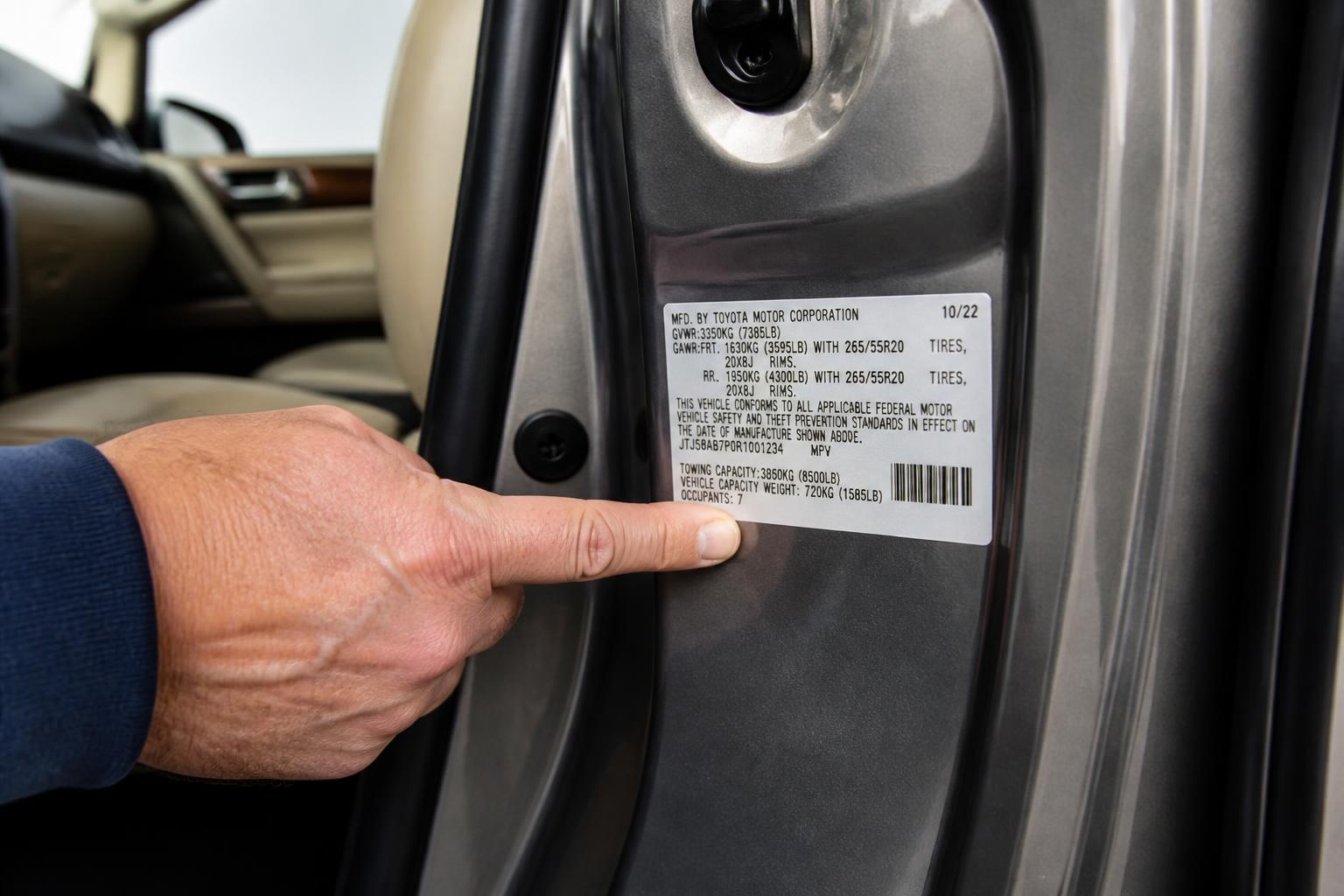
Step 1: Check the payload sticker
Open the driver’s door and look for the yellow or white Tire and Loading Information sticker. It lists the maximum combined weight of passengers, cargo, and trailer tongue weight your SUV can carry (the payload). This number is the first restriction. For example, a 2024 Ford Expedition with Max Tow Package may show a payload of 1,600 lbs.
Step 2: Subtract tongue weight and people
Trailer tongue weight should be 10–15% of the trailer’s total weight. If you plan to tow a 9,000-lb travel trailer, the tongue weight will be about 900–1,350 lbs. If you have 600 lbs of passengers and cargo in the SUV, you’ve already used 1,500–2,000 lbs of payload with the tongue weight alone. That may exceed the 1,600-lb payload before you even hitch up. The actual trailer you can pull is limited by what remains after you subtract people and gear.
Step 3: Verify the equipment package
Factory tow packages include transmission coolers, alternator upgrades, integrated brake controllers, and heavy-duty suspension. Without them, the max tow rating drops. A Chevrolet Tahoe without the Max Trailering Package pulls 7,400 lbs; with the package it pulls 8,400 lbs. An aftermarket hitch alone does not add cooling or electrical capacity. Check your VIN or window sticker for the specific options.
Step 4: Check GCWR (Gross Combined Weight Rating)
The GCWR is the maximum weight of the fully loaded SUV plus the fully loaded trailer. It’s listed in the owner’s manual. Add your SUV’s curb weight (with passengers and cargo) to the loaded trailer weight. If the sum exceeds GCWR, you’re over the limit regardless of the tow rating. This is a hard stop.
How to confirm you’re within safe limits
- Weigh your fully loaded SUV (with passengers, gear, and trailer attached) at a public scale (truck stop or recycling center). Compare the measured weights to the GVWR (on the door sticker) and GCWR.
- A properly loaded trailer should sit level or slightly nose-down when hitched. The SUV should not squat more than 1–2 inches. If it sags significantly, you need a weight-distributing hitch or you’re overloaded.
- After a short test drive, stop and feel the hubcaps and tires. If they are too hot to hold your hand on (over 150°F), your brakes or bearings are struggling, or you’re overweight.
When to stop and consult a professional
Stop your DIY planning if any of these apply:
- Your payload calc shows you’ll exceed the door sticker limit by more than 100 lbs even with the lightest trailer you’re considering.
- Your SUV does not have a factory or dealer-installed tow package (coolers, brake controller, etc.). Adding aftermarket parts rarely meets OEM durability standards.
- The trailer’s weight falls within the SUV’s max rating but your passengers and gear push you over payload. In that case, you need a larger vehicle or a lighter trailer.
- You plan to tow frequently or over steep grades (mountain passes). Repeated heavy towing with a marginal setup causes transmission overheating and premature wear. Consult a certified hitch installer or an RV weight specialist.
A common real-world mistake: payload overload
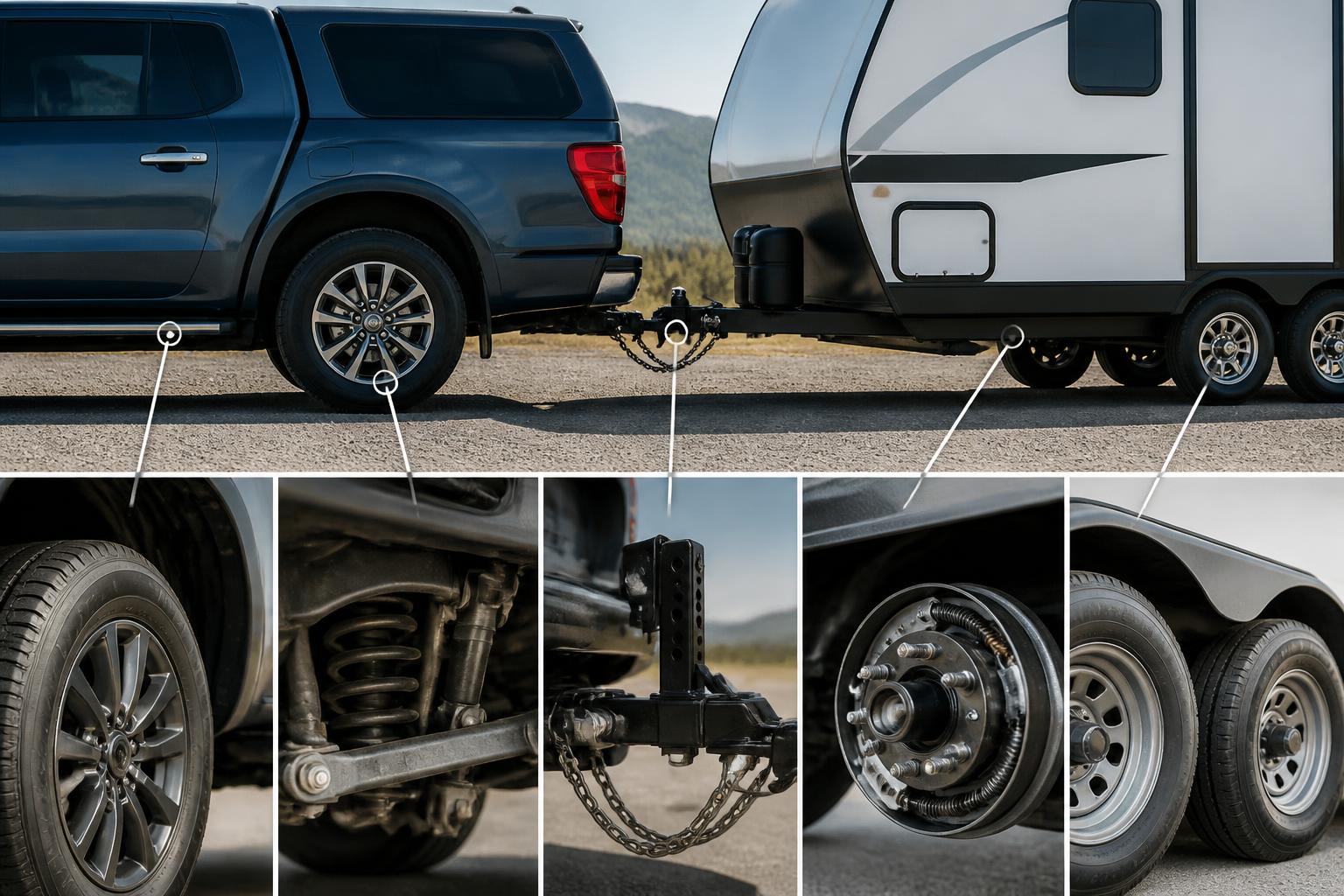
A shopper buys a 2019 Jeep Grand Cherokee with the 5.7L V8, attracted by the 7,200-lb max tow rating. They load the family of four (600 lbs of people) and gear (200 lbs) into the SUV, then hitch a 6,500-lb travel trailer (tongue weight 780 lbs). The payload on the door sticker is 1,200 lbs. The math: 600 + 200 + 780 = 1,580 lbs – 380 lbs over payload. The SUV squats, headlights point upward, and the rear axle is overloaded. On the first trip, the transmission temperature warning light comes up after 45 minutes of highway driving. The owner stops short of damage but needs to unload 400 lbs of gear or switch to a lighter trailer. The mistake: assuming the max tow number is always reachable. It is reachable only when the SUV carries a light load (driver only, no cargo).
What actually limits your towing number
Beyond the steps above, three factors determine real-world towing: payload, trailer type, and required equipment. This section recaps the mechanical boundaries.
Payload and tongue weight
Your vehicle’s payload capacity (from the driver’s door jamb sticker) includes passengers, cargo, and the trailer’s tongue weight. Tongue weight should be 10–15% of the trailer’s total weight. A 7,000-lb trailer with 700 lbs of tongue weight eats into your payload. If you carry four adults and luggage, you may exceed payload before touching the max tow rating.
Example: A 2024 Ford Expedition with Max Tow Package is rated for 9,300 lbs. The payload sticker might show 1,600 lbs. If you load 600 lbs of passengers and cargo in the SUV, and the trailer tongue weight is 900 lbs (about 10% of 9,000 lbs), you’re at 1,500 lbs payload used. That leaves only 100 lbs of margin—not enough for gear or a weight-distributing hitch.
Equipment required, not optional
Factory towing packages include:
- Hitch receiver
- Wiring harness (4-pin or 7-pin depending on class)
- Engine oil cooler
- Transmission cooler (automatic)
- High-output alternator
- Upgraded radiator
- Integrated trailer brake controller
- Heavy-duty suspension (rear springs or air leveling)
Without these components, max capacity drops sharply. For example, a Chevrolet Tahoe with no towing package pulls 7,400 lbs. Add the Max Trailering Package and it jumps to 8,400 lbs. Installing an aftermarket hitch does not add cooling or electrical upgrades.
Trailer type
- Boat trailers need to account for wet weight (fuel, water, gear) and the surge brakes common on marine trailers.
- Travel trailers generate high wind resistance. A 24-ft
Explore This Topic
Related guides in this cluster:
- Truck Towing Capacity Comparison
- Engine Oil Type Capacity Lookup
- Compact Suv Dimensions Cargo Space Compared

Greedy Wheels is the founder and lead editor at Wheels Greed. With over 15 years of hands-on automotive experience — from rebuilding engines in a home garage to managing fleet maintenance for a regional logistics company — he brings real-world mechanical knowledge to every guide.
His work has been featured in automotive forums, owner communities, and dealership training materials. When he’s not researching the latest car owner questions, you’ll find him at a local track day, wrenching on his project car, or testing the newest OBD2 diagnostic tools.
At Wheels Greed, every article is reviewed against manufacturer service manuals, NHTSA bulletins, and verified owner reports. No AI-generated fluff. No guesswork. Just practical answers from someone who has turned the wrench.