Compact SUV Dimensions and Cargo Space: Every Model Compared
If you need to know which compact SUV offers the most cargo space or the best passenger volume, the answer depends on how you measure. The Hyundai Tucson leads in cargo capacity (41.3 cu ft behind the second row, 81.3 cu ft folded), while the Tucson, Rogue, and Forester tie for passenger room. All figures below apply to the most recent model year unless noted; verify against your specific trim because specs vary by drivetrain and roof configuration.
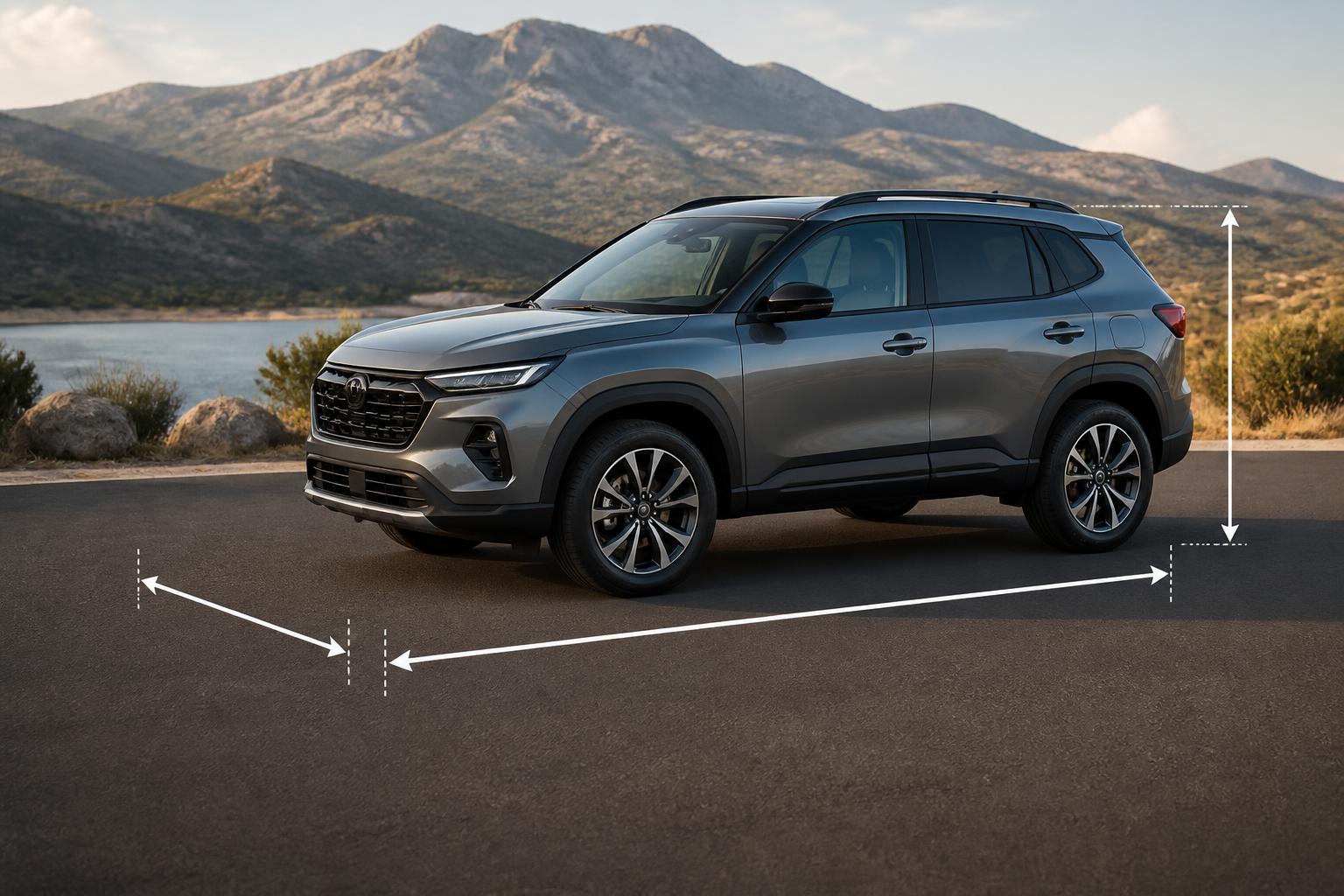
Exterior Dimensions: Length, Width, and Height
Compact SUVs differ by several inches in each direction, which affects garage fit, parking ease, and road presence. Here is how the top sellers compare (all measurements in inches; width excludes mirrors):
| Model | Length (in) | Width (in) | Height (in) | Wheelbase (in) |
|---|---|---|---|---|
| Honda CR-V | 182.1 | 73.5 | 66.5 | 104.8 |
| Toyota RAV4 | 180.9 | 73.0 | 67.0 | 105.9 |
| Hyundai Tucson | 186.3 | 73.4 | 65.6 | 108.5 |
| Kia Sportage | 183.5 | 73.4 | 65.4 | 108.5 |
| Subaru Forester | 182.7 | 72.0 | 68.1 | 105.1 |
| Mazda CX-5 | 179.1 | 72.6 | 66.1 | 106.3 |
| Ford Escape | 181.6 | 74.1 | 66.1 | 106.7 |
| Nissan Rogue | 183.0 | 72.4 | 66.5 | 106.5 |
Key takeaways:
- Longest: Hyundai Tucson (186.3 in) – measure your garage depth before buying.
- Shortest: Mazda CX-5 (179.1 in) – easiest to park and maneuver in tight lots.
- Widest: Ford Escape (74.1 in) – check your garage door opening width.
- Tallest: Subaru Forester (68.1 in) – best headroom but higher step-in.
- Longest wheelbase: Tucson and Sportage (108.5 in) – smoother ride but wider turning radius.
The CX-5 is the most city-friendly choice due to its shorter length and narrower body. The Forester stands tallest, which helps headroom and a higher seating position but raises the step-in height. The Tucson and Sportage share the longest wheelbase, which improves ride stability but may reduce maneuverability in tight parking lots. If your garage door opening is narrow, measure your clearance before buying the Escape or any model with wide mirrors.
Cargo Space Behind Second Row and with Seats Folded
Cargo volume often decides the purchase. Numbers below reflect each manufacturer’s published spec; note that measurement methods vary (up to roofline vs. below beltline).
| Model | Cargo behind 2nd row (cu ft) | Cargo behind 1st row (cu ft) |
|---|---|---|
| Honda CR-V | 39.3 | 76.0 |
| Toyota RAV4 | 37.6 | 69.8 |
| Hyundai Tucson | 41.3 | 81.3 |
| Kia Sportage | 39.6 | 74.1 |
| Subaru Forester | 35.4 | 71.8 |
| Mazda CX-5 | 30.9 | 59.3 |
| Ford Escape | 37.5 | 65.4 |
| Nissan Rogue | 36.5 | 74.1 |
Key takeaways:
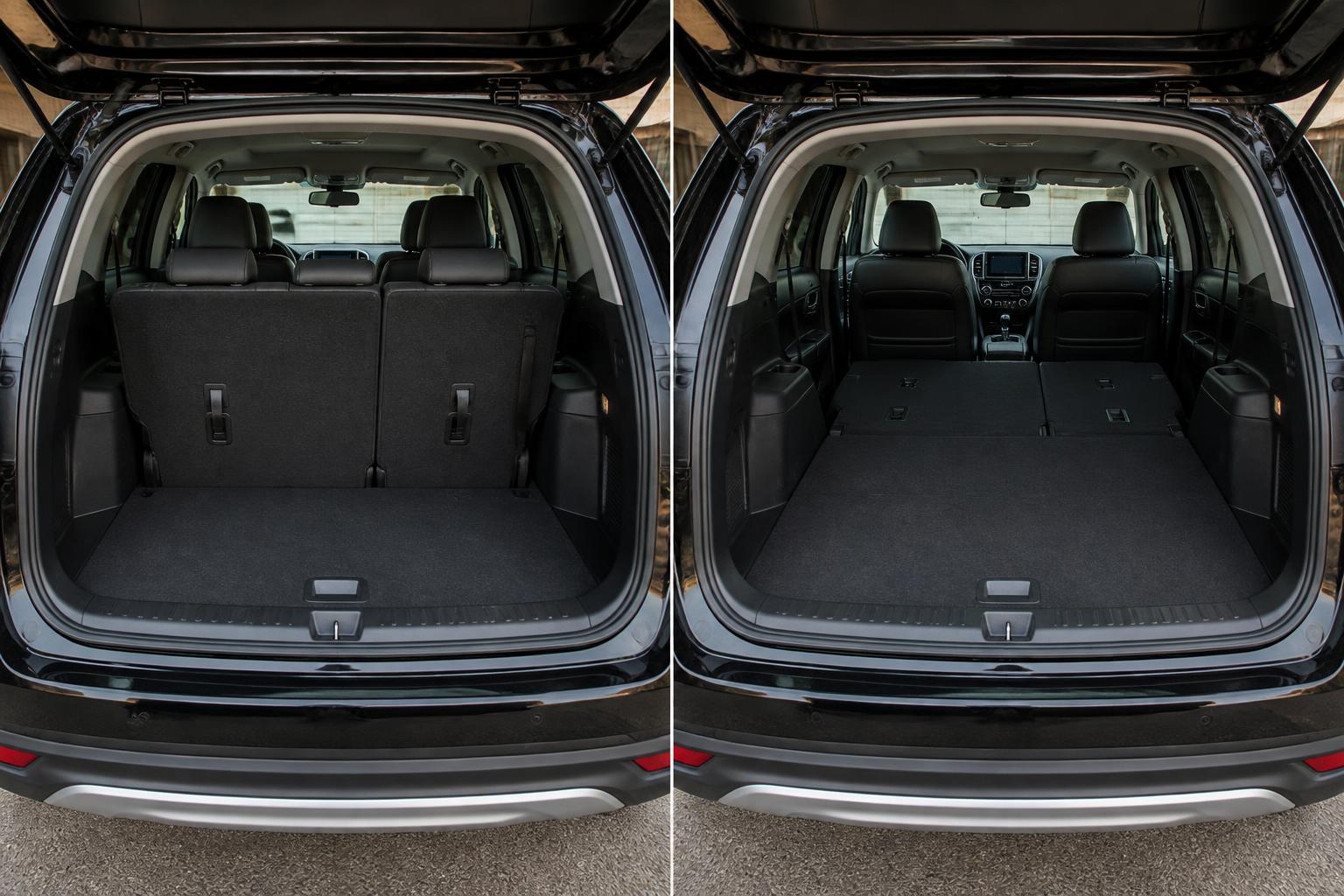
- Best cargo capacity: Hyundai Tucson – 41.3 cu ft behind second row, 81.3 cu ft folded.
- Best everyday usability: Honda CR-V – lower load floor and wider opening make loading heavy items easier.
- Smallest cargo area: Mazda CX-5 – a trade-off for sportier handling and tighter exterior dimensions.
- Strong runners-up: Rogue and Sportage both offer 74.1 cu ft folded, but the Tucson beats them by 7+ cubic feet.
If you haul bulky items like furniture or large pet crates, the Tucson is the clear choice. If you only need grocery and stroller space, the CR-V provides a better driving position with nearly as much usable room.
Measurement trap: Manufacturers measure cargo differently. Some use SAE J1100 standards (volume to the roof), others publish numbers that include space up to the dashboard. The Tucson’s 81.3 cu ft number reflects the SAE method; if you compare it against brands that measure differently, the gap may appear larger than real-world use proves. Always view the vehicle in person with your actual cargo before buying.
Passenger Volume and Rear Legroom
Passenger volume includes front and rear seat space. Higher numbers mean more room for adults in the back.
| Model | Passenger Volume (cu ft) | Rear Legroom (in) |
|---|---|---|
| Honda CR-V | 102.9 | 40.4 |
| Toyota RAV4 | 98.9 | 37.8 |
| Hyundai Tucson | 105.9 | 41.3 |
| Kia Sportage | 103.8 | 41.3 |
| Subaru Forester | 104.9 | 39.4 |
| Mazda CX-5 | 99.3 | 38.0 |
| Ford Escape | 101.3 | 39.0 |
| Nissan Rogue | 105.4 | 38.5 |
Key takeaways:
- Most passenger space: Tucson (105.9 cu ft), Rogue (105.4 cu ft), and Forester (104.9 cu ft) – best for families or frequent rear-seat passengers.
- Most rear legroom: Tucson and Sportage (both 41.3 in) – enough for tall adults.
- Tightest rear seat: RAV4 (37.8 in) and CX-5 (38.0 in) – test these in person if you carry tall passengers regularly.
- Rear seat comfort clue: The CR-V and Forester have rear seats that recline slightly, which helps on long drives. The CX-5 and Escape have more upright rear seatbacks.
The Rogue’s passenger volume is impressive (105.4 cu ft) given its shorter wheelbase compared to the Tucson — Nissan achieves this with a more upright rear seat angle and thinner front seatbacks, which can reduce comfort on longer trips. Passenger volume numbers don’t tell you everything about seat shape. Ask yourself whether your back-seat riders are small children (fine in any model) or adults who will notice angles and thigh support.
Ground Clearance
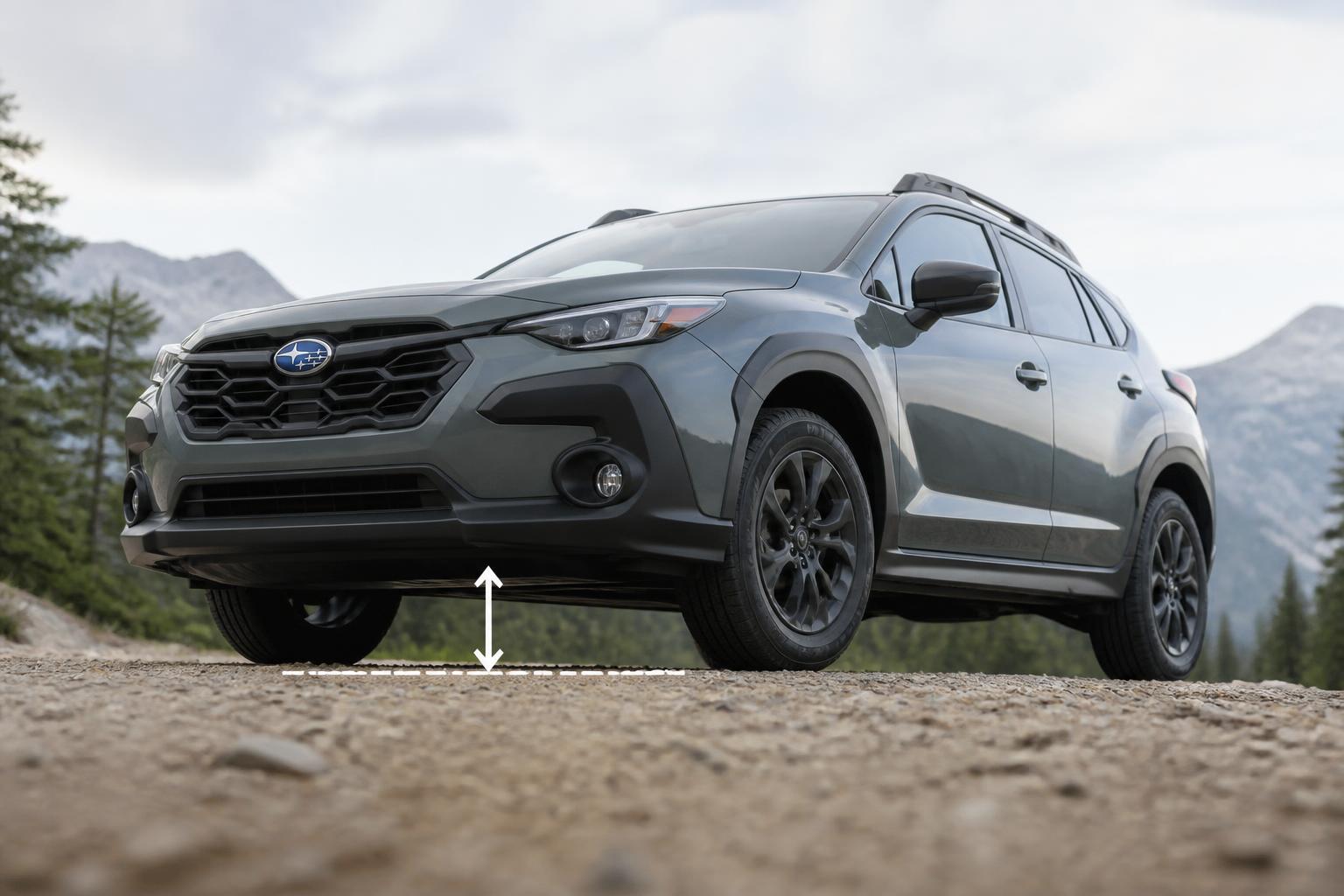
Higher ground clearance helps on snowy roads, gravel driveways, and light trails. It also raises the step-in height, which can affect ease of entry for shorter passengers and seniors.
| Model | Ground Clearance (in) |
|---|---|
| Subaru Forester | 8.7 |
| Toyota RAV4 (Adventure/TRD) | 8.6 (select trims) |
| Honda CR-V | 7.8 |
| Hyundai Tucson | 6.9 |
| Kia Sportage | 7.1 |
| Mazda CX-5 | 7.6 |
| Ford Escape | 7.3 |
| Nissan Rogue | 7.3 |
Key takeaways:
- Highest standard clearance: Subaru Forester (8.7 in) – the safest choice for unplowed roads or gravel.
- Close second: RAV4 Adventure and TRD trims (8.6 in), but you must buy a specific trim to get it. The standard RAV4 sits around 8.4 inches.
- Lowest clearance: Hyundai Tucson (6.9 in) – sufficient for snow and light off-roading but not for serious trail use.
- Entry trade-off: Each inch of added ground clearance raises the step-in height by roughly the same amount. The Forester’s 8.7 inches means hip-level entry is higher, which can be harder for shorter drivers or those with limited mobility. The Tucson’s lower stance makes it easier to slide in and out.
If you live on a road that doesn’t get plowed, that extra inch or two from the Forester or RAV4 can mean the difference between driving through and calling a tow truck. If you or a family member struggles with entry, test the step-in height in person — spec sheets don’t capture door sill width or pillar placement.
Key Takeaways for Compact SUV Shoppers
When you combine all measurements, three distinct groups emerge:
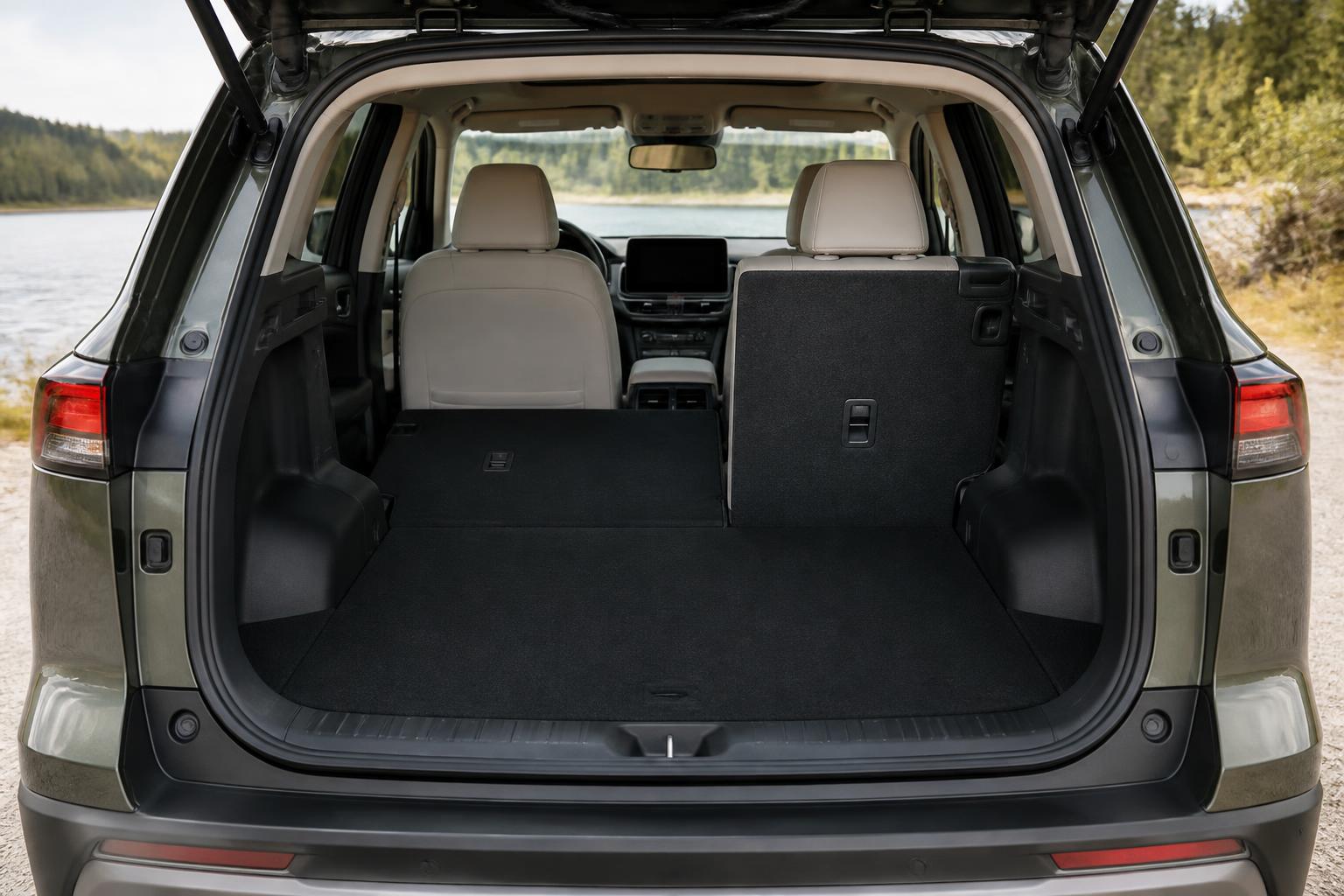
- Best cargo capacity: Hyundai Tucson – 41.3 cu ft behind second row, 81.3 cu ft folded. The CR-V (39.3 / 76.0) offers a lower load floor and wider opening that many owners prefer for daily use. Choose the Tucson if you maximize cubic feet; choose the CR-V if ease of loading matters more.
- Best passenger comfort: The Tucson, Rogue, and Forester all offer 104+ cubic feet of passenger volume. The Forester wins on visibility (large windows, low beltline) and reclining rear seats. The Rogue wins on storage cubbies and clever seat folding. The Tucson wins on outright rear legroom (41.3 in).
- Easiest to park and maneuver: Mazda CX-5 – shortest length (179.1 in) and narrowest body (72.6 in). The CX-5 also has the best turning circle in the segment, making U-turns and tight parking easier. The Forester is the least parking-friendly due to its height and boxy shape.
- Best ground clearance: Subaru Forester – standard 8.7 inches across all trims. If unplowed roads or gravel are part of your weekly routine, this is the safest choice. The RAV4 Adventure/TRD trims match within 0.1 inch but you must buy a specific trim to get it.
- Smallest overall footprint: CX-5. Just confirm that your rear passengers are comfortable with 38 inches of legroom. If they are, the CX-5 delivers the best driveability and fuel economy in this segment.
No single compact SUV wins every category. If cargo volume is your top priority, go with the Tucson or CR-V. If passenger comfort matters most, test the Tucson, Rogue, or Forester. For a blend of driving enjoyment and reasonable space, the CX-5 or Escape are solid options. Visit a dealer with your actual gear — a stroller, a dog crate, luggage for a weekend trip — and you will quickly see which spec-sheet advantage translates into real convenience.
Video Walkthrough of Compact SUV Cargo Spaces
See the differences in real life. Our side-by-side video shows how each model’s rear seats fold, the shape of the cargo area, and the step-over height. Pay attention to whether the folded seats create a flat floor (the CR-V and Forester do; the CX-5 and RAV4 have a slight hump) and whether the opening is wide enough for bulky items.
[Link to video]
Frequently Asked Questions
Which compact size SUV has the most cargo space?
The Hyundai Tucson leads with 41.3 cubic feet behind the second row and 81.3 cubic feet with the seats folded, making it the current cargo space champion among compact SUVs.
What is the easiest car for seniors to get in and out of?
The Subaru Forester offers the highest ground clearance (8.7 inches) combined with relatively low step-in height and large door openings, but the Honda CR-V has a very low load floor and wide doors that many find easiest for entry and exit. Seniors should test both and check the door sill height in person.
What is considered a compact size SUV?
A compact SUV typically measures between 175 and 187 inches in length, with a wheelbase of 103–110 inches and seating for five passengers. They are smaller than midsize SUVs like the Toyota Highlander or Ford Explorer but larger than subcompact SUVs like the Honda HR-V or Mazda CX-30.
What is the most roomy compact SUV?
The Hyundai Tucson offers the most combined cargo volume and passenger volume (105.9 cubic feet) among compact SUVs, making it the most roomy overall. The Nissan Rogue is a close second in passenger volume (105.4 cubic feet) but has less cargo space than the Tucson.
Explore This Topic
Related guides in this cluster:
- Midsize Suv Dimensions Cargo Space Compared
- Fullsize Suv Dimensions Cargo Space Compared
- Luxury Suv Dimensions Cargo Space Compared

Greedy Wheels is the founder and lead editor at Wheels Greed. With over 15 years of hands-on automotive experience — from rebuilding engines in a home garage to managing fleet maintenance for a regional logistics company — he brings real-world mechanical knowledge to every guide.
His work has been featured in automotive forums, owner communities, and dealership training materials. When he’s not researching the latest car owner questions, you’ll find him at a local track day, wrenching on his project car, or testing the newest OBD2 diagnostic tools.
At Wheels Greed, every article is reviewed against manufacturer service manuals, NHTSA bulletins, and verified owner reports. No AI-generated fluff. No guesswork. Just practical answers from someone who has turned the wrench.