Car Brand Origins: Logos, Founders, and the Stories Behind Every Brand
The fastest way to learn a car brand’s story is to look at its logo and trace who founded it and where. Each badge has a reason behind its shape, color, or symbol—whether it’s a family crest, a star cluster, or an ancient iron mark. This guide gives you the key facts for every major brand: the founder, founding year and location, what the logo means, and how the brand evolved.
Before you dive in, have a clear image of the logo or the car’s badge in front of you. If you’re trying to identify a specific vintage car, check the badge design for subtle changes that can pinpoint the model year. And if the logo doesn’t match any of these descriptions, verify with a manufacturer archive or an enthusiast forum—don’t guess.
Car Brand” /> Origins: Logos, Founders, and the Stories Behind Every Brand
What the Logo Tells You About the Brand
Most car logos fall into one of a few categories:
- Family or location crests (Cadillac, Porsche, Buick)
- Initials or wordmarks (Ford, Honda, Nissan)
- Abstract symbols (BMW, Audi, Subaru)
- Industry or heritage references (Volvo iron mark, Mercedes star)
The shape, color, and design often hint at the country of origin. European logos tend to use shields or crests. Japanese logos favor clean geometric shapes. American logos lean toward bold wordmarks or recognizable icons. Korean brands use sleek, modern fonts.
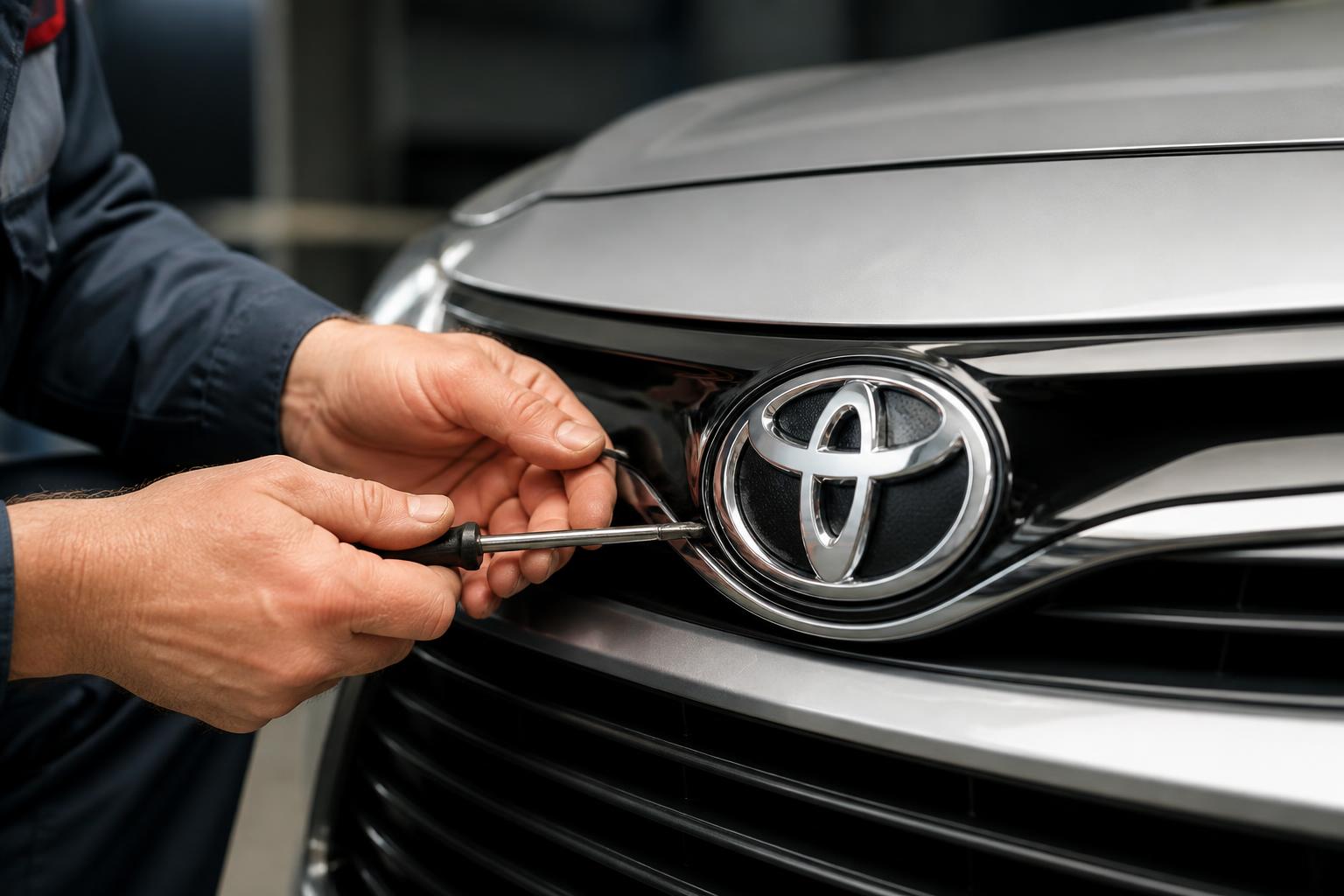
If you see a logo with a crest, the brand likely traces its roots to a European family or city. If you see a star or celestial symbol, the name may reference mythology or constellations. If you see a wordmark inside an oval, the brand is probably American or Korean.
The Stories Behind Every Major Brand
Japanese Brands: Precision, Innovation, and Unexpected Beginnings
Toyota
Founded: 1937 in Toyota City, Japan, by Kiichiro Toyoda
Origin story: Started as a division of Toyoda Automatic Loom Works, a textile machinery company. The name changed from Toyoda to Toyota because the new name requires eight brush strokes (a lucky number) and sounded distinct from the family name.
Logo meaning: Three ellipses forming a T shape—the two inner ellipses represent the heart of the driver and the car; the outer ellipse represents global reach. Introduced in 1989.
Honda
Founded: 1948 in Hamamatsu, Japan, by Soichiro Honda
Origin story: First product was motorized bicycles. The first car, the T360 mini truck, arrived in 1963.
Logo meaning: A stylized H that also looks like a seated person with arms raised, meant to be welcoming and confident. Current badge from 1981.
Subaru
Founded: 1953 in Tokyo, Japan, by Kenji Kita and five other companies merging to form Fuji Heavy Industries
Origin story: Subaru is the Japanese name for the Pleiades star cluster. First car was the Subaru 1500 in 1954.
Logo meaning: Six stars—one large (representing Fuji Heavy Industries) and five smaller (the original five merging companies). The cluster also references the Taurus constellation.
Mazda
Founded: 1920 in Hiroshima, Japan, as Toyo Cork Kogyo (a cork-making company). Jujiro Matsuda took over in 1927.
Origin story: Began building vehicles in 1931 with a three-wheeled truck. Name comes from Ahura Mazda, the Zoroastrian god of wisdom, and echoes founder Matsuda’s surname.
Logo meaning: Current logomark (1997) shows stylized wings in a V shape that forms an M, representing creativity and forward motion.
Nissan
Founded: 1933 in Yokohama, Japan, by Yoshinosuke Aikawa, Masujiro Hashimoto, and Kenjiro Den
Origin story: Started as a holding company combining Datsun production and American technology. Name means “Japan Industries.”
Logo meaning: Simple wordmark inside a circle. Current design (2020) uses thin-line modern font. No separate icon.
Lexus
Founded: 1989 in Nagoya, Japan, as Toyota’s luxury division
Origin story: Developed in secret over six years with a $1 billion budget. The LS 400 launched at the 1989 Detroit Auto Show and set new standards for quietness and reliability.
Logo meaning: Stylized L inside an oval. The design was a result of an internal competition—the L is drawn with a precise curve that suggests a sense of motion and precision. First appeared in 1989.
American Brands: From Bicycles to Muscle Cars
Ford
Founded: 1903 in Dearborn, Michigan, by Henry Ford
Origin story: First car was the Model A (1903). Introduced the moving assembly line in 1913, making the Model T affordable.
Logo meaning: Script oval based on Henry Ford’s signature. Blue oval added in 1927; script dates to 1909.
Chevrolet
Founded: 1911 in Detroit, Michigan, by Louis Chevrolet (Swiss race car driver) and William C. Durant (founder of General Motors)
Origin story: Durant wanted a competitor for Ford’s Model T. First Chevy car, the Series C Classic Six, was actually a luxury model.
Logo meaning: The bowtie. Most common story says Durant saw the design on a Paris hotel wallpaper in 1908 and tore a piece off. First used in 1913 and largely unchanged.
Cadillac
Founded: 1902 in Detroit, Michigan, by Henry Leland
Origin story: Named after Antoine de la Mothe Cadillac, the French explorer who founded Detroit. Aimed at precision-engineered luxury cars. Joined GM in 1909.
Logo meaning: Combines the Cadillac family coat of arms and the crest of La Mothe Cadillac’s family. The shield features a merlette (a duck-like bird that always flies forward) and vertical stripes representing courage and purity.
Buick
Founded: 1899 in Detroit, Michigan, by David Dunbar Buick
Origin story: Buick struggled until William C. Durant took over in 1904 and used it as the foundation for General Motors. First car: Model B (1904).
Logo meaning: Current trishield (since 1959) shows three shields representing the three Buick models of the time: LeSabre, Invicta, and Electra. Based on the Buick family coat of arms.
Chrysler
Founded: 1925 in Auburn Hills, Michigan, by Walter Chrysler after reorganizing the failing Maxwell Motor Company
Origin story: First car, the Chrysler Six (1924), was notable for its high-compression engine.
Logo meaning: Winged emblem. Wings represent forward-looking, aerodynamic design philosophy. Modern version is silver wings on blue background.
Dodge
Founded: 1900 in Detroit, Michigan, by brothers Horace and John Dodge
Origin story: Originally supplied engine components to other automakers. Began building their own cars in 1914. First Dodge: Model 30.
Logo meaning: Ram’s head since 1993 (earlier: interlocking D). The ram symbolizes toughness and strength.
RAM
Founded: 2009 as a separate brand, spun off from Dodge
Origin story: Named after the Dodge Ram truck (first produced in 1981). The hood ornament was a ram’s head; the name also suggests “Reliable, Affordable, Mighty.”
Logo meaning: Stylized ram’s head, simplified from the original hood ornament. Minimalist metallic design.
Jeep
Founded: 1941 as a military vehicle built by Willys-Overland, Ford, and Bantam during WWII
Origin story: Name likely came from “GP” (General Purpose) military designation. First civilian Jeep: CJ-2A (1945).
Logo meaning: Wordmark with two trapezoidal grille slits in the letter J, referencing the iconic seven-slot grille of the Jeep Wrangler. First used in the 1960s.
German Brands: Engineering, Prestige, and Unexpected Origins
BMW
Founded: 1916 in Munich, Germany, as Bayerische Flugzeugwerke (aircraft engine manufacturer). First product: BMW IIIa aircraft engine. Shifted to motorcycles after WWI, then automobiles in 1928.
Logo meaning: Circle divided into four quadrants (white and blue) from the Bavarian flag. Often mistakenly described as a spinning propeller—that myth came from a 1929 ad. Actually the roundel of the predecessor Rapp Motorenwerke.
Mercedes-Benz
Founded: 1926 merger of Daimler’s and Benz’s companies (both developed early automobiles in the 1880s). The name Mercedes came from Emil Jellinek, who named race cars after his daughter Mercédès.
Logo meaning: Three-pointed star represents Daimler’s ambition for motorization on land, water, and air. First appeared on a car in 1909. Circle and name added in 1926 after merger.
Audi
Founded: 1909 in Zwickau, Germany, by August Horch. Horch had previously founded a company called Horch; after leaving, he translated his last name (“horch” = “hark”) into Latin: Audi.
Logo meaning: Four interlocking rings representing the 1932 merger of Audi, DKW, Horch, and Wanderer. Symbolizes unity and partnership.
Volkswagen
Founded: 1937 in Wolfsburg, Germany, by the German Labor Front. Car designed by Ferdinand Porsche as a “people’s car” (Volkswagen). The Beetle design was the result.
Logo meaning: V inside a W inside a circle. Current flat design (2019). Original 1937 logo had a gear-like circle with a swastika, quickly changed after WWII.
Porsche
Founded: 1931 in Stuttgart, Germany, by Ferdinand Porsche as a design consultancy. First Porsche car: 356 (1948), based on Volkswagen components.
Logo meaning: Black horse on gold background with “Stuttgart.” The horse is the city’s symbol (Stuttgart was a horse-breeding center). Red and black stripes from the state of Württemberg. Logo first appeared in 1952.
Korean Brands: Late Starters, Global Players
Hyundai
Founded: 1947 in Seoul, South Korea, by Chung Ju-yung as a construction company. Hyundai Motor Company established in 1967. First car: Cortina (licensed from Ford, 1968). First independent design: Pony (1975).
Logo meaning: Stylized H inside an oval. The H also represents two silhouettes—a manufacturer and a customer shaking hands. Oval suggests global reach. Introduced in 1990.
Kia
Founded: 1944 in Seoul, South Korea, as a manufacturer of bicycle parts and steel tubing. Built Korea’s first bicycle (1951) and first car under license from Mazda (Brisa, 1974).
Logo meaning: Brand name in stylized font inside an oval. Current logo (2021) is a continuous flowing line spelling K-I-A, representing symmetry, rhythm, and motion.
Swedish Brands: Safety and Practicality
Volvo
Founded: 1927 in Gothenburg, Sweden, by Assar Gabrielsson and Gustaf Larsson. Started as a subsidiary of SKF, a ball bearing manufacturer. First car: ÖV4 (“Jakob”).
Logo meaning: Circle with an arrow pointing diagonally upward—the “iron mark,” ancient symbol for the element iron. Represents strength, durability, and Swedish steel industry. “Volvo” means “I roll” in Latin. The diagonal stripe across the grille was originally a mounting bracket.
What to Do If the Logo Doesn’t Match
Sometimes a car badge doesn’t match the description above. This can happen for several reasons:
- Aftermarket modifications – The owner replaced the badge with a custom or replica emblem. Look for mismatched paint, glue residue, or non-standard fastener holes.
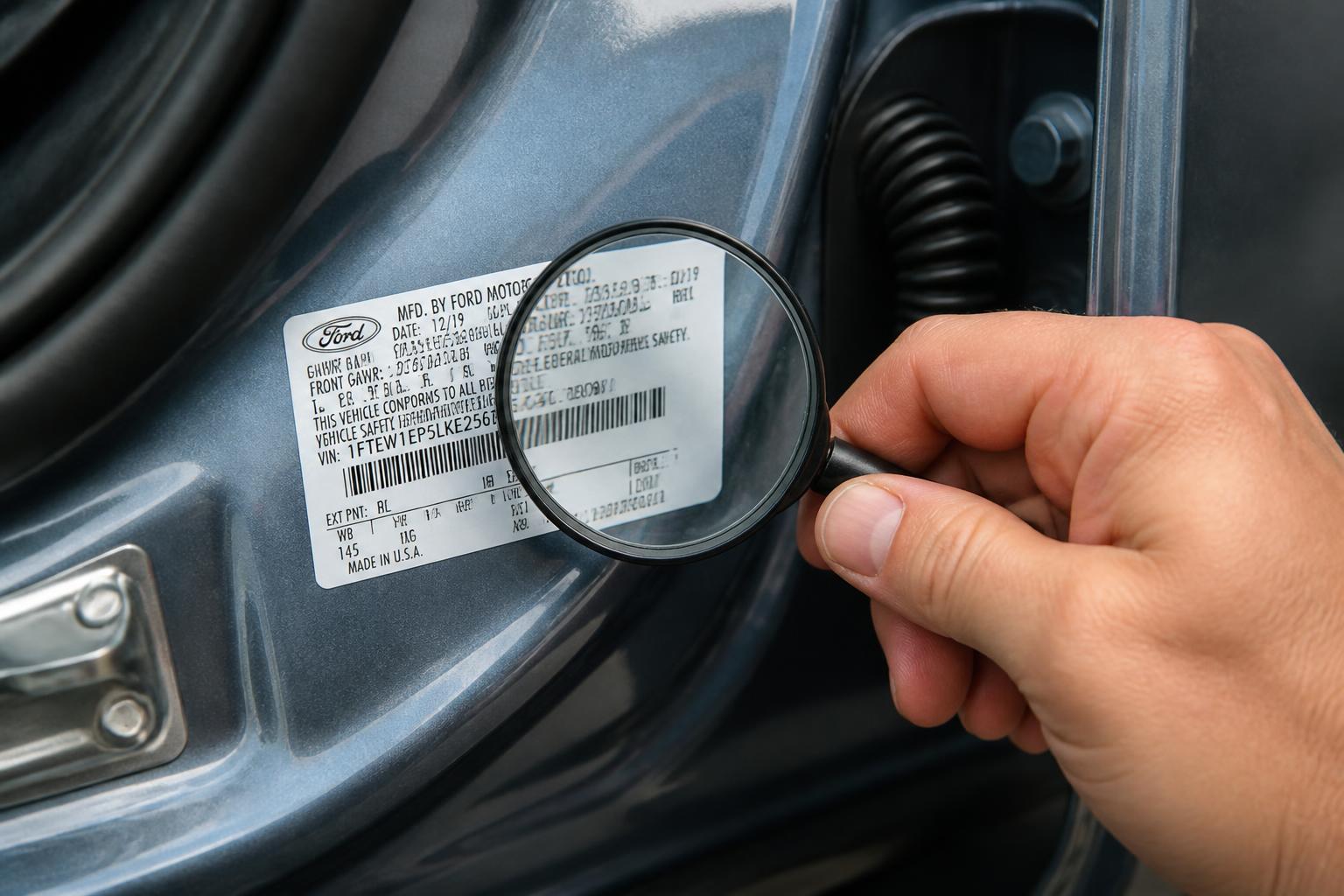
- Model-year badge change – Logos change at specific model-year updates. For example, Toyota updated its logo in 1989; a 1988 Camry would have the older wordmark badge. Check a model-specific forum or the manufacturer’s historical archive.
- Rebadged vehicles – Some cars are sold under different brands in different markets (e.g., a Daewoo sold as a Chevrolet in the US). The badge on the grille may not match the historical brand origin. Check the VIN to confirm the actual manufacturer.
What to do next: If you’re trying to authenticate a vintage car for restoration or sale, stop guessing and verify. Find the VIN and decode it using a manufacturer database or a reputable decoding service. If the badge is clearly wrong and the VIN matches a different brand, consult an expert at a marque-specific club or a professional appraiser. Do not assume the badge is correct just because it looks old.
How to Confirm the Brand’s Origin Yourself
Once you think you’ve identified the brand based on the logo or the story, confirm it in two steps:
1. Check the founder’s location and year – Look up the brand’s official founding date and place (e.g., Ford Motor Company was incorporated in 1903 in Dearborn, Michigan). If the badge says “Ford” but the car’s build date is 1905, that matches. If the car is from 1920 and says “Mercedes,” it should be “Mercedes-Benz” after the 1926 merger, so be aware of the correct era.
2. Compare the logo design to known changes – Use a brand timeline (many are available online from manufacturer heritage sites). For example, the BMW logo changed slightly in 1997 (added three-dimensional shading) and again in 2020 (flat design). If your badge has a 3D look, it’s from 1997–2019.
Successful confirmation looks like: The badge matches one of the known logo iterations for that brand, and the car’s VIN or build date places it within the correct year range. The car’s country of assembly should also align with the founder’s location.
Common Mistake: Confusing Similar Logos
One realistic failure mode is mixing up the Subaru logo with other star-based badges. Subaru’s six-star cluster can be mistaken for the single star of Suzuki or the three-pointed star of Mercedes-Benz at a glance. The key difference is the number of points and the arrangement: Subaru’s six stars form a tight cluster, while Suzuki uses a single capital S and Mercedes uses a three-pointed star inside a circle.
If you see stars on a badge, count them. A cluster of six pointed stars means Subaru. A single three-pointed star inside a circle is Mercedes-Benz. A single five-pointed star is not a major car brand logo and likely indicates an aftermarket emblem. Taking a close photo and comparing it to an official brand logo guide is the surest way to avoid this mistake.
Explore This Topic
Related guides in this cluster:
- How to Spell and Pronounce Car Brand Names Correctly
- Car Fuel Economy Guide: MPG, Tank Size, and Fuel Type by Brand

Greedy Wheels is the founder and lead editor at Wheels Greed. With over 15 years of hands-on automotive experience — from rebuilding engines in a home garage to managing fleet maintenance for a regional logistics company — he brings real-world mechanical knowledge to every guide.
His work has been featured in automotive forums, owner communities, and dealership training materials. When he’s not researching the latest car owner questions, you’ll find him at a local track day, wrenching on his project car, or testing the newest OBD2 diagnostic tools.
At Wheels Greed, every article is reviewed against manufacturer service manuals, NHTSA bulletins, and verified owner reports. No AI-generated fluff. No guesswork. Just practical answers from someone who has turned the wrench.