Who is the current owner and parent company of the subaru motor company, a well-known japanese automotive manufacturer?
Subaru Motor Company, recognized for its innovative engineering and all-wheel-drive technology, has a rich history in the automotive industry. Currently, it’s a subsidiary of Subaru Corporation, which oversees a diverse range of operations beyond just automotive manufacturing. The ownership structure of Subaru Corporation has evolved over the years, influenced by various market dynamics and strategic decisions. As the brand continues to grow, it’s focusing on sustainable practices and cutting-edge technologies to meet changing consumer demands. Understanding the current ownership and its implications can provide valuable insights into Subaru’s brand identity and future direction.
Subaru Ownership at a Glance
Readers usually come to this topic with one direct question and one hidden one. The direct question is who owns Subaru. The hidden question is whether Subaru is fully independent or whether Toyota’s stake changes how the brand operates in the United States.
| Question | Short answer | Why readers ask it |
|---|---|---|
| Who owns Subaru? | Subaru’s automotive business sits under Subaru Corporation. | This is the clean parent-company answer most searchers want first. |
| Does Toyota own Subaru? | Toyota has had an ownership stake, but Subaru is not simply a Toyota brand. | Readers often confuse an investment stake with total ownership. |
| Does that change Subaru’s identity? | No. Subaru still operates with its own brand position, product strategy, and buyer audience. | This is the practical meaning behind the ownership search. |
What this means for U.S. buyers
- Ownership structure matters less than whether Subaru continues to deliver the features, reliability, and all-wheel-drive positioning buyers expect.
- The Toyota relationship is relevant for partnership context, but it does not mean Subaru shoppers are simply buying a rebadged Toyota.
- Many readers asking this question next need manufacturing, model, or feature-support details rather than more corporate background.
Related Subaru guides
- Where Subaru Outback models are built
- mySubaru app subscription cost
- How to turn off auto start-stop in a Subaru Outback

This Subaru Ownership Page Now Covers the Main Duplicate Questions
The duplicate Subaru ownership URLs were all circling the same intent with slightly different wording: who owns Subaru now, what company sits above Subaru, and how Toyota fits into the picture. This page now acts as the main answer for those overlapping searches.
| Duplicate question pattern | Now covered here | Reason for consolidation |
|---|---|---|
| Who owns Subaru? | Yes | The wording changes, but the parent-company answer stays the same. |
| Who is the current owner of Subaru Motor Company? | Yes | This is the same ownership intent phrased more formally. |
| Does Toyota own Subaru? | Yes | That question belongs inside the main ownership explanation rather than on separate near-duplicate pages. |
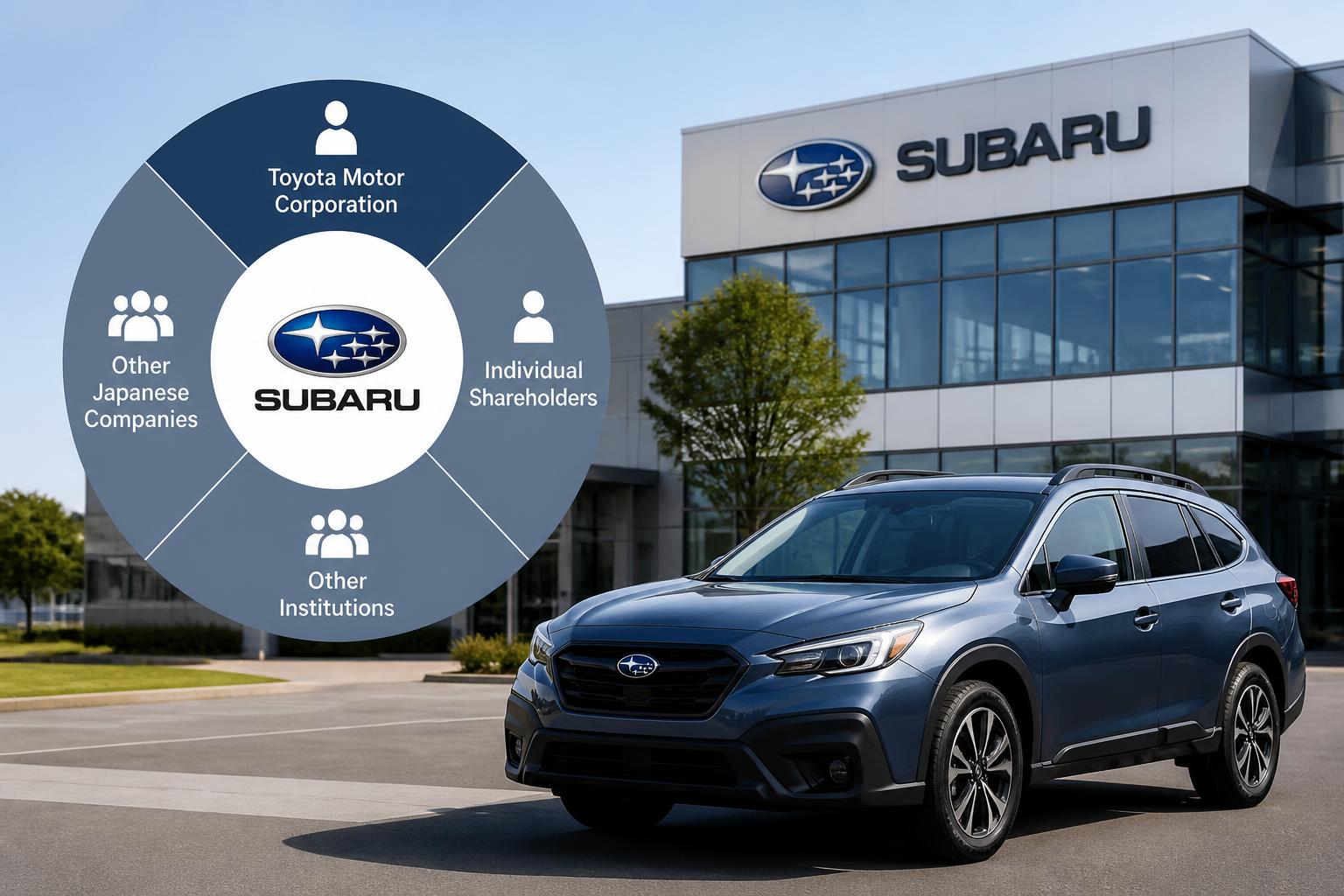
Ownership Structure of Subaru Motor Company
Subaru Motor Company’s ownership structure is defined by its relationship with its parent company and diverse shareholder composition. It’s crucial to understand who currently holds the reins and the distribution of shares among various stakeholders. This sets the stage for a closer look at the current parent company and the shareholder composition.
Current Parent Company
The current parent company of Subaru Motor Company is Toyota Motor Corporation, which holds a significant stake in the automaker. Toyota’s involvement has been pivotal in shaping Subaru’s strategic direction. It’s not just a financial investment; it’s also about shared technology and resources. Both companies benefit from collaboration in various areas, including research and development. This partnership illustrates a strong bond that enhances Subaru’s competitiveness in the automotive market.
Shareholder Composition
Shareholder composition reflects a mix of institutional investors and individual stakeholders, highlighting the diverse interests in the company. It’s evident that large financial institutions hold significant stakes, influencing corporate decisions. Individual investors contribute to the broader ownership landscape, reflecting personal investment in the brand. Together, these groups create a dynamic balance of power within Subaru Motor Company. Ultimately, this diversity fosters a multifaceted approach to governance and strategy.
History of Subaru Corporation
Subaru Corporation’s history is marked by its evolution from a small manufacturer into a global automotive player. It’s gone through significant changes over the decades, reflecting advancements in technology and shifts in ownership. Now, it’s time to explore the early beginnings of Subaru, key milestones in development, and recent corporate changes.
Early Beginnings of Subaru
In the early beginnings of the company, it focused on developing innovative technologies and unique designs that would set it apart in the automotive industry. Subaru’s commitment to engineering excellence led to the creation of its first passenger car, the Subaru 360, which gained popularity in Japan. The company quickly established a reputation for reliability and practicality, appealing to a broad consumer base. Over the years, it expanded its offerings, incorporating all-wheel drive technology that became a hallmark of its brand. These foundational steps paved the way for Subaru’s growth into a recognized name in global automotive markets.
Key Milestones in Development
Key milestones in development have shaped the company’s identity and direction over the years. Subaru’s introduction of the iconic All-Wheel Drive system in the 1970s set it apart in the automotive market. The launch of the Subaru Legacy in 1989 solidified its reputation for producing reliable, family-friendly vehicles. In the 2000s, Subaru embraced environmental initiatives by introducing hybrid models and aiming for sustainability. More recently, its partnership with Toyota has fostered innovation and expanded its global reach.
Recent Corporate Changes
Recent corporate changes have significantly impacted Subaru Corporation’s strategic direction and market positioning. The company’s focus has shifted towards electric vehicle development, aligning with global trends. It’s also entered new partnerships to enhance technological capabilities and expand its market reach. Financial restructuring has allowed for increased investment in research and development. As a result, Subaru’s brand identity is evolving to meet changing consumer demands and environmental standards.
Key Developments Under Subaru Corporation
Subaru Corporation’s made significant strides in the automotive industry over recent years. It’s focused on innovation through recent product launches, strategic partnerships, and sustainability initiatives. These developments reflect the company’s commitment to enhancing its market presence and environmental responsibility.
Recent Product Launches
The company’s latest product launches showcase its commitment to blending advanced technology with customer needs. Subaru’s introduced several models that emphasize safety features and fuel efficiency. These vehicles incorporate cutting-edge technology, appealing to environmentally conscious consumers. Additionally, the recent designs reflect a modern aesthetic that resonates with a younger demographic. Overall, Subaru’s new offerings highlight its dedication to innovation and customer satisfaction.
Strategic Partnerships Established
Strategic partnerships have played a vital role in enhancing the company’s competitive edge and expanding its reach in the global market. Subaru’s collaborations with technology firms have led to advancements in vehicle safety and autonomous driving features. These alliances allow Subaru to leverage shared resources and expertise, driving innovation forward. Additionally, partnerships with environmental organizations have strengthened Subaru’s commitment to sustainability initiatives. Overall, these strategic relationships have positioned Subaru favorably in an increasingly competitive automotive landscape.
Sustainability Initiatives Implemented
Sustainability initiatives have become a central focus for the company, showcasing its dedication to reducing environmental impact and promoting eco-friendly practices. It’s invested in renewable energy sources for its manufacturing plants, significantly lowering carbon emissions. The company’s also implemented a robust recycling program aimed at minimizing waste throughout the production process. Additionally, Subaru’s committed to developing fuel-efficient vehicles that meet stringent environmental standards. These efforts highlight Subaru’s broader vision of achieving a sustainable future within the automotive industry.
Strategic Direction and Future Plans
Future plans include a stronger focus on electric vehicle development and enhanced safety technologies. The company’s aiming to expand its electric lineup by introducing new models in the coming years. It’s also investing in advanced driver-assistance systems to improve overall vehicle safety. Subaru’s committed to sustainability, seeking to reduce its carbon footprint across all operations. The brand’s exploring partnerships with technology firms to enhance connectivity features in its vehicles. Consumer feedback is being prioritized to ensure the new models meet market demands. Overall, Subaru’s strategic direction reflects a proactive approach to future automotive trends.
Impact of Ownership on Subaru’s Brand Identity
Ownership changes have influenced Subaru’s brand identity, shaping its reputation in the automotive market. The company’s ties with Toyota have brought a focus on innovation and reliability. Subaru’s all-wheel-drive systems became synonymous with adventure and outdoor lifestyle. As a result, its marketing strategies shifted to appeal to a more active demographic. The collaboration has also emphasized safety, aligning Subaru with a reputation for producing secure vehicles. Additionally, Subaru’s commitment to sustainability has been reinforced through shared technologies and practices. Overall, these ownership dynamics have solidified Subaru’s unique position within the competitive landscape of automotive manufacturers.
Frequently Asked Questions
What is the history behind the name "subaru" and its meaning?
The name "Subaru" comes from the Japanese word for the Pleiades star cluster, which is represented in the logo by six stars. It symbolizes the unity of the company’s multiple divisions under the larger umbrella of its parent organization, Fuji Heavy Industries. The company’s origins date back to the 1950s when it first began producing automobiles, and the name reflects its commitment to innovation and collaboration. Over the years, Subaru’s identity has become intertwined with its emphasis on all-wheel drive technology and outdoor lifestyle branding.
How does subaru’s ownership affect its global market strategy?
Subaru’s ownership plays a significant role in shaping its global market strategy. It influences decisions related to resource allocation, technology sharing, and collaborative ventures with other automotive manufacturers. By leveraging its parent company’s strengths, Subaru can enhance its competitiveness in diverse markets. This strategic alignment allows Subaru to adapt to regional demands while maintaining its unique brand identity.
What are the environmental initiatives undertaken by subaru corporation?
Subaru Corporation’s environmental initiatives focus on sustainability and reducing their carbon footprint. They’ve implemented programs aimed at enhancing fuel efficiency and promoting the use of eco-friendly materials in their vehicles. Additionally, they’re committed to reducing waste and increasing recycling efforts within their production processes. By prioritizing these initiatives, Subaru’s aiming to contribute positively to the environment while meeting the demands of eco-conscious consumers.
Conclusion
In summary, Subaru Motor Company operates under the ownership of Subaru Corporation, with Toyota Motor Corporation playing a crucial role as its parent company. This partnership not only drives innovation and resource sharing but also solidifies Subaru’s position in the automotive landscape. As the company continues to evolve, its commitment to sustainability and eco-friendly practices remains at the forefront of its mission. The integration of outdoor lifestyle branding aligns with consumer values, enhancing Subaru’s appeal to adventurous drivers. Overall, Subaru’s strategic direction reflects a blend of tradition and modernity, positioning it favorably for future growth.
If you’re interested in exploring the automotive industry further, I highly recommend visiting this insightful page on the Buick Rainier. It delves into the factors contributing to its longevity and overall performance, providing valuable information for car enthusiasts. Check it out here: Understanding the Longevity of a Buick Rainier.

Greedy Wheels is the founder and lead editor at Wheels Greed. With over 15 years of hands-on automotive experience — from rebuilding engines in a home garage to managing fleet maintenance for a regional logistics company — he brings real-world mechanical knowledge to every guide.
His work has been featured in automotive forums, owner communities, and dealership training materials. When he’s not researching the latest car owner questions, you’ll find him at a local track day, wrenching on his project car, or testing the newest OBD2 diagnostic tools.
At Wheels Greed, every article is reviewed against manufacturer service manuals, NHTSA bulletins, and verified owner reports. No AI-generated fluff. No guesswork. Just practical answers from someone who has turned the wrench.