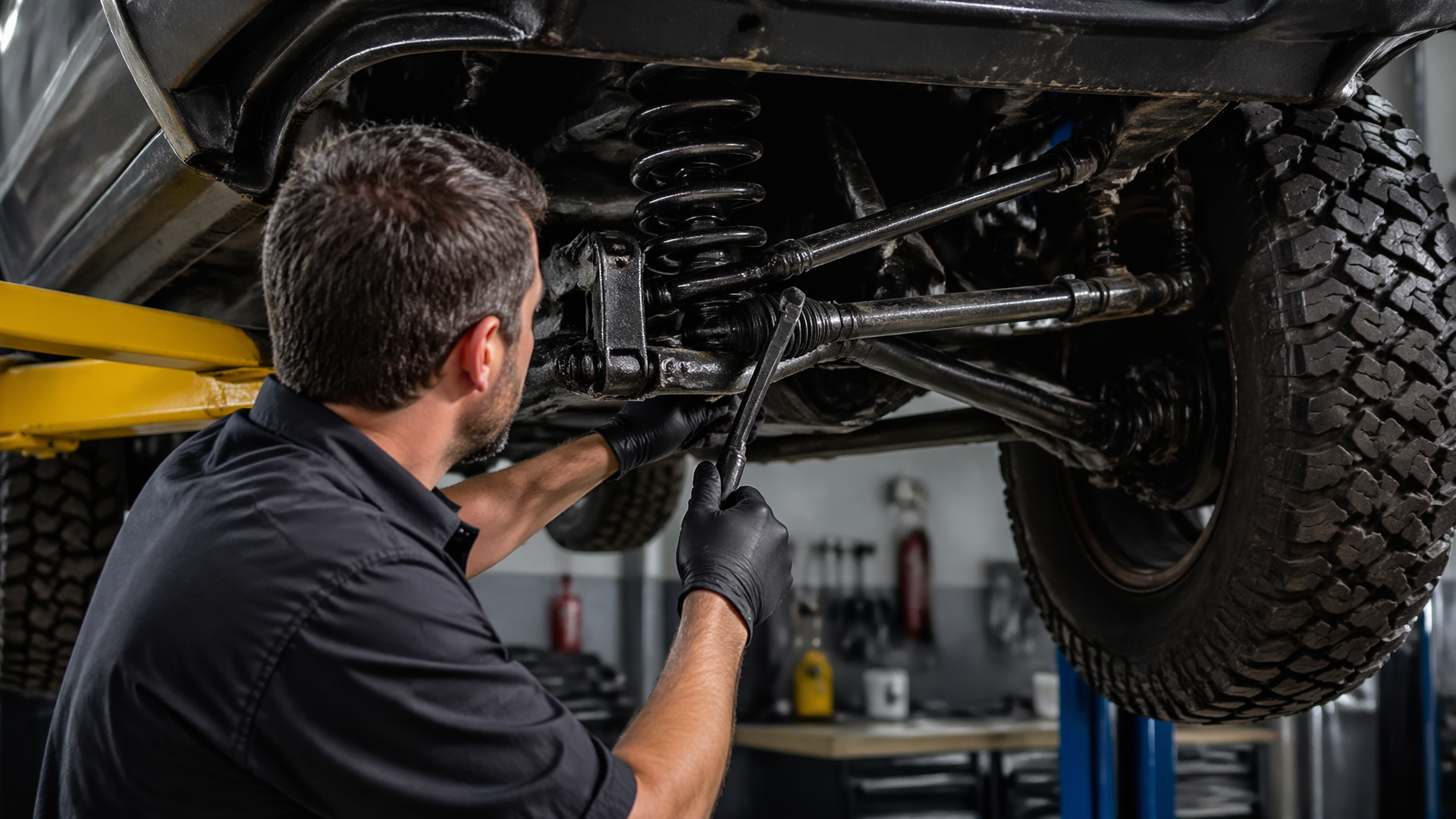
Understanding the Ford Death Wobble and How to Fix It
The “death wobble” in Ford trucks is a frightening and dangerous phenomenon characterized by violent, uncontrollable shaking of the steering wheel and front end, often triggered by hitting a bump or uneven road. This shaking signals a critical issue with worn steering and suspension components that allow excessive play, leading to rapid oscillation. The most effective way to fix it is by identifying and replacing the worn parts, followed by a professional wheel alignment.
Inspecting Potential Causes of the Wobble
A thorough inspection is the first step to pinpointing the worn parts causing the death wobble. Focus on components that allow for pivoting or connecting the suspension.
- Ball Joints: These are primary pivot points for the front wheels. Look for torn rubber boots, grease leakage, or significant movement when a pry bar is used between the control arm and the steering knuckle. Worn ball joints allow the wheel hub to move independently.
- Tie Rod Ends: Connecting the steering rack to the steering knuckles, worn tie rod ends introduce play. Inspect for torn boots and check for up-and-down or side-to-side movement at the ball joint when the wheel is stationary.
- Wheel Bearings: While usually causing humming, severely worn wheel bearings can create instability. Check for play by grasping the tire at the top and bottom and attempting to rock it.
- Control Arm Bushings: Cracked or deteriorated bushings can permit excessive suspension movement. Inspect for visible damage or missing rubber.
- Steering Damper: This shock absorber for the steering can worsen wobble symptoms if it’s failing, though it doesn’t cause the initial wear. Look for leaks or physical damage.
Confirming the Worn Component
To confirm the source, you need to detect the excessive play.
- Jounce and Turn Test: With the vehicle on the ground, have an assistant rapidly turn the steering wheel back and forth (lock to lock) while you observe all suspension and steering linkages for visible looseness or movement.
- Pry Bar Method: Use a pry bar to gently lever against components like ball joints and tie rod ends to detect significant movement.
Repairing and Realignment for Stability
Replacing worn parts is the definitive fix. It is essential to replace these parts in matching pairs (e.g., both left and right ball joints or tie rod ends) to ensure balanced suspension geometry.
- Replacement: This involves safely lifting the vehicle, removing the wheel, disconnecting the worn part, installing the new component, and reassembling. Always use a torque wrench to tighten fasteners to manufacturer specifications.
- Professional Wheel Alignment: After any steering or suspension work, a professional wheel alignment is critical. This recalibrates wheel angles for stable driving and even tire wear.
When Driving Becomes Unsafe
The death wobble is a critical safety issue. If you experience this violent shaking, stop driving the vehicle as soon as it is safe to do so.
- Immediate Hazard: Continuing to drive with death wobble significantly increases the risk of catastrophic failure, such as a steering component breaking, which could lead to a severe accident.
- Seek Professional Diagnosis: While initial inspections can be done by an owner, complex suspension repairs and precise alignments are best handled by a qualified mechanic with specialized tools and expertise.
- Don’t Delay Repairs: Ignoring death wobble symptoms will lead to further damage and more expensive repairs.
Frequently Asked Questions
Q: Can a simple wheel alignment fix the Ford death wobble?
A: No, a wheel alignment alone cannot fix the Ford death wobble. The wobble is caused by physical wear in steering and suspension parts, which must be repaired first; an alignment is a necessary step after those repairs.
Q: How do I know if my Ford truck is experiencing death wobble?
A: The primary sign is a sudden, violent, and uncontrollable shaking or shimmy of the steering wheel and the entire front end. This often occurs at highway speeds, especially after hitting a pothole or uneven road surface.
Q: Are all Ford trucks susceptible to death wobble?
A: While certain Ford trucks, particularly those with solid front axles, have been more commonly associated with death wobble, any vehicle with significantly worn steering and suspension components can develop similar instability. Regular maintenance and inspection are key for all vehicles.

Greedy Wheels is the founder and lead editor at Wheels Greed. With over 15 years of hands-on automotive experience — from rebuilding engines in a home garage to managing fleet maintenance for a regional logistics company — he brings real-world mechanical knowledge to every guide.
His work has been featured in automotive forums, owner communities, and dealership training materials. When he’s not researching the latest car owner questions, you’ll find him at a local track day, wrenching on his project car, or testing the newest OBD2 diagnostic tools.
At Wheels Greed, every article is reviewed against manufacturer service manuals, NHTSA bulletins, and verified owner reports. No AI-generated fluff. No guesswork. Just practical answers from someone who has turned the wrench.