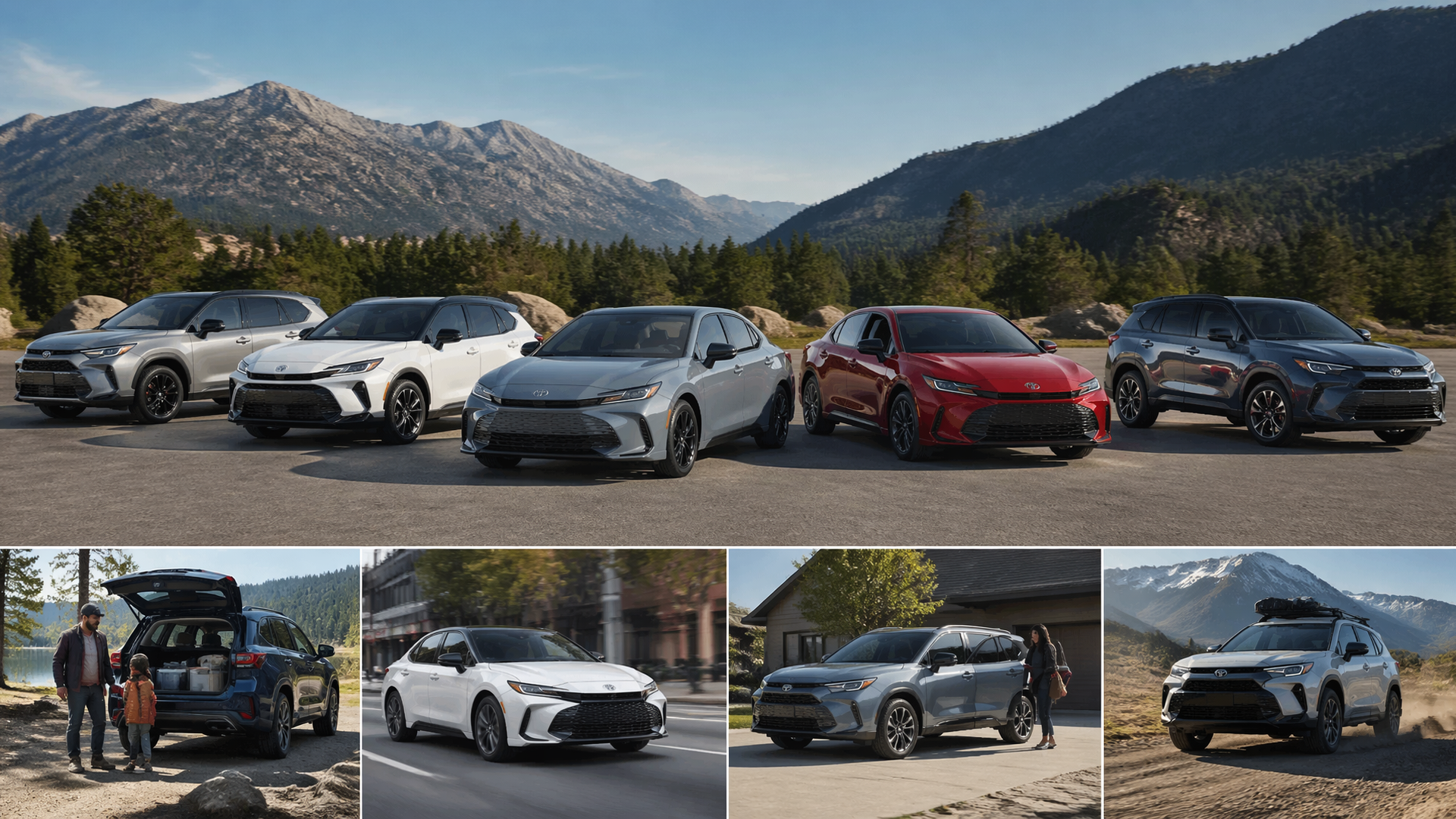
Top 10 Best Selling Toyota Models of 2025
If you’re looking to understand which Toyota models are flying off dealership lots and what that means for your next vehicle purchase, the answer lies in their consistent appeal across diverse buyer needs. The best-selling Toyota models of 2025, largely mirroring recent trends, are characterized by their exceptional reliability, strong resale value, and a broad range of practical options catering to everything from daily commutes to family hauling. This analysis focuses on the core reasons behind their enduring popularity and helps you identify if one of these top performers aligns with your specific requirements, or if another Toyota might be a better fit.
Who the Best-Selling Toyota Models Fit Best
The enduring success of models like the Toyota RAV4, Camry, and Highlander points to a broad appeal for buyers who prioritize dependability and a sensible approach to vehicle ownership. The RAV4, consistently a top performer, is an ideal fit for individuals and small families seeking a versatile compact SUV that balances fuel efficiency with ample cargo space and a comfortable ride for daily errands and weekend getaways. Its reputation for long-term reliability means lower ownership costs over time, making it a smart financial choice for many. Similarly, the Toyota Camry continues to be a go-to for those who need a dependable, comfortable, and fuel-efficient sedan for commuting or family transport. Its blend of a smooth ride, well-appointed interior, and proven track record makes it a no-nonsense choice for drivers who value practicality and peace of mind above all else.
For larger families or those needing more robust hauling capabilities, the Highlander offers a compelling package. Its three-row seating, comfortable interior, and Toyota’s renowned reliability make it a strong contender for families who need space for passengers and gear without compromising on safety or long-term value. These models are particularly well-suited for buyers who may not be chasing the latest automotive trends but instead seek a proven, durable, and sensible vehicle that will serve them reliably for years to come, often with a strong resale value when it’s time to trade up.
Furthermore, the consistent sales figures for these models indicate a strong market segment that values practicality and proven performance. Buyers who have had positive experiences with Toyota’s commitment to quality and durability are likely to remain loyal, making these vehicles a safe and predictable choice. The availability of various trim levels across these popular models also allows for a degree of customization, enabling buyers to select features that best match their budget and lifestyle. For instance, a budget-conscious buyer might opt for a base model RAV4 for its essential functionality, while another might choose a higher trim for enhanced technology and comfort features.
This adaptability, coupled with Toyota’s widespread dealer network for service and support, solidifies the position of these vehicles as top choices for a vast spectrum of consumers who are looking for a dependable, well-rounded, and value-conscious automotive investment. The underlying commonality among these buyers is a desire for a vehicle that simplifies their lives rather than complicating them, offering a reliable solution for their transportation needs day in and day out.
Main Trade-Offs: Practicality vs. Performance and Features
While the best-selling Toyota models excel in reliability and value, a significant trade-off often lies between their focus on practicality and the desire for more exhilarating performance or cutting-edge technology. For example, while the Camry offers a comfortable and efficient sedan experience, it typically doesn’t compete with sportier European sedans in terms of raw acceleration or dynamic handling. Drivers who prioritize a thrilling driving experience or highly engaging road feel might find the Camry a bit too refined or sedate, even in its sportier trim levels. Similarly, the RAV4, while a capable SUV, is designed with a balance of on-road comfort and light off-road capability, not for aggressive off-roading or high-speed cornering.
Those seeking a more rugged, trail-ready SUV might need to look at specialized off-road vehicles, which often come with compromises in fuel economy and on-road comfort. The Highlander, while offering ample space, also represents a trade-off: its larger size and weight, while beneficial for passenger capacity, can impact fuel efficiency and maneuverability compared to smaller SUVs or cars. Drivers who frequently navigate tight urban spaces or are highly sensitive to fuel costs might find its size to be a drawback.
Another key trade-off relates to the feature set and interior luxury compared to premium or luxury brands. While Toyota models are well-equipped with modern conveniences and safety features, they generally do not offer the same level of opulent interior materials, advanced infotainment systems, or exclusive luxury amenities found in vehicles from brands like Lexus, BMW, or Mercedes-Benz. Buyers seeking the absolute pinnacle of interior craftsmanship, bespoke design elements, or the most sophisticated driver-assistance technologies might need to consider vehicles in a higher price bracket. The Toyota philosophy often leans towards providing a robust and functional experience that is accessible and durable, rather than pushing the boundaries of automotive luxury or extreme performance.
This means that while you gain exceptional reliability and value, you might be foregoing some of the finer details or the most advanced, albeit sometimes less proven, technological innovations that are often found in more premium offerings. This is a deliberate choice by Toyota to cater to a broad market, but it means that buyers with specific desires for extreme performance or luxury will need to weigh these priorities against the proven strengths of Toyota’s best-sellers.
When to Skip the Best-Selling Toyota Models
Despite their widespread appeal, the best-selling Toyota models are not the right choice for every buyer, particularly for those who prioritize niche performance characteristics or have very specific, high-end automotive desires. If your primary motivation for purchasing a vehicle is a passion for driving dynamics, extreme acceleration, or track-capable handling, then the practical nature of models like the Camry or RAV4 will likely fall short. These vehicles are engineered for broad appeal and everyday usability, not for the enthusiast seeking a highly specialized performance machine.
Similarly, if you are looking for a vehicle that makes a bold, unconventional design statement or offers a highly distinctive aesthetic, the generally conservative styling of Toyota’s top sellers might not resonate. While their designs are functional and broadly pleasing, they rarely push the envelope in terms of avant-garde styling. Buyers who want their vehicle to be a highly expressive personal statement through its design might find themselves looking at brands known for more daring or unique aesthetics.
Furthermore, individuals or families who require specialized capabilities beyond what a mainstream SUV or sedan can offer should look elsewhere. For instance, if you regularly tow very heavy loads, a standard Highlander might not have the necessary towing capacity, and you would be better served by a dedicated heavy-duty truck. Likewise, if your lifestyle demands significant off-road prowess for challenging terrain, the all-wheel-drive systems on models like the RAV4 or Highlander are designed for light off-road conditions and inclement weather, not for serious rock crawling or extreme backcountry exploration. In such cases, vehicles specifically engineered for off-road performance, often with features like locking differentials and higher ground clearance, would be a more appropriate selection.
Lastly, for buyers who are purely driven by luxury, prestige, and the most advanced, often experimental, technology available, the value-oriented approach of Toyota means that these premium features might be absent or less refined than what is offered by luxury marques. The decision to skip these best-sellers should be based on a clear understanding of your unique needs that fall outside the realm of dependable, practical, and value-driven transportation.
Bottom Line: Reliability and Value Drive Toyota’s Sales Success
The consistently high sales figures for Toyota models like the RAV4, Camry, and Highlander are a testament to the brand’s unwavering commitment to building reliable, durable, and value-conscious vehicles that meet the everyday needs of a vast majority of consumers. These models are the top sellers because they offer a compelling blend of practicality, efficiency, and long-term dependability, making them a sensible and secure choice for individuals and families across diverse demographics. They fit best for buyers who prioritize peace of mind, lower ownership costs over time, and a vehicle that performs its intended function without fuss.
However, if your priorities lean heavily towards exhilarating driving dynamics, cutting-edge luxury appointments, or specialized capabilities like extreme off-roading or heavy-duty towing, then these best-selling Toyota models might not be the ideal fit. In such scenarios, exploring vehicles from brands that specialize in performance, luxury, or dedicated utility segments would be a more prudent approach. For most buyers, though, the proven formula of Toyota’s top sellers provides a robust and dependable foundation for their transportation needs, ensuring a positive ownership experience backed by one of the automotive industry’s strongest reputations for quality and resale value.
Explore This Topic
- Top Best Toyota Motors Performance Reliability
- Best Used Toyota Suv To Buy Top Picks
- Toyota Best Car What Is The Best Toyota

Greedy Wheels is the founder and lead editor at Wheels Greed. With over 15 years of hands-on automotive experience — from rebuilding engines in a home garage to managing fleet maintenance for a regional logistics company — he brings real-world mechanical knowledge to every guide.
His work has been featured in automotive forums, owner communities, and dealership training materials. When he’s not researching the latest car owner questions, you’ll find him at a local track day, wrenching on his project car, or testing the newest OBD2 diagnostic tools.
At Wheels Greed, every article is reviewed against manufacturer service manuals, NHTSA bulletins, and verified owner reports. No AI-generated fluff. No guesswork. Just practical answers from someone who has turned the wrench.