Where Are Cars Actually Built? US Manufacturing by Brand
Most cars sold in the US are assembled in the United States, Canada, or Mexico. Many “American” brands build vehicles in Mexico and Canada, while several “foreign” brands operate large US plants. You can find a car’s final assembly country by decoding its VIN.
How to Check Where a Specific Car Was Built
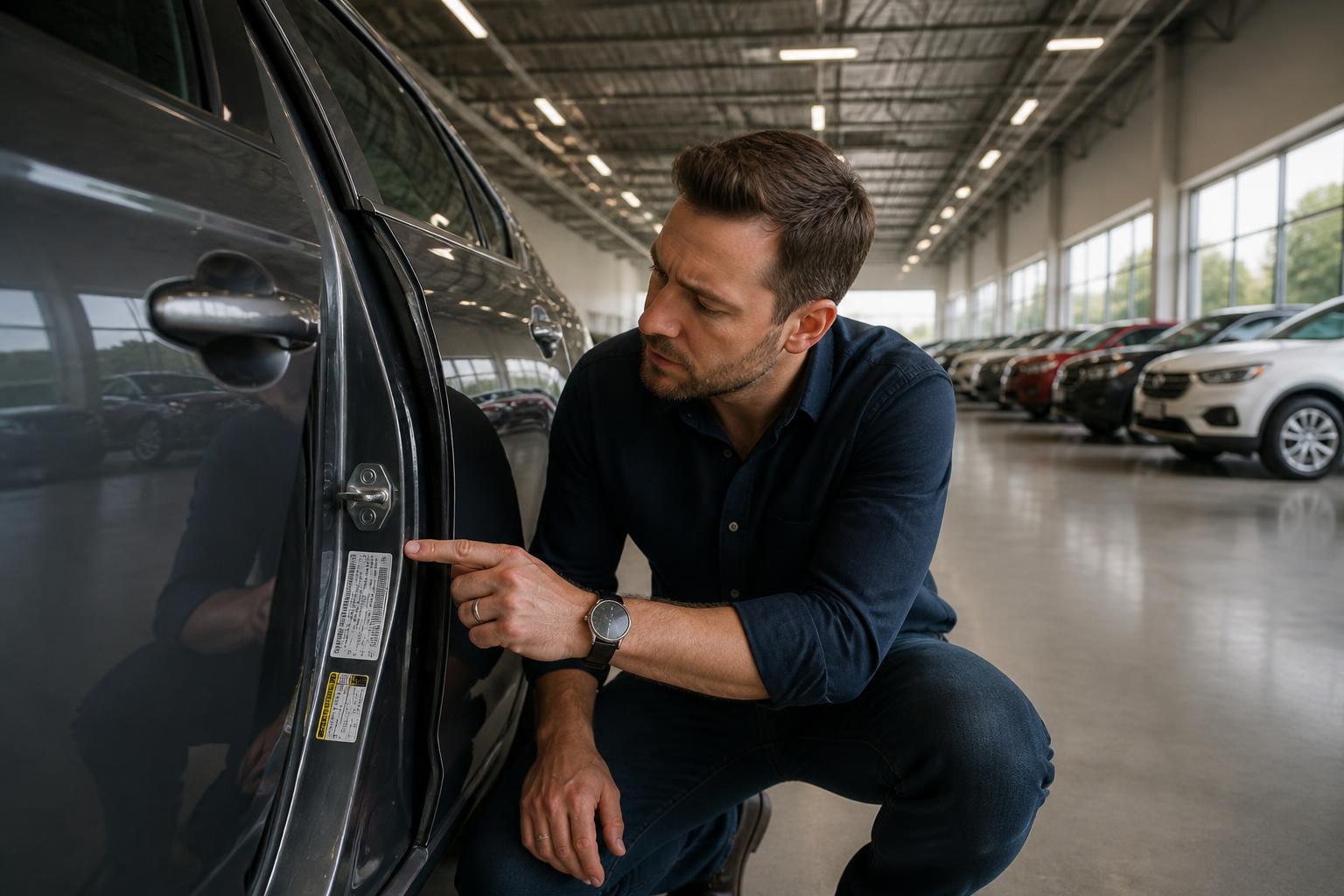
You’ll need the vehicle’s 17-character VIN. Find it on the lower corner of the windshield on the driver’s side, on the driver’s door jamb, or on your registration or insurance card.
Step 1: Locate the VIN.
Write down all 17 characters exactly. Common trouble spots: the letter “O” looks like the digit “0”, and “I” looks like “1”. Use a smartphone photo if it helps.
Step 2: Decode the first character (country of final assembly).
The first digit tells you where the vehicle was completed. Use this quick lookup:
| First digit | Country |
|---|---|
| 1, 4, 5 | United States |
| 2 | Canada |
| 3 | Mexico |
| J | Japan |
| W | Germany |
| K | South Korea |
| L | China |
| S | United Kingdom |
| V | France or Spain (varies) |
For example, a VIN starting with 1 means the car was assembled in the US. A VIN starting with J means Japan.
Step 3 (optional): Check the 11th character for the specific plant code.
Each manufacturer has its own plant codes inside the VIN. For a quick country check, the first digit is usually enough.
Branch point: If the VIN starts with 1 but the brand is Toyota, that’s correct – it means the car was assembled in a Toyota US plant (e.g., Camry in Kentucky). If the VIN starts with J but the model is a Honda Civic, that model is imported from Japan (while the Civic sedan is built in Indiana). Your next move depends on what you’re trying to verify: for a used-car purchase, check both the VIN country and the window sticker.
Verify with the window sticker.
Every new car sold in the US includes a Monroney sticker (and often the American Automobile Labeling Act sticker). Look for a line that says “Final Assembly Point” or “Country of Origin:” followed by the location. The VIN’s first digit should match this sticker. If they disagree, double-check the VIN carefully – the sticker is legally required and generally reliable.
Stop / escalate threshold:
If you cannot locate the VIN (e.g., missing or tampered plate), or if the VIN’s country digit doesn’t match the brand’s expected plant for that model year, stop relying on DIY checks. Contact the manufacturer’s customer service with the full VIN to get an official build record. Also escalate if you’re buying a used car and the VIN shows a different country than the seller advertised – that’s a serious red flag for title or odometer fraud.
Which Brands Build in the US? A Practical Reference
The following lists show where major brands assemble their most popular models for the US market. Use this as a starting point, but always verify with the VIN for the exact vehicle.
American Brands
Ford – US plants: Dearborn, MI; Kansas City, MO; Flat Rock, MI; Chicago, IL; Wayne, MI. Key US-built models: F-150, Mustang, Explorer, Ranger. Mexican-built: Bronco Sport, Maverick, Mustang Mach-E. Ford also builds the Transit Connect in Spain.
General Motors – US plants in Michigan, Texas, Indiana, Missouri, Ohio, Tennessee. Key US-built models: Chevrolet Silverado 1500 (Fort Wayne/Flint), Chevy Corvette (Bowling Green), Chevy Tahoe/Suburban and Cadillac Escalade (Arlington, TX), GMC Canyon (Wentzville, MO). Mexican-built: Chevy Equinox, Blazer, some Silverado 1500 crew cabs. Canadian-built: some Silverado 1500 regular cabs (Oshawa).
Stellantis – US plants: Ram 1500 (Sterling Heights, MI), Jeep Wrangler/Gladiator (Toledo, OH). Mexican plants: Ram HD trucks (Saltillo), Jeep Compass (Toluca). Canadian plants: Chrysler Pacifica (Windsor), Dodge Charger/Challenger (Brampton – ending; new Charger Daytona in Windsor).
Tesla – All North American passenger vehicles built in the US: Fremont, CA (Model S, Model X, Model 3, Model Y) and Austin, TX (Model Y, Cybertruck). Semi built in Sparks, NV.
Foreign Brands with US Plants
Toyota – 10 US plants. Key US-built models: Camry (Georgetown, KY), Highlander (Princeton, IN), Corolla (Blue Springs, MS), Tundra and Tacoma (San Antonio, TX). Many RAV4s come from Canada.
Honda – US plants in Ohio, Alabama, Indiana, South Carolina. Key US-built models: Accord (Marysville, OH), Civic Sedan (Greensburg, IN), CR-V (East Liberty/Marysville, OH), Pilot/Passport/Odyssey/Ridgeline (Lincoln, AL). Civic Hatchback built in Canada.
Nissan – US plants in Smyrna, TN and Canton, MS. Key US-built models: Altima, Rogue, Pathfinder (Smyrna); Frontier, Murano (Canton); Leaf (Smyrna). Sentra and Versa come from Mexico.
Hyundai & Kia – Hyundai plant in Montgomery, AL builds Sonata, Santa Fe, Elantra, Tucson, Santa Cruz. Kia plant in West Point, GA builds Telluride, Sorento, K5, Sportage, EV6. Some variants come from Korea.
BMW – Spartanburg, SC builds X3, X4, X5, X6, X7, XM. All other BMW models are imported.
Mercedes-Benz – Tuscaloosa, AL builds GLE, GLE Coupe, GLS, EQE SUV, EQS SUV. C-Class and E-Class imported from Germany.
Volkswagen – Chattanooga, TN builds Atlas, Atlas Cross Sport, ID.4. Jetta and Taos built in Puebla, Mexico.
Subaru – Lafayette, IN builds Outback, Legacy, Ascent. Forester, Crosstrek, Impreza, BRZ built in Japan.
Mazda – Huntsville, AL (joint venture with Toyota) builds CX-50. All other models imported from Japan (CX-5, Mazda3 hatchback) or Mexico (Mazda3 sedan).
Common Mistakes When Checking Where a Car Was Built
Mistake 1: Assuming brand name equals build location.
A Honda Civic may be built in Indiana or Japan. A BMW X5 is built in South Carolina, not Germany. Always check the VIN.
Mistake 2: Relying only on the brand’s country of origin.
Even an American brand like Ford builds many models in Mexico. Conversely, a “Japanese” brand like Toyota builds more than half of its US-market vehicles in the US.
Mistake 3: Misreading the VIN.
The first digit is numeric for North America (1, 2, 3, 4, 5) and alphabetical for other regions. Double-check that you’re reading the character correctly – a “1” and “I” look similar. One wrong digit and you’ll think a US-built car came from Italy or vice versa.
Failure mode example: A buyer sees a “Honda Passport” and assumes it’s built in Japan because of the brand. The Passport is actually built in Lincoln, Alabama. The mistake leads to incorrect assumptions about parts availability and warranty service. Safer move: before buying, ask the seller for the VIN, decode the first digit, and confirm on the window sticker.
FAQ
Are there any cars that are 100% American-made?
No. Even a car assembled in the US with a high parts-content score (e.g., Tesla Model 3 or Honda Passport) still contains foreign-sourced materials and components. The “Made in USA” label applies only to final assembly.
How do I know if a used car was originally sold in the US?
Check the VIN’s first digit (1,4,5 for US) and look for a US-spec compliance sticker. Some imported vehicles are federalized later, but the VIN country stays the same. For extra certainty, run a vehicle history report (Carfax or AutoCheck).
Do model-year changes affect where a car is built?
Yes. For example, the Honda Civic sedan moved from Canada to the US for some trims, and the Ford Focus switched from US to Mexico before being discontinued. Always check the VIN for the specific year you’re looking at.
Explore This Topic
Related guides in this cluster:
- Common Problems American Cars By Brand
- How Long Do Cars Last By Brand
- Common Problems Japanese Cars By Brand

Greedy Wheels is the founder and lead editor at Wheels Greed. With over 15 years of hands-on automotive experience — from rebuilding engines in a home garage to managing fleet maintenance for a regional logistics company — he brings real-world mechanical knowledge to every guide.
His work has been featured in automotive forums, owner communities, and dealership training materials. When he’s not researching the latest car owner questions, you’ll find him at a local track day, wrenching on his project car, or testing the newest OBD2 diagnostic tools.
At Wheels Greed, every article is reviewed against manufacturer service manuals, NHTSA bulletins, and verified owner reports. No AI-generated fluff. No guesswork. Just practical answers from someone who has turned the wrench.