Most Common Problems with European Cars: BMW, Mercedes, Audi, Volvo, VW
If you own a European car or are shopping for one, the most frequent trouble spots are predictable: timing-chain failures on certain BMW and Audi engines, suspension air leaks on Mercedes, DSG mechatronic issues on VW, and infotainment glitches on Volvo. Knowing which model years and symptoms to watch for can save you thousands in repairs. Below is a brand-by-brand breakdown of the most common problems, the specific model years most affected, and what you should do first.
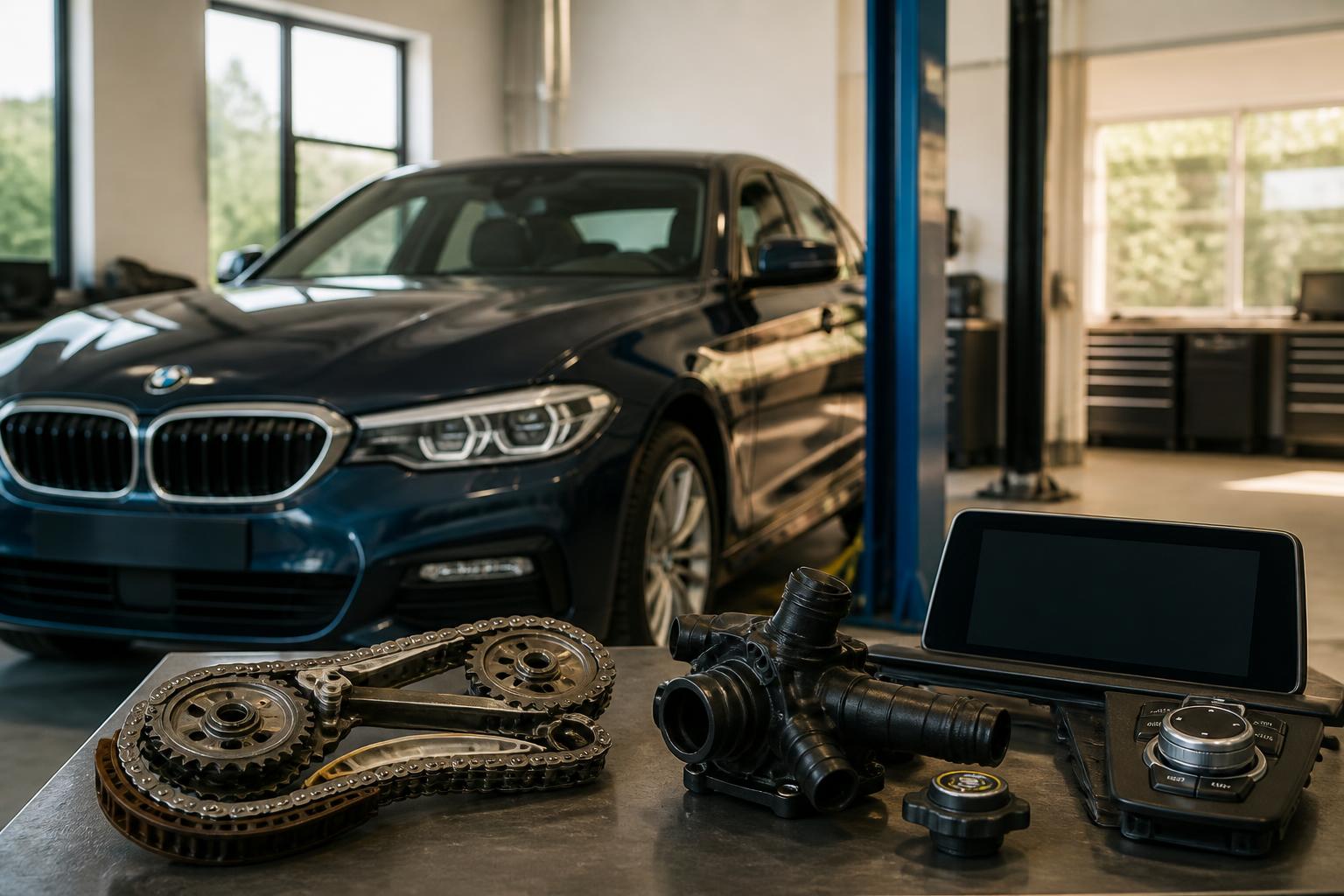
BMW — Timing Chain, Cooling System, and iDrive
BMW’s reputation for high-performance engines is undercut by a few well-documented weaknesses that tend to show up between 60,000 and 100,000 miles.
Cold-Start Rattle Check
Park the car overnight, then start it in the morning with the hood open. Listen for a brief rattling sound from the front of the engine that lasts one to three seconds, then disappears. That is the timing chain slapping the guides. A single second of rattle is a warning; anything longer than two seconds or a persistent rattle means the tensioner is already failing.
If the rattle is short (under two seconds) and only happens on the first start of the day, you may have a few hundred miles before catastrophic failure, but schedule inspection immediately. If the rattle is loud and continues for more than two seconds, stop driving and tow the car—a snapped chain can destroy the engine.
N20 Timing Chain Failure (2012–2015 2.0L Turbo Models)
The N20 four-cylinder engine found in 2012–2015 320i, 328i, X1, X3, and Z4 models uses a plastic-chain-guide design that can break. Symptoms include a rattling noise from the front of the engine on cold starts, followed by a check-engine light with codes for camshaft or crankshaft correlation. The permanent fix is an updated chain tensioner and steel guide from the later B48 engine, plus the entire timing-chain kit. Labor alone runs $1,500–$2,500 at an independent shop.
After repair, start the engine cold and listen. There should be zero rattle. Run the engine to operating temperature, then shut it off and restart. The check-engine light should be off. If any rattle returns, the chain may be improperly tensioned.
Cooling System Plastic Component Failure (Nearly All Models 2000–2018)
BMW’s cooling system relies on a plastic coolant-expansion tank, plastic thermostat housing, and plastic water-pump impeller. After about 60,000 miles, these parts become brittle and crack, often without warning. The coolant-level warning light is usually the first sign. A burst expansion tank dumps coolant instantly, leading to overheating. Replace the entire cooling system every 60,000–80,000 miles as preventive maintenance. This includes the water pump, thermostat, expansion tank, and hoses. Cost: $800–$1,200 at an independent shop.
If you see only a low coolant light but no overheating, top off coolant and monitor. If the light returns within 500 miles, pressure-test the system to locate the micro-crack—often the tank seam. Replace the tank alone as a temporary fix, but plan for a full system replacement within 10,000 miles.
iDrive Controller and Infotainment Freezing (2003–2015 Models)
The iDrive screen may freeze, reboot repeatedly, or fail to accept inputs. The cause is usually a failing hard-drive-based CIC unit in 2007–2013 models, or a software corruption in the earlier CCC system. A simple reset—hold the volume knob for 30 seconds—works temporarily, but recurring freezes require a new head unit ($1,000+). Model years to avoid: 2007–2010 3 Series with the original CCC iDrive.
After the reset, the screen should go black and then restart to the main menu within 30 seconds. If the screen stays black or returns to a freeze within five minutes, the unit needs replacement.
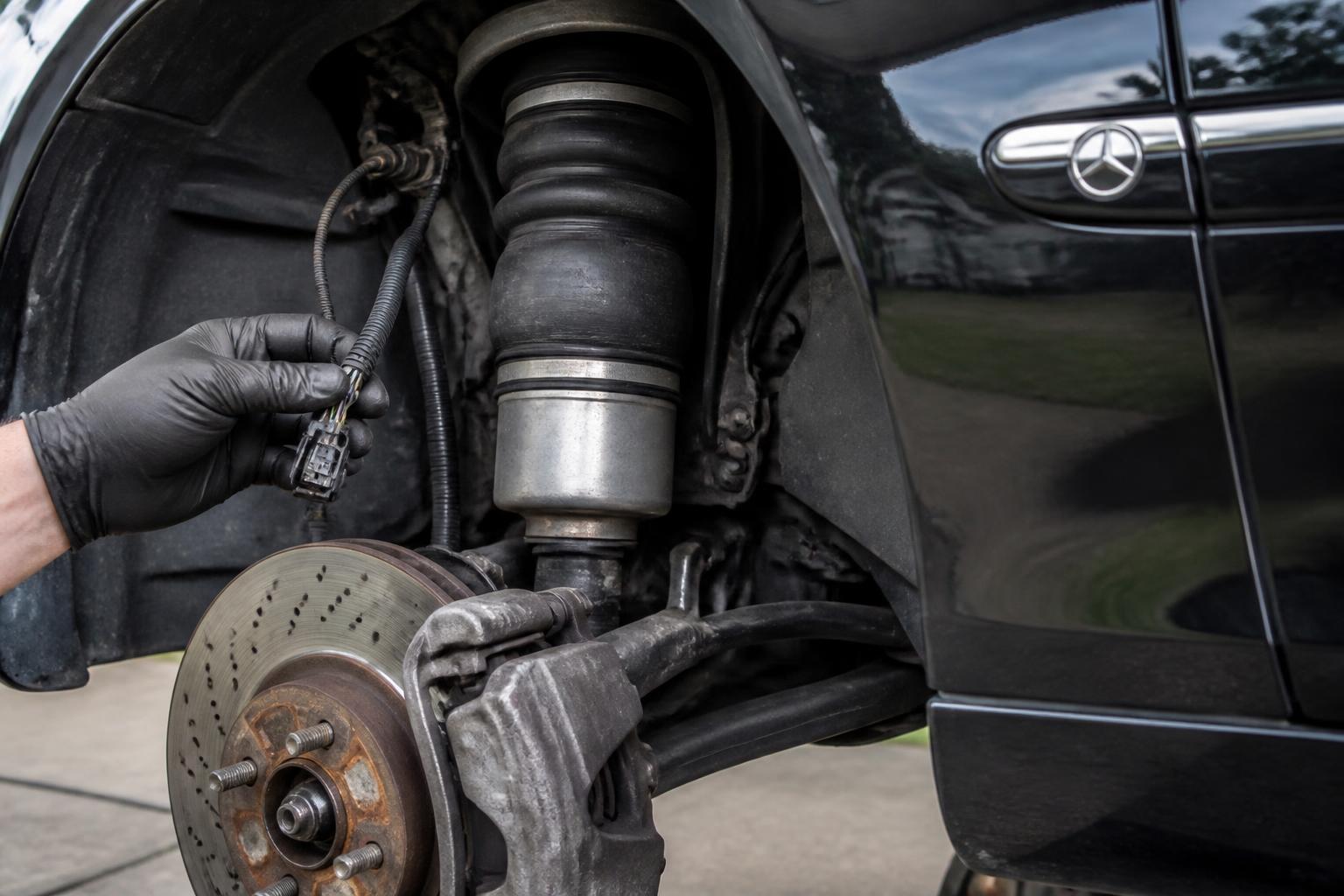
Mercedes-Benz — Airmatic Suspension and Electrical Glitches
Mercedes luxury often comes with air suspension and complex electronics that are expensive to diagnose and repair.
Overnight Sag Check
Park the car on a level surface and measure the distance from the center of each wheel arch to the ground. Mark it. Check again after the car has sat overnight. A drop of more than one inch on any corner indicates an air spring leak. Listen for the compressor running after the car is parked—it should shut off within 15 seconds. If it runs longer than 30 seconds, the compressor is overworking and will likely fail soon.
Airmatic Suspension Leaks (2006–2016 S-Class, E-Class, GL-Class, ML-Class)
The Airmatic system uses air bags at each corner. The most common failure is a cracked air-spring bag—especially the front left—or a failing compressor that runs constantly. Symptoms include one corner of the car sitting lower than the others after sitting overnight, the compressor running for more than 30 seconds, or a red “Vehicle Rising” message staying on. Replace both front or both rear air bags in pairs, not just the leaky one. A single air bag costs $300–$500, plus 2–3 hours labor. The compressor ($600–$900) often fails because it overheats from running too long trying to fill a leaking bag.
If you hear the compressor running but the car does not rise, the compressor may still be good but the system has a major leak. Spray soapy water on the air bag seams—bubbles reveal the leak. If the compressor runs but the car rises slowly and then stays up, the compressor is likely failing and should be replaced alongside the air bags to avoid a repeat failure.
After replacing an air bag, start the car and watch the suspension raise fully. The compressor should run for no more than 20 seconds and then shut off. Turn the car off, wait one minute, and restart—the “Vehicle Rising” message should not appear. Let it sit overnight and re-measure the arch heights; they should be equal within 0.25 inches.
Electrical System Faults (2010–2018 Models)
Mercedes has struggled with battery-drain issues, faulty window regulators, and electronic steering-column lock failures. The most common combination is a check-engine light with a battery discharge warning. This is often caused by a faulty alternator control module or a parasitic drain from the infotainment system. If the car won’t start and the steering column is locked, it is usually the electronic lock module ($400 part). Model years to avoid for electrical problems: 2012–2014 C-Class (W204) and 2013–2016 GLK-Class.
After replacing the faulty module or fixing the drain, charge the battery fully and let the car sit for 24 hours. Then check the voltage at the battery terminals—should be 12.4V or higher. If it drops below 12.0V, the drain is not resolved.
Audi — Timing Chain Tensioner and Oil Consumption
Audi’s 2.0T and 3.0T engines have two highly predictable failures that affect models from the late 2000s to mid-2010s.
Cold-Start Rattle Duration Check
Start the engine from cold and use a stopwatch. Time the rattle. Less than one second is normal. One to two seconds is a warning. Over two seconds means the tensioner is near failure. If the rattle continues for more than five seconds, do not drive the car—the chain may jump teeth.
Timing Chain Tensioner Failure (2008–2012 2.0T, 2010–2015 3.0T)
Audi used a spring-loaded tensioner with a plastic slide that wears out. When it fails, the timing chain slackens and can jump teeth, bending valves. Symptoms include a brief rattle on cold start lasting one to two seconds, then smooth operation. If the rattle persists longer, the tensioner is already worn. Audi issued a technical service bulletin for the 2.0T—the updated tensioner has a metal part number. Check your VIN: 2009–2012 A4, A5, and Q5 2.0T are highest risk. Replacement timing-chain kit with tensioner costs $2,000–$3,500.
If you have a 2013+ 2.0T (CNDA engine) you may still have an older tensioner—check the production date. If the car was built before June 2012, it likely has the plastic slide. After replacement, verify the part number stamped on the new tensioner matches the updated metal design (part number 06K109467K). Cold-start the engine and listen for zero rattle. Run the engine to operating temperature, then shut it off for one hour, restart—still no rattle. Check the oil level; the chain job requires draining and refilling oil, so confirm it is at the correct mark.
Excessive Oil Consumption (2009–2015 2.0T, 2012–2016 3.0T)
Audi’s 2.0T engine consumes oil at a rate of 1 quart per 1,000 miles or more due to piston-ring design. Audi eventually settled a class-action lawsuit for 2012–2014 A4 and Q5 models, offering engine replacements. For 2015 and later models, the ring design was revised. Check oil level weekly—many owners do not realize they are running low until the low-oil-pressure light comes on. A compression test and borescope inspection can confirm the issue. If consumption exceeds 1 quart per 1,200 miles, an engine rebuild or short-block replacement may be needed. Cost: roughly $4,000–$7,000.
After an oil change, drive exactly 1,000 miles, then check the dipstick. If the level has dropped below the low mark, you have excessive consumption. Do not rely on the car’s oil-level sensor—they often read inaccurately on these engines.
Volvo — Infotainment Lag and Suspension Wear
Volvo’s recent cars from 2016 onward are reliable mechanically but have software glitches, while older models from 2000 to 2014 suffer from suspension component fatigue.
Rear Clunk Test
Drive slowly (10–15 mph) over a speed bump or rough road with the windows down. Listen for a dull thud or clunk from the rear suspension. If you hear it, pull over and push down on the rear of the car. A single clunk when the suspension compresses then rebounds indicates worn trailing-arm bushings. Multiple clunks suggest more widespread wear.
Sensus Infotainment Freezing and Lag (2016–2020 XC90, S90, V90)
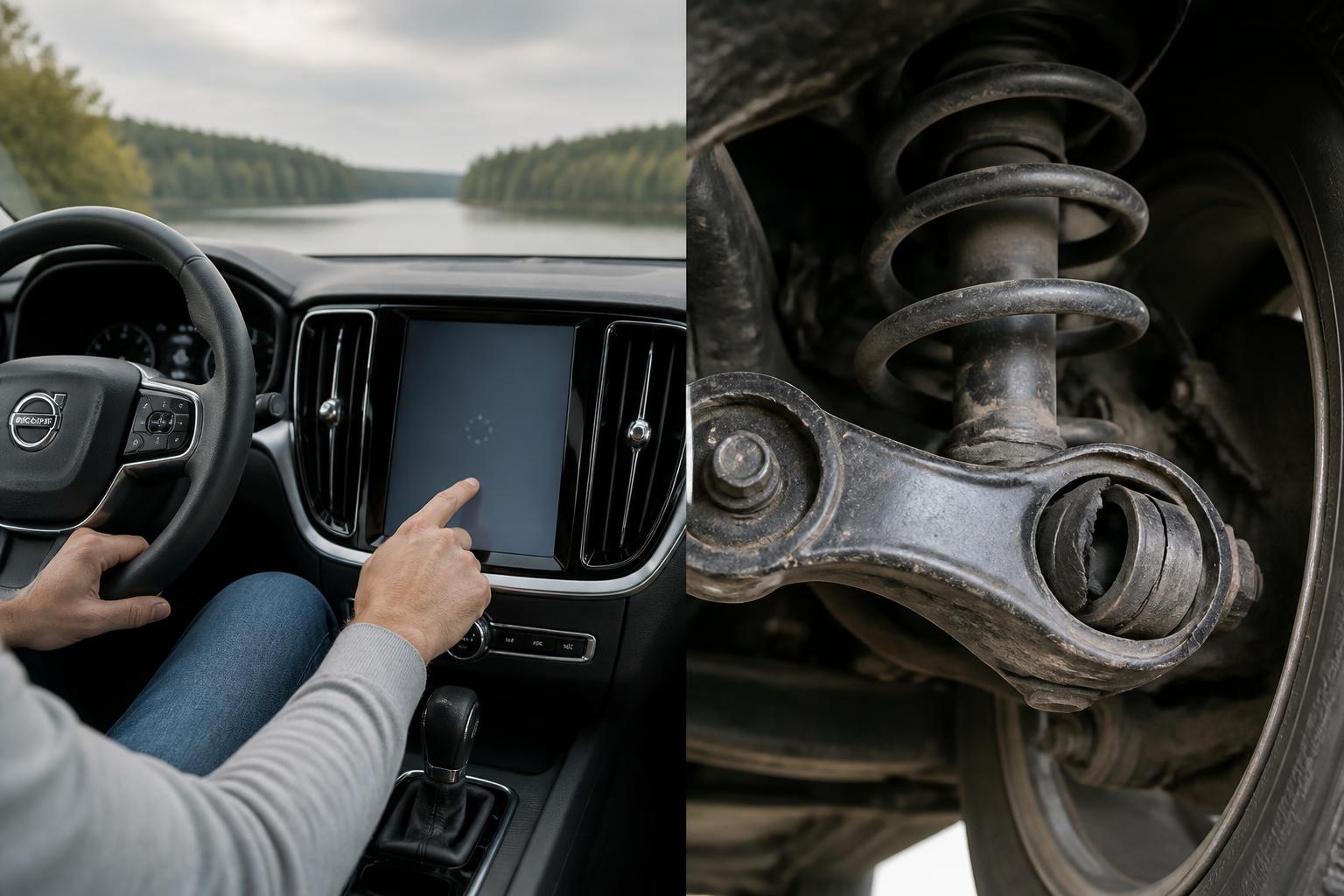
The Sensus touchscreen can become unresponsive, reboot randomly, or lag badly when switching between menus. This is a software issue that Volvo has addressed through multiple over-the-air updates. First step: perform a hard reset by holding the home button for 20 seconds until the screen goes dark. If the problem recurs, the IHU hardware may need replacement. Model years to avoid: 2016–2017 XC90, the first model year of the new platform.
After the hard reset, the Volvo logo appears and the system should load within 30 seconds. Navigate through three different screens (e.g., navigation, media, climate) without any freeze. If it freezes again within five minutes, schedule a dealer software update or IHU replacement.
Rear Suspension Bushing Wear (2001–2014 Models)
Volvo’s rear trailing-arm bushings on P2-platform cars—S60, V70, XC70, S80—wear out around 70,000 miles. The symptom is a clunking noise from the rear when going over bumps or accelerating from a stop. The bushings can be replaced individually at about $200 each in parts, but the labor is high because the entire rear subframe must be dropped, adding $600–$900. Aftermarket polyurethane bushings last longer but transmit more road noise.
If the clunk is only present on sharp bumps and the car is under 80,000 miles, you may only need one bushing. Ask the shop to inspect both sides—if one is torn, the other is close. Replacing both at the same time saves future labor costs. After replacement, test drive over the same bumps. The clunk should be gone.
Volkswagen — DSG Mechatronic, Electrical, and Intake Manifold
VW’s mass-market models share several common problems across gasoline and diesel platforms.
Flashing Gear Indicator Check
Start the car, shift through all gears (P, R, N, D) while stationary. Watch the dashboard gear indicator. If it flashes or shows a gear that you did not select, the mechatronic unit inside the DSG transmission is failing. This indicates a hydraulic or electronic issue that can lead to loss of drive.
DSG Mechatronic Unit Failure (2009–2015 Models with DQ200 or DQ250)
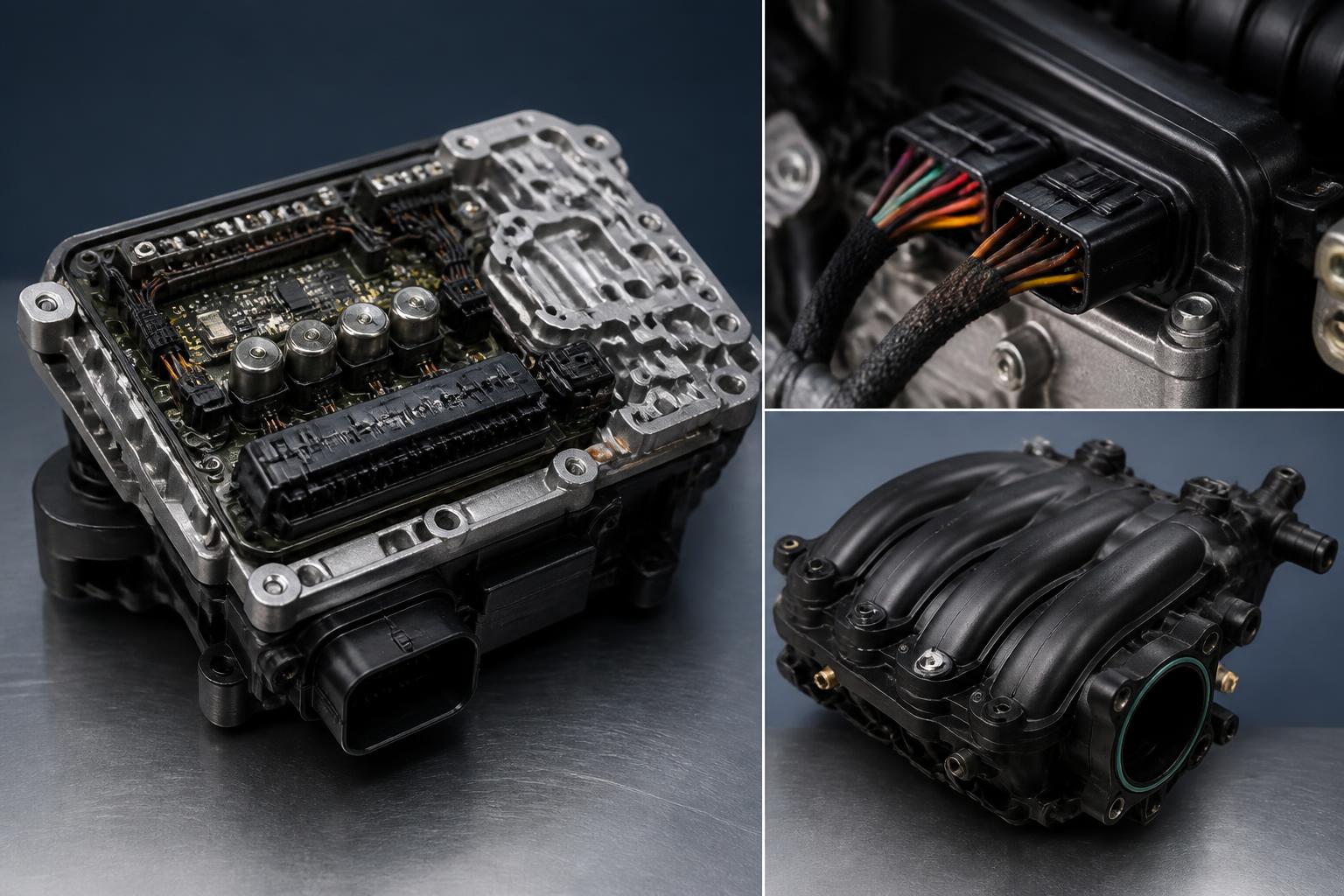
The DSG (direct-shift gearbox) mechatronic unit controls gear engagement and clutch actuation. Common symptoms include harsh or delayed shifts, a flashing gear indicator on the dash, jerking at low speeds, or loss of drive. The mechatronic unit can be replaced separately from the full transmission, but it costs $1,200–$2,000 including labor and reprogramming. Model years to avoid: 2009–2012 Golf GTI, Jetta GLI, and Passat with the 6-speed DSG.
If the gear indicator flashes only intermittently, you may have a software issue—check for a TSB update first. If the flashing is constant, the mechatronic unit has likely failed. After replacement, the transmission should shift smoothly through all gears without flashing indicators.
Electrical Gremlins (2010–2018 Models)
VW models from this era are known for faulty window regulators, door lock actuators, and central control module failures. The most common symptom is a window that stops moving or drops into the door. Window regulators fail around 50,000–70,000 miles. Replacement cost is around $250–$400 per door. Door lock actuators that fail will leave the door locked or cause the alarm to sound randomly. A dealer reprogramming may be needed for the control module.
If a window drops into the door, DO NOT try to close it with force—you will damage the motor. Remove the door panel and replace the regulator assembly. After replacement, test the window through full cycles multiple times.
Intake Manifold Flap Failure (2008–2014 2.0T and 2.5L Engines)
The intake manifold has plastic runner flaps that control air flow at low and high RPM. The flaps break off and can be sucked into the engine, causing misfires or engine damage. Symptoms include a check-engine light with code P2004 or P2006, reduced power, rough idle, or a rattling sound from the intake area. Replace the intake manifold with an updated unit that has metal shafts. Cost: $400–$700 including labor.
If you have a check-engine light for P2004, the flaps are stuck open or closed. Visual inspection through the intake port with a borescope can confirm broken flaps. After replacement, the check-engine light should stay off and the engine should idle smoothly.
Each of these brands has its own predictable weak points, and knowing them before you buy or repair is the best way to avoid expensive surprises. If your car is showing any of the symptoms described here, start with the earliest check listed under each section. Many problems can be caught early with simple observation, and that often saves the biggest repair bills.
Explore This Topic
Related guides in this cluster:
- Common Problems Japanese Cars By Brand
- Common Problems American Cars By Brand
- How Long Do Cars Last By Brand

Greedy Wheels is the founder and lead editor at Wheels Greed. With over 15 years of hands-on automotive experience — from rebuilding engines in a home garage to managing fleet maintenance for a regional logistics company — he brings real-world mechanical knowledge to every guide.
His work has been featured in automotive forums, owner communities, and dealership training materials. When he’s not researching the latest car owner questions, you’ll find him at a local track day, wrenching on his project car, or testing the newest OBD2 diagnostic tools.
At Wheels Greed, every article is reviewed against manufacturer service manuals, NHTSA bulletins, and verified owner reports. No AI-generated fluff. No guesswork. Just practical answers from someone who has turned the wrench.