How Long Do Cars Last? Brand-by-Brand Longevity Report
A well-maintained modern car can last 200,000 miles or more, but the average across most brands falls between 150,000 and 200,000 miles. Some brands routinely cross 250,000 miles with proper care, while others struggle to reach 150,000. Which brands hold up best depends less on hype and more on engineering priorities, build quality, and how owners maintain them.
Average Lifespan by the Numbers
According to iSeeCars analysis of over 260 million used cars, the average vehicle on US roads reaches about 200,000 miles before major systems fail. The same data shows that 1.6% of all vehicles exceed 250,000 miles. That number jumps significantly for certain brands. Toyota and Honda lead with roughly 2.3% to 2.6% of their cars hitting 250,000 miles. By contrast, luxury European brands and most domestic SUVs fall below the industry average.
The gap between brands is not random. Engines, transmissions, rust protection, and parts availability all play a role. So does owner behavior — the same model that lasts 250,000 miles with regular oil changes can fail at 120,000 miles if neglected.
Brand-by-Brand Longevity Comparison
| Brand | Average Max Miles | Top Long-Lasting Models |
|---|---|---|
| Toyota | 200,000–300,000+ | Land Cruiser, 4Runner, Camry, Highlander, Corolla |
| Honda | 200,000–250,000+ | Accord, Civic, CR-V, Pilot |
| Subaru | 180,000–250,000 | Outback, Legacy, Forester |
| Ford | 150,000–200,000 | F-150 (V8), Crown Victoria, Fusion (2.5L) |
| Chevrolet / GMC | 150,000–200,000 | Silverado/Sierra (V8), Suburban/Tahoe, Impala (3.8L V6) |
| BMW | 150,000–200,000 | 3 Series (E46, E90 non-turbo), X5 (diesel) |
| Mercedes-Benz | 150,000–200,000 | E-Class (diesel), W123/W124, S-Class (pre-2006) |
| Hyundai / Kia | 150,000–200,000 | Elantra (pre-2011), Sonata (2.4L), Sorento (V6) |
| Nissan | 150,000–200,000 | Frontier, Xterra, Altima (4-cyl pre-2013) |
| Mazda | 180,000–250,000 | Miata, CX-5, Mazda3 |
| Volkswagen | 150,000–200,000 | Golf (diesel), Jetta TDI, Passat (V6) |
| Tesla | 150,000–200,000 | Model S (early), Model 3 (RWD) |
| Lexus | 250,000–300,000+ | LS 400/430, ES 350, RX 350 |
| Acura | 200,000–250,000+ | Legend, TL (non-turbo), MDX (pre-2015) |
Which Car Brands Last the Longest?
Toyota
Average max miles: 200,000–300,000+
Top long-lasting models: Land Cruiser, 4Runner, Camry, Highlander, Corolla
Toyota owns the reputation for a reason. The Land Cruiser and 4Runner are legendary for exceeding 300,000 miles with basic maintenance. The Camry and Corolla routinely hit 250,000 miles when oil changes happen every 5,000–7,500 miles. The Highlander matches that in SUV form.
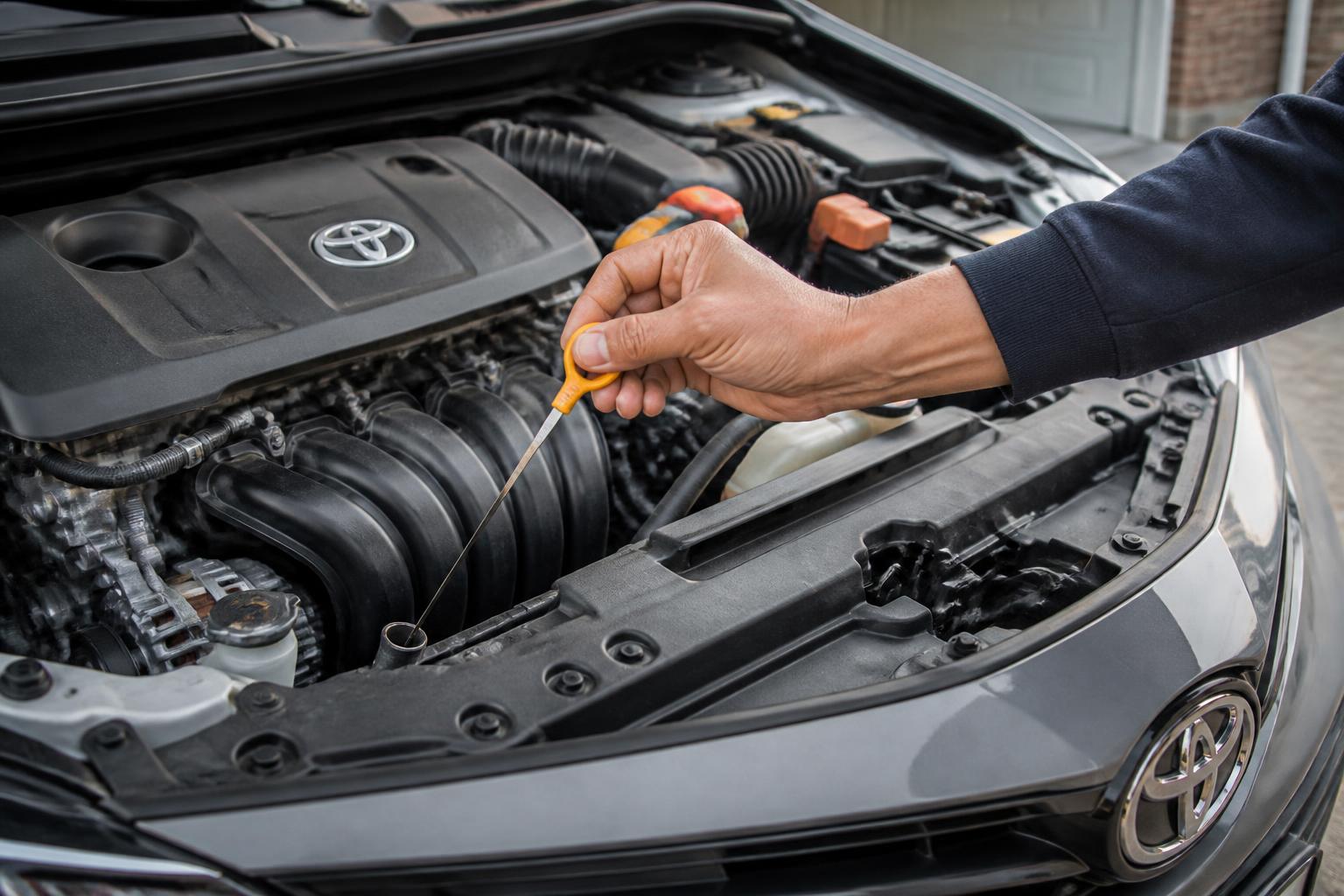
Branch point: The main risk area is the early 2010s 2AZ-FE four-cylinder engine found in some Camry and RAV4 models. If you own one of these and notice the oil pressure light flickering on turns or the dipstick showing low between changes, check oil level every 1,000 miles. Consumption above 1 quart per 1,000 miles means the piston rings are likely worn. At that point, a rebuild costs roughly $2,500–$3,500. Stop threshold: If the car has more than 150,000 miles and you spot frame rust alongside oil consumption, stop pouring money into engine work — the body won’t outlast the repairs.
Honda
Average max miles: 200,000–250,000+
Top long-lasting models: Accord, Civic, CR-V, Pilot
Honda’s best-known engines — the K-series and J-series — are bulletproof when their timing belts are replaced on schedule. The Accord and Civic frequently exceed 250,000 miles. The CR-V and Pilot follow closely.
Branch point: If you own a 2002–2006 V6 Accord and hear a low groan from the front of the car during acceleration, immediately stop driving and have the transmission inspected. A fluid flush at the first sign of shuddering can buy another 20,000 miles. If the transmission is already slipping under hard throttle, stop driving and get a rebuild quote — typically $2,500–$3,500. Stop threshold: When the car is worth under $4,000 and needs a full transmission replacement, that’s the mathematical ceiling. Sell it as-is rather than investing more than the car’s value.
Subaru
Average max miles: 180,000–250,000
Top long-lasting models: Outback, Legacy, Forester
Subaru’s boxer engines can last 250,000 miles with meticulous care, but head gasket failures are common on 2000–2010 models (especially the 2.5L naturally aspirated engine). After 2011, Subaru improved the gasket design. The Outback and Legacy are the strongest performers.
What to do now: Owners who change the coolant every 30,000 miles and use full synthetic oil (such as QUARTZ 9000 FUTURE FGC 5W-30 or Mobil Super Synthetic 5W30) significantly reduce head gasket risk. Check for milky oil on the dipstick or white smoke from the exhaust — both are early signs of a failing gasket. If spotted, stop driving and get a compression test. Head gasket repair on a Subaru runs $1,800–$2,500. Stop threshold: If the car has over 180,000 miles and the gasket has failed once before, consider whether the chassis and suspension are still solid. Rust on the rear strut towers is a no-go signal.
Ford
Average max miles: 150,000–200,000
Top long-lasting models: F-150 (V8 models), Crown Victoria, Fusion (2.5L)
Ford’s longevity depends heavily on which engine you choose. The 4.6L and 5.0L V8s in F-150s routinely hit 250,000 miles. The Crown Victoria’s 4.6L V8 is famously durable past 300,000 in fleet service. The Fusion with the 2.5L four-cylinder is solid to 200,000. By contrast, the EcoBoost V6 engines have more complexity and shorter average lifespans (150,000–180,000 miles), especially with turbocharger failures around 120,000.
Failure mode to watch: If your EcoBoost engine hesitates on acceleration and you hear a whistling sound, the turbo wastegate or a boost leak is likely failing. Ignore it, and the turbo can fail completely within 2,000 miles. Stop driving if the engine loses power on a hill. Replacement turbos run $1,200–$2,000 per unit.
Chevrolet / GMC
Average max miles: 150,000–200,000
Top long-lasting models: Silverado/Sierra (V8), Suburban/Tahoe, Impala (3.8L V6)
The 5.3L and 6.2L V8s in GM trucks can reach 250,000 miles when active fuel management (AFM) systems are maintained or disabled. The 3.8L V6 in older Impalas is one of GM’s best engines, regularly hitting 250,000.
Branch point: If your 5.3L Silverado (2007–2013) develops a steady misfire under load, have the lifters inspected immediately. AFM lifter collapse can happen as early as 80,000 miles and often starts as a random cylinder misfire code (P0300–P0308). A shop may attempt a fuel injector cleaning first. If the misfire returns within 500 miles, stop driving and get a full AFM delete and new lifters — $3,000–$4,500. Stop threshold: If the truck has existing frame rust or over 200,000 miles, that repair exceeds the vehicle’s value. Sell it rather than invest.
BMW
Average max miles: 150,000–200,000
Top long-lasting models: 3 Series (E46, E90 non-turbo), X5 (diesel)
BMW builds rewarding cars, but longevity is expensive. The naturally aspirated inline-6 engines (M54, N52) are the most durable, often reaching 200,000–250,000 miles with cooling system overhauls every 60,000–80,000 miles. Turbocharged engines (N54, N55) have more failure points: high-pressure fuel pumps, wastegates, and valve cover gaskets fail earlier. The diesel X5 (X5 35d) is a rare standout, frequently exceeding 250,000 miles.
Verification step: After any cooling system work (water pump, thermostat, expansion tank), run the engine with the heater on full and check for even heat from all vents within 10 minutes. Uneven heat means trapped air — re-bleed the system. If the temperature needle ever climbs past the midpoint, stop driving and tow it. Overheating a BMW inline-6 often warps the cylinder head, requiring a $3,000+ repair.
Mercedes-Benz
Average max miles: 150,000–200,000
Top long-lasting models: E-Class (diesel), W123/W124 chassis, S-Class (pre-2006)
The pre-2006 diesel E-Classes (W123, W124) are legendary for 500,000-mile lifespans, but those are rare on US roads today. Modern Mercedes models have shorter averages. The M272 V6 engine (2005–2011) has balance shaft issues. The M276 V6 (2012+) is better, but electrical issues on newer cars (air suspension, infotainment) often drive owners to sell before 200,000 miles.
Failure mode to watch: If your air suspension car (S-Class, GL-Class) sits lower on one corner after sitting overnight, and the compressor runs continuously when you start it, stop driving immediately. A blown air strut can damage the compressor. Replacing a single strut is $800–$1,200; replacing all four plus the compressor runs $3,500–$5,000.
Hyundai / Kia
Average max miles: 150,000–200,000
Top long-lasting models: Elantra (pre-2011), Sonata (2.4L), Sorento (V6)
Hyundai and Kia have improved dramatically since 2010, but certain engines are problematic. The 2.4L Theta II engine (2011–2019) is prone to connecting rod bearing failure, often before 100,000 miles. The 3.3L V6 is far more durable. Models with the 1.6L turbo (Gamma) have mixed results.
Branch point: If your 2011–2019 Sonata or Optima starts making a knocking sound that changes with engine RPM, and the oil pressure light flickers, stop driving immediately. This is the rod bearing failure symptom. Tow it to a Hyundai or Kia dealer — the brand has extended warranty programs for Theta II failures (up to 15 years / 150,000 miles in some states). If the dealer denies the claim, a replacement engine costs $4,000–$6,000. Stop threshold: At that point, compare the cost to the car’s value. If the car is worth under $5,000, it’s typically not worth the replacement.
Nissan
Average max miles: 150,000–200,000
Top long-lasting models: Frontier, Xterra, Altima (4-cyl pre-2013)
Nissan’s strongest longevity plays are the Frontier and Xterra, which share a proven 4.0L V6 that regularly exceeds 250,000 miles. The pre-2013 Altima with the 2.5L four-cylinder is decent to 200,000. The weak link is Nissan’s CVT transmission, used in most models after 2007. CVT failure between 80,000 and 120,000 miles is common, and replacement runs $3,000–$4,500.
What to check: If you own a Nissan with a CVT (2010–2018 Sentra, Altima, Rogue, Pathfinder), listen for a whining or buzzing sound that rises with engine speed. At the first sign, have the transmission fluid changed immediately — but only with genuine Nissan NS-3 CVT fluid. If the transmission hesitates or shudders on acceleration, stop driving. A rebuilt CVT is available for $2,500–$3,500, but the car’s resale value may not support that cost past 120,000 miles.
Mazda
Average max miles: 180,000–250,000
Top long-lasting models: Miata, CX-5, Mazda3
Mazda’s Skyactiv engines (2012+) are among the most reliable powerplants on the market. The naturally aspirated 2.0L and 2.5L four-cylinders regularly exceed 200,000 miles with nothing more than oil changes and spark plugs. The Miata is the outlier — well-maintained examples routinely cross 300,000 miles. Rust is the main threat, especially on 2010–2014 models in salt-belt states.
Verification step: On any used Mazda, lift the carpet in the trunk near the spare tire well. If you see brown discoloration or bubbling paint, the rear wheel arch rust has started. Treat it with a rust converter before winter to extend the body life.
Volkswagen
Average max miles: 150,000–200,000
Top long-lasting models: Golf (diesel), Jetta TDI, Passat (V6)
Volkswagen’s
Explore This Topic
Related guides in this cluster:
- Common Problems Japanese Cars By Brand
- Common Problems American Cars By Brand
- Common Problems European Cars By Brand

Greedy Wheels is the founder and lead editor at Wheels Greed. With over 15 years of hands-on automotive experience — from rebuilding engines in a home garage to managing fleet maintenance for a regional logistics company — he brings real-world mechanical knowledge to every guide.
His work has been featured in automotive forums, owner communities, and dealership training materials. When he’s not researching the latest car owner questions, you’ll find him at a local track day, wrenching on his project car, or testing the newest OBD2 diagnostic tools.
At Wheels Greed, every article is reviewed against manufacturer service manuals, NHTSA bulletins, and verified owner reports. No AI-generated fluff. No guesswork. Just practical answers from someone who has turned the wrench.