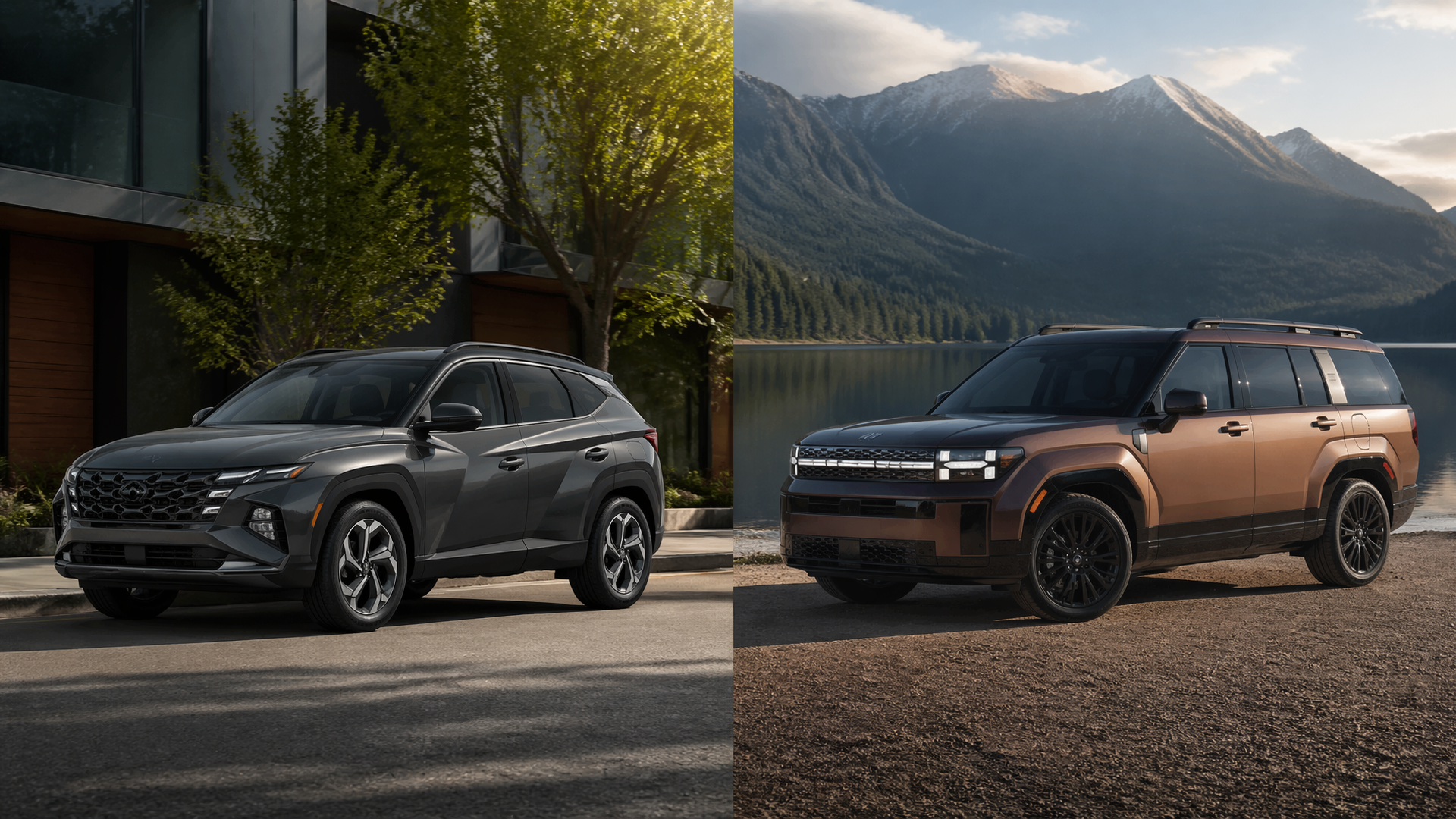
Size showdown: hyundai tucson vs. santa fe – which suv is bigger?
When deciding between the Hyundai Tucson and Santa Fe, the core difference for many buyers comes down to sheer size, impacting everything from passenger comfort to cargo capacity and maneuverability. The Santa Fe is definitively the larger of the two SUVs, offering more extensive interior space, particularly for rear passengers and cargo, making it the better choice for families who frequently haul gear or multiple adult passengers. Conversely, the Tucson, while smaller, provides a more agile driving experience and is easier to navigate in urban environments and tight parking situations, appealing to those who prioritize ease of use in everyday driving over maximum interior volume. This size distinction is the primary driver for choosing one over the other, with each vehicle catering to distinct needs and preferences within the SUV market.
Who the Larger Hyundai Santa Fe Fits Best
The Hyundai Santa Fe is engineered for those who require more space and versatility from their SUV. Its extended wheelbase and overall larger dimensions translate directly into a more accommodating cabin. This is most evident in the rear seating area, where adult passengers will find significantly more legroom and shoulder room compared to the Tucson. This makes the Santa Fe an excellent option for families with growing teenagers, carpooling situations, or for anyone who frequently transports adult guests. Furthermore, the Santa Fe boasts a larger cargo area, which is crucial for families who engage in activities requiring bulky equipment, frequent grocery runs for larger households, or for those who simply appreciate the flexibility of ample storage space for luggage, strollers, or recreational gear.
Its increased size also typically means a more substantial and commanding presence on the road, which some drivers prefer. For buyers prioritizing passenger comfort on longer journeys and maximum utility for hauling various items, the Santa Fe presents a compelling solution. The added length and width of the Santa Fe also contribute to a smoother ride over uneven surfaces, as the larger wheelbase helps to absorb road imperfections more effectively than its smaller counterpart.
Beyond passenger and cargo volume, the Santa Fe’s larger footprint often translates to a more robust towing capacity, although this can vary significantly by trim level and drivetrain. For those who need to tow a small trailer, a boat, or recreational equipment, the Santa Fe generally offers a higher towing threshold than the Tucson. This capability further solidifies its position as the go-to choice for active families or individuals who require their vehicle to perform dual duty for both daily commuting and occasional hauling tasks.
The interior design of the Santa Fe, while sharing Hyundai’s modern aesthetic with the Tucson, often features slightly more premium materials and amenities in comparable trim levels, further enhancing the experience for those seeking a more upscale and comfortable environment for longer trips. The overall feeling inside the Santa Fe is one of spaciousness and refinement, designed to make every journey more enjoyable for all occupants.
Main Trade-Offs: Tucson’s Agility vs. Santa Fe’s Space
The primary trade-off when choosing between the Tucson and Santa Fe revolves around the fundamental compromise between interior space and exterior maneuverability. The Hyundai Tucson, by virtue of its smaller dimensions, offers a distinct advantage in urban driving and tight parking scenarios. Its more compact length and width make it easier to navigate crowded city streets, squeeze into smaller parking spots, and generally feel more nimble and less cumbersome for daily errands. This agility can significantly reduce driving stress in congested areas. For drivers who live in densely populated urban environments or frequently visit areas with challenging parking, the Tucson’s more manageable size is a substantial benefit. This ease of maneuverability extends to simpler car washes and potentially lower insurance premiums in some areas due to its smaller vehicle classification.
However, this advantage in nimbleness comes at the direct expense of interior volume. While the Tucson is perfectly adequate for smaller families or individuals, its rear-seat legroom and overall cargo capacity are noticeably less than that of the Santa Fe. This can become a significant limitation for those who regularly transport adult passengers in the back or who need to carry substantial amounts of luggage or gear. For instance, a family of four on a week-long vacation might find the Tucson’s cargo hold restrictive, requiring careful packing or the use of a roof-top carrier, whereas the Santa Fe could likely accommodate the same load with ease.
The Santa Fe’s larger size also contributes to a more substantial road presence and can offer a slightly quieter cabin due to better insulation from road noise, but this comes with the inherent challenge of parking and navigating in tighter spaces. Therefore, the decision hinges on whether your priority is the ease of daily driving and parking or the maximum capacity for passengers and cargo.
When to Skip the Santa Fe (and the Tucson)
You should consider skipping the Hyundai Santa Fe if your primary concern is ease of parking and maneuverability in tight urban environments. While it offers superior space, its larger exterior dimensions can make navigating busy city streets and finding parking spots a more challenging endeavor compared to the Tucson. If you live in a downtown area with limited parking availability or frequently drive through narrow streets, the Santa Fe’s size might become a daily annoyance.
Furthermore, if your typical use case involves only one or two passengers and minimal cargo, the extra space of the Santa Fe is largely unnecessary and may even contribute to less efficient fuel consumption due to its greater weight and size. The Santa Fe’s higher price point, typically associated with its larger size and often more premium features, can also be a deterrent for budget-conscious buyers who don’t require its full capabilities.
On the other hand, you might want to skip the Hyundai Tucson if you consistently need to transport more than four people comfortably, especially adults, or if you regularly carry large or bulky items. While the Tucson is a capable compact SUV, its rear-seat legroom can feel cramped for adults on longer journeys, and its cargo area, though practical for everyday needs, is significantly smaller than the Santa Fe’s. If your lifestyle involves frequent road trips with multiple adult passengers, carrying sports equipment like skis or golf clubs, or regularly transporting large grocery hauls for a sizable family, the Tucson’s space limitations will quickly become apparent.
In such scenarios, the Tucson would feel restrictive, and you would likely be better served by a larger vehicle. For those who need the absolute maximum in passenger comfort and cargo utility, neither the Tucson nor the Santa Fe might be the ideal solution, and a larger three-row SUV or a minivan would be a more appropriate choice.
Bottom Line: Choosing Your Ideal Hyundai SUV Size
Ultimately, the choice between the Hyundai Tucson and Santa Fe hinges on a clear understanding of your spatial needs and driving environment. The Hyundai Santa Fe is the larger vehicle, offering superior passenger room, especially for rear occupants, and a significantly more expansive cargo area, making it the prime candidate for larger families, frequent travelers, or those who regularly haul substantial gear. Its increased dimensions also contribute to a smoother ride and potentially higher towing capabilities, but this comes with the trade-off of reduced agility and more challenging parking. Conversely, the Hyundai Tucson is the more compact option, excelling in urban maneuverability and ease of parking, making it an excellent choice for city dwellers or drivers who prioritize a nimble driving experience.
While its interior space is more limited than the Santa Fe’s, it remains a practical and versatile SUV for smaller families or individuals with more modest spatial requirements. If your primary need is maximum passenger and cargo capacity, the Santa Fe is the clear winner. If ease of navigation and parking in congested areas is paramount, and your passenger/cargo needs are more modest, the Tucson is likely the better fit.

Greedy Wheels is the founder and lead editor at Wheels Greed. With over 15 years of hands-on automotive experience — from rebuilding engines in a home garage to managing fleet maintenance for a regional logistics company — he brings real-world mechanical knowledge to every guide.
His work has been featured in automotive forums, owner communities, and dealership training materials. When he’s not researching the latest car owner questions, you’ll find him at a local track day, wrenching on his project car, or testing the newest OBD2 diagnostic tools.
At Wheels Greed, every article is reviewed against manufacturer service manuals, NHTSA bulletins, and verified owner reports. No AI-generated fluff. No guesswork. Just practical answers from someone who has turned the wrench.