Best Pinewood Derby Car Shapes for Maximum Speed
When aiming for maximum speed in a Pinewood Derby race, the most effective car shapes are those that minimize air resistance and maintain stability down the track. A long, narrow, and aerodynamic profile is generally superior to wider, boxier designs. For beginners, a simple, well-balanced design is often the best starting point, prioritizing a stable center of gravity and smooth surfaces over complex aerodynamic features. Serious racers might explore more refined shapes, but the fundamental principles of low drag and controlled descent remain paramount. If your primary goal is outright speed and you’re willing to invest time in precise construction, a streamlined torpedo or needle shape offers the best potential. However, if ease of build and a forgiving design are more important, a basic wedge shape with careful weight distribution is a solid choice.
Best Pinewood Derby Car Shapes for Maximum Speed
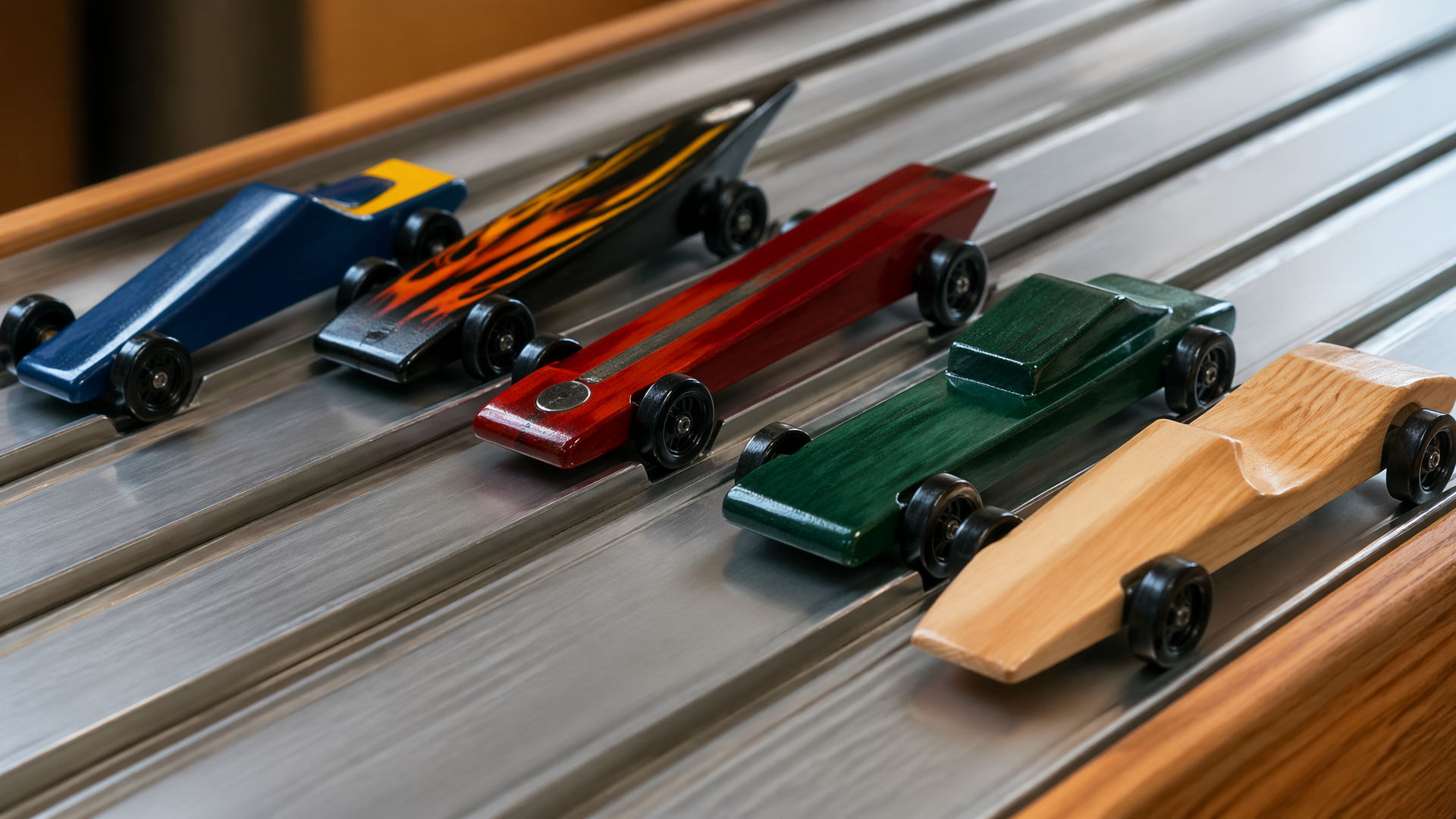
The undisputed champions in Pinewood Derby speed are often found in the streamlined, aerodynamic categories. The “torpedo” shape, characterized by a pointed front tapering to a narrower tail, excels at cutting through the air with minimal resistance. This design mimics the form of fast-moving objects in nature and fluid dynamics, allowing the car to maintain momentum more effectively. Similarly, a “needle” or “dart” shape, which is even more elongated and slender, can achieve impressive speeds by drastically reducing drag.
These shapes require careful consideration of weight placement; the center of gravity must be positioned correctly, typically about one inch ahead of the midpoint of the car’s wheelbase, to ensure stability without sacrificing forward momentum. Building these shapes demands precision, as any rough edges or uneven surfaces can create turbulence and slow the car down. The key to their success lies in their ability to glide rather than push through the air.
A slightly more accessible yet still highly effective shape is the “bullet.” This design features a rounded or slightly pointed front that smoothly tapers towards the rear. It offers a good balance between aerodynamic efficiency and ease of construction compared to the more extreme needle shapes. The rounded front can be more forgiving in terms of minor imperfections than a sharp point, and it still effectively channels air over the car. Another variant worth considering is the “swept-wing” design, which incorporates subtle, angled surfaces that can help manage airflow. However, these often require more advanced shaping and sanding techniques to be truly effective and can sometimes introduce drag if not executed perfectly. For racers seeking to optimize for speed, investing time in achieving a perfectly smooth finish on any of these streamlined shapes is crucial.
Best Pinewood Derby Car Shapes for Maximum Speed if You Want Easier Builds
While sleek, aerodynamic shapes promise maximum speed, they often come with inherent trade-offs, primarily concerning stability and build complexity. Extremely narrow and elongated designs, like the needle or dart, can be prone to wobbling or lifting off the track if the center of gravity is not perfectly balanced or if the track has any imperfections. A car that bounces or slides sideways loses valuable momentum. This is where a slightly wider, more stable shape might prove to be a better overall performer, especially on tracks with less-than-perfect surfaces or for younger builders who may struggle with achieving pinpoint precision. The “wedge” shape, for instance, offers a broader base and a lower profile that can enhance stability. Its simplicity makes it easier to build and balance, making it a reliable choice for many.
The trade-off is that a less aerodynamic shape will inherently encounter more air resistance. However, this increased drag might be offset by superior stability, allowing the car to maintain a straighter, faster path down the track without losing speed to oscillations. For serious competitors, the challenge lies in finding the sweet spot: a shape that is aerodynamic enough to minimize drag but also possesses sufficient stability to maintain a consistent, fast trajectory. This often involves meticulously placing the weight as far back as possible while still maintaining the required center of gravity, and ensuring the car’s chassis is perfectly aligned. The choice between prioritizing pure aerodynamics or a more stable, forgiving shape often depends on the builder’s skill level, the specific track conditions, and the rules of the competition.
Pinewood Derby Car Shape Trade-Offs: Speed vs Stability
While a torpedo or needle body can be the fastest answer on paper, the real buying decision is whether you can build and balance it well enough to beat a cleaner, easier wedge. If you want the highest possible speed ceiling, the trade-off is tighter build tolerance and a bigger chance of wobble if your weight placement or finish is off. If you want a shape that still runs fast but gives you more margin for error, the wedge or bullet profile is often the smarter choice for most racers.
Best Fit: Which Pinewood Derby Car Shape Should You Actually Build?
If you are a beginner, the best fit is usually a wedge or bullet shape because you are more likely to build it cleanly, align it correctly, and keep it stable on race day. If you already know how to place weight aggressively, polish the axles, and finish a narrow body without introducing wobble, then a torpedo or needle shape becomes the better fit for maximum speed.
When to Avoid Aggressive Aerodynamic Designs
Extreme aerodynamic shapes, while tempting for their speed potential, are not always the best choice for every Pinewood Derby racer. Beginners or those with limited time and tools might find the precise shaping and meticulous balancing required for needle or torpedo designs to be frustratingly difficult. Building a fast car is not just about the shape; it’s about the execution. A poorly executed streamlined shape, with rough edges, uneven surfaces, or an improperly placed center of gravity, will perform far worse than a simple, well-built wedge or basic block car. If your primary goal is to have a fun, relatively easy building experience and still have a competitive car, it’s often better to opt for a simpler design.
Furthermore, some racing organizations have rules that might limit the overall length or width of a car, or prohibit certain sharp, pointed designs for safety reasons. It’s always crucial to consult the specific rules of your Pinewood Derby event before committing to a particular shape. A design that looks fast on paper might be illegal in practice. If the rules are restrictive, focusing on maximizing speed through careful weight distribution, low-friction wheels, and a smooth, polished finish on a more conventional shape will yield better results than trying to force an illegal or overly complex aerodynamic form. For these situations, a classic, simple shape that adheres strictly to the rules and is built with care is the smarter path.
Bottom Line: Pick a Torpedo for Maximum Speed or a Wedge for the Safer Build
Ultimately, the best Pinewood Derby car shape for maximum speed depends on whether you are chasing pure speed or trying to build a fast car without introducing stability problems. If you want the highest speed ceiling and can shape, sand, and balance the car precisely, choose a torpedo or needle-style body. If you want a car that is still fast but easier to build and less likely to get unstable on race day, choose a wedge or bullet shape instead. The key takeaway is that a perfectly executed simpler shape will almost always outperform a poorly executed complex one. Focus on achieving a low center of gravity (typically 1 inch forward of the midpoint of the wheelbase), ensuring all surfaces are smooth and free of imperfections, and that the wheels spin freely.
For those seeking the absolute fastest car and possess the skills and tools for precise crafting, a streamlined, low-drag design like a torpedo or needle shape, executed flawlessly, will likely yield the winning edge. However, it’s vital to balance this pursuit of aerodynamics with the need for stability; a car that wobbles or bounces will lose speed. Therefore, the most practical advice is to select a shape that you can build with precision, ensuring optimal weight distribution and a smooth, polished finish. This focus on careful construction and balanced physics will be more impactful than the specific silhouette of the car itself.
Common Pitfalls to Avoid
Building a fast Pinewood Derby car involves not only choosing the right shape; several common mistakes can significantly hinder performance. One of the most frequent errors is improper weight placement. While the general guideline is to place the center of gravity about one inch ahead of the midpoint of the wheelbase, many builders place it too far back, leading to instability and bouncing, or too far forward, which can cause the car to nose-dive and lose momentum. It’s essential to test the balance by placing the car on a narrow edge (like a ruler) and adjusting the weight until it balances at the desired point.
Another common mistake is neglecting wheel preparation. Even the most aerodynamic shape will be slow if the wheels are rough, misaligned, or if the axles are bent. Sanding and polishing the wheels and axles, ensuring they spin freely, and aligning them perfectly straight are critical steps that often get overlooked in the pursuit of the perfect shape.
Over-sanding or creating uneven surfaces on the car’s body can also be detrimental. While a smooth finish is crucial, aggressive sanding can lead to an irregular profile that creates more drag than a slightly less refined but uniformly shaped surface. Similarly, adding too much weight, even if placed correctly, can make the car too heavy to maintain momentum on certain tracks, especially if the track has inclines or requires significant acceleration from the starting gate. It’s a fine balance, and often, less weight, perfectly placed, is more effective than maximum possible weight. Finally, forgetting to check for any binding between the wheels and the car body is a simple yet critical oversight. Any contact will create friction and slow the car down considerably. Ensure there is a small, consistent gap all around each wheel.

Greedy Wheels is the founder and lead editor at Wheels Greed. With over 15 years of hands-on automotive experience — from rebuilding engines in a home garage to managing fleet maintenance for a regional logistics company — he brings real-world mechanical knowledge to every guide.
His work has been featured in automotive forums, owner communities, and dealership training materials. When he’s not researching the latest car owner questions, you’ll find him at a local track day, wrenching on his project car, or testing the newest OBD2 diagnostic tools.
At Wheels Greed, every article is reviewed against manufacturer service manuals, NHTSA bulletins, and verified owner reports. No AI-generated fluff. No guesswork. Just practical answers from someone who has turned the wrench.