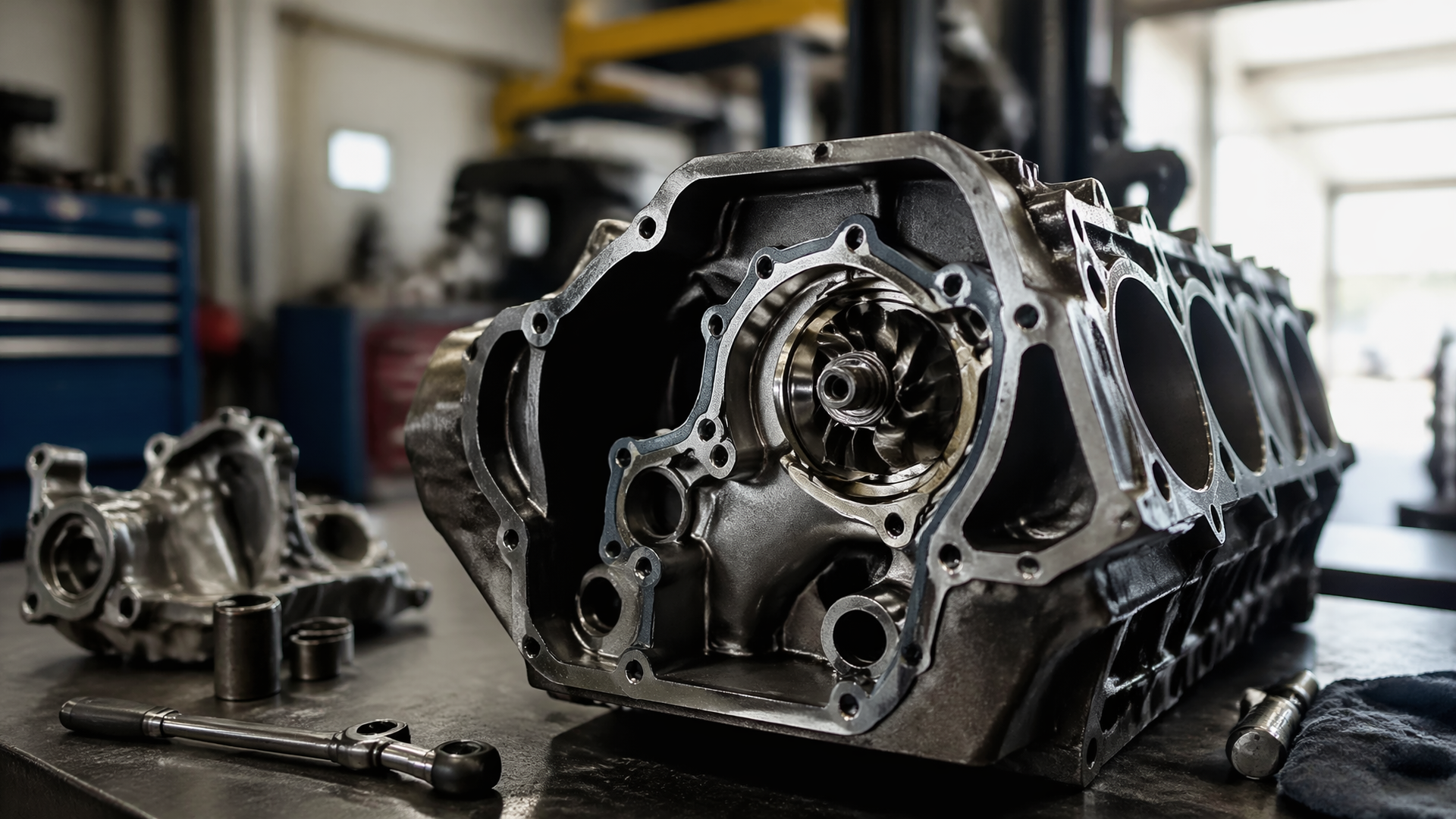
Ford Engines with Internal Water Pumps: A Comprehensive Guide
When diagnosing cooling system issues or planning routine maintenance on certain Ford vehicles, understanding which engines utilize an internal water pump is crucial. These designs integrate the water pump directly within the engine block or timing cover, a departure from the more common external, belt-driven pumps. This configuration can impact repair complexity and the signs of failure. Generally, Ford engines that feature an internal water pump include many of their modular V8 engines, such as the 4.6L, 5.4L, and 6.8L Triton families, found across a wide range of their truck, SUV, and some passenger car models from the mid-1990s through the late 2000s. Owners of these vehicles need to be aware of the specific implications for cooling system service and potential leak points.
Which Ford Engines Typically Feature an Internal Water Pump?
Ford’s most widespread application of internal water pumps is found within their modular V8 engine families, particularly the Triton series. This encompasses the 4.6-liter, 5.4-liter, and the larger 6.8-liter V10 engines. These engines powered a vast array of Ford’s most popular vehicles, including the F-150, F-250, F-350 pickup trucks, the Expedition SUV, and E-Series vans, predominantly from the mid-1990s into the late 2000s. In these engines, the water pump is integrated behind the timing cover, driven by the timing chain or gears.
For example, the second-generation 5.4L Triton V8, commonly found in F-150s produced between 2004 and 2010 (specifically the 3-valve variants), is a prominent example of an engine employing an internal water pump. Similarly, both the 2-valve and 3-valve versions of the 4.6L Triton V8, utilized in a broad spectrum of Ford and Mercury vehicles, also feature this internal pump design.
While the modular Triton engines are the most recognized for their internal water pumps, some earlier Ford engine designs also utilized this configuration, though they are less frequently discussed in current automotive contexts. The core reason for this design choice often centered on packaging efficiency and reducing the number of external components. For owners, the primary consequence of this internal placement is that any suspected water pump failure necessitates a more extensive engine disassembly. This involves removing the timing cover, a task significantly more complex than accessing an externally mounted pump, which typically only requires removing drive belts and related accessories.
Understanding the Trade-offs of Internal Water Pump Designs
The internal placement of Ford’s water pumps offers certain advantages, but these are often overshadowed by significant trade-offs, particularly maintenance and repair. A key benefit is a cleaner engine bay appearance and potentially better protection of the pump from external debris and environmental damage. However, the major drawback emerges when the pump begins to fail. Unlike external water pumps that often leak coolant visibly from a weep hole, an internal pump leak can be far more problematic. Coolant might seep into the engine oil, leading to lubrication breakdown and potential internal engine damage. Alternatively, leaks can occur internally into the crankcase or combustion chambers, which can manifest as misfires or white exhaust smoke.
The labor and cost associated with replacing an internal water pump are substantially higher. The process demands the removal of the timing cover, which usually requires disconnecting or removing numerous accessories, pulleys, and sometimes even engine mounts. This extensive disassembly also presents a prime opportunity to address other maintenance items. If the timing chain, tensioners, or guides are nearing the end of their service life, it is highly advisable to replace them concurrently with the water pump. While this increases the immediate repair bill, it can prevent significantly higher labor costs later by avoiding a second major engine tear-down. Furthermore, the timing cover gasket itself is typically replaced during this procedure, adding a layer of preventative maintenance that is often overlooked with external pump replacements.
When to Consider Engines with External Water Pumps
While Ford’s internal water pump engines have served many vehicles capably, their inherent complexity in repair and the potential for difficult-to-diagnose failure modes make them less ideal for owners prioritizing straightforward maintenance and potentially lower long-term cooling system repair costs. For those who value simplicity and easier access for routine service, engines that utilize externally mounted water pumps are generally a more practical choice. Many modern Ford engines, and indeed engines across the automotive industry, have either returned to or continued the practice of using externally driven water pumps. These are typically situated on the front of the engine block and driven by the serpentine belt, making them much more accessible.
If you are in the market for a used Ford vehicle and ease of maintenance, particularly for cooling system components, is a high priority, it is essential to research specific model years and engine options. For instance, when considering a Ford truck from the early to mid-2000s, you may find models equipped with both internal and external water pump designs depending on the specific trim and powertrain. Choosing a vehicle with an externally accessible water pump can provide greater peace of mind regarding simpler diagnostics and more cost-effective repairs should the pump eventually need replacement. Moreover, for owners who frequently undertake short trips or live in remote areas where immediate professional assistance might be less readily available, the more accessible nature of an external water pump system can be a significant factor in choosing the right vehicle.
Bottom Line: Evaluating Your Ford Engine Choice
Ford’s implementation of internal water pumps, primarily in their Triton V8 modular engines like the 4.6L, 5.4L, and 6.8L, presents a specific set of considerations for owners. While these designs can offer packaging benefits, they introduce significant complexities and potential costs when maintenance or repairs are required. The most critical implication is the labor-intensive nature of replacing an internal water pump, which involves extensive engine disassembly. Furthermore, failure signs can be less obvious than with external pumps, sometimes leading to coolant contamination of oil or vice versa, potentially causing more severe engine damage if not addressed promptly.
For owners who prioritize straightforward maintenance, readily available parts, and potentially lower repair expenses for cooling system components, engines featuring externally mounted water pumps are generally the more advisable choice. If you are selecting a Ford vehicle, particularly a truck or SUV from the era when internal pumps were common, researching the specific engine and its water pump configuration is a prudent step. Opting for an engine with an external water pump can simplify future servicing and potentially reduce long-term ownership friction related to cooling system upkeep. Ultimately, while internal water pumps have been a feature of many robust Ford engines, the practical advantages of an external design often outweigh the benefits for the average owner focused on ease of maintenance and predictable repair costs.

Greedy Wheels is the founder and lead editor at Wheels Greed. With over 15 years of hands-on automotive experience — from rebuilding engines in a home garage to managing fleet maintenance for a regional logistics company — he brings real-world mechanical knowledge to every guide.
His work has been featured in automotive forums, owner communities, and dealership training materials. When he’s not researching the latest car owner questions, you’ll find him at a local track day, wrenching on his project car, or testing the newest OBD2 diagnostic tools.
At Wheels Greed, every article is reviewed against manufacturer service manuals, NHTSA bulletins, and verified owner reports. No AI-generated fluff. No guesswork. Just practical answers from someone who has turned the wrench.